

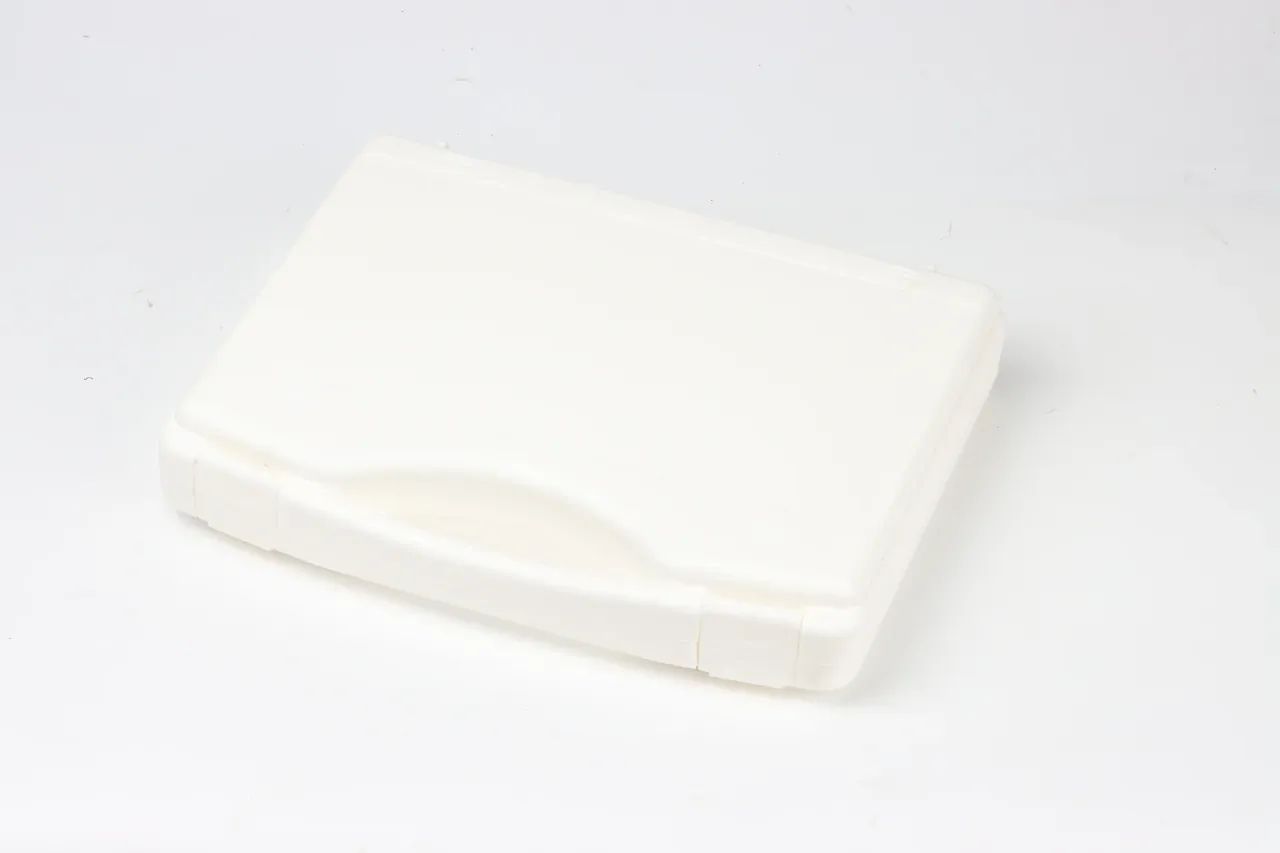
Quick answer: A used case is worth buying only when five checks pass: an unbroken seal band 3 mm wide, a 0.05 mm feeler that will not enter, latch force between 40 and 60 N, walls of at least 2.2 mm, and a valve that returns within 3 s.
Table of contents
- Seal Face First: Gaps in the 3 mm Band
- Latches and Hinges: Opening Force Between 40 and 60 N
- Wall Thickness and Distortion: Two Rulers
- Foam and Pressure Valve: The Soft Checks
- Price Anchors: When a Used Case Is Not Worth It
- FAQ
1. Seal Face First: Gaps in the 3 mm Band
The seal face is the one part of a used case that cannot be replaced cheaply, so it comes first. A shell can be patched, a latch can be swapped, foam can be cut again. The flat land around the rim is different. Once a chip breaks through it the whole case leaks, and no amount of cleaning brings it back. Open the lid fully and trace the 3 mm band that carries the gasket, running a fingertip along it before tilting the shell into the light. A chip 0.5 mm deep, or 2 mm long along the lip line, is a repair rather than a cleaning job.
| Check | Action on site | Fail line |
|---|---|---|
| Seal face | Fingertip pass, raking light | deeper than 0.5 mm, or 2 chips |
| Latches | Scale on the lever, rock the pin | under 35 N or over 80 N, play over 0.3 mm |
| Walls | Ultrasonic gauge, tape diagonals | under 2.2 mm, diagonals off by 2 mm |
| Foam | Calipers on thickness, rub surface | over 15% set, crumbling |
| Valve | Press and time the return | over 3 s, cracked diaphragm |
Then test with a feeler gauge: close the lid, latch it and slide a 0.05 mm blade in at eight points. If one point accepts the blade, re-latch once; if it still accepts it, the gasket is flattened or the rim is warped.
Original parts matter less than fit: a replaced gasket is fine unless the channel holds old adhesive or the strip sits 0.5 mm narrower than the groove.
2. Latches and Hinges: Opening Force Between 40 and 60 N
Latches are the easiest hardware to grade: they have a force window. Hook a 20 kg scale under the lever and pull straight out: 40 to 60 N means spring and tongue are still in design condition. Under 35 N the tongue is worn and the latch pops open; over 80 N the seat is distorted and wears a groove into the rim.
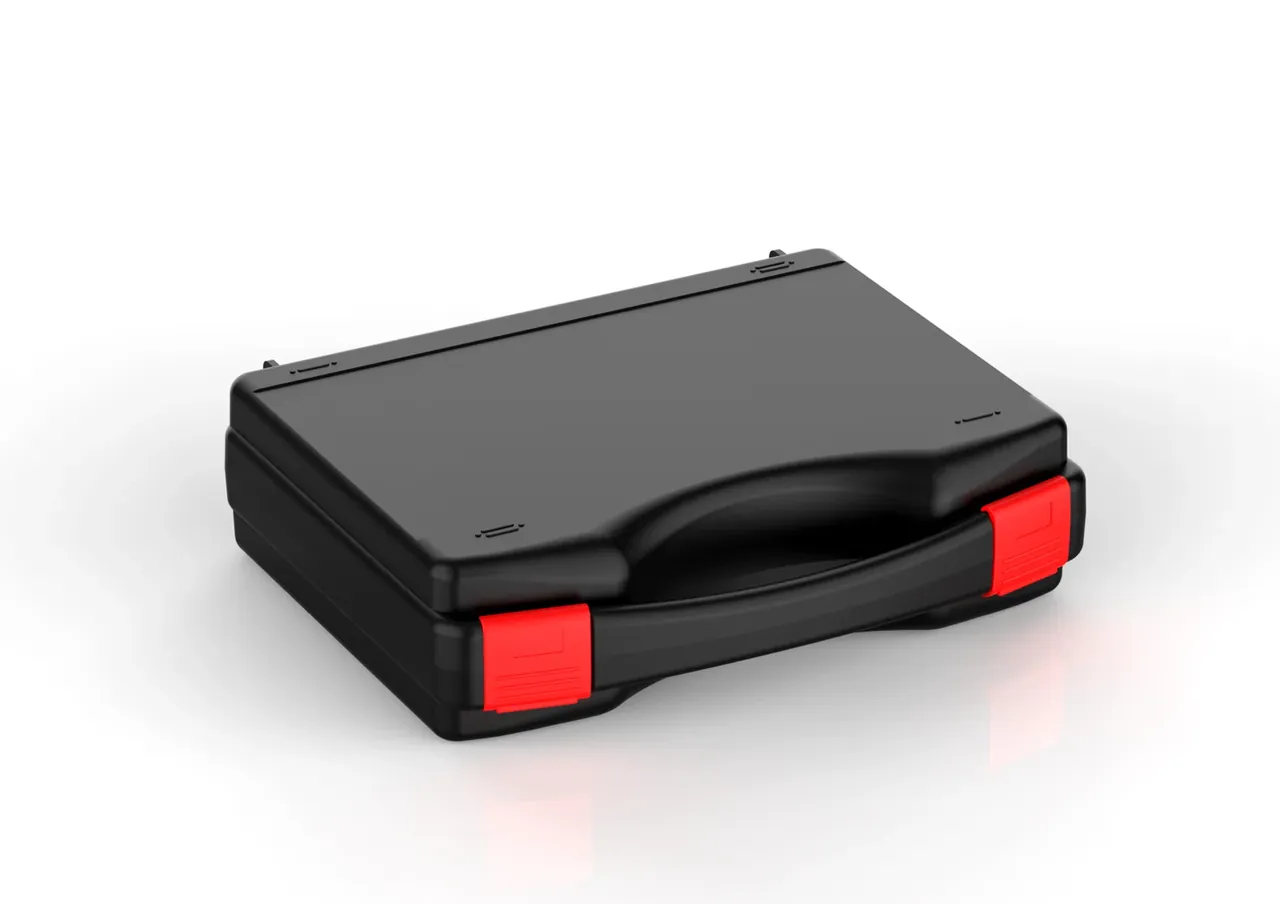
Check pin play rather than appearance. Rock the lever side to side; movement beyond 0.3 mm means the bore has opened up and the whole latch has to go.
Hinges hide their wear on a used case. Open to 90 degrees, support the lid and rock it gently; sag beyond 3 mm means pin and bush are loose, and the lid will close off-centre. Cycle the latches 20 times and watch for one that skips.
3. Wall Thickness and Distortion: Two Rulers
Wall thickness decides how much impact margin is left, and it is the hardest thing to see. A 0.01 mm ultrasonic gauge, three readings each on base, walls and lid, should return 2.5 to 3.2 mm. Any point under 2.2 mm has either been hit repeatedly or was thin-walled from the start.
Distortion needs two rulers. A tape across the rim diagonals, differing by more than 2 mm, means the shell is twisted and the lid sits proud on one side. A straight edge and feeler gauge across the lid centre, accepting 1.5 mm, means the lid has sagged and stacking load will run into the walls.
Cracks matter by location. Scratches on a flat wall can be ignored; cracks at a corner radius, a rib root or a hinge boss cannot, and anything over 5 mm long ends the deal.
4. Foam and Pressure Valve: The Soft Checks
Foam tells you whether the case still cushions; thickness answers faster than colour. Measure the most compressed area: 30 mm down to 25 mm is 17% set, and anything past 15% has stopped recovering. Rub the surface; powder means the cell structure has broken down.
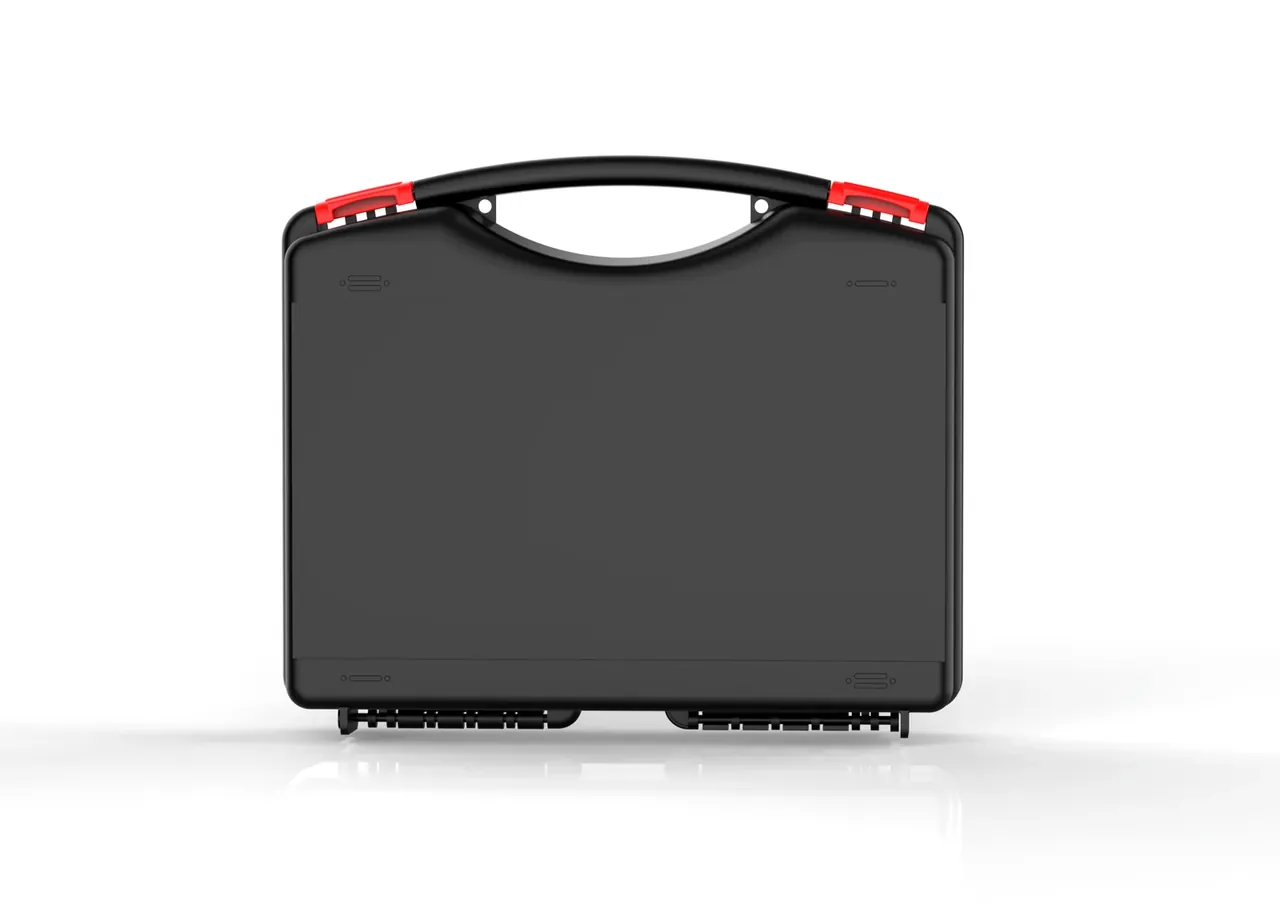
The pressure valve is the second blind spot. Press the core fully in and time the return: within 3 s is normal, slower means an aged diaphragm or salt inside. Look along the diaphragm edge for fine cracks; a new valve is cheap next to a leak.
Damp foam smells musty, and a sour lining means the adhesive has hydrolysed.
5. Price Anchors: When a Used Case Is Not Worth It
A used case with an intact seal face, original latches and springy foam sits at 45–55% of new; small chips that still pass put it at 30–40%; one that needs a gasket and fresh foam lands at 20–25%.
| Grade | Shell and hardware | Seal face | Share of new price |
|---|---|---|---|
| A | no cracks, original latches | clean, feeler will not enter | 45%–55% |
| B | light knocks, latches replaceable | one chip under 0.5 mm | 30%–40% |
| C | collapsed foam, gasket needed | two chips or more | 20%–25% |
Three conditions end the conversation. More than two chips on the seal face, because gasket labour eats the discount. A crack at a corner radius, which cannot be repaired reliably. A wall under 2.2 mm, where no patch restores margin.
Test the used case within seven days of delivery. Latch it, immerse it in 1 m of water for 30 min, or pressurise to 15 kPa and watch for more than a 1.5 kPa drop in 60 s.
Conclusion
A used case fails on details that a photo hides and a five-minute inspection exposes. Trace the 3 mm seal band, push a 0.05 mm feeler into eight points, pull each latch with a 20 kg scale, gauge the walls, check the diagonals, then count three seconds on the valve. Five passes make 45–55% of new fair; one failure moves the number down by the cost of the part, and a chipped seal face, a cracked corner or a 2.2 mm wall ends the deal at any price.
This article discusses only the container (case body) side of specifications and design intent, and does not cover any handling, loading or use of the contents.
Related Reading
- Refurbished cases: which parts may have been swapped
- Warranty negotiation points for used cases
- UV ageing tests and what they say about strength
- Repair and spare parts: what can still be saved
Related Products
- 8 Series — Gun Cases; Military Equipment Cases; Camera Equipment Cases; Drone Cases; Watch Cases; Knife Cases; First Aid Cases; Electronics Equipment Cases
- WL8-2812 PP Gun Case — model WL8-2812
- All protective cases and toolboxes: 7 series, 158 models