

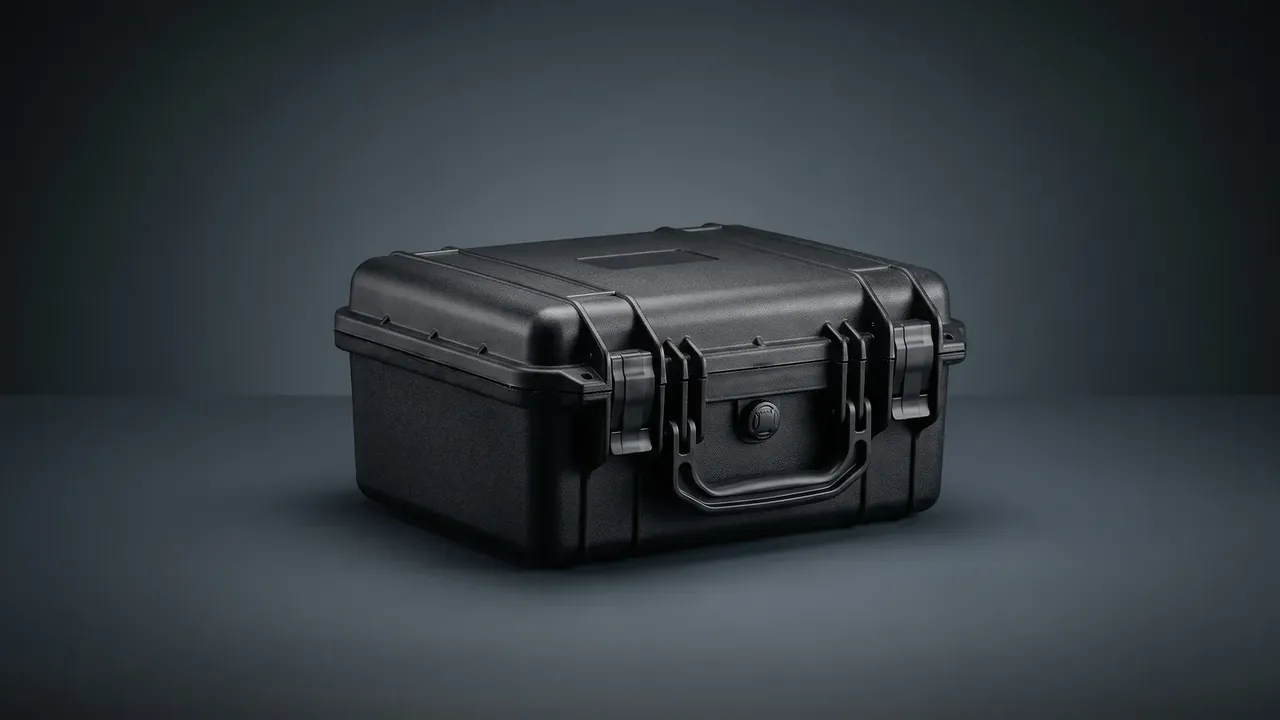
Quick answer: A waterproof box fan passes two verdicts, one for water and one for heat. Assembly inspection covers fan screws, grommets and gasket seating, lot sampling measures duct decay and airflow, type tests cover spray, salt fog and thermal cycling. Flap clearance, membrane airflow and fan orientation slip through most often.
Table of contents
- Waterproof Box Fan Acceptance Begins With Three Inspection Tiers
- Judging the Air Path and Seal Tolerances
- Judging Fan Output, Noise and Temperature Rise
- Judging Spray and Environmental Exposure
- Judging Dimensions, Latches and Sampling
- FAQ
1. Waterproof Box Fan Acceptance Begins With Three Inspection Tiers
A waterproof box fan sits on a contradiction: air must move, so the wall needs an opening that lets water in. Judgement starts with the thermal concept: a louvre on blade clearance and drainage slope, a membrane on film integrity, a self-closing flap on static pressure.
Assembly inspection is 100 percent: bracket screws at 1.2 N·m, grommet pressed home, gasket in its groove. Lot sampling puts five units per batch on a duct bench; type testing covers IPX5 spray, 480 h salt fog and 20 thermal cycles.
| Tier | Scope | Main items | Method |
|---|---|---|---|
| Assembly | Every unit | Torque, grommet, gasket | Torque wrench |
| Lot sampling | 5 per batch | Duct decay, airflow | Duct bench |
| Type test | Design change | Spray, salt fog | Third-party report |
2. Judging the Air Path and Seal Tolerances
Pressure decay is the practical duct test: plug both openings, charge to 5 kPa, hold 30 seconds, accept no more than 0.3 kPa drop. Louvre blades count inside the measured volume, since a 0.5 mm gap bleeds continuously and such a waterproof box fan fails the first bench run.
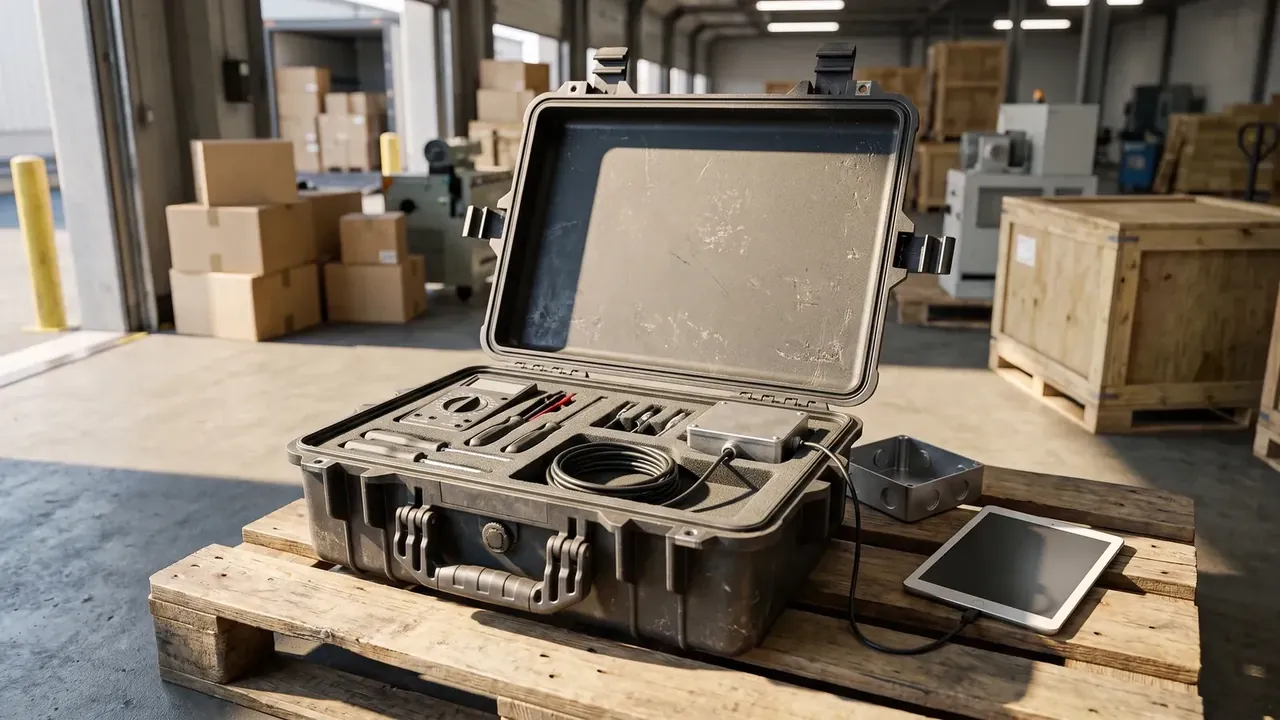
Membranes pass on three points: no bubbles or lifting, bond width of 3 mm, and 300 ml per minute at 7 kPa. Adhesive contamination can halve that, so airflow is sampled after assembly.
Gaskets go by compression set: 8 mm cord in a 5.8 mm groove, 27 percent against an allowed 22 to 32 percent. The pad under the fan frame takes 30 percent, and set after 24 hours at 70 °C stays under 25 percent.
3. Judging Fan Output, Noise and Temperature Rise
Data comes from the bench, not the datasheet. A 120 mm square, 38 mm deep axial fan must give 180 m³/h and 60 Pa at 12 V, within 8 percent across five units. IP68 motors may sit in the spray zone; IP55 units belong behind a drip lip.
Noise is read at 1 m with background under 30 dB(A), and the closed unit stays below 45 dB(A). Bearings are rated for 70000 hours with airflow loss under 10 percent after 2000 hours.
Temperature rise ends the argument: empty interior, 40 °C ambient, four hours at full speed, sensor within 12 K of ambient. Locked-rotor protection is proven by blocking the intake for 10 seconds.
4. Judging Spray and Environmental Exposure
IPX5 means a 6.3 mm nozzle at 12.5 litres per minute and 30 kPa, held 2.5 to 3 m from each face for 3 minutes, with a waterproof box fan mounted in service orientation.
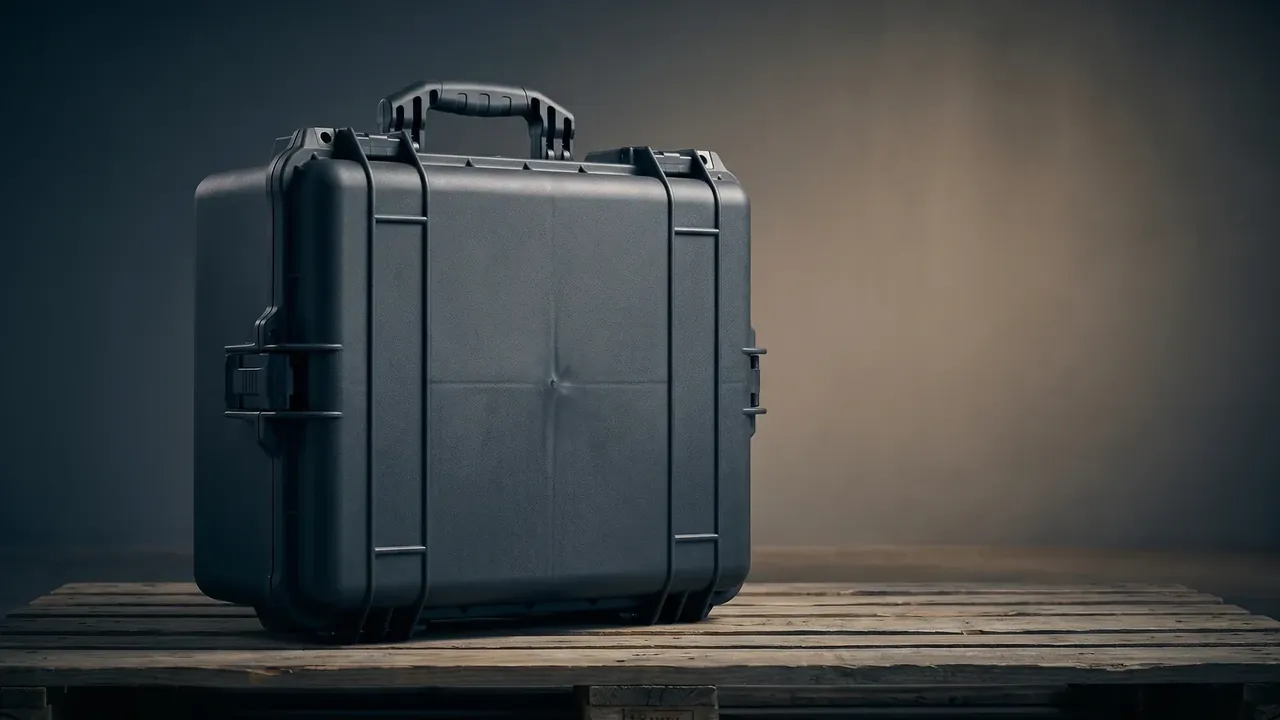
Three checks follow: no standing water, no droplets behind the membrane, no traces in the motor cavity. Drain ports of 6 mm empty in under 90 seconds.
Salt fog runs 480 hours neutral, judged on metal parts only: no red rust, white rust under 5 percent. Thermal cycling spans −30 to +70 °C for 20 cycles, then duct decay is re-checked.
| Item | Condition | Pass criterion |
|---|---|---|
| Duct decay | 5 kPa, 30 s | ≤0.3 kPa drop |
| Membrane airflow | 7 kPa | ≥300 ml/min |
| Salt fog | 480 h neutral | No red rust |
5. Judging Dimensions, Latches and Sampling
Three dimension groups: outline ±0.8 mm, fan hole centres ±0.3 mm, frame-to-cut-out clearance 0.4 to 0.8 mm. Under 0.3 mm the fan will not seat; over 1 mm the pad never compresses.
Latch retention is 350 N held for 10 seconds, and after 10000 lid cycles the lid sags under 1.5 mm. Sampling uses level II, with AQL 0, 1.0 and 2.5.
Conclusion
The hard part of a waterproof box fan is not water alone but water and heat at once: the duct must breathe, the grommet must seal, the membrane must pass air. Give every item a method and a threshold, and the acceptance file for a waterproof box fan will survive an audit.
This article discusses only the container (case body) side of specifications and design intent, and does not cover any handling, loading or use of the contents.
Related Reading
- Waterproof hard case acceptance criteria
- Dustproof case selection and rating matching
- Temperature-controlled case selection
- Quality control points on the case assembly line
Related Products
- 8 Series — Gun Cases; Military Equipment Cases; Camera Equipment Cases; Drone Cases; Watch Cases; Knife Cases; First Aid Cases; Electronics Equipment Cases
- WL8-2812 PP Gun Case — model WL8-2812
- All protective cases and toolboxes: 7 series, 158 models