

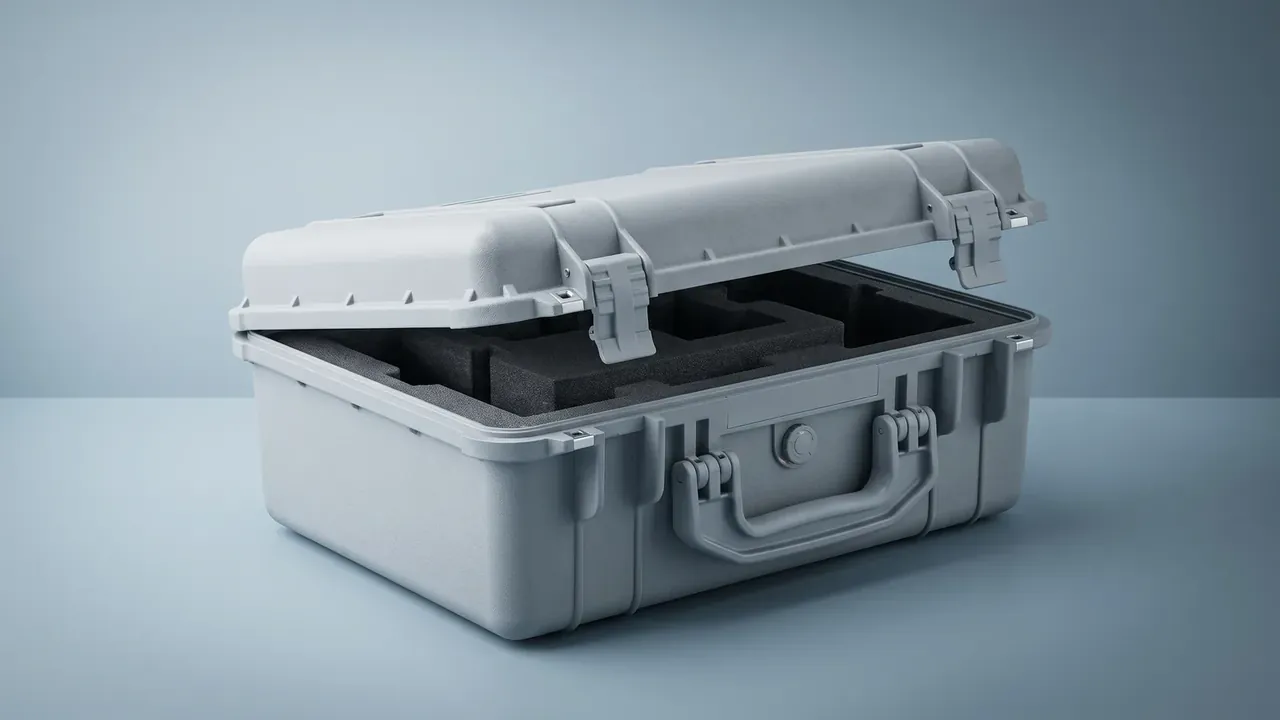
Quick answer: Choosing a dustproof case takes three steps: rating from the dust on site, seal type from how often the case opens, service interval from the concentration. Over-specifying wastes money, under-specifying wears the seal out, and a wrong seal type ruins a high rating within a quarter.
Table of contents
- How to choose a dustproof case: three decisions
- Rating: where IP5X ends and IP6X starts
- Seal types: matching four faces to the job
- Working conditions: concentration, cycles, swings
- Acceptance: how to verify in the plant
- FAQ
1. How to choose a dustproof case: three decisions
Set the rating first: particle size and concentration decide IP5X or IP6X, and an error here turns the rest into patching. Then pick the seal: the more often a case opens, the better it must tolerate compression. Finally set the service interval, since fine powder clogs relief parts faster.
Three mistakes recur: reading only the IP number, substituting a waterproof case, and ignoring cleaning, since a pressure washer pushes dust into the joint.
| Step | Ask first | Settles |
|---|---|---|
| Rating | Size, concentration, conductivity | IP5X or IP6X |
| Seal | Opens per day, and by whom | Flat, O-ring, lip or double lip |
2. Rating: where IP5X ends and IP6X starts
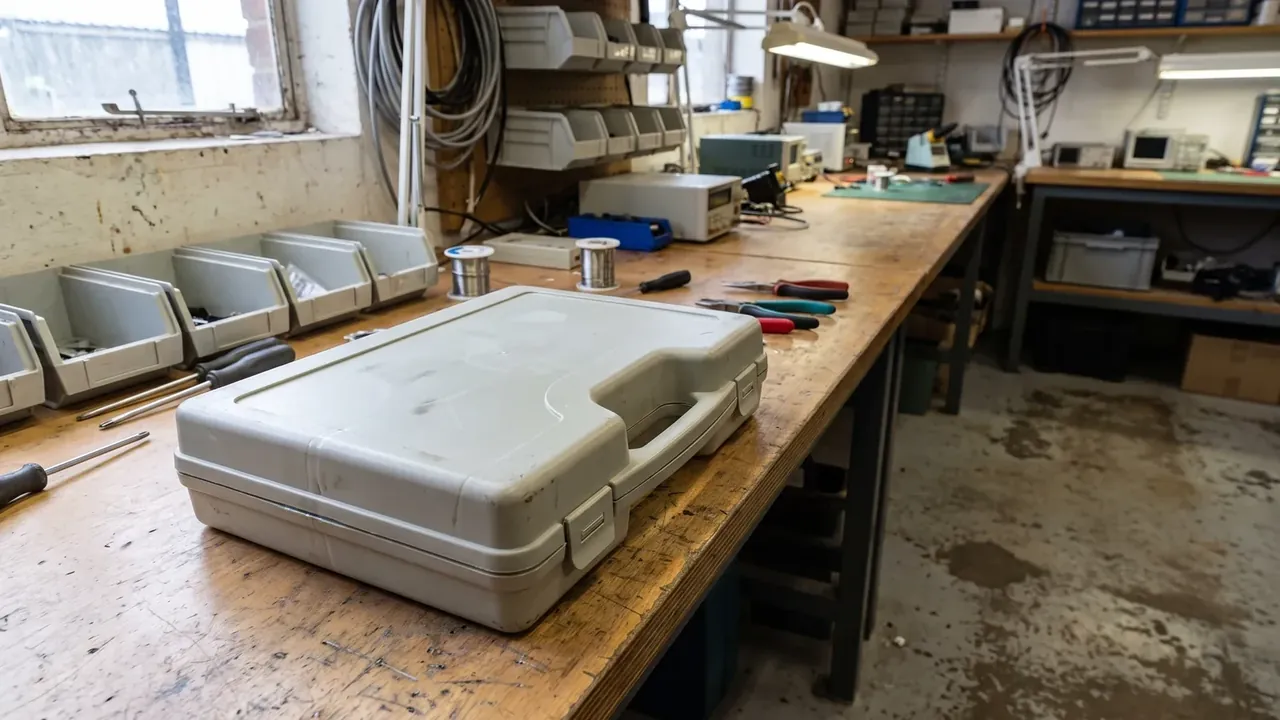
IP5X runs without vacuum and allows a little dust if operation is unaffected. It suits moderate concentration and parts that tolerate deposit: motors, pumps, luminaires.
IP6X requires no visible deposit, with 2 kPa of vacuum pulling dust toward every gap. It suits fine, conductive and optical loads, where carbon black bridges into shorts and a grain on a lens is a defect.
The cost gap runs 15–30%, spent on seal machining, latches and relief parts. IP6X against coarse sand is wasteful; IP5X in a polishing shop fails in a quarter.
| Rating | Test | Suits |
|---|---|---|
| IP5X | Talc, 8 h, no vacuum | Coarse dust, infrequent opening |
| IP6X | Talc, 8 h, 2 kPa vacuum | Polishing, sand, carbon black |
3. Seal types: matching four faces to the job
A flat gasket is cheapest: large lids, infrequent opening, coarse grains. Latches supply 15–25%, so the lid needs ribs to stay flat.
An O-ring rolls into contact at 20–30%, forgiving more and suiting frequent opening, but 0.2 mm of groove oversize lets it roll, and one roll leaks.
A lip seal self-tightens with pressure for large swings but is one-directional; a double lip adds a scraping edge for fine dust at the highest cost.
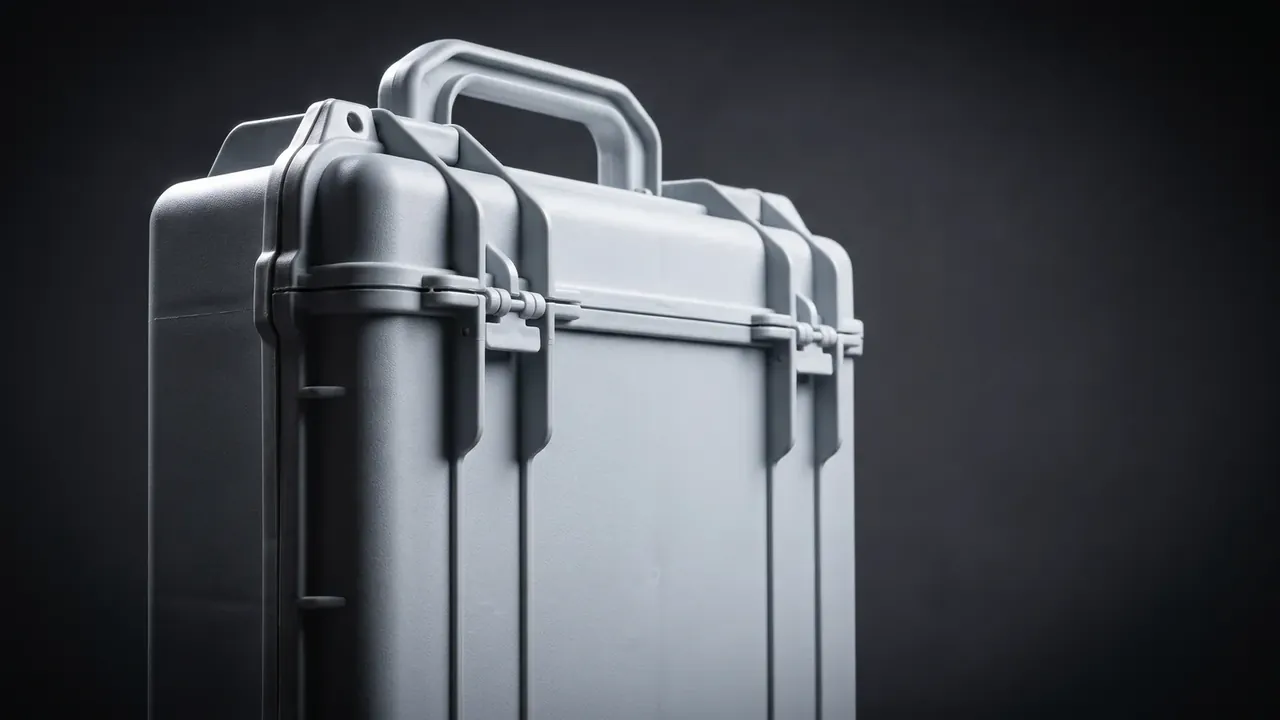
Latch spacing decides evenness: one every 250–300 mm, with holes blinded.
4. Working conditions: concentration, cycles, swings
Concentration runs in milligrams per cubic metre: under 1 low, 1–10 medium, above 10 high. High takes a double lip and monthly service; low takes a flat gasket.
Ten openings a day is about three thousand a year, so the cord lasts under two years; choose a gasket that can be swapped, not bonded.
Above a 30 K swing, relief is mandatory, or pressure pumps dust through the weakest joint. Washdown matters too: specify a smooth interior without fabric lining.
| Site | Load | Configuration |
|---|---|---|
| Woodworking | Medium | O-ring, one-way valve |
| Polishing | High | Double lip, membrane |
5. Acceptance: how to verify in the plant
A powder test is the direct route: talc at 2 kg/m³ for 8 hours with 2 kPa of vacuum. Without a chamber, fluorescent powder and a UV lamp are more sensitive.
A feeler gauge finds single points: run a 0.05 mm blade around the latched joint and wherever it enters is a leak, though micro-leaks stay hidden.
A pressure-decay test covers the shell: seal every opening, charge to 2 kPa, watch 60 seconds; over 10% decay means a leak to isolate. Inspect the first article fully and sample batches at AQL 2.5.
Record compression, groove depth and gasket hardness; hold hardness at Shore A 50–70, since harder does not seat and softer creeps.
Conclusion
A dustproof case comes down to three matches: rating to powder, seal to opening cycle, service to concentration. Compare ratings alone and the dustproof case is either overbuilt or short-lived.
This article covers container-side specifications and design implications only, not the handling, loading or use of the contents.
Related Reading
- IP54 versus IP65 in real conditions
- Dustproof design for outdoor cases
- Gasket material selection
- Latch selection and clamping force
Related Products
- 8 Series — Gun Cases; Military Equipment Cases; Camera Equipment Cases; Drone Cases; Watch Cases; Knife Cases; First Aid Cases; Electronics Equipment Cases
- WL8-2812 PP Gun Case — model WL8-2812
- All protective cases and toolboxes: 7 series, 158 models