

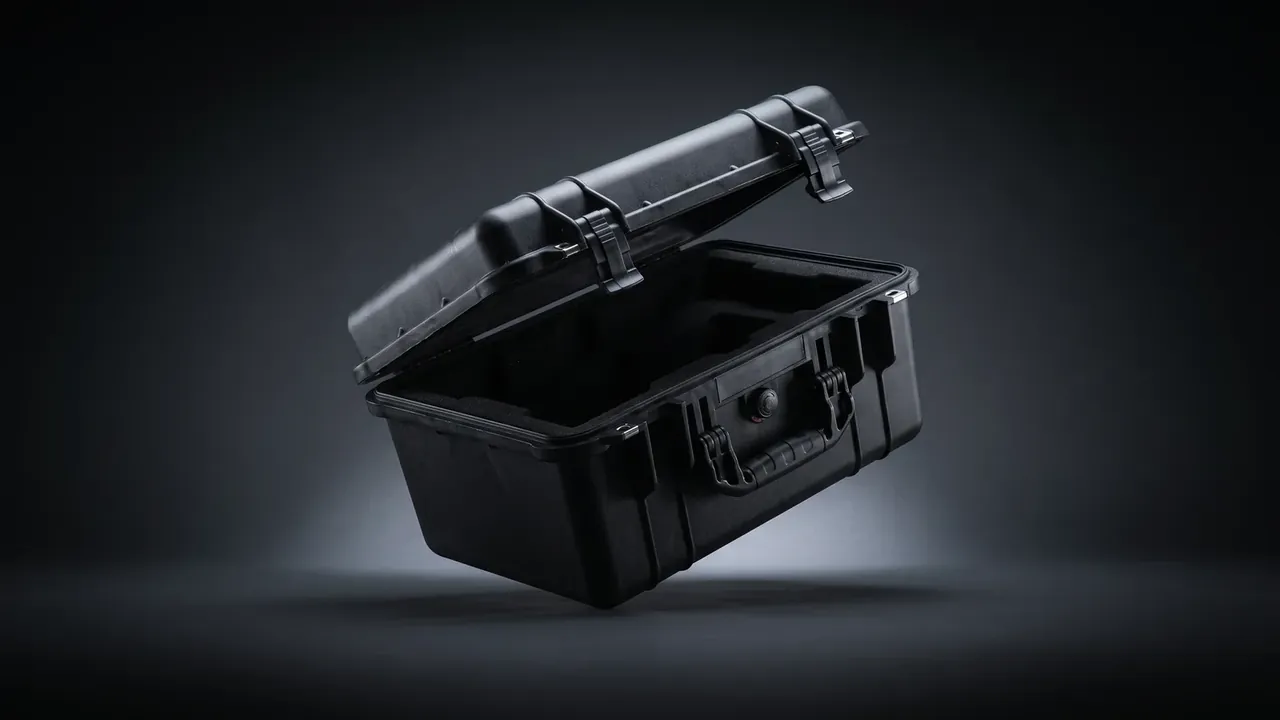
Quick answer: A waterproof protective case is accepted through four gates — 12 incoming items, 9 in-process, 8 final and 4 pre-shipment — each with a named signer and a release condition. Critical defects are never accepted, and concessions need three signatures.
Table of contents
- Four Inspection Gates
- Defect Classes and Wording
- First-Off Approval and Patrol Timing
- Final Inspection Thresholds
- Sampling and Reject Handling
- FAQ
1. Four Inspection Gates
The weak point in acceptance for a waterproof protective case is rarely a thin standard; it is a gate with no named judge. Dimensions get measured, nobody rules between pass and rework, and the numbers stay on paper while the verdict stays verbal.
The order is fixed: 12 incoming items, 9 in-process, 8 final, 4 pre-shipment. No material enters the line before incoming release, no batch starts before the first-off is signed.
| Gate | Timing | Items | Signer | Release |
|---|---|---|---|---|
| Incoming | Within 24 hours | 12 | Incoming inspector | Release sheet and COA |
| In-process | First-off, then every 2 hours | 9 | Patrol inspector | Signed first-off |
| Final | Every unit | 8 | Final inspector | Unit record in the system |
| Pre-shipment | Before loading | 4 | Storekeeper and QA | Shipping report filed |
Gates do not substitute. A thorough final check cannot recover a material mix-up, and waving product through shifts its risk onto the next three.
2. Defect Classes and Wording
Classes decide what happens next, so the wording is settled before any threshold. A waterproof protective case carries three: critical breaks the protective function, major eats into sealing margin, minor is appearance and marking.
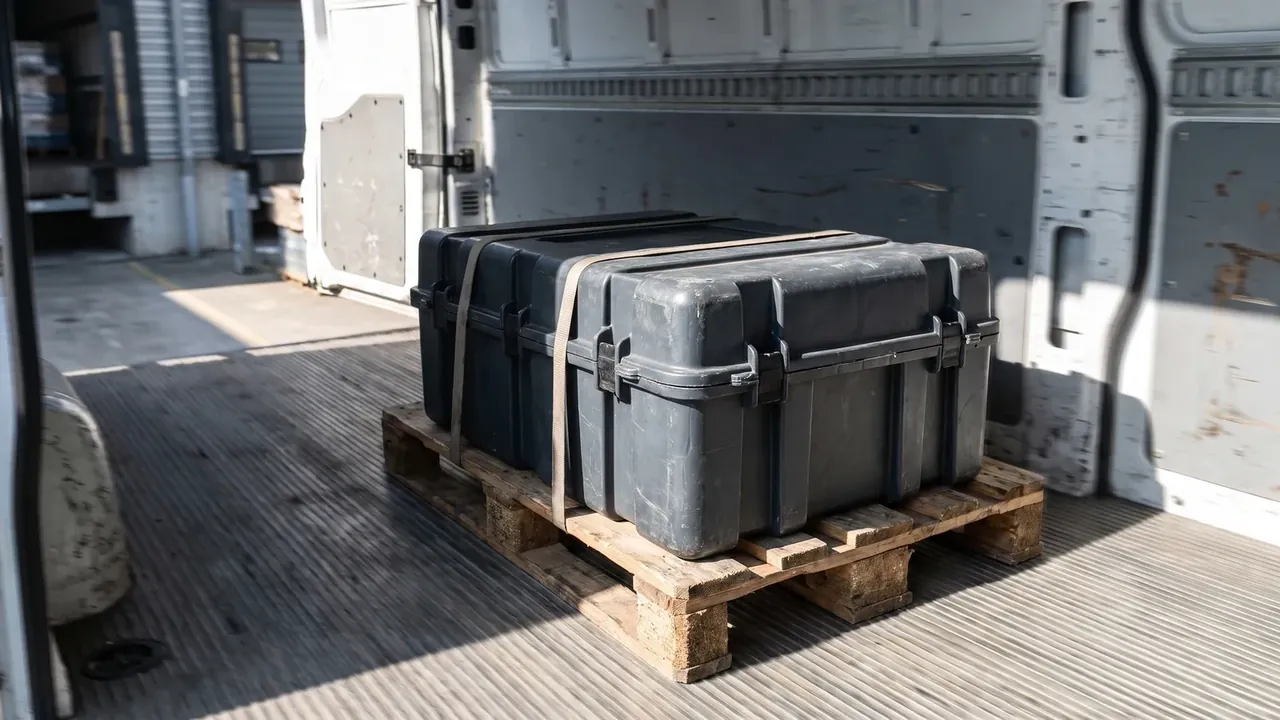
Wording works with examples, not adjectives: the same flash is major on the sealing face and minor on the base.
| Class | Examples | Action | Release |
|---|---|---|---|
| Critical | Body crack, latch fracture, handle pull-out | Isolate the lot, no rework release | Nobody; scrap or return |
| Major | Sealing-face flash, joint gap over 0.3 mm, handle set over 3 mm | Rework, then full re-inspection | Quality supervisor |
| Minor | Flash off the seal, marking off by 2 mm, ΔE 2–3 | Record and release or sort | Inspector |
Once written, classes are not re-cut before shipment; downgrading a major breaks the rework trail.
3. First-Off Approval and Patrol Timing
First-off approval is the gate most often skipped on a waterproof protective case, because it happens before the batch exists and produces nothing visible. The workable rule is three units per mould per shift, all items passed, one of them retained for 12 months.
First-off carries more than patrol: cavity tolerance ±1.0 mm, envelope ±1.5 mm, rim flatness within 0.5 mm. Those three decide whether the lid presses the gasket evenly. Patrol then runs every 2 hours on five units, reading joint gap, flash height, latch feel and unit weight, where a 3% swing signals wall thickness or melt flow drift.
4. Final Inspection Thresholds
Final inspection of a waterproof protective case does appearance and latches unit by unit inside 90 seconds: look inside and out, cycle the latches, confirm the marking.
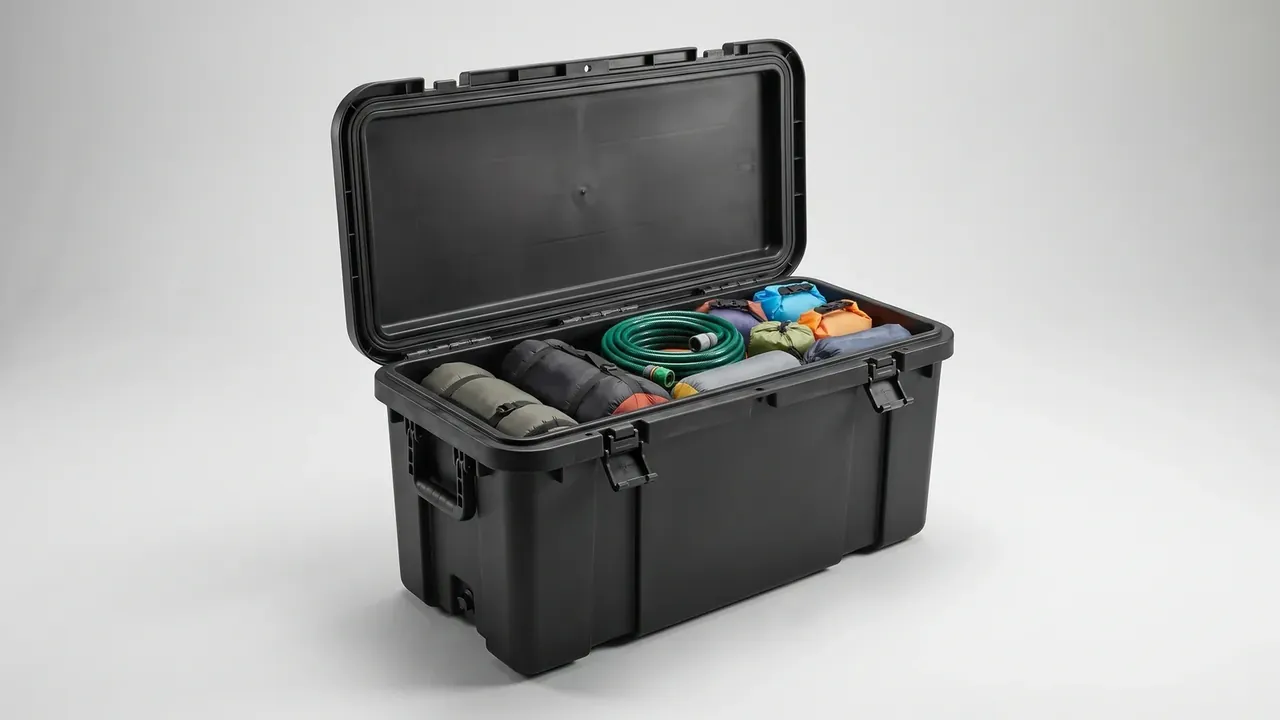
Performance carries four limits: handle static load of 30 kg held 10 minutes with no more than 3 mm permanent set, hinges still tight after 3,000 cycles, normal opening after a 0.9 m drop onto steel, and a gasket that stays seated across a 40 °C wall differential. Write the verdict as a sentence: "Unit 7, handle set 4.2 mm, major, rework and re-test" survives six months.
5. Sampling and Reject Handling
Sampling for a waterproof protective case follows GB/T 2828.1 at level II. At 281–500 units the sample is 50: critical zero-accept, major at AQL 1.0 with acceptance 1 and rejection 2, minor at AQL 2.5 with 3 and 4.
| Lot size | Sample | Critical | Major, AQL 1.0 | Minor, AQL 2.5 |
|---|---|---|---|---|
| 91–150 | 20 | Zero accept | Accept 0, reject 1 | Accept 1, reject 2 |
| 281–500 | 50 | Zero accept | Accept 1, reject 2 | Accept 3, reject 4 |
| 1201–3200 | 125 | Zero accept | Accept 3, reject 4 | Accept 7, reject 8 |
Rejects are isolated with a tag carrying lot, quantity and class. Reworked lots are re-inspected at the original sample size and only those items are released. Concessions take three signatures, three retained samples for 12 months and 36 months of records.
Conclusion
What holds in acceptance for a waterproof protective case is not the threshold table but the judge, the timing and the release at each gate. Limits can be negotiated, gates cannot be dropped, and classes can be refined but not rewritten on the day of shipment. Signatures, retained samples and records carry a waterproof protective case from paperwork onto the line.
This article discusses only the container (case body) side of specifications and design intent, and does not cover any handling, loading or use of the contents.
Related Reading
- Quality control at the case assembly station
- Writing acceptance clauses into a case production SOP
- How a case supplier scorecard is scored
- What manufacturers claim about protective case production
Related Products
- 8 Series — Gun Cases; Military Equipment Cases; Camera Equipment Cases; Drone Cases; Watch Cases; Knife Cases; First Aid Cases; Electronics Equipment Cases
- WL8-2812 PP Gun Case — model WL8-2812
- All protective cases and toolboxes: 7 series, 158 models