

Quick answer: Write five figures: load per shelf, adjustment pitch, locking and key tiers, fixing method, and door opening angle. All are measurable and comparable; total load and outer size hand the decision to the supplier.
Table of contents
- The five specifications
- Shelves: load against pitch
- Locking: three forms and the record
- Fixing: combining three methods
- Acceptance and how to write the sheet
- FAQ
1. The five specifications
Shelf load is usually twenty to forty kilograms: a long weapon with optics runs five to seven, three to five per shelf, so forty is a sensible ceiling. Beyond it the shelf deflects and the brackets fail first.
Adjustment pitch sets adaptability: fifty millimetres covers most types, a hundred forces compromise after a weapon change. Welded shelves lock capacity to one configuration permanently.
Locking and fixing follow: three-point or single, with or without key tiers; anchors, anti-tip bracket and ballast in combination; and a door angle above 120 degrees, or the innermost item requires a sideways reach.
| Figure | Typical | Test | If short |
|---|---|---|---|
| Shelf load | 20 to 40 kg | distributed load for 24 hours | deflection, bracket failure |
| Adjustment pitch | 50 mm | move one shelf | will not fit after a change |
| Locking | three-point with key tiers | walk the key tiers | no traceability |
| Fixing | anchors or anti-tip with ballast | push the cabinet | tips when knocked |
| Door angle | 120 degrees or more | measure the opening | hard to reach the far end |
2. Shelves: load against pitch
Load and pitch conflict: a denser pitch improves adaptability but adds stiffener holes, lowering shelf stiffness for the same material — so fifty-millimetre cabinets usually add a fold or ribs to compensate.
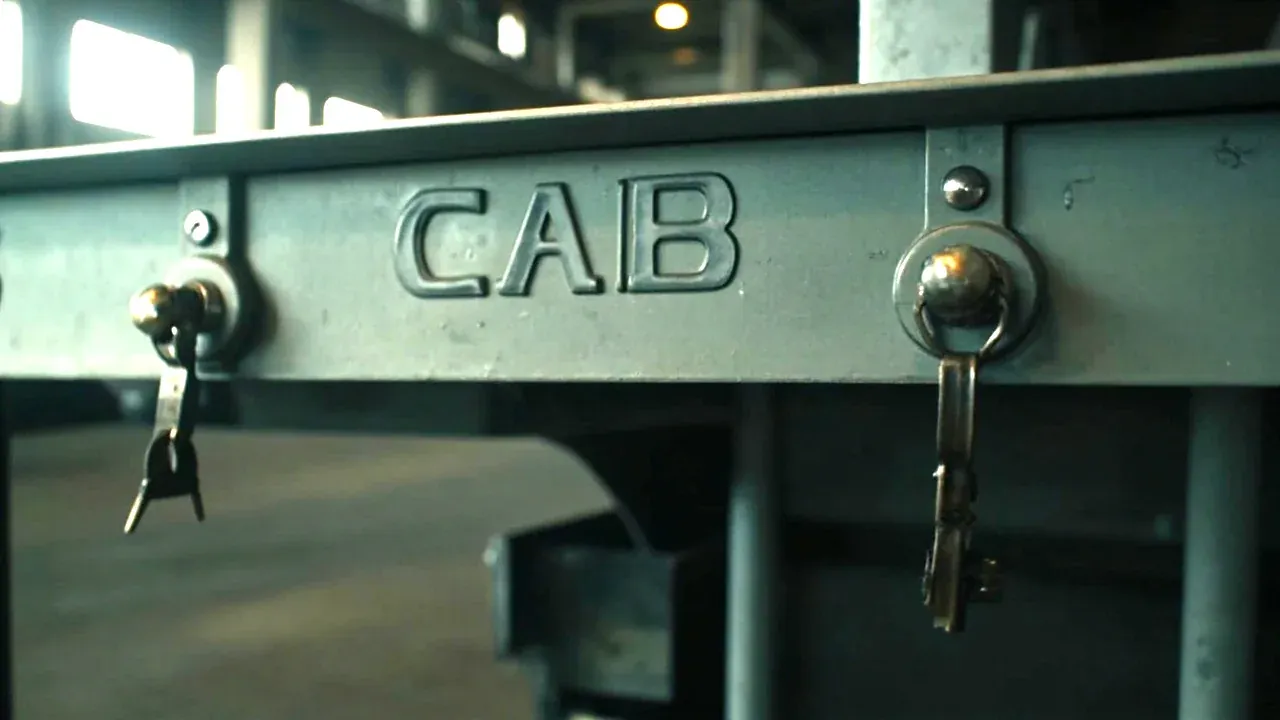
Judge a shelf by fold height and bracket count: below fifteen millimetres with two brackets, a forty-kilogram distributed load deflects past five millimetres; a twenty-five millimetre fold and three brackets fix it in the same steel.
3. Locking: three forms and the record
A single-point lock secures one side and relies on door stiffness; a three-point locks top, middle and bottom; a linked cabinet lock ties doors to internal partitions. Pry resistance differs by an order of magnitude for about twenty percent more.
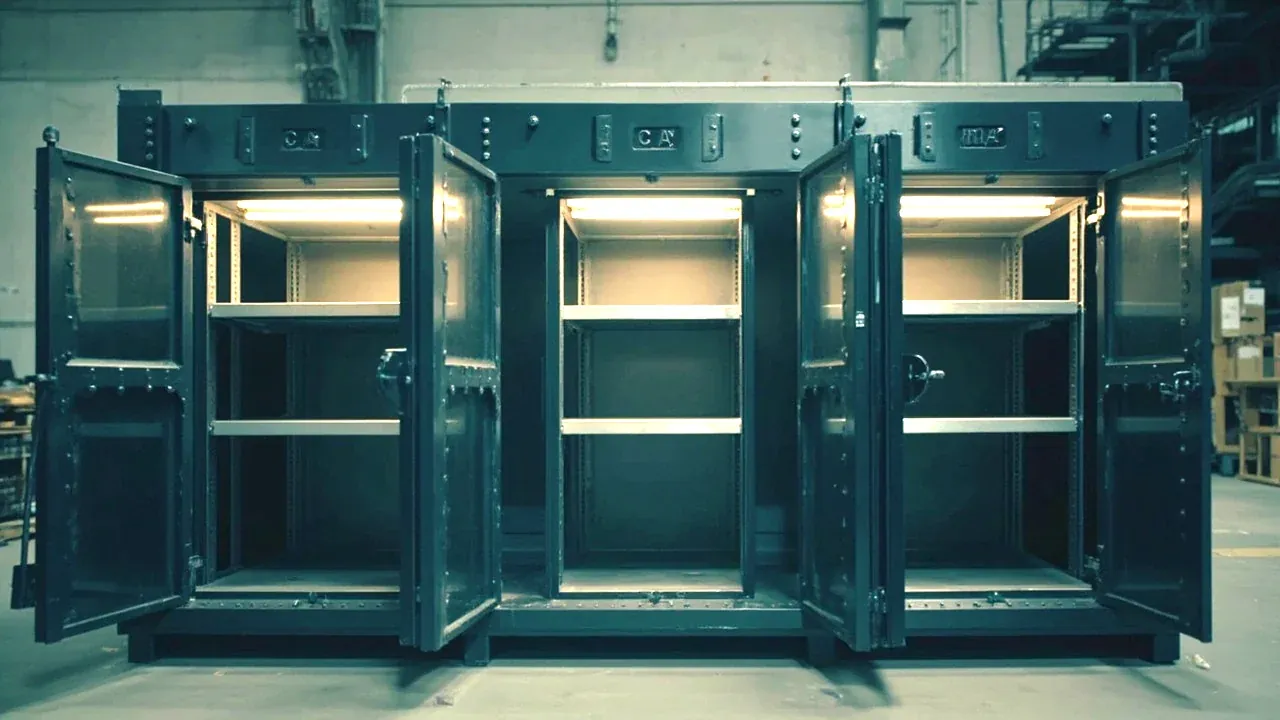
Key tiers should match the staffing: manager, supervisor, duty officer. More tiers is not safer — past the number of real roles, keys get lent and traceability worsens.
4. Fixing: combining three methods
Anchors suit concrete and resist tipping best but prevent moving; an anti-tip bracket suits wall placement and costs little but needs a sound wall; ballast suits field stores but eats the bottom of the cabinet. Combine anchors, then bracket, then ballast.
Check level after fixing: an out-of-level cabinet swings its doors and misaligns the bolt. Measure top and bottom, and shim beyond two millimetres of difference.
5. Acceptance and how to write the sheet
Five actions: distributed load for a day, move a shelf, walk the key tiers, push the cabinet, measure the door angle. Twenty minutes, no instruments; a refusal to run any one of them usually means the figure is not held.
Write numbers and positions, not adjectives: reinforced shelf cannot be accepted, a twenty-five millimetre fold with three brackets can. The price difference lives in exactly those details.
Conclusion
Five figures: shelf load, adjustment pitch, locking with tiers, fixing, door angle. Write numbers and accept them, or the quotation reduces to price — and price is where these five get cut. Put all five into the technical conditions and take three quotes on the same terms before negotiating, so acceptance follows the numbers rather than individual judgement.
This article covers container-side specifications and design implications only, not the handling, loading or use of the contents.
Related Reading
- Weapon storage cabinets across three sites
- Choosing a gun case
- Gun cabinet versus gun box
- Case seal materials
Related Products
- 8 Series — Gun Cases; Military Equipment Cases; Camera Equipment Cases; Drone Cases; Watch Cases; Knife Cases; First Aid Cases; Electronics Equipment Cases
- WL8-2812 PP Gun Case — model WL8-2812
- All protective cases and toolboxes: 7 series, 158 models