

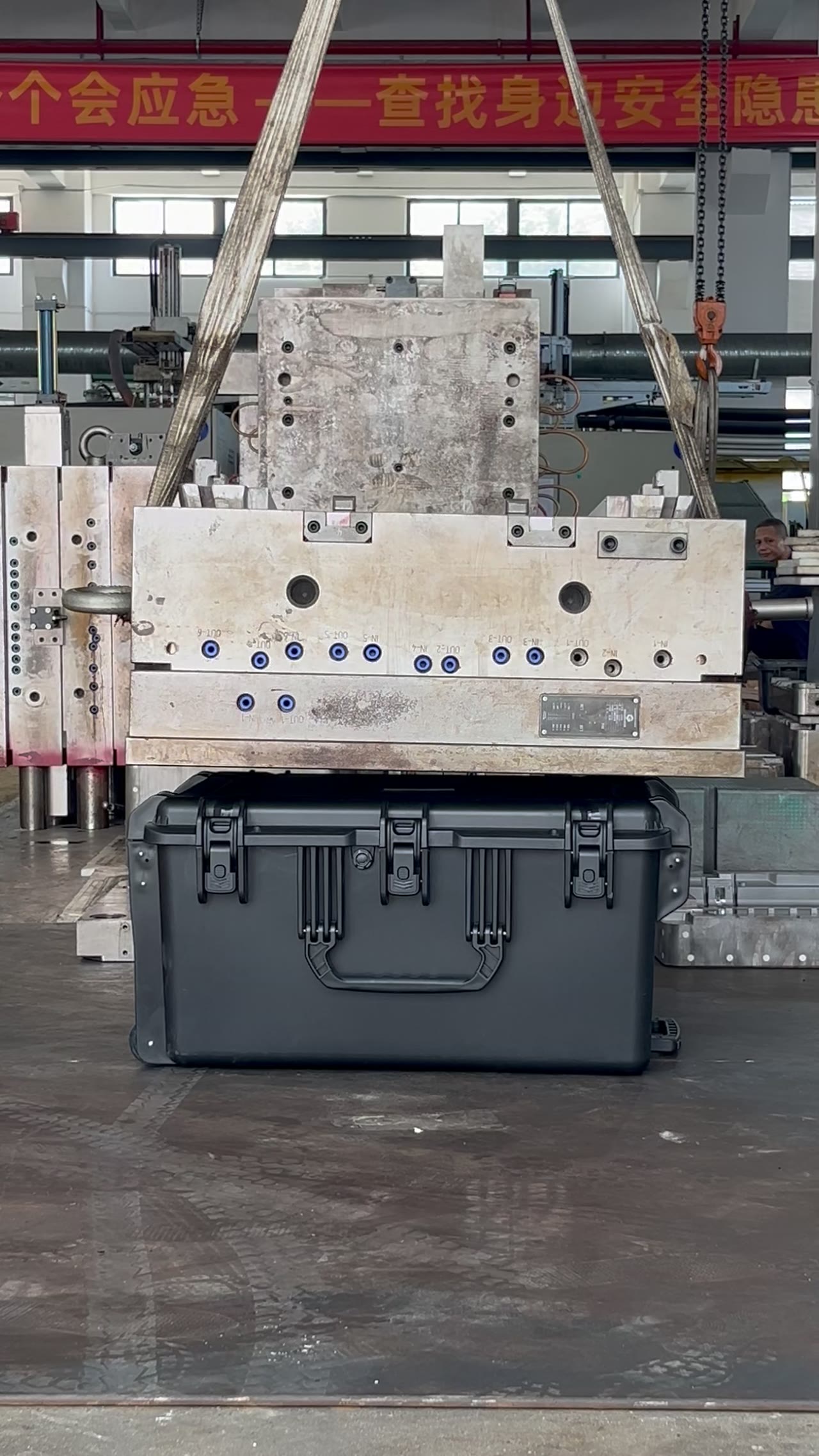
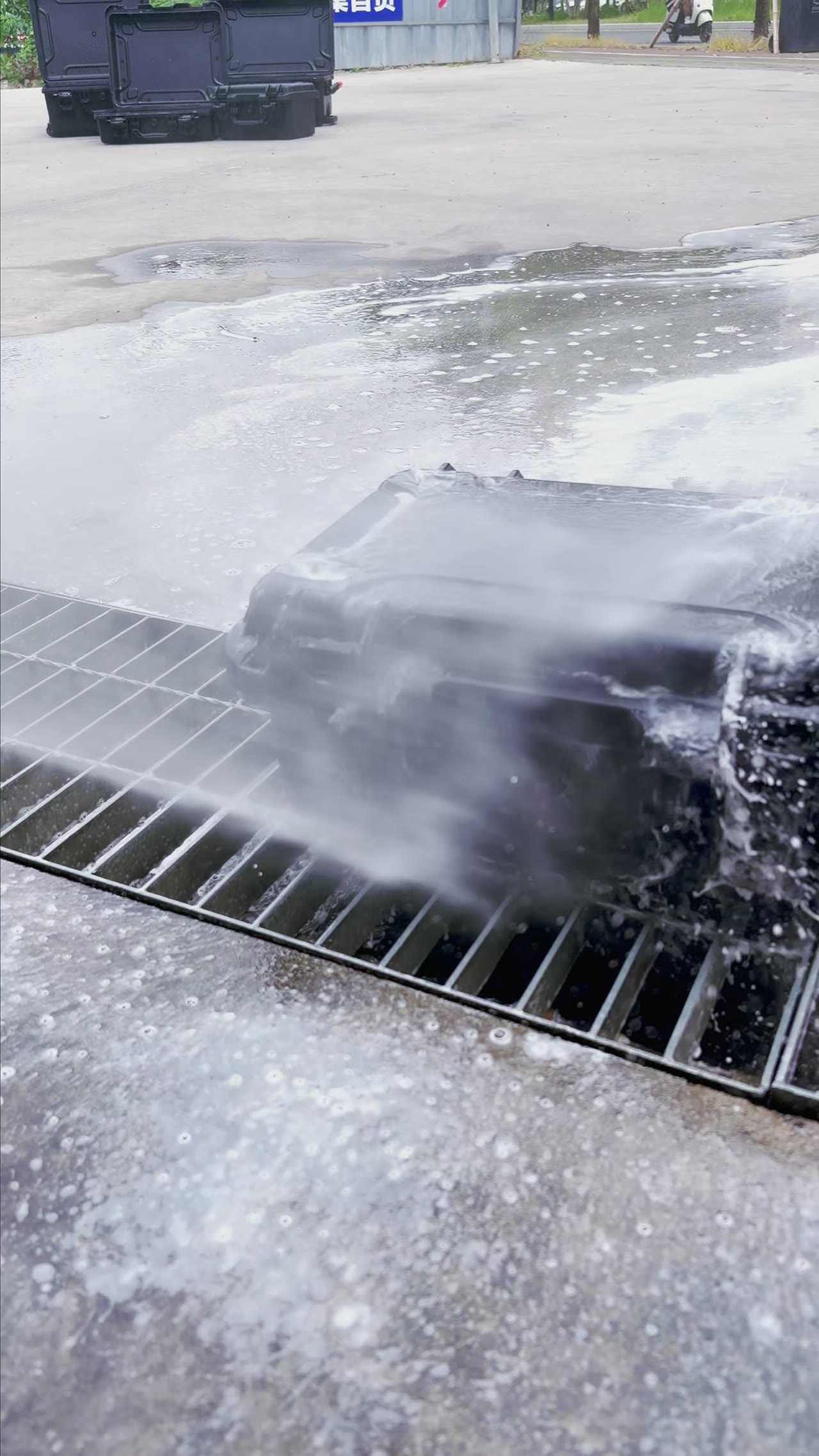
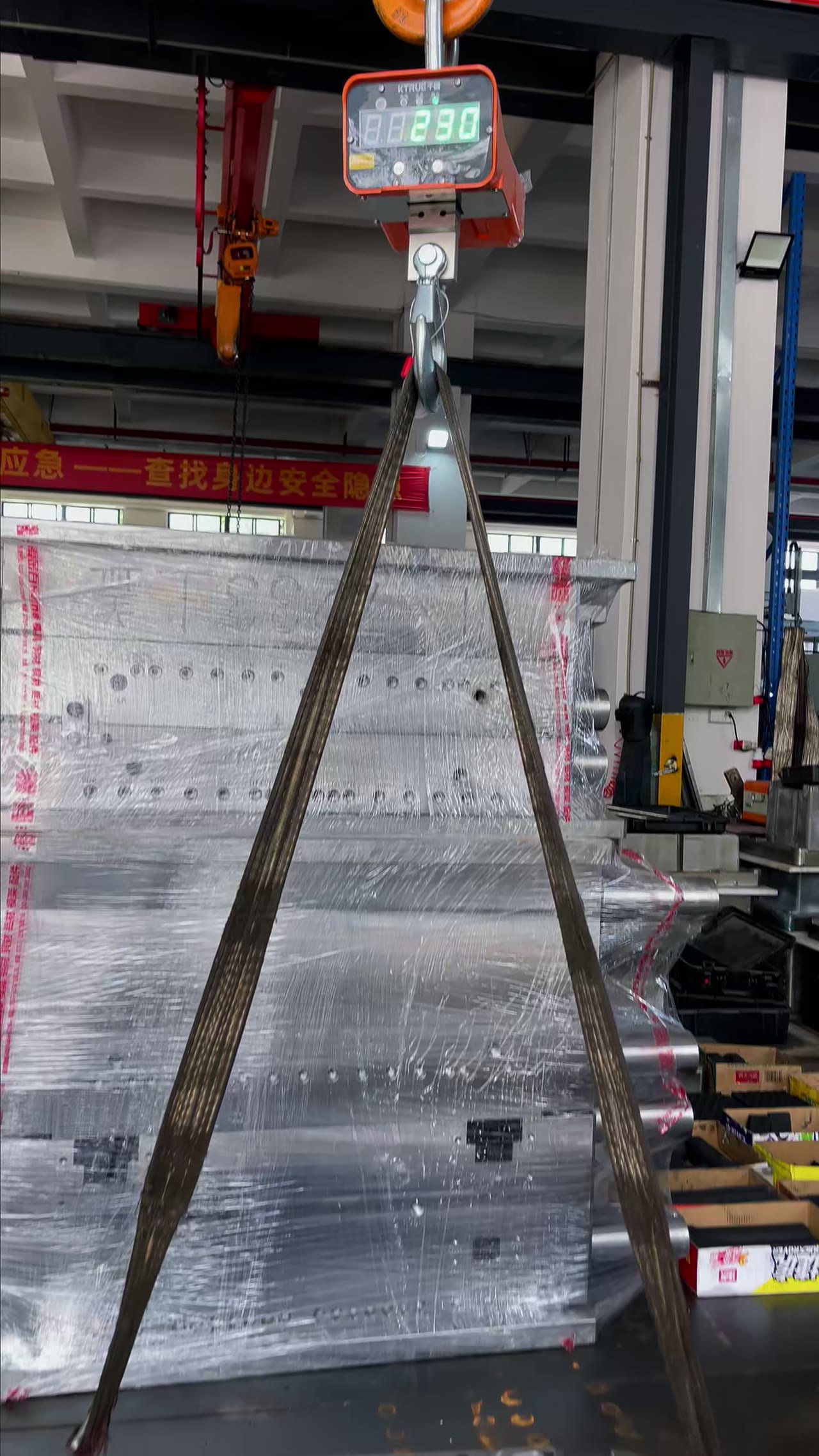
2208 kg Load Challenge: What Was Recorded
The second the ram lands is the good footage: the lid dips, the frame steadies, the number climbs. What decides whether the case still has a working life is the small amount that stays behind once the load is gone. Two cases in the same batch can peak within a fraction of a millimetre of each other and still differ threefold in what they keep, and a third difference shows up when you press them again. This page follows the case after release: how much came back, how much stayed, and how much returns by the next morning.
01Split the peak reading in two: springback and what remains
Load to 2208 kg, note the ram position at full travel, release, wait 60 seconds, note it again. The difference is rebound; the ratio is elastic recovery. Across this batch recovery ran 60% to 90%, which says most of the peak movement was elastic and the material was still walking back when the ram stopped.
The other 10% to 40% is residual set, measured at 0.5 mm to 3 mm. A peak reading answers how far the lid went. A residual reading answers whether the case is still the case. Footage favours the peak because the peak has motion; the number that decides usability usually lives only on the record sheet.
02Between 2 mm and 5 mm sits the line between service and scrap
The permanent deformation threshold runs 2 mm to 5 mm. Under 2 mm the lid still presses the gasket to its design compression and the latches need no extra force. Past 5 mm the lid starts to shift, the gasket is crushed on one side and floating on the other, and clamping harder makes the leak worse rather than better.
You do not need instruments to check this. Lay a straight edge across the lid, try a feeler gauge in the widest gap. At 2 mm you are at the limit, at 5 mm you stop using it. Measure three spots, both ends and beside a latch seat, and take the largest, not the average. Averaging hides the worst point, which is the only one that matters.
03Hold longer and the part that stays keeps growing
Hold time runs 300 seconds to 1800 seconds, and the reading is taken at the end of the hold. Between those two durations the same 2208 kg buys another 0.4 mm or more, and that extra does not come back on release. Longer holds push the peak figure closer to real long-term behaviour instead of a one-off strength score.
Creep rate sits at 0.1 mm/h to 0.5 mm/h. Small per hour, large per night: at 0.5 mm/h an eight hour hold adds 4 mm. Plot end-of-hold displacement against time. If the slope is still climbing, the case has not reached steady state and the figure is a process value, not a result.
04Recovery over 24 hours separates viscoelastic from plastic
Recovery at 24 hours runs 40% to 80%. Recover most of it and the deformation was largely viscoelastic, the material was pushed slowly rather than rearranged. Recover little and plastic flow has occurred, chains have slid and will not slide back. Take three readings at the same point: 60 seconds, 2 h, 24 h.
Steep then flat is normal. Flat then still creeping means the observation window is too short and should stretch to 72 h, because the slow tail is exactly what the 24 hour point is meant to expose. A case that recovers under 40% gets treated as plastically deformed regardless of how good the peak looked. Saying it springs back does not restore the dimension.
05Press it a second time and watch the slope drop
Second-load stiffness loss falls between 2% and 8%. Load, release, let it sit, load again, then divide the load increment by the displacement increment over the same interval. A lower second slope means the section has yielded locally and now needs more travel to carry the same load. The first curve describes a structure; the second describes what survived it.
Two to four percent usually means contact surfaces have bedded in and the plate sits flatter against the lid. Past 8%, go looking: whitening at a rib root is stress concentration, a bulged panel is general yielding, wrinkling near a latch seat is local buckling. Inspect right after the second load, while the case is still warm. Some marks fade once it cools.
| Total applied load | 2208 kg |
|---|---|
| Residual set | 0.5–3 mm |
| Elastic recovery | 60%–90% |
| Soak time under load | 300–1800 seconds |
| Creep rate | 0.1–0.5 mm/h |
| Permanent deformation threshold | 2–5 mm |
| Recovery after unloading | 40%–80% |
| Second-load stiffness loss | 2%–8% |
FAQ
Is 2208 kg the load limit of this case?
No. It is the total applied in one run, and the readings move with hold time and with how long you watch after release. A limit has to be established on fixed tooling with a fixed hold. The clip shows a procedure; the verdict sits in the formal record.
Why wait 24 hours after loading?
Because rebound does not finish in a minute. The 60 second reading captures one segment; recovery continues between 2 h and 24 h. Reading only the early point files viscoelastic recovery as permanent set and condemns a sound case. Three points make the separation visible.
How much residual set is too much?
It depends on the job. Under 2 mm the lid usually still seals. Between 2 mm and 5 mm you are in a grey zone that needs a feeler gauge and a lid-shift check. Past 5 mm, retire it. The threshold is a band because the same number means different things on different sizes.
What does a second load reveal?
The first load beds the structure in. If the second curve is clearly shallower, that section is no longer working elastically and needs more travel for the same load. Two to four percent is contact bedding; past 8%, open it up and inspect rib roots and panels.