

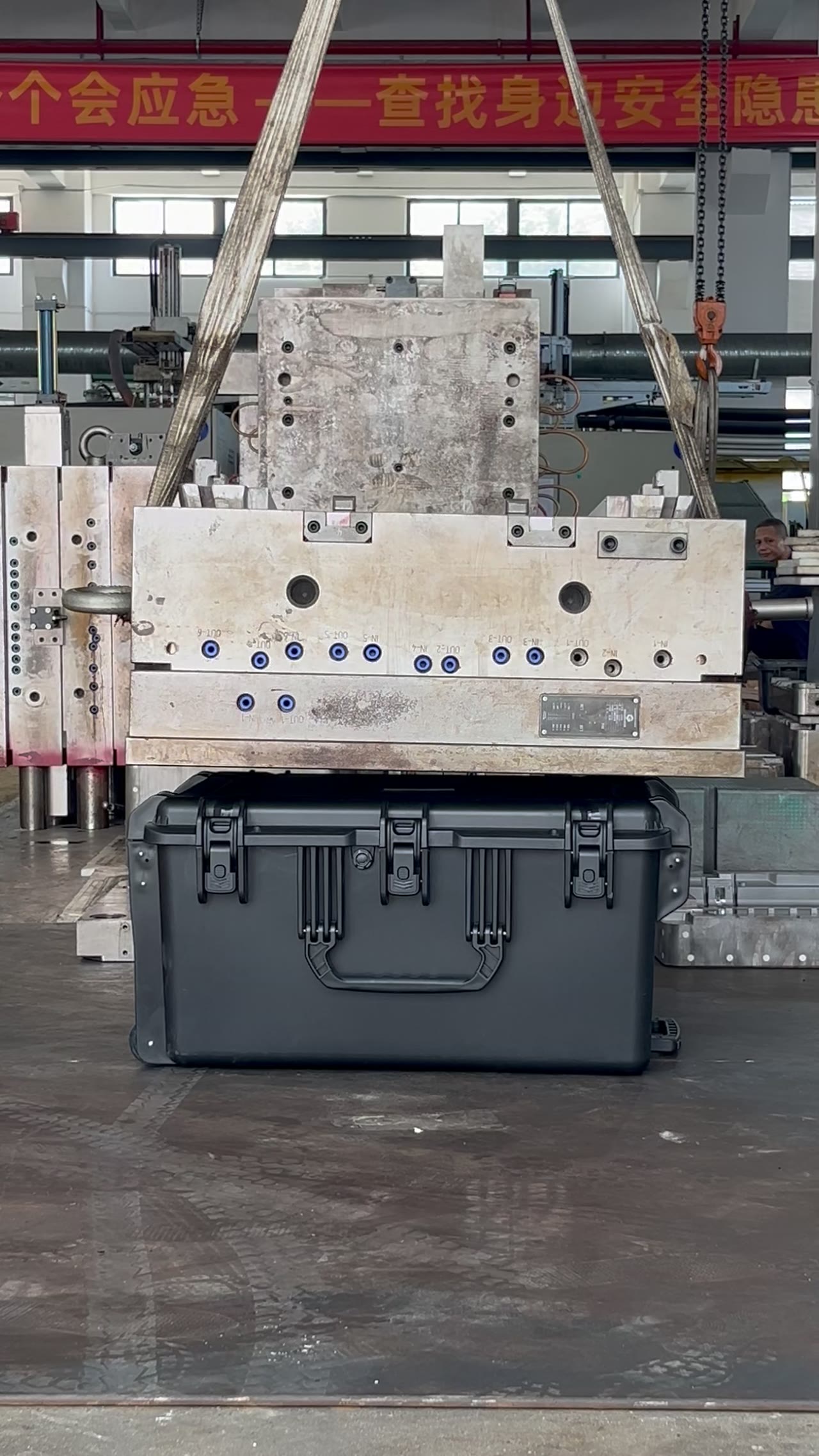
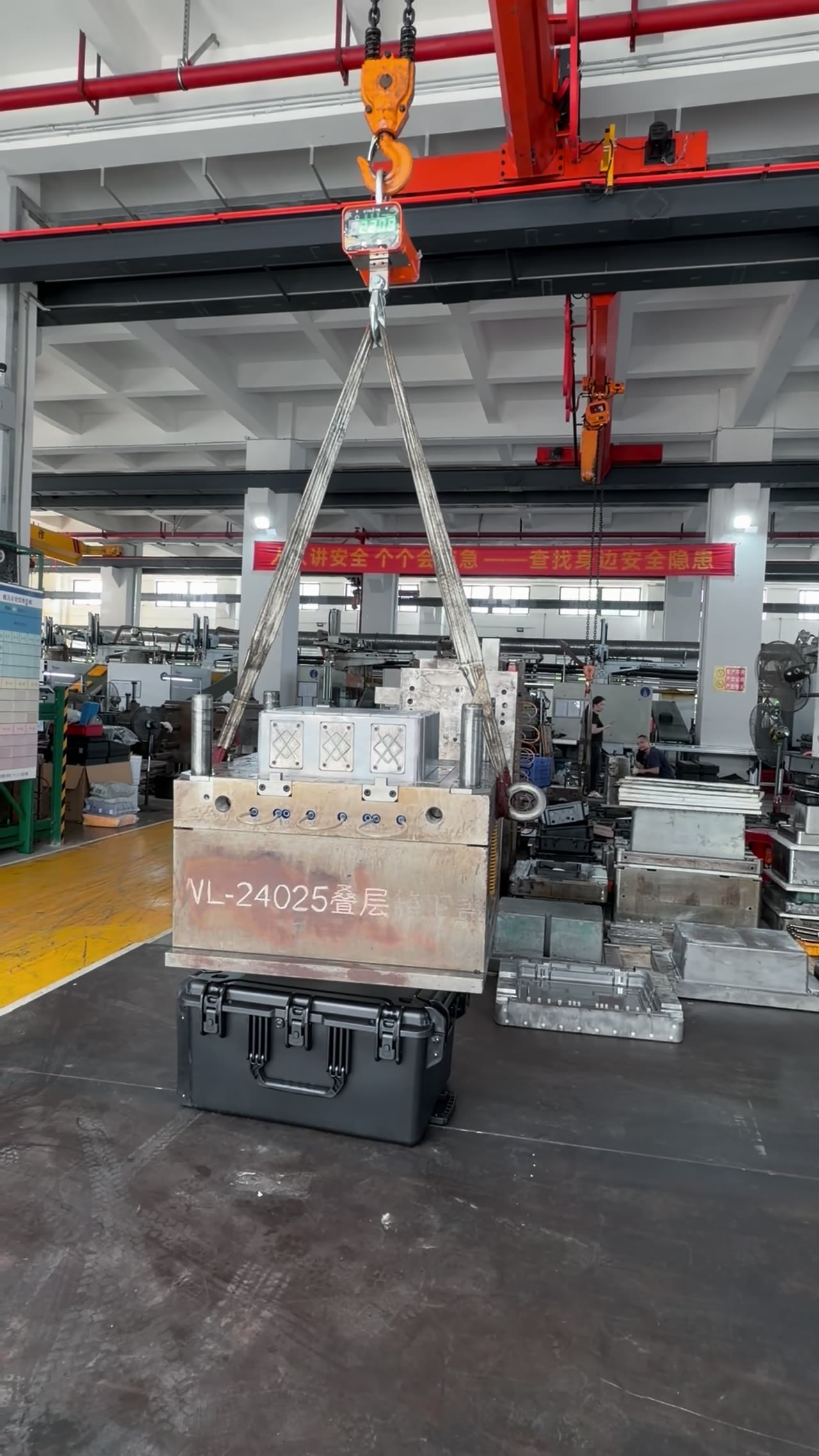

8 Series Load Challenge: Three Sizes Compared
Three sizes from the 8 series, one rig, one indenter, one load step. The eye goes to the biggest case because it moves the most, and that reading means almost nothing until the support span is written beside it. Spans in this group run from 480 mm to 1180 mm, so a good share of the gap between the numbers is geometry rather than weakness. Divide deflection by span and the ranking rearranges itself. What follows is how to do that division, and what to ignore once it is done.
01One Reading Cannot Travel Between Sizes
Ask what the span was before asking what the dial said. Supports 480 mm apart put far less bending moment at mid-span than supports 1180 mm apart, roughly in proportion to the distance itself, so a panel of identical thickness and identical resin will sag less for reasons that have nothing to do with how well it was designed. Two cases a factor of two apart in span are not comparable, however neatly they sit side by side in frame.
Under one load step these three cases separated by 35% to 60% in deflection. The spread is real, but it measures the rig as much as the product. A photograph of a dial is not a comparison until the geometry sits on the same page as the number. Put the span in the corner of the frame and the reading starts to mean something; leave it out and the clip is a process record, not a result.
02Divide, and the Order Changes
Normalised deflection is sag divided by span, read as a percentage. Across these three cases it landed between 0.2% and 1.2%. A 12 mm sag over 1180 mm works out near 1.0%; a 5 mm sag over 480 mm works out near 1.04%. Identical in engineering terms, more than twice apart on screen, and the smaller case looks far better until somebody does the arithmetic.
Then allow for repeatability. Readings hold to roughly 0.1 mm, and on a short span that absolute error is divided by a smaller number, so cases sitting near 0.2% should not be ranked against each other. A working line at 0.8% is more honest: above it, investigate; below it, keep watching. Ranking below the noise floor only invites thickening a wall that was never the problem.
03Long Side, Short Side, Two Different Tests
Rectangular cases here run 1.3 to 1.8 times longer than they are wide. Support the long edges and the span is large, with 6 mm to 14 mm of sag being ordinary. Move the supports to the short edges and the same moulding gives 2 mm to 6 mm. Nothing in the tool changed between those two runs; only the direction of the test did.
Service load is rarely one-directional, which is why both runs belong in the record. A stack presses down through the lid along the long direction, while a strap or a tight shelf pushes across the short one. Keep both numbers in one row, labelled by direction, so nobody later mistakes one for the other. Reporting the friendlier direction alone is reporting half a test, and the half that flatters.
04Pulling Supports Inward Borrows From the Ends
Sliding the supports toward the middle is tempting because the mid-span number drops at once. What it buys is paid at the ends, where the lid overhangs and droops instead. Take a span from 1180 mm down to 900 mm and mid-span sag falls by about a third while the overhanging ends pick up 2 mm to 4 mm of curl. Total distortion may not improve at all.
The bill arrives at assembly, where lid and body no longer meet cleanly and the latches need force. Fix the supports where the case is actually carried, not where the fixture is convenient: truck floor, shelf beam, whatever face it stacks on. A rig sitting further inboard than real service will always read optimistic, and the droop it hides simply moves to the ends where nobody is measuring.
05Ribs Only Count Between the Supports
Four to eight ribs across a lid is a common count, and the count on its own says little. A rib near mid-span raises section modulus where bending peaks, which is where it earns its material. A rib sitting over a support adds mass and a sink mark and changes almost nothing, because moment there is close to zero. Position beats quantity every time.
Ribs also cost something on the far face. Each one pulls a shrink mark into the sealing land, so the gasket compresses unevenly; pack them close and the flow fronts merge, leaving weld lines at the rib root. Eight ribs is not evidence of strength. Measure the span, divide the sag, then check whether the rib ends land on the line between supports.
| Support span range | 480–1180 mm |
|---|---|
| Long-to-short side ratio | 1.3–1.8× |
| Normalised deflection | 0.2%–1.2% |
| Cases compared | 3 |
| Sag difference across three sizes | 35%–60% |
| Deflection, short-span side | 2–6 mm |
| Deflection, long-span side | 6–14 mm |
| Lid ribs | 4–8 |
FAQ
The biggest case reads worst. Is it the weakest?
Not necessarily. The reading follows the span, and 1180 mm puts far more moment at mid-span than 480 mm does. Divide sag by span and all three usually land inside 0.2% to 1.2%. Get the span first, then the wall thickness, and only then look at the dial.
What normalised deflection passes?
These runs sat between 0.2% and 1.2%, and 0.8% works as an inspection line: below it, keep using the case; above it, check support position and rib layout before adding wall. That band is experience, not a load rating, which the batch record settles.
Why only 2 mm to 6 mm on the short side?
Moment scales with span, so shortening the span to about six tenths cuts moment by the same share, and the closer supports help again. The short direction is not stronger material, it is cheaper geometry. Test both directions or the result flatters the case.
Can the supports be moved inward a little?
The mid-span number improves and the ends pay for it. Overhanging lid droops, and the lid-to-body joint drifts out of line. From 1180 mm to 900 mm, mid-span falls a third while the ends add 2 mm to 4 mm. Set the supports where the case is really carried.