

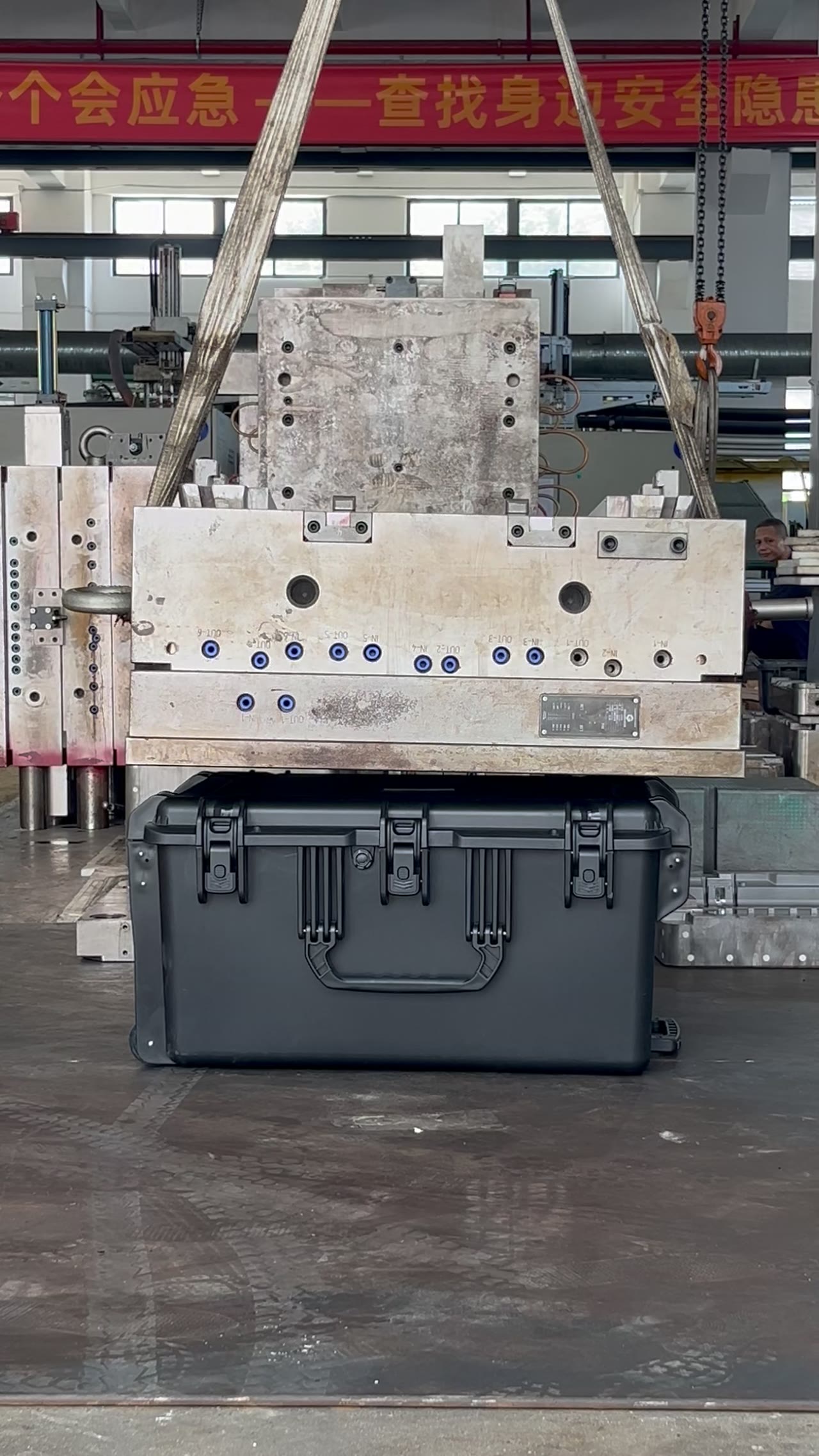
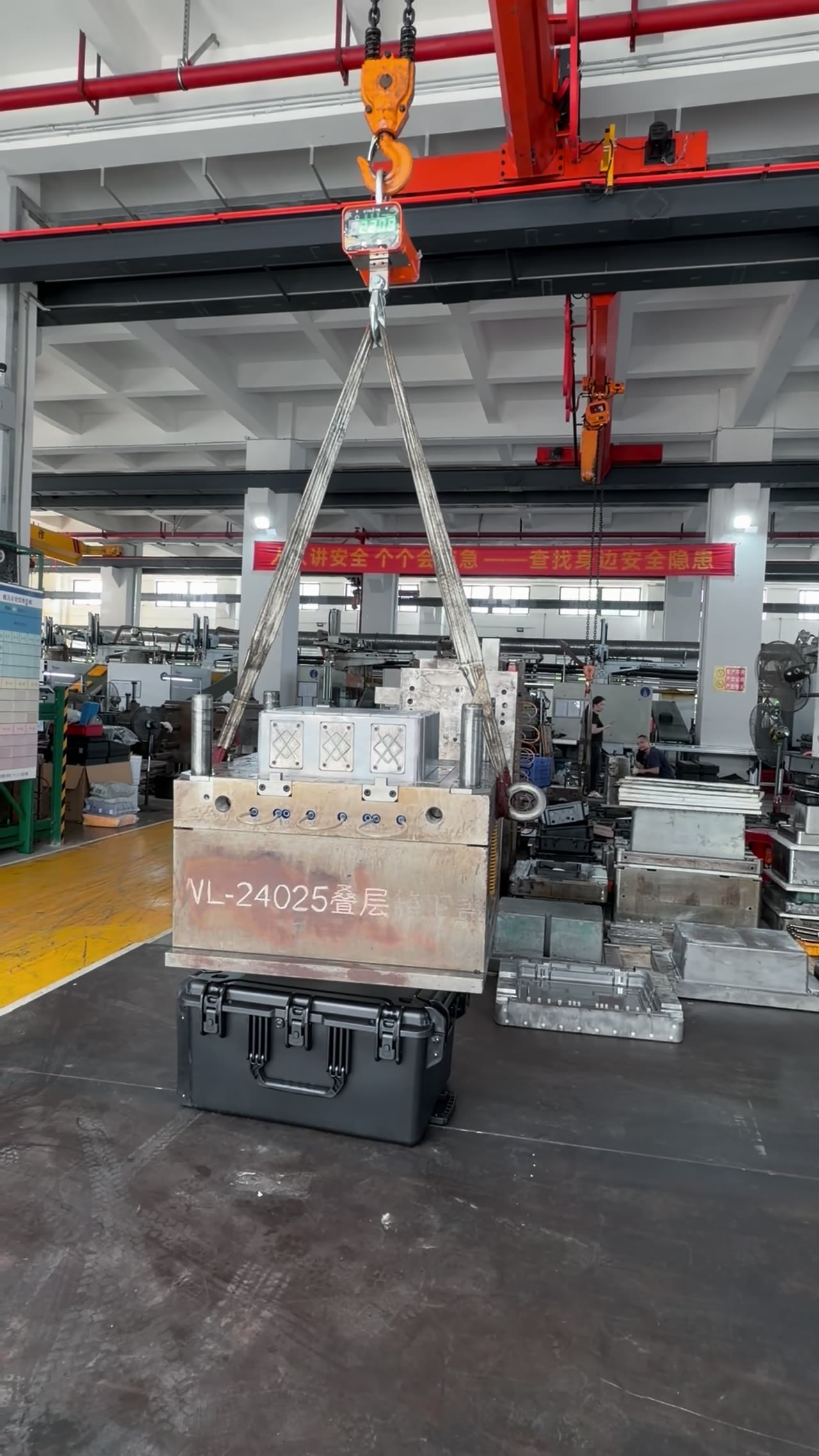
3422A Water Test: Model Specific
On this model the seal is not one line under even pressure. It runs the full lip — somewhere between 1200 and 2600 mm of perimeter — and gets interrupted twice at the hinge pins and again beside each of the 2–4 latch seats. Count those breaks and the loop becomes four segments. Their compression differs, and the case is only as watertight as the weakest one, which carries 40–65% of the leak risk. What follows walks the line segment by segment.
01Count the segments before arguing about leaks
Pull the gasket off and lay it flat and you see one continuous profile. Fit it back and the picture changes: the profile is cut or diverted at two hinge penetrations, and its direction of compression shifts beside each of the 2–4 latch seats. Use those interruptions as boundaries and the loop divides into four, regardless of lip size.
Averaging compression around the whole loop hides precisely what matters. The longest run between two latch seats has no extra clamping point along its middle, so the gasket's own rebound is the only thing holding it into the groove. Nobody checks that stretch, because it looks like the simplest part of the geometry. It is the first candidate for weakest segment.
02A 6–12 mm profile in a 5–10 mm groove: compression is arithmetic
The calculation is plain. Take free section height, subtract the height left after the lid closes, divide by free height. With profiles of 6–12 mm sitting in grooves 5–10 mm wide, resulting compression lands in a 20–35% band. Adding another latch does not move that figure much; groove depth and profile height set it.
Groove width decides where the material bulges. Too narrow and the profile is squeezed out to sit on the groove edge as a hard line, which opens a gap instead of closing one. Too wide and the profile wanders sideways, drifting off centre at corners. Either way the symptom is identical: no rebound left when the lid lifts.
03Why the four segments do not compress alike
At a corner the inner face is in compression and the outer in tension, so real compression reads lower than on a straight run. At a hinge penetration the profile is cut or diverted and the section weakened, so clamping force does not carry across. Beside a latch seat sits a local hard point, clamped hardest, with a transition band on either side.
That is why one reading taken mid-run tells you very little. Sample across the transition bands and you can watch compression begin to fall away. Log the two ends and the middle of each segment separately; when the three points disagree by more than five points of compression, that segment joins the shortlist. The stretch where it drops fastest is the one worth watching from then on.
04The weakest segment carries 40–65% of the risk
Plot all four segments together and a familiar shape appears: three sit in the upper part of the band, one drops below its lower edge. The loop average still looks respectable. Water does not read averages. The most leak-prone segment accounts for 40–65% of the leak opportunity, which locates the problem in the extreme rather than the spread.
Two places produce that extreme. The lower run beside a hinge penetration, where the section is thinned. And the middle of the longest span between latch seats, where nothing else clamps. Finding either one beats thickening the entire gasket: extra thickness squeezes the three healthy segments harder, nudges the weak one up a fraction, and makes every latch stiff to close.
05Measure four segments, trust only the worst
The recheck has three fixed moves: record free height, record the height left after closing, write both onto a sketch of the lip. Keep the gauge on the gasket centreline, never on the groove edge; take three points per segment and keep the smallest. Four segments, four sets of numbers, one verdict.
The rule is equally fixed: if any single segment falls outside the band, the case does not pass this round, however good the other three look. Footage documents the closing and the wet run. Release depends on the formal record — segment heights, which segment the moisture started from, how many rechecks. A video is not a protection rating.
| Seal perimeter | 1200–2600 mm along the lip |
|---|---|
| Gasket section height | 6–12 mm free state |
| Compression range | 20–35% |
| Groove width | 5–10 mm |
| Latch count | 2–4 |
| Hinge penetrations | 2 places |
| Seal path segments | 4 |
| Weakest-segment share | 40–65% of leak risk |
FAQ
How are the four segments counted?
By where the gasket is cut or diverted: two hinge penetrations plus the change of direction beside each latch seat. Structure sets the number; lip size does not.
Is 20–35% a design figure or a measured one?
Measured, from free height against the height left after closing, segment by segment. Not every point along the run lands inside that band — the differences between segments are real.
Can the weak segment be fixed by a thicker gasket?
A thicker profile changes how much of the groove it fills, and may push it out of the groove or make the latches hard to close. Adjusting groove width, or reshaping the transition at the penetration, is more reliable.
The video never shows the lid opened — how do I judge?
Leak or no leak belongs to the formal record: four segment heights, which segment the moisture came from, how many rechecks. Those few seconds of closing tell you nothing about how far the gasket was compressed.