

Medical Device Case: Transport and Access
Four moves define this case: off the vehicle, onto the floor, up onto a bench, lid open. The clip removes the waiting and the handovers, so it reads as one smooth motion by one person. What it hides is whether the lid stays where you put it, how much bench the open case consumes, and how many seconds the straps cost before the device is in hand. Those three decide whether the run can be done alone. Miss any one of them and the whole run becomes a two-person job.
01Four Stages: Vehicle, Floor, Bench, Hand
Transport breaks into four stages: handover at the vehicle, a temporary set-down, the lift onto a bench, and the lid coming up. Each stage needs a stable surface; the case should never be in the air between two of them. At the vehicle it rests on the floor or the tailgate, because cradling it while you swap grip is where drops happen. The floor spot must be level, since 5 degrees of slope starts it sliding.
The bench stage is the one people underestimate. Once the case is up there, the lid sweep counts too: open, it occupies 0.45 m² to 0.6 m², and a treatment trolley often has half its top left. Under 400 mm of depth, open the case lower down. Any stage needing a second pair of hands means the layout is wrong.
02Carry the Case, Not the Device: Handle Within 120 mm
Keep the handle within 120 mm of the centre of gravity horizontally, and a loaded case will not tip forward. Past that, one-handed carrying adds a wrist torque that a fifteen-kilo case converts into forearm fatigue inside twenty metres. Load the device high or to one side and the centre of gravity shifts, which is why the insert holds it above the lower third of the case, not against the lid.
Here is the trade: the more rigidly the device is fixed, the more work removal becomes; the faster the access, the looser it travels. This class straps the device down for transit and releases at the destination, rather than relying on foam interference. Interference looks neat when static, but after fifty kilometres of vibration the foam compresses, holding force halves, and the device starts walking.
03Lid Angle 95–110°: It Holds Itself, Freeing Your Hands
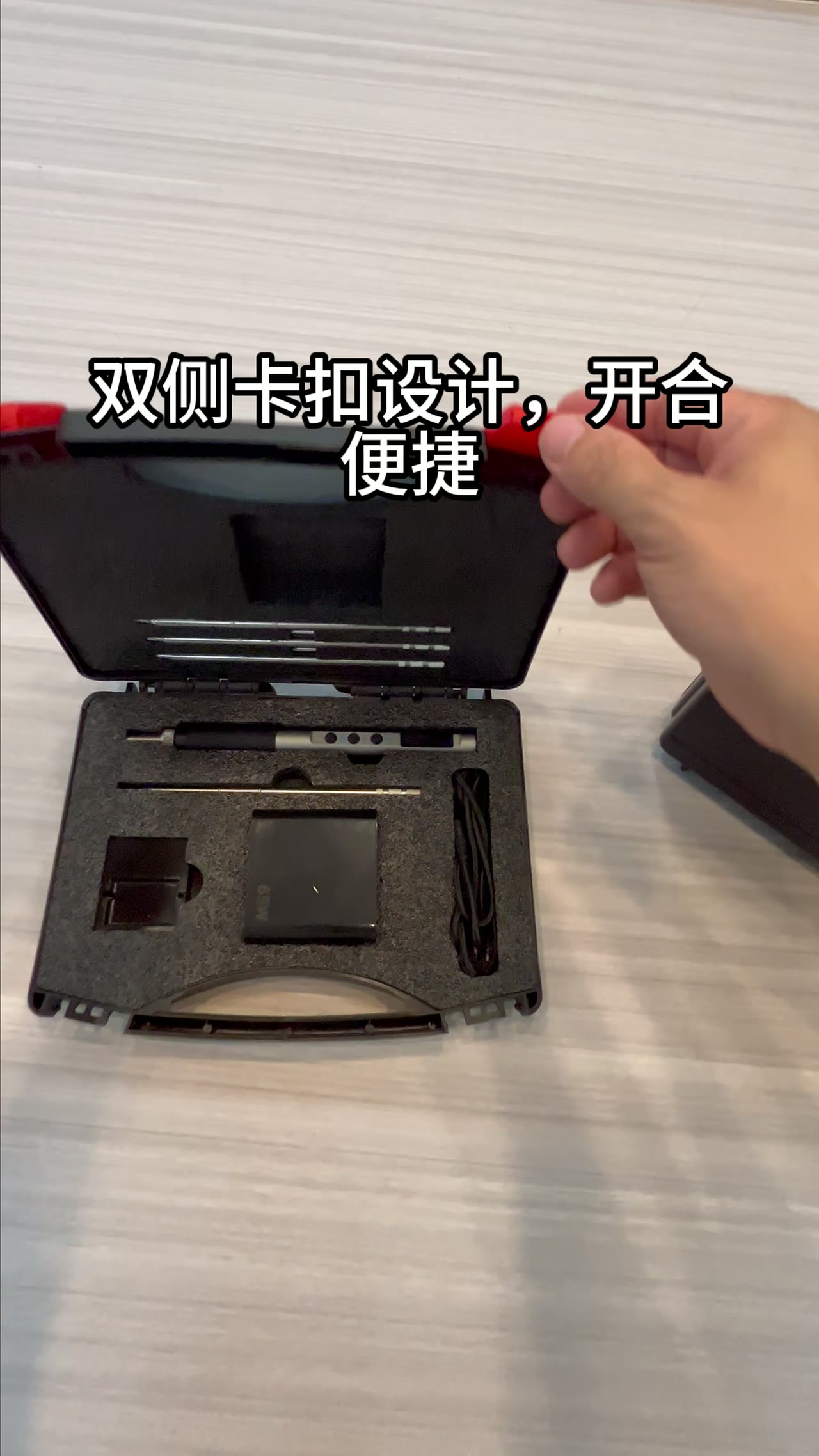
Set the lid to stop between 95 and 110 degrees on hinge friction or a hard stop. Under 95, gravity pulls it back and you end up bracing it with a shoulder. Over 110, the centre of gravity moves behind the case and a narrow bench becomes a tipping hazard. That band is the window where the lid stands alone without dragging the case over.
Use a hard plastic stop, not a foam pad; foam takes a set after a few closures and the angle creeps down. Acceptance runs on a 5 degree slope: the lid must not fall shut and the case must not rock up. Leave 0.3 mm to 0.5 mm of clearance at each hinge side, or repeated opening seizes the hinge and turns a one-hand job into a two-hand one.
04Access in 8–15 Seconds: Two Straps or Four
Lid up to device out, 8 to 15 seconds is what a practised operator achieves. Two straps suit a flat, low-centre device: release both and lift it clear. Four suit a tall load or one with protruding parts, where a missing strap means it leans in transit. More straps is not more safety; four releases cost over 20 seconds, hard to justify at a bedside.
Specify a single-action buckle that opens on one press, not a two-handed ladder lock, because the other hand is holding the lid. Route straps away from control faces and ports; pressed against a button for fifty kilometres, plastic takes a permanent dent. Foam compression should sit at 2 mm to 3 mm, enough to hold and not enough to fight, and past 5 mm the device must be rocked out.
05Stacking and Movement: Three High, 20 mm Obstacles
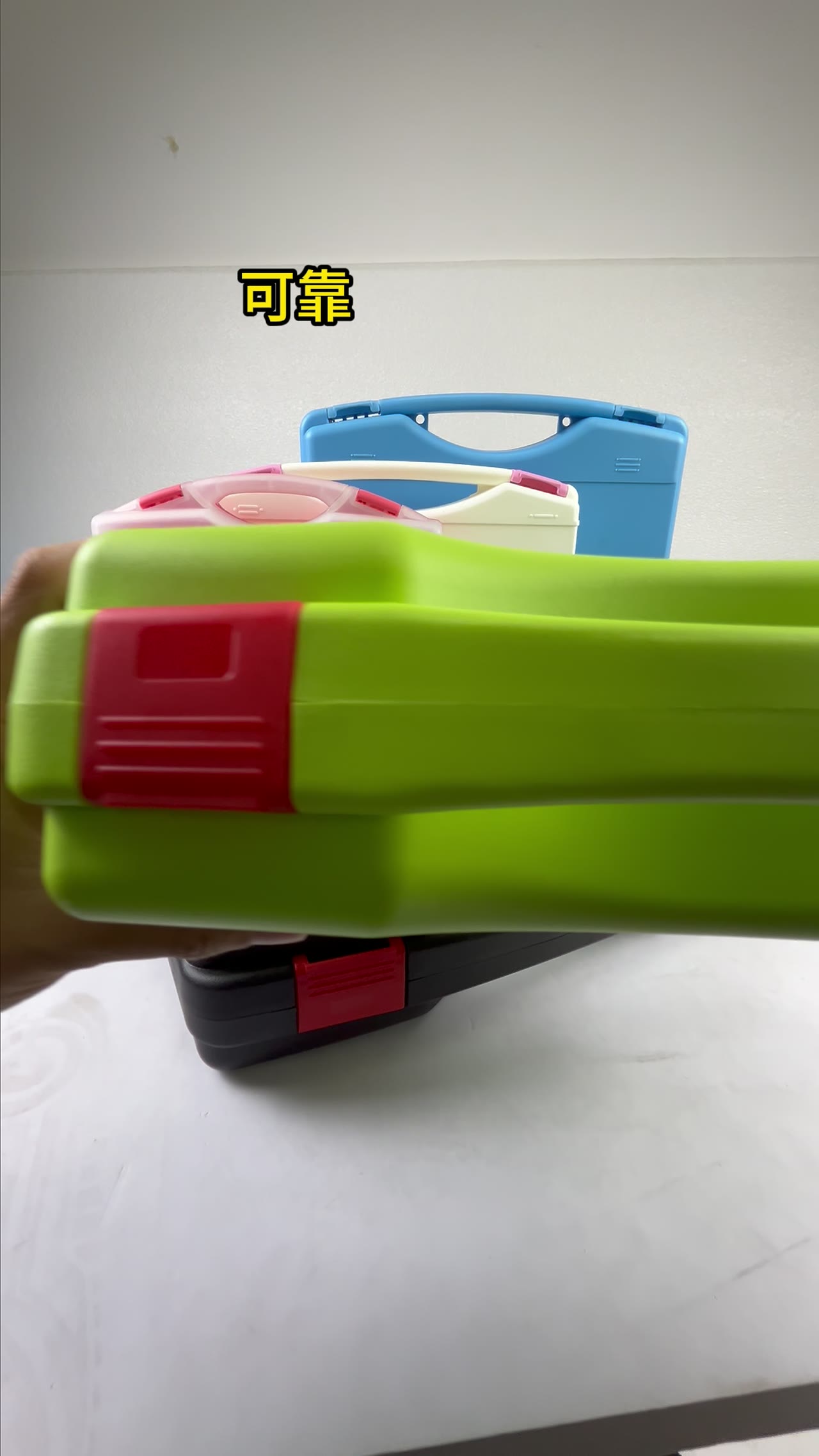
Warehouses stack three high, so the bottom case carries two above it and the lid centre deflects 3 mm to 5 mm; past 8 mm it needs a rib. Door sills, cable ramps and lift thresholds all sit around 20 mm, so the base either gets castors or feet taller than that, or it is carried. The two approaches should not be mixed on one case.
The failure mode is half-carried, half-rolled: two castors at the back, front lifted, and the shell twists at the threshold with the hinge taking the load. Fit four castors or none; two-point support suits flat floors and short runs. For acceptance, drop the case 200 mm onto its corners and check the lid still opens, closes and latches square.
| Lid opening angle | 95–110° |
|---|---|
| Bench area when open | 0.45–0.6 m² |
| Device removal time | 8–15 s |
| Strap points | 2 / 4 |
| Insert compression | 2–3 mm |
| Stacking height | 3 high |
| Threshold clearance | 20 mm |
| Handle to centre of gravity | ≤120 mm |
FAQ
Can one person open and unload this case alone?
Yes, if all four stages work for a single operator: a stable base at each stop, a lid that holds its angle, and single-action straps. With the open case inside 0.45 m² to 0.6 m² and removal at 8 to 15 seconds, one person is enough. Any stage that needs someone to hold something means the bays need rearranging.
Will the lid fall back and catch a hand?
Not if the angle is right. Between 95 and 110 degrees, damping or a hard stop holds it. Below 95 it swings back. Test on a 5 degree slope: lid stays up, case stays flat. A foam pad used as a stop collapses after a few closures, the angle drops, and that is the usual cause of pinched fingers.
Are two straps enough?
It depends on load height. Flat, low-centre devices need two: release both and lift clear. Tall devices or ones with protruding parts need four, or they lean in transit. Four releases take over 20 seconds, so if every access needs all four undone, the answer is a better bay layout, not more straps.
Does the case need extra restraint once loaded?
Yes. A shell rated for three-high stacking and 20 mm thresholds is not rated for emergency braking. Add a cross bar or a strap over the upper shell, and a non-slip mat under the base, so it cannot creep. Friction alone lets a case slide half a metre into the bulkhead in one hard stop.