01The water is pulled in, not pushed
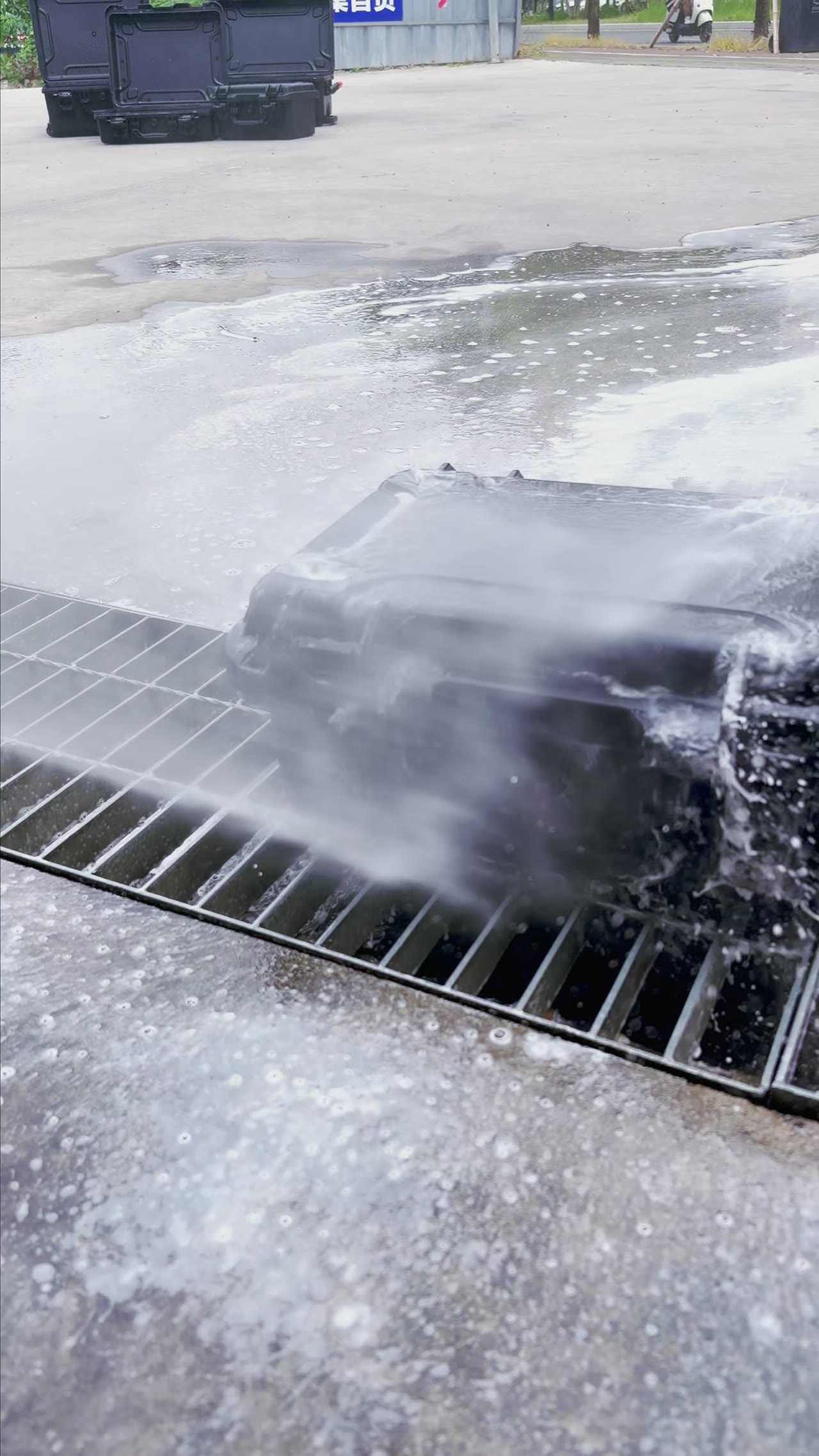
Spray for 180–900 s with water at 5–30 ℃ and the shell is soaked, the outer edge of the gasket carries a film, and nothing has crossed the contact face yet. Wipe the outside dry, open the lid, and the interior is still dry. That result proves one thing only: no jet punched straight through the wall panel.
The informative stretch comes after the spray stops. Put the case somewhere colder than the air inside and that air contracts; a pressure difference appears across the gasket and starts hauling the film inward through the contact line. Spray delivers water to the door. Pressure difference opens it. Extend the spray indefinitely and, with no temperature step, the interior stays dry.
02A 15–45 ℃ drop holds the differential for 600–3600 s
Air volume tracks absolute temperature. Going from 35 ℃ to 10 ℃ means 308 K down to 283 K, about an 8% contraction. Across the 15–45 ℃ band the shrinkage runs roughly 3–15%, and multiplied by internal volume that figure is the amount of air the case must draw back. Whatever it cannot draw becomes negative pressure inside.
The differential is not flat across the 600–3600 s it lasts. Most of the drop happens early, so the peak sits in the first few minutes and then decays as wall temperature equalises. A slow, long cooldown gives a lower peak held for longer, and often moves more water overall than a fast shallow one. Read the whole curve, not the spike.
030.012–0.18 L/h is the reading at the weak spot
Set the case on a scale with enough resolution, log weight continuously, and the slope of that line is the intake rate. Values usually land between 0.012 and 0.18 L/h. It is not a constant: differential pressure, film thickness and how much of the gasket is wet all shift it, and they shift it within a single cycle too.
First and second cycles rarely match. Once the gasket is wet, water spreads more readily through the capillary path between profile and groove, so the same differential pulls more through. That is why one first-round number settles nothing. Watch whether the rate is still climbing at round three or four before calling the seal stable, because that plateau is what a settled seal looks like.
04Compression of 0.6–2.5 mm sets the gap
Closed-lid compression on the seal edge falls between 0.6 and 2.5 mm. At the low end a very narrow gap remains between profile and groove floor, and a differential will walk water along it. At the high end the profile is packed tight, which holds at first but leaves less rebound, and after several cycles the gap comes back.
Breathing loads are slow, which is what makes compression matter. An impact lasts milliseconds and the rubber has no time to move. A cooldown lasting hundreds of seconds gives it time to creep, seat and recover, so compression drifts down a little. That drift is the channel. Measure after every cycle; one reading taken at dispatch proves nothing.
05One to three drain holes, 0.001–0.012 L per cycle
A few drain holes in the base release water that collects in the groove so the next cycle does not start with a puddle. Each hole is also a route, so each needs a one-way membrane. Crack pressure is low and it tracks normal breathing well; under a large differential it cannot stay shut, which is why intake clusters around those spots.
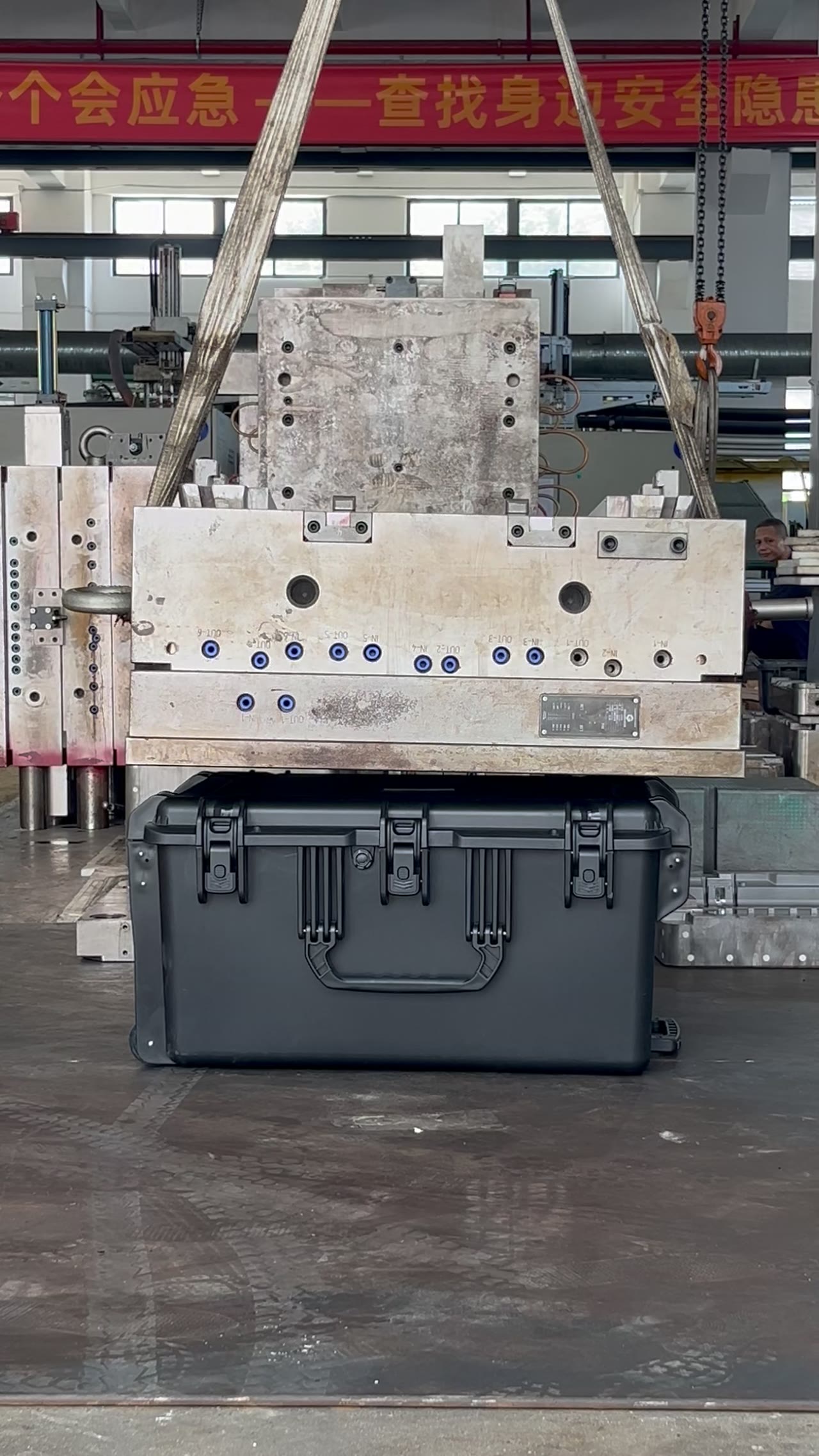
Intake per cycle typically falls between 0.001 and 0.012 L. Three actions settle it: weigh before and after and flag anything above 0.012 L; open the lid and trace where the moisture started; repeat three rounds and see whether the increment converges. The spray footage shows where water landed and says nothing at all about whether it crossed inside.
| Spray duration | 180–900 s |
|---|---|
| Nozzle water temperature | 5–30 ℃ |
| Temperature drop | 15–45 ℃ |
| Cooldown duration | 600–3600 s |
| Intake rate | 0.012–0.18 L/h |
| Intake per cycle | 0.001–0.012 L |
| Drain hole count | 1–3 |
| Seal edge compression | 0.6–2.5 mm |
FAQ
Why is the inside still dry after a long spray?
A spray only delivers water to the outside of the seal. With no temperature step the trapped air does not contract, so nothing pulls the film inward. A dry interior here shows the wall held, not that the seal line works.
Does a bigger temperature drop always mean more water?
A bigger drop gives a higher peak differential, but duration counts too. Falling 40 ℃ in two minutes and falling 20 ℃ over an hour are different events, and the slow one often moves more water. Read both numbers.
Can the drain holes let water in?
They can, which is why each one carries a one-way membrane. When that membrane fails to seat, intake clusters around the hole. Check for moisture beside the hole first, then look at the membrane for deformation.
The clip shows spraying but no temperature step. How do I judge?
The clip documents the wet run only. Entry is decided by the record: weight before and after, where the trace begins, how the increment behaves over three rounds. Video is not a sealing rating.