

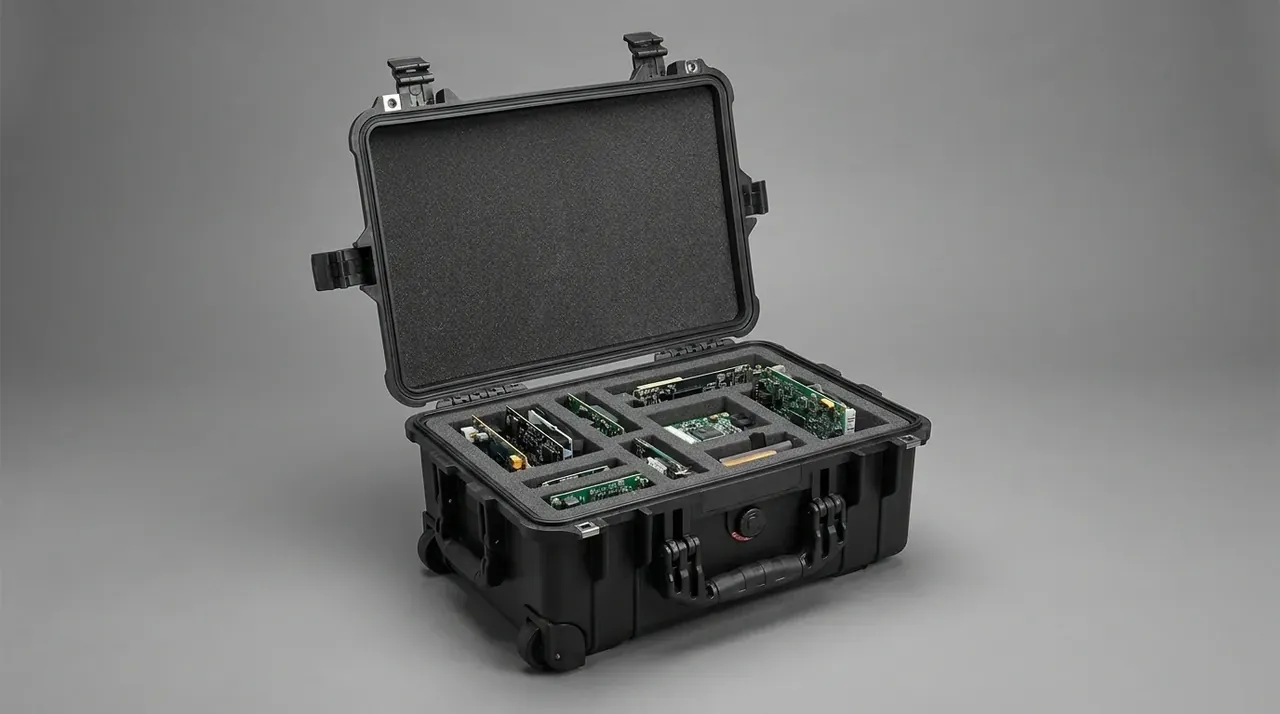
Quick answer: Acceptance standard choice is a ranking call: national, industry, company and customer documents gain force by specificity, and the contract breaks ties.
Table of contents
- Fix the hierarchy before the severity
- What each of the four levels covers
- Where a company standard can be tighter
- Ruling on conflicts: contract, drawing, company standard, national standard
- Revisions and records: a 6-month overlap and 4 copies
- FAQ
1. Fix the hierarchy before the severity
One 800-unit order arrives with three documents: the drawing says 2.8 mm wall, the company standard a 0.99 m drop, the buyer 1.1 m. Whether those units are received or rejected depends on which level governs, not which clause sounds tougher.
Severity is inherited from the level, not negotiated. A national standard decides whether a case may travel at all, a company standard states what the plant promises, and a customer document binds one account, once it sits in the contract annex.
A standard is not better for being strict. It is better for being decidable.
A usable acceptance standard answers three questions: which document the clause comes from, which method proves it, and which sheet records the result. Miss one and acceptance collapses into argument.
| Level | Issued by | Scope | Force | Revision rhythm |
|---|---|---|---|---|
| National | National standards body | Minimum requirement across industries | Cited by regulation or contract | About 5 years |
| Industry | Sector body or association | Packaging for one use category | Named in the contract | 3 to 5 years |
| Company | The manufacturer | Every product the plant makes | Self-declaration and filing | Reviewed every 2 years |
| Customer | The buyer | One account, one project | Contract annex | Follows the project |
Once the levels are clear, disagreement is manageable. Where a national and a company standard differ, the answer is the contract, then the drawing.
2. What each of the four levels covers
A national standard sets the floor. The GB/T 4857 series covers drop, stacking, vibration and low pressure, fixing methods while leaving pass values to the user, so it proves a case can travel, not that it suits a line.
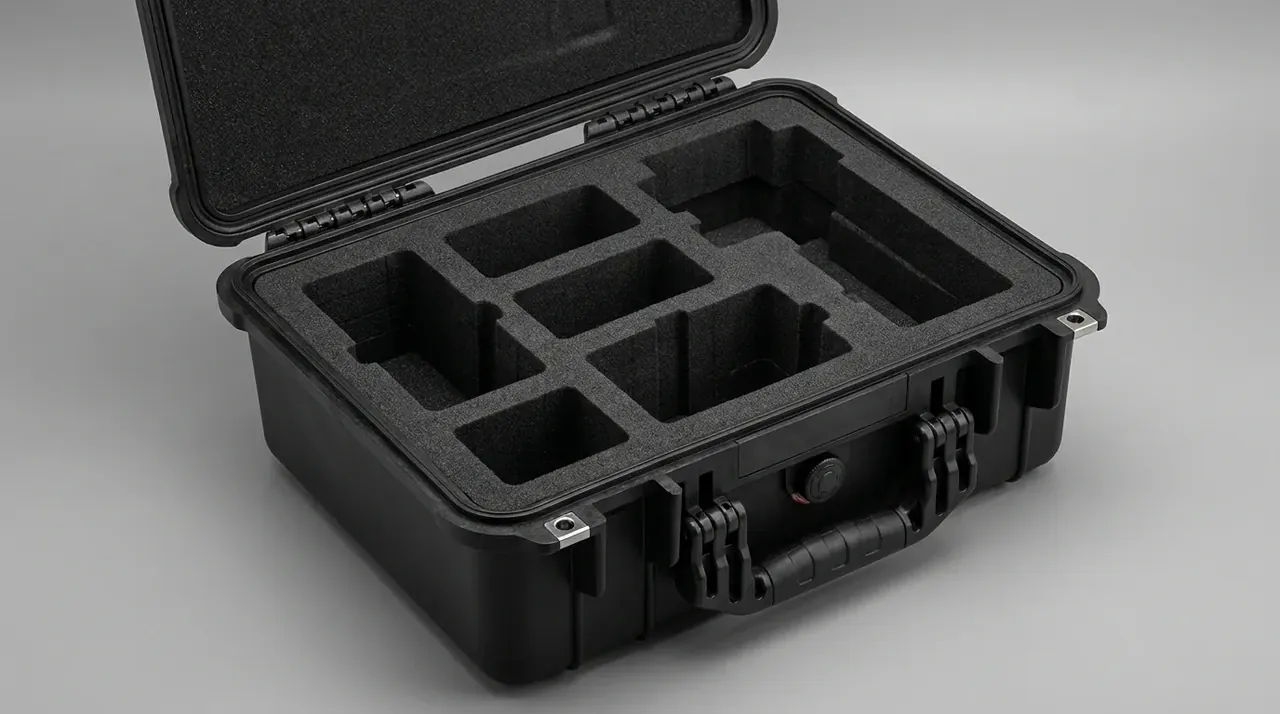
An industry standard sits closer to use. It splits by application and narrows the size series and stacking layers for returnable crates, which suits export work because it assumes repeated trips.
A company standard is bounded by the plant. It can lock all 14 inspection items and bind each to a method and a pass value. The risk runs the same way: a figure the plant cannot hold becomes a batch of rejections once a buyer tests it.
A customer document governs one account, arriving as a purchasing specification or quality annex, short and hard, with no authority over anyone else. Copying it into the company standard ties every line to one buyer.
Order the four by specificity, not by strictness.
3. Where a company standard can be tighter
Being tighter than the national standard is normal, but only in the right places. Drop, stacking and pressure retention matter most, because they map onto transport and storage failures.
Drop height rises from 0.9 m to 0.99 m, a 10% step. That 0.09 m changes the cushioning: at the same foam thickness corner acceleration climbs, and as drop faces grow from 6 to 10, packaging cost rises about 3%.
Stacking time goes from 24 h to 48 h, testing creep rather than strength. A stack of 5 layers held for 3 months cannot be modelled in 24 h; 48 h pulls the slow deformation out of the wall.
Pressure retention tightens from 30 kPa to 20 kPa, measuring the seal margin. A smaller differential is harder to hold, and a case passing 20 kPa is steadier under low-pressure transport and thermal cycling.
Do not raise everything. Lifting appearance, colour and print by 10% adds sorting hours and prevents no failure.
4. Ruling on conflicts: contract, drawing, company standard, national standard
Conflict is normal. The drawing says 2.8 mm, the company standard 3.0 mm, the customer document 3.2 mm, and all three are live, so the first question is whether the contract nominates one.
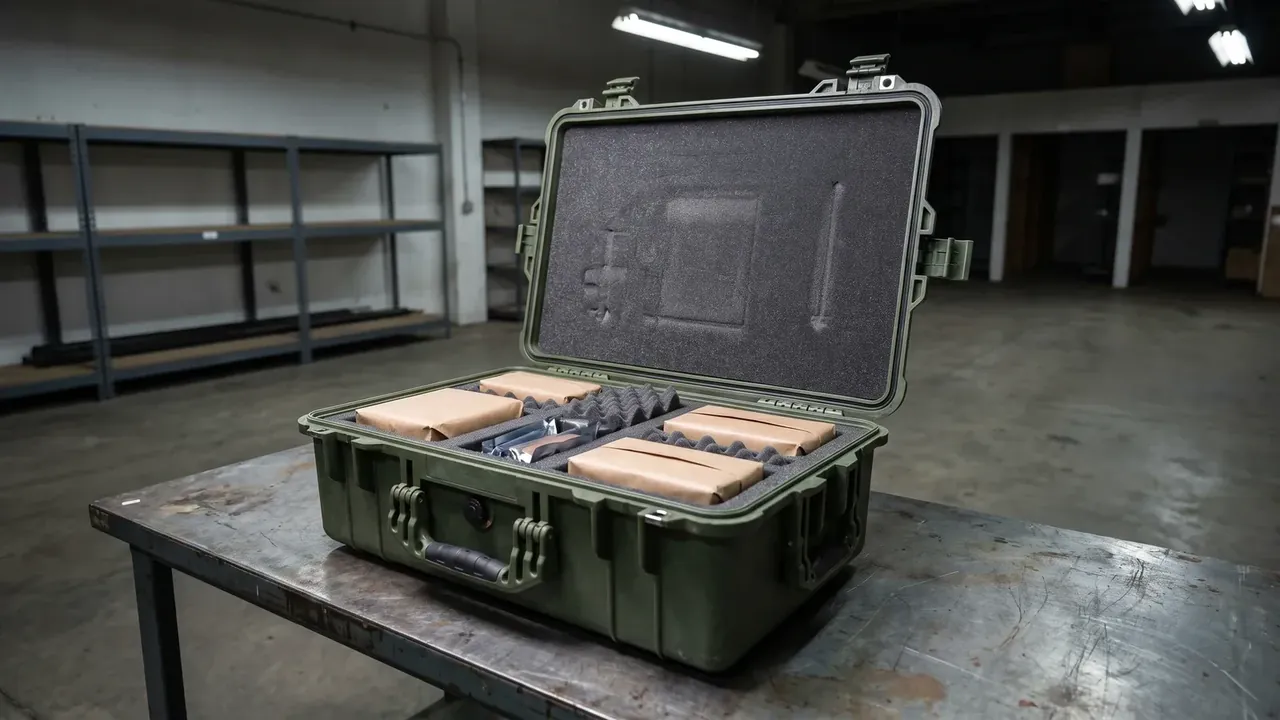
Without a nomination the ruling runs through 4 levels: contract, drawing, company standard, national standard. The contract leads because it records what both sides agreed, the drawing follows for being specific, and the national standard catches what is left.
A customer document outranks the company standard in only 2 situations: it is named as a contract annex, or the destination market regulates packaging above the domestic level. Verbal requests carry no weight.
Put the ruling on one sheet: an acceptance standard list, 1 main page and 3 annex pages, source marked against every item and the ruling beside each conflict. That is the only sheet an inspector opens.
5. Revisions and records: a 6-month overlap and 4 copies
Standards get revised. Filing a company standard takes 5 documents: the text, the drafting note, the test method annex, the judgment table and the filing receipt. Until then, a revision has no force against a buyer.
The overlap runs 6 months. Old orders finish under the old version while new orders start under the new one, and every record must name the version in force, otherwise a rework cannot be traced.
The 14 inspection items split into 3 groups: appearance and marking 5, dimensions and fit 5, performance and sealing 4. The split assigns responsibility: appearance is judged at the bench, dimensions need gauges, sealing needs a test rig.
| Group | Items | Source of the judgment | Who judges |
|---|---|---|---|
| Appearance and marking | 5 | Company annex and colour chip | Incoming inspector |
| Dimensions and fit | 5 | Drawing and gauges | Dimensional inspector |
| Performance and sealing | 4 | Company and national methods | Test laboratory |
Records run in 4 copies: plant self-check, customer receipt, quality archive and settlement. All 4 carry one number, and an incomplete set counts as no record. Keep them 24 months, longer than most claim windows.
Conclusion
Choosing an acceptance standard is a matter of ranking, not of picking the toughest clause. The national standard catches the floor, the company standard states the promise, a customer document moves ahead once it enters the contract, and conflicts resolve through 4 levels. Tighten only drop, stacking and pressure; judge 14 items in 3 groups.
This article covers case-side specifications only and does not address any handling, loading or use of the contents.
Related Reading
- How AQL sampling sets sample size and verdict
- Which quality clauses belong in a case contract
- How SOP and SIP divide the work
- What a factory audit day actually looks at
Related Products
- 8 Series — Gun Cases; Military Equipment Cases; Camera Equipment Cases; Drone Cases; Watch Cases; Knife Cases; First Aid Cases; Electronics Equipment Cases
- WL8-2812 PP Gun Case — model WL8-2812
- All protective cases and toolboxes: 7 series, 158 models