

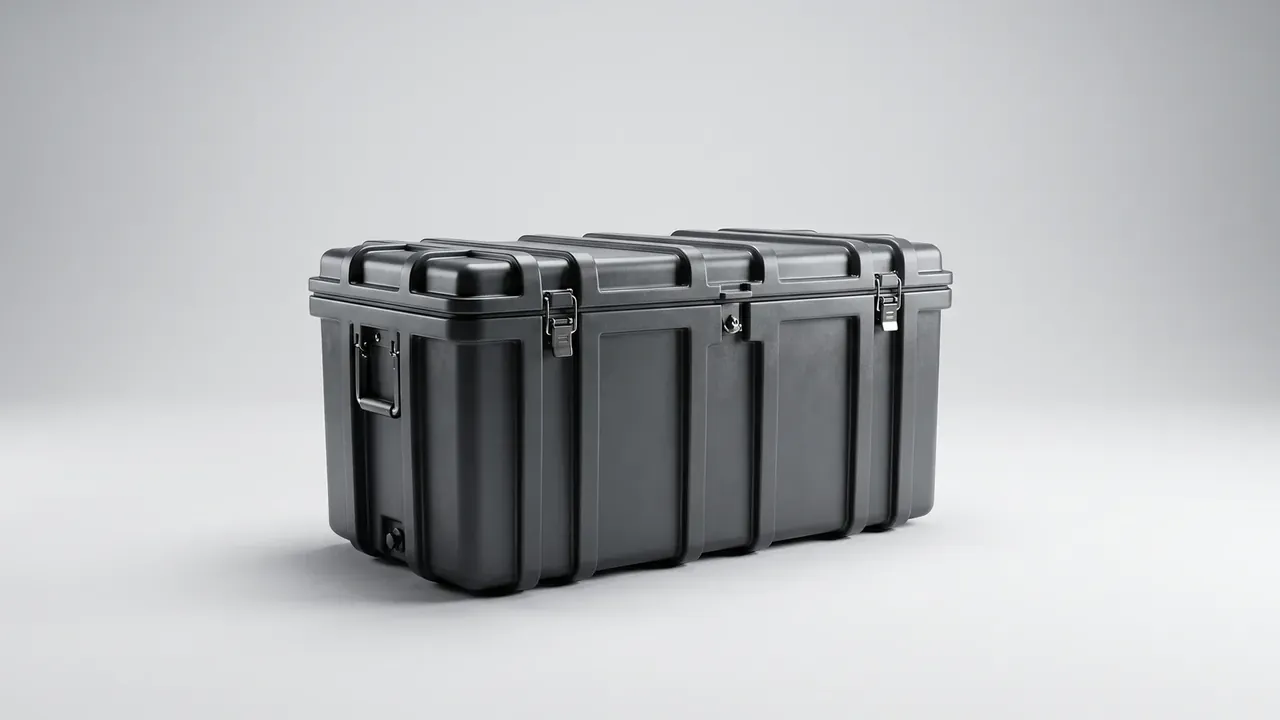
Quick answer: Judge an AED case in this order: interior fit, opening time, sealing and relief, mounting and security, inspection visibility. The first two decide whether it works, the last three whether it can stay on a wall.
Table of contents
- AED Case Interior Fit Against the Device
- Opening and Retrieval Time
- Sealing and Pressure Equalisation
- Mounting, Security and Inspection
- Scoring the Five Criteria
- FAQ
1. AED Case Interior Fit Against the Device
An AED case interior is sized from the device plus clearance, not from outside dimensions. Most biphasic units measure 300×230×90 to 340×280×110 mm, so a 420×320×130 mm interior covers the common models with 30 mm each side.
| Device (mm) | Interior (mm) | Clearance | Insert |
|---|---|---|---|
| 300×230×90 | 360×290×140 | 30 | single cavity, 3 mm pad |
| 340×280×110 | 400×330×160 | 30 | two layers, pads in lid |
| 260×200×80 | 320×260×130 | 30 | two retaining ribs |
Under 25 mm the handle presses into foam and the lid must be forced; past 40 mm the unit slides and shears the walls. Depth is most often missed: 30 mm of foam at ten percent compression leaves about 97 mm usable, plus 25 mm in the lid.
2. Opening and Retrieval Time
Two seconds, one hand, standing to device out, is the pass line. Four latches cost 1.2 seconds more than two, and the handle is rated 25 kg. The hinge stops at 100 degrees so the lid stays put.
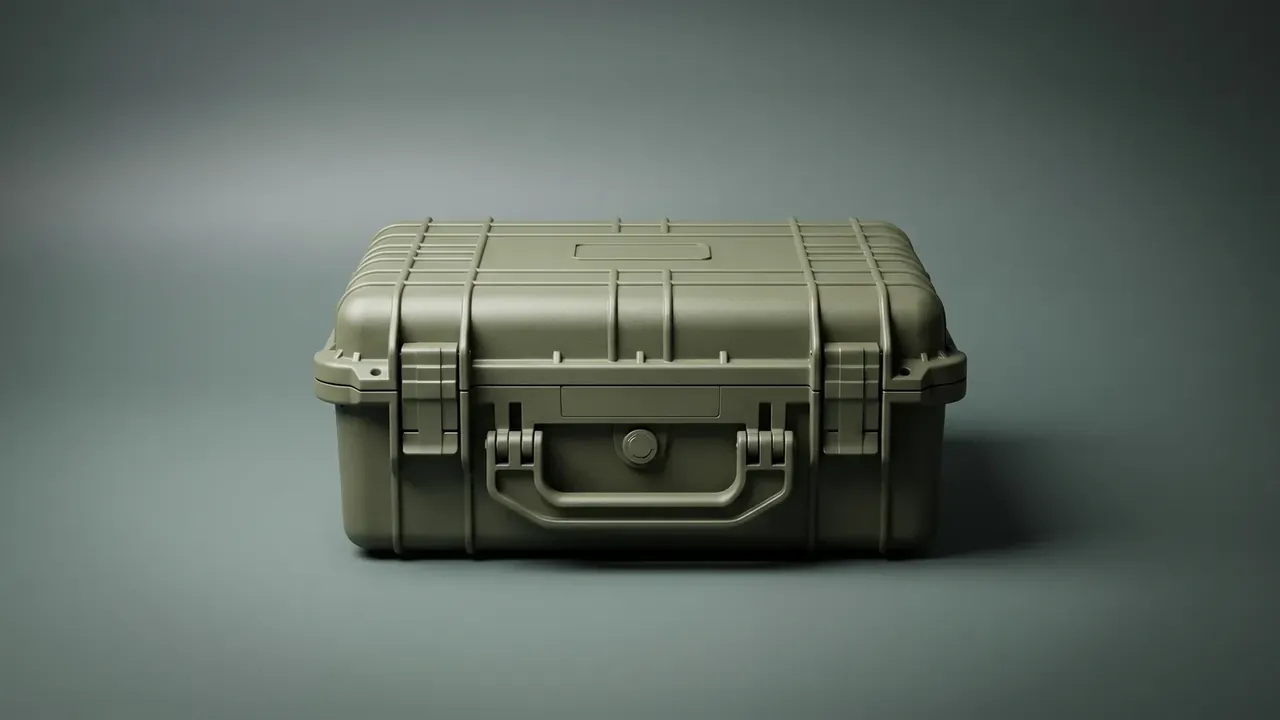
On scene one hand is often all there is. With the lock button at the centre of the handle, an AED case opens in one press and lift, leaving the other hand free. Clearance of 25 mm takes a winter glove; under 20 mm the glove jams on the grip. A hinge short of 90 degrees lets the lid drop back.
3. Sealing and Pressure Equalisation
IP66 and IP67 differ only in immersion: spray against short soaking. A sheltered wall point needs IP65, an open platform IP66, a wash-down bay IP67. A double-lip gasket traps air between 3 mm lips, so pressure drops before water reaches the interior.
Sealing well creates a second problem. At 50 degrees by day and 0 at night, cooling air leaves a vacuum holding the lid with over 30 kg of pull; a 0.2 bar relief valve on the short side releases it without using interior space.
| Location | Rating | Relief valve | Temperature |
|---|---|---|---|
| Sheltered exterior | IP65 | needed | -5 to 50 C |
| Open platform | IP66 | needed | -10 to 55 C |
| Wash-down bay | IP67 | needed | -5 to 45 C |
Polypropylene turns brittle at minus twenty, and the body drops from a 1.2 m to a 0.8 m test height.
4. Mounting, Security and Inspection
Mounting height is 1100 mm to the lid edge, so the wrist stays neutral. The bracket is rated 40 kg, three times a loaded case, and a 3 mm coated cable loops body to bracket.
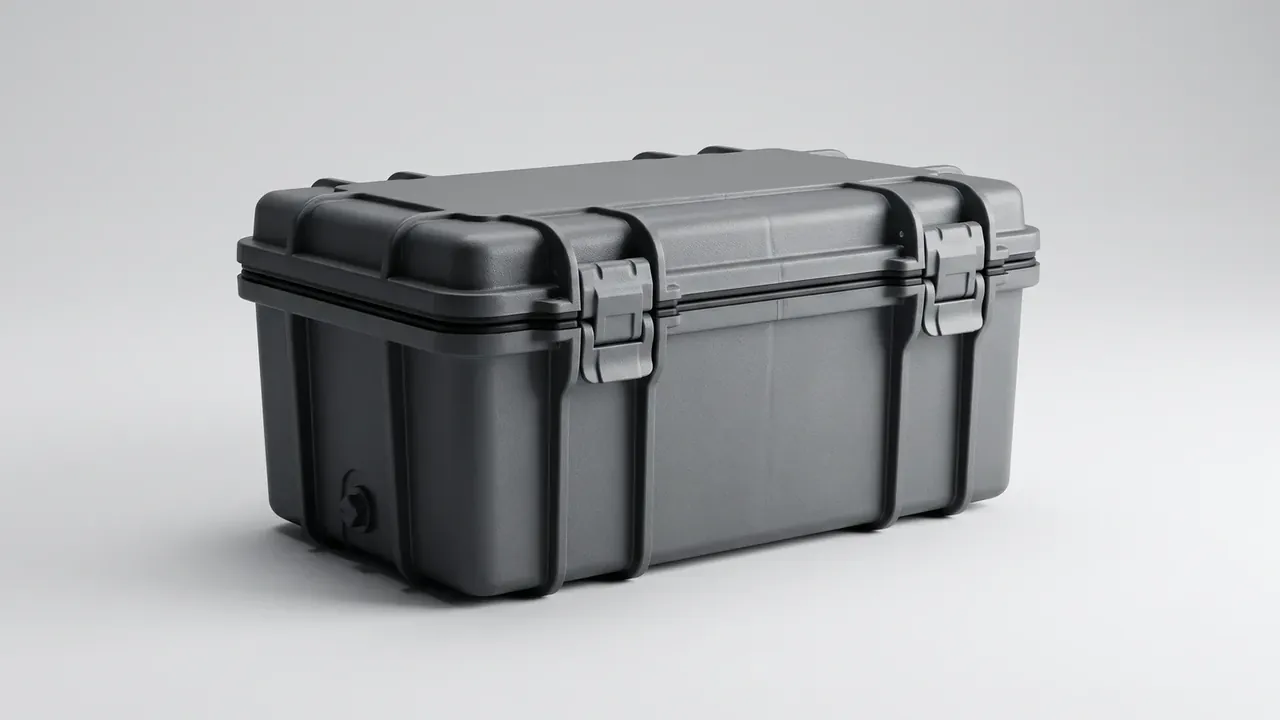
Inspection of an AED case fails when nothing is visible. A 30 percent clear panel reveals a disturbed insert without opening, and an A6 slot inside the lid keeps the record beside the seal.
Security and access conflict. A padlock adds two seconds and a key to manage; a one-time seal shows an unauthorised opening and breaks in one pull, and at a 30 day cycle it is cheaper.
5. Scoring the Five Criteria
| Criterion | Weight | Pass line | Usual failure |
|---|---|---|---|
| Interior | 30 | 25 mm side clearance | depth from device only |
| Opening | 25 | one hand, two seconds | four latches, two hands |
| Sealing | 20 | IP65 or better, with relief | rating marked, no valve |
| Mounting | 15 | bracket rated 40 kg | four expansion bolts |
| Inspection | 10 | insert visible unopened | no record slot |
Weighted to 100, below 70 should not go on a wall and below 55 belongs indoors. Interior fit takes 30 because a new device forces a new case, inspection 10 because management can compensate.
When criteria conflict, sealing and opening win: weak sealing fogs the interior and slow opening delays the analysis.
Conclusion
The order matters: interior fit decides whether the device goes in, opening whether it arrives in time, sealing and mounting whether it can hang for years, inspection whether hanging still means anything. Score the five on one sheet and choosing an AED case becomes a matter of conditions.
This article discusses only the container (case body) side of specifications and design intent, and does not cover any handling, loading or use of the contents.
Related Reading
- First aid kit case versus alternatives
- How a medical case is built
- Emergency supply case selection
- Fire equipment case structure
Related Products
- 8 Series — Gun Cases; Military Equipment Cases; Camera Equipment Cases; Drone Cases; Watch Cases; Knife Cases; First Aid Cases; Electronics Equipment Cases
- WL8-2812 PP Gun Case — model WL8-2812
- All protective cases and toolboxes: 7 series, 158 models