

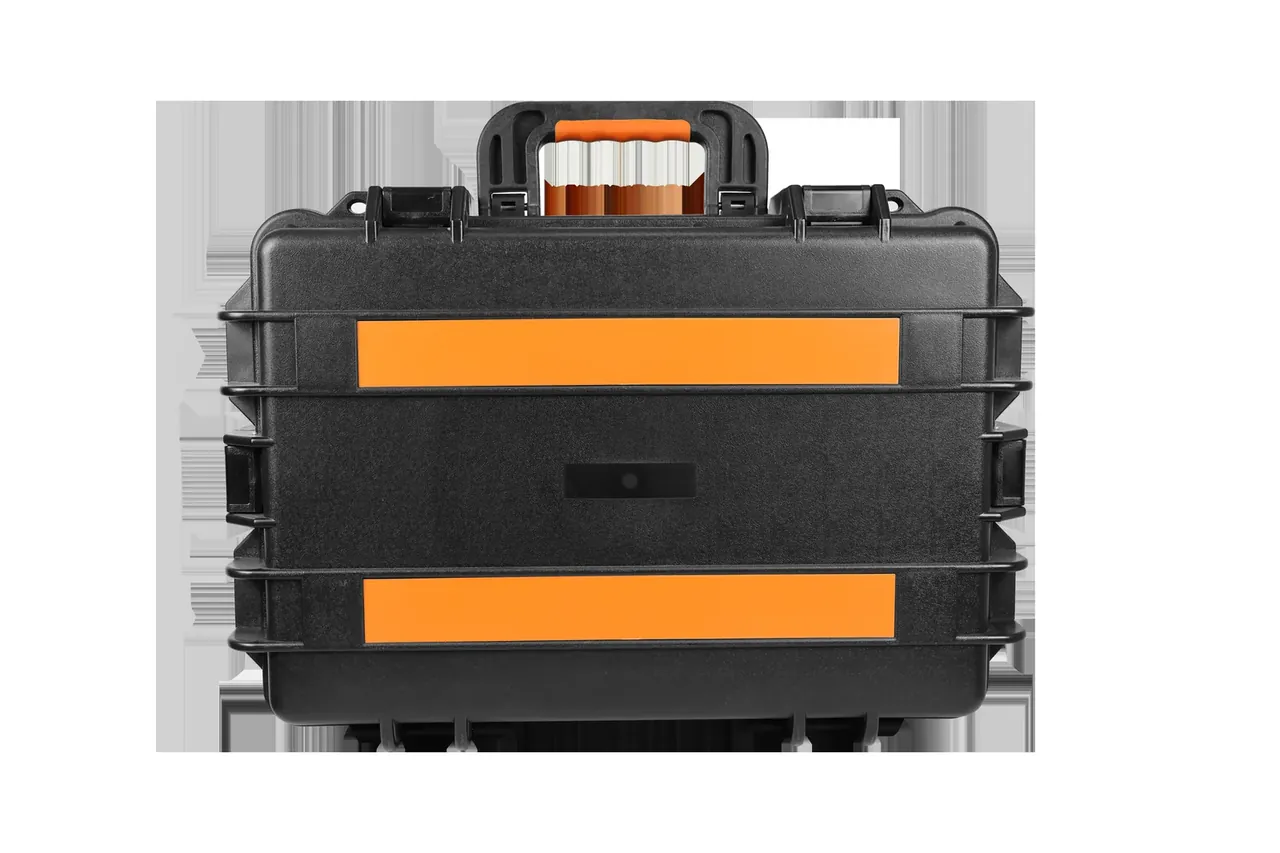
Quick answer: A fire equipment case is worth little for how much it holds and everything for two things: how fast it opens, and whether anyone can tell where it is and whether it is shut without a label.
Table of contents
- How a fire equipment case is measured in four moves
- Latches and hinge: one-handed opening
- Marking: colour, bands and recognition distance
- Lid depth and cavity split
- Three consequences of storage-box use
- FAQ
1. How a fire equipment case is measured in four moves
Taking equipment out is four stages, and only their sum is the real response time.
Walking is set by installation, and the case contributes only recognition distance: colour and bands show at fifteen metres that a case is there. Opening is the stage a case compresses hard, where latch count, travel and lid weight decide one hand or two.
| Move | Typical time | Case-side variable |
|---|---|---|
| Open | 1 to 4 s | latch count, travel, lid weight |
| Take | 2 to 6 s | opening angle, division |
| Close | 1 to 3 s | hinge return, alignment |
2. Latches and hinge: one-handed opening
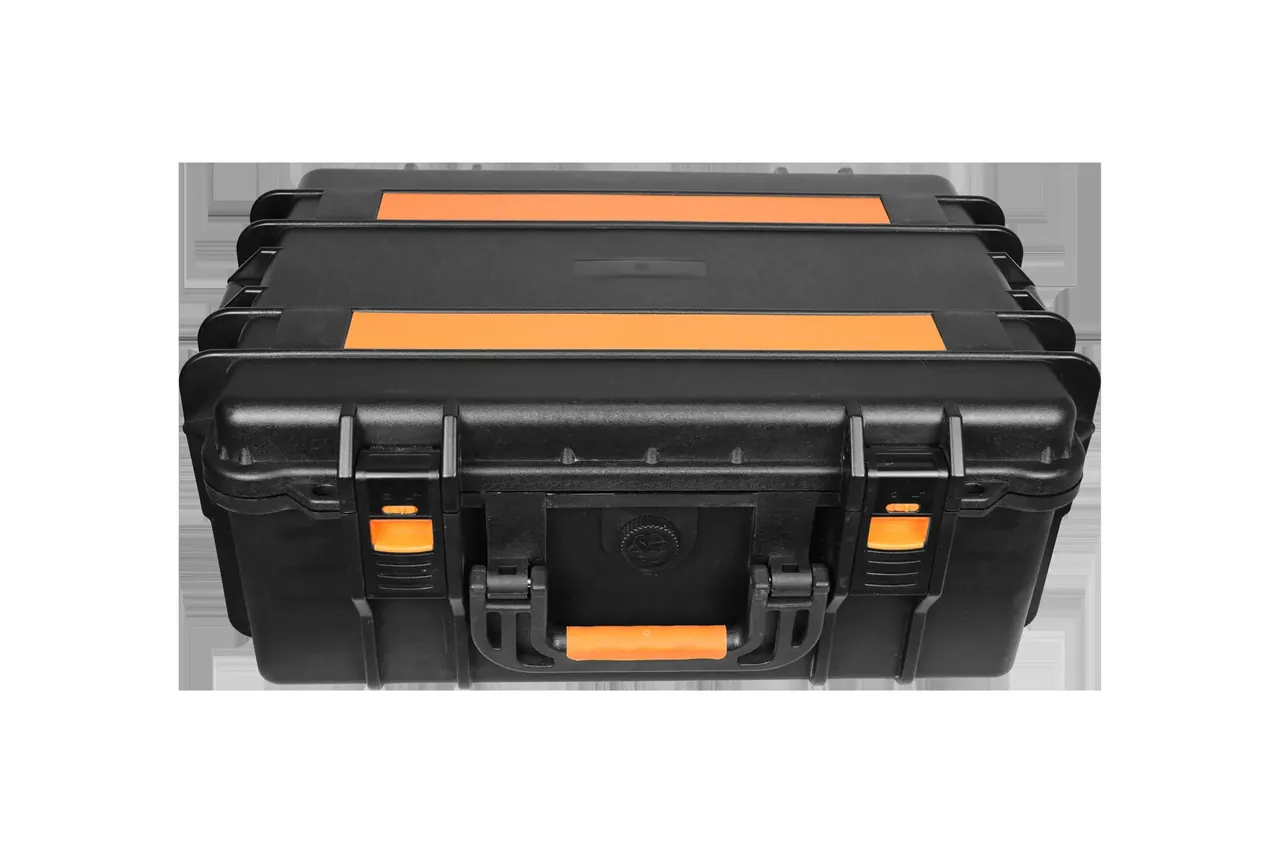
One-handed opening needs a lid that does not sag. Two draw latches either side of the front edge let a palm on the rim keep the lid square when one side releases first.
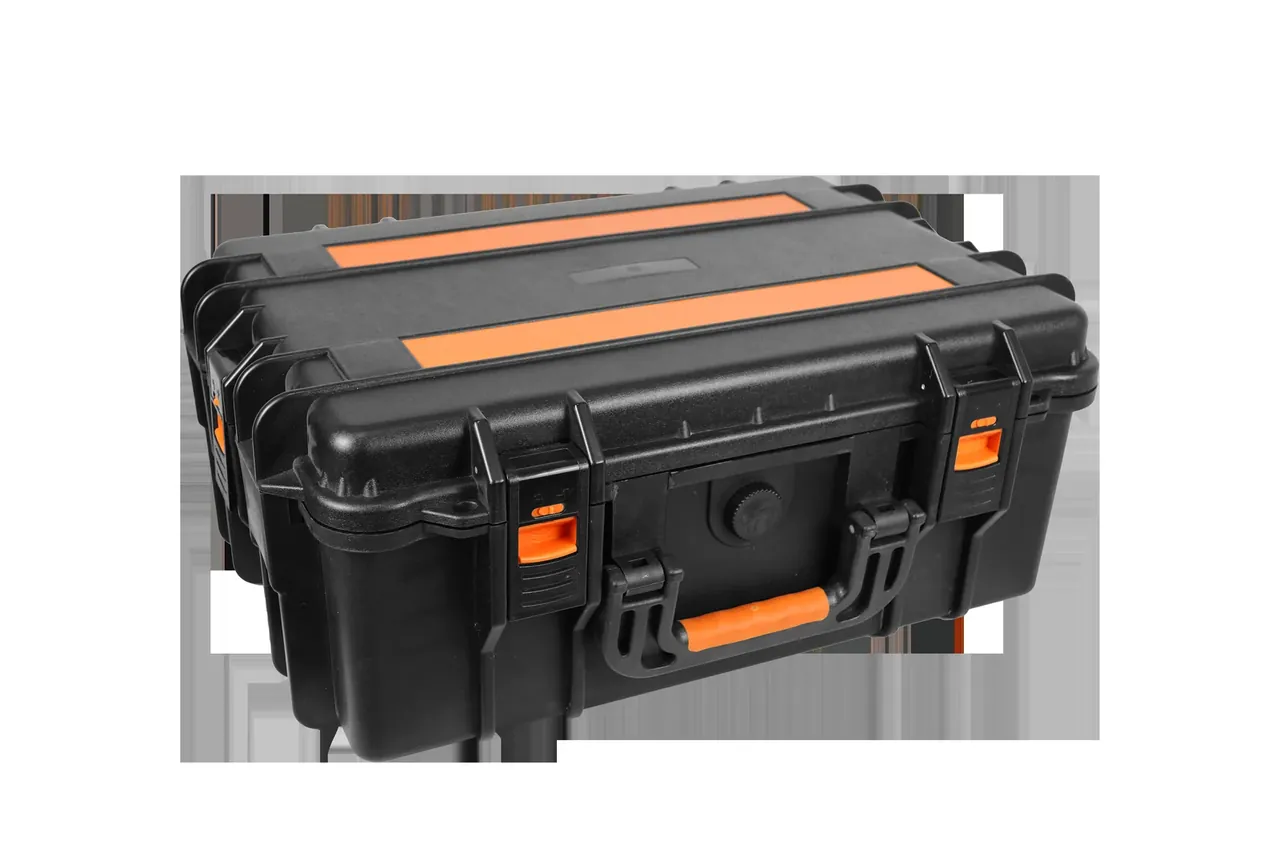
The orange release is not decoration: gloved fingers feel little, so colour is the locating cue, and a short throw is easily half-tripped. The hinge decides where the lid stops — just past ninety degrees the centre of gravity sits behind the tipping point, one hand steadies it and the other is free. A shallower stop presses the lid back onto a shoulder.
3. Marking: colour, bands and recognition distance
Marking answers where a case is and whether it is shut.
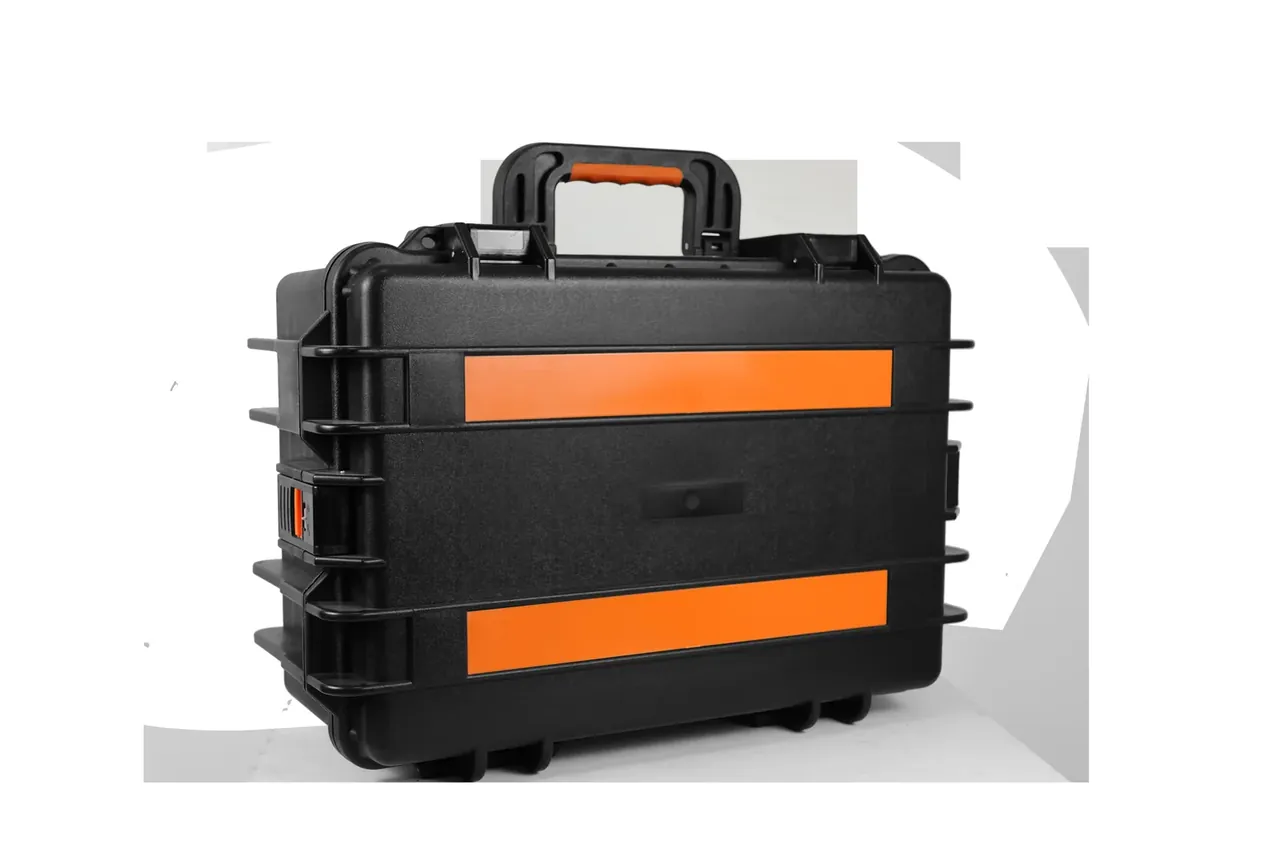
One band on the lid, one on the body, parallel and level when closed, with a body-coloured gap between. That gap is the closed indicator: bands out of line or the gap widened means a latch is not home. Bands laid against the parting line erase the gap.
Recognition distance comes from contrast, not area. Orange on black holds up in low light and smoke, while a narrow band blurs into a line at fifteen metres, so it should be at least a tenth of case height. Bands must clear the handle root, the latches and the label area.
4. Lid depth and cavity split
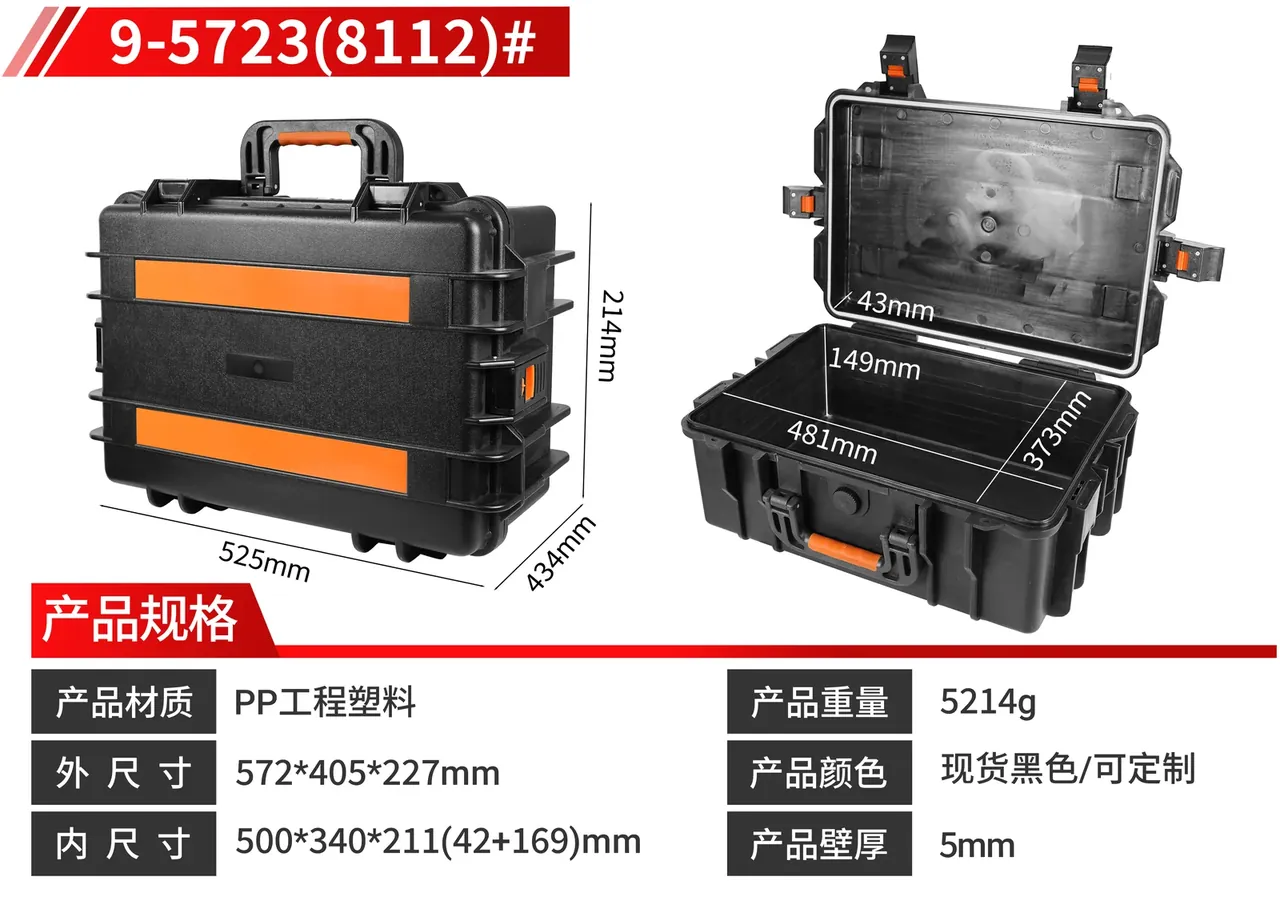
Lid depth rarely appears in a selection table, yet it sets the visible range. A common size runs 572 × 405 × 227 mm outside, 500 × 340 × 211 mm inside, split into 42 mm in the lid and 169 mm in the body, on 5 mm walls at 5214 g.
A 42 mm lid is shallow: nothing in it blocks the view of the body, but only paperwork or hose lies flat enough to live there. A deep lid gains that space and shifts the centre of gravity forward. The 169 mm body sets the picking method: under 150 mm fingers reach the bottom, over 200 mm items must stand or layer. At 5214 g, distance needs wheels.
5. Three consequences of storage-box use
The first is that marking fails: storage habits add labels, straps and document pouches to the front, and once the bands are covered both the closed indicator and the long-range identification disappear.
The second is a latch left half-closed. A box opened rarely keeps latches hooked but not compressed, the gasket stays half-squeezed and loses rebound, and sealing is gone by the time it is needed.
The third is a lid left in the sun: stored beside a window or outdoors, a dark lid runs far hotter than the sides and slowly crowns. None is a shell defect; all three are mismatched use.
Conclusion
The design logic of a fire equipment case compresses into two rules: fewer moves to open, and a closed state you can see. Latches and hinge settle the first, band position the second, and both can be measured before a case reaches the field.
This article covers container-side specifications and design implications only, not the handling, loading or use of the contents.
Related Reading
- Sizing and dividing a fire equipment case
- Structure of a fire rescue equipment case
- Field configuration of rescue cases
- Protective design of a fire pump case
Related Products
- 8 Series — Gun Cases; Military Equipment Cases; Camera Equipment Cases; Drone Cases; Watch Cases; Knife Cases; First Aid Cases; Electronics Equipment Cases
- WL8-2812 PP Gun Case — model WL8-2812
- All protective cases and toolboxes: 7 series, 158 models