

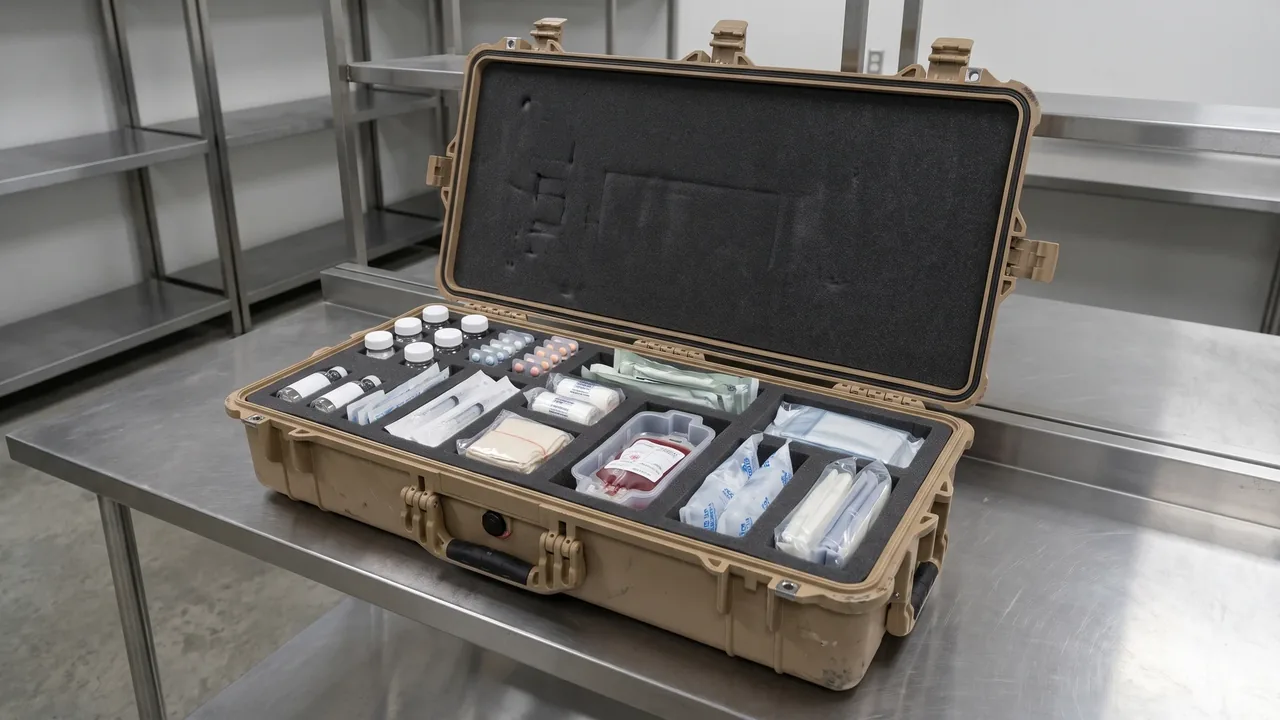
The firefighting rescue protective case is the core container used by fire brigade equipment sections, emergency response teams, and firefighting accessory suppliers to store and transport rescue tools, personal protective equipment, and on-site medical supplies. It must survive heat radiation, smoke, water spray, and rough vehicle transport near a fire scene while letting crew members reach critical gear along the shortest possible path during deployment and transfer. Experience shows that a protective case with stable IP67 sealing and clearly defined heat-tolerance limits can markedly reduce the risk of moisture and heat damage to equipment during edge-of-fire transport, and can compress pre-deployment check and access time into an acceptable window. Treating the case as an engineered product rather than an ordinary storage box is the first step toward standardized equipment management. This article covers case material, cushioning liner, sealing, heat tolerance, impact resistance, latches and fast access, stacking and vehicle mounting, identification, certification, customization, and maintenance, with actionable parameters and steps.
1. Case Material and Structural Selection
The material of a firefighting rescue protective case directly determines its tolerance ceiling, weight, and service life. The three common engineering routes are modified engineering-plastic cases, aluminium-alloy cases, and composite-material cases. Modified engineering plastics, represented by PP and ABS blends and rotomolded PE, offer few seams after molding or rotomolding, low weight, corrosion resistance, and low-temperature toughness, which suits mass issue and bumpy vehicle transport. Their weakness is reduced rigidity under long exposure to heat radiation, so structural ribs and insulation layers are needed. Aluminium cases in 5052 or 6061 grades give high rigidity and a neat form, but their fast heat conduction means external heat reaches the interior quickly, so liner and air-gap insulation are mandatory, plus surface anodizing or coating for salt-spray and acid-alkali environments. Composite shells with glass or carbon fibre reinforcement give the best strength-to-weight ratio but cost more and suit fewer high-value items.
Structurally, wall thickness, rib distribution, and corner radius together decide deformation resistance. As a rule of thumb, the side-wall deflection of a fully loaded case should stay within five thousandths of the case height so the lid keeps operating smoothly under stacking and compression. Corners should use large-radius fillets rather than sharp angles, because sharp angles concentrate stress and crack on impact. The lid-to-body interface needs a uniform compression allowance so the gasket is compressed evenly instead of over-pressed in one spot and gaping in another. For models opened frequently, hinges should use metal inserts or integral thickening to avoid fatigue fracture of plastic hinges. For a general comparison method, see the protective case selection guide, which maps task profiles to quantifiable indicators.
External dimensions should match vehicle space and carry style. Too-deep interiors make bottom items hard to reach quickly, while too-wide spaces slide under emergency braking. Place high-frequency items in the top layer near the lid and heavy, impact-tolerant items at the bottom, fixed by partition panels. For long-distance vehicle transfer, reserve roller and trolley-handle interfaces or options to reduce manual carrying load. For heat and insulation design, the fire rescue case solution can be compared with this one, aligning exterior size and fixation with your own vehicle modification plan.
2. Cushioning Liner System Design
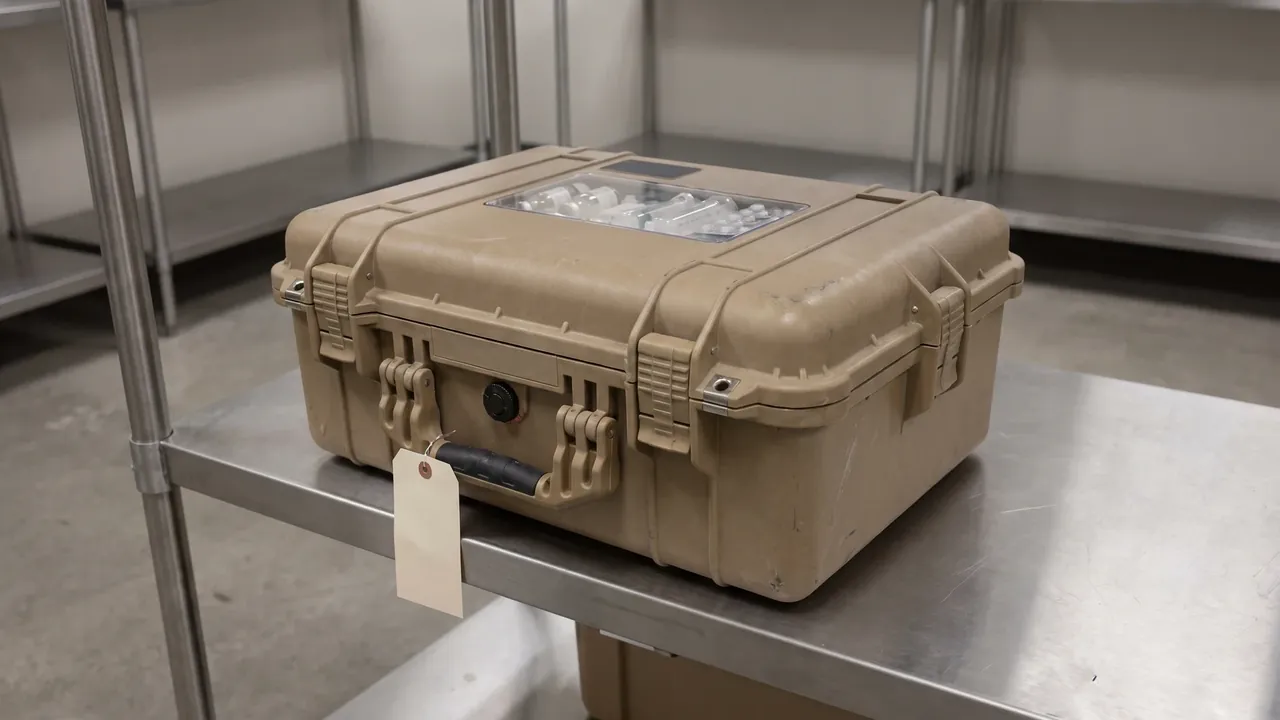
The liner is the second structure that actually protects equipment. In firefighting scenarios, equipment is mostly metal tools, glass instruments, electronic detectors, or bottled agents, all vulnerable to sustained vibration, instant shock, and mutual collision in transit. The liner's core task is to lock each item in place and keep a buffer distance between the item and the case wall. Common liner forms include pre-cut foam, self-adhesive foam, pick-and-pluck foam, EVA molded inserts, and field-poured foam. Pre-cut foam is cheap and fast for standardized items; pick-and-pluck lets users carve contours for temporary kits; EVA molded inserts give the best fit and neatest look for long-term issue; field-poured foam wraps irregular items seamlessly but is hard to reverse.
Design starts with an equipment list and weight map, arranging items from heaviest at the bottom to lightest at the top. Heavy items sit near the base with extra bottom-foam thickness; small fragile items get independent upper compartments. Limiting methods follow shape: round or oval slots for cylindrical tools, stepped brackets for flat items, and at least ten millimetres of compressible foam around electronic instruments. Verification means a short drop and vibration test after loading, observing displacement or surface marks, then adjusting foam density and slot size. For a finer foam selection method, consult the custom foam lining guide, which matches foam type to item characteristics.
Liner material must also meet flame-retardant and low-smoke requirements. Ordinary polyurethane foam releases heavy smoke when heated and is unsuitable near heat; choose flame-retardant-treated EVA, PE, or cross-linked closed-cell foam and request the flame-rating document. The liner should be moisture resistant and easy to clean, because cases returning from a fire scene often carry water and ash; the surface should wipe dry quickly to avoid long-term dampness, odour, or corrosion. For long-term rotation, design the liner as a whole removable module to lower maintenance cost and to allow quick internal re-layout when the equipment list changes, without replacing the entire case.
3. Sealing Structure and IP67 Protection
The sealing system of a firefighting rescue protective case consists of the lid gasket, the compression structure, and the environmental-balance device. IP67 is the baseline recommended here: under IEC 60529 and the corresponding GB/T 4208 framework, it means complete dust protection and waterproofing against one metre of water for thirty minutes without ingress. It must be stressed that the IP code is a static protection grade verifying sealing under immersion, spray, and dust, not a guarantee that the case endures prolonged heat or mechanical crushing, so sealing is only one part of overall reliability and must be assessed with other structural indicators.
Gasket materials are typically EPDM, NBR, or silicone rubber. EPDM resists ozone, weathering, and a wide temperature span and is the mainstream for outdoor use; NBR resists oil and suits gear that may contact grease; silicone keeps elasticity across a very wide range but has lower mechanical strength. Cross-sections are solid round, hollow tube, or double-lip; hollow rebounds more evenly when compressed, and double-lip blocks dust and splash better. After locking, the gasket should be compressed to fifteen to twenty-five percent of its original thickness; too little leaks, too much accelerates aging and raises opening force, so the compression allowance must be sized precisely to the groove.
Fire and water-rescue scenes bring pressure and temperature swings. When a case moves from cold to hot and back, internal air-volume change creates negative pressure at the lid, making it hard to open or even drawing in outside moisture. Fit a pressure-equalization valve with a hydrophobic breathable membrane that balances pressure while blocking liquid water and dust. This valve is a wear part and belongs on the spare-parts list with periodic replacement. For IP meaning and differences, read the IP rating guide and the IP67 and IP68 case guide, keeping static sealing distinct from dynamic use so procurement does not chase a code while ignoring the real seal structure.
4. Heat Tolerance and Material Selection
Heat tolerance is the key metric that separates a firefighting rescue protective case from an ordinary toolbox, but it must be quantified rather than asserted vaguely. Three temperature concepts must be distinguished: short-term contact temperature, sustained ambient temperature, and internal equipment safety temperature. Short-term contact is what the shell briefly endures touching a hot object or receiving flame radiation; sustained ambient is the temperature the case sits in for long periods at a fire edge, near an engine bay, or in a sun-baked vehicle; internal safety is the highest storage or operating temperature allowed for the gear inside. The design goal is that, at the sustained ambient level, the case does not soften or deform, the gasket does not fail, and the interior stays below the equipment safety temperature.
The heat-deflection temperature of engineering-plastic shells typically ranges from sixty to one hundred degrees Celsius depending on grade and glass-fibre content. For edge-of-fire transfer, choose a modified material with HDT no lower than ninety degrees and add an air-insulation layer or aluminium-foil reflective layer inside the wall to slow heat conduction inward. As a rule of thumb, keeping more than ten millimetres of still air between wall and liner, with low-conductivity liner, can cut the internal heating rate by about thirty percent. Aluminium cases conduct fast and rely more on liner insulation and the gear's own rating; when needed, add phase-change cold packs or insulation shrouds inside to protect heat-sensitive detectors and agents and extend their usable window on a hot scene.
It must be stated plainly that the case is not a fireproof box and must not be placed into open flame or under direct sustained burning. Its value is tolerating the high-temperature environment around a fire and buying evacuation and cooling time for the gear inside, not replacing a fire-safe enclosure. Procurement should require the material heat-deflection report, the UL 94 flame-rating statement, and the post-high-temperature sealing-retention note; where useful, compare the UL 94 flammability rating cases tiering to interpret material flame language, and write the heat-tolerance versus fireproof distinction into training and purchasing documents to prevent on-site misunderstanding.
5. Impact and Drop Protection Design
A firefighting rescue protective case will inevitably be dropped, bumped, and stepped on during deployment, transfer, and withdrawal. Impact resistance comes from three parts: shell rigidity, liner cushioning, and corner reinforcement. Shell rigidity comes from material, wall thickness, and ribs; liner cushioning absorbs the instant shock to gear; corner reinforcement ensures the weakest corner hits the ground first without puncturing. As a design rule, the four corners should be thickened and filleted, with internal support posts at corresponding positions so drop energy spreads along the shell skeleton instead of concentrating at one point and punching through, which matters most for protecting delicate instruments.
Drop testing usually references MIL-STD-810H Method 516 and the ISTA series. MIL-STD-810H stresses engineering exposure to the use environment, while ISTA is closer to real distribution handling. For firefighting, set drop height by loaded mass: below twenty kilograms use zero point eight metres, twenty to forty kilograms use zero point six, above forty kilograms use zero point four, with each bottom face, corner, and edge dropped the specified number of times. After testing, the case should show no through-crack, the lid should still lock, the liner limit should hold, and the gear should have no functional damage. For methods, see MIL-STD-810H explained and the ISTA test guide, writing the test conditions into the specification as acceptance criteria.
Beyond free drop, consider stacking static load and transit vibration. Stacking load is the constant weight the bottom case bears under multi-layer stacking; the bottom case should withstand at least four times its own loaded weight long term without permanent deformation. Transit vibration comes from road spectra and should be validated by random-vibration testing that the liner limit holds over time. For models fixed to a rack, reserve strap channels or bolt holes at the base to stop the whole case sliding under hard braking and causing secondary damage. Combine this with the tri-proof case guide to evaluate sealing, weathering, and impact as one package rather than in isolation.
6. Latch System and Fast Access Structure
Fast access is the core use requirement of a firefighting rescue protective case. Every second before deployment matters, so crew must reach a designated item by muscle memory without opening the lid to search. Fast access is achieved by making both localization and opening extremely simple. For opening, prefer one-hand butterfly latches, push latches, or linked dual latches with a clear locked feel and visual indicator, avoiding the hazard of looking locked but actually open. Latch points should grow with case length: a long case needs at least one main latch at each end plus a secondary mid latch so lid force stays even and the long case does not bulge and leak when stacked.
For localization, apply colour and graphic markings on the inside of the lid and on the liner surface. For example, red bays hold forcible-entry tools, blue bays hold communications gear, white bays hold medical consumables, with the item name and quantity labelled by each bay. After training, crew can pick by position even with eyes closed. For high-frequency first-aid and forcible-entry items, set an independent quick-access layer or external pouch so they are reachable without opening the main case, further shortening deployment time. Latch metal should be stainless or zinc-plated to resist rust in damp and salt-spray environments and to open by hand even when cold, avoiding post-heat expansion that jams the latch.
Fast access also needs a stable lid opening angle. The lid should self-stop or limit at about one hundred degrees to avoid flapping in wind, and vehicle flip-lids can use gas struts to ease one-hand operation. Latches and hinges are wear parts and should be lubricated and torqued on the schedule in the protective case maintenance guide, treating change in opening force as an aging signal. To compare latch options, also see the general rescue case guide, selecting latch type against your real glove operation and night-work conditions.
7. Stacking and Vehicle Mounting
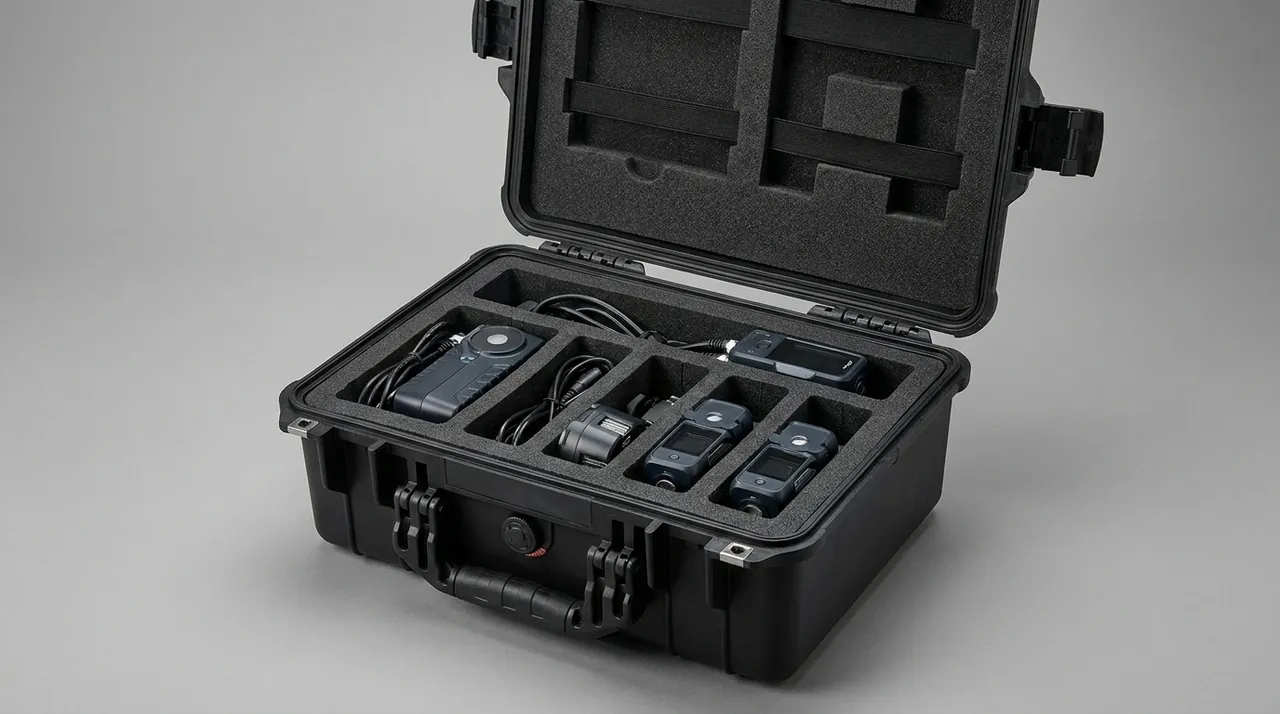
Firefighting rescue protective cases are often stacked and transported by vehicle, and stacking stability directly affects driving safety and on-site access. Stacking design relies on top anti-slip ribs, bottom locating grooves, and corner stack posts. Top ribs prevent the upper case from sliding sideways in a turn; bottom grooves must mesh precisely with the lower case's stack posts or bosses so multi-layer stacking forms a self-aligning structure rather than relying on friction. As a rule, stacking height should not exceed four times the case short side, or the centre of gravity gets too high and the stack topples under braking while the bottom case overloads and its lid deforms.
Vehicle fixation is a hard requirement. The case must not sit on the floor by weight alone but connect to the vehicle through straps, rails, or a rack. Straps should pass through reserved channels with anti-slip pads to avoid cutting the shell. For models with rollers and a trolley handle, stow rollers inward and retract the handle on long trips to remove the roller as a sliding pivot. Partition the cargo bay by flammable, heat-sensitive, and moisture-sensitive cases, and ventilate and shade the bay in hot seasons so enclosed-bay heat does not exceed the case sustained-temperature limit. For stacking and bay planning, follow the protective case stacking guide load-distribution advice and write safety requirements into the vehicle modification acceptance sheet.
For temporary on-site piling, put heavy cases at the bottom and light at the top, and cluster same-function cases nearby to cut cross-zone fetching. For models that may be airdropped or lifted, reserve lifting rings or fork slots on the shell and verify their strength by calculation. The stacking and fixation plan should enter the equipment management rules and pair with the identification system so any crew member can access items in a fixed order during an emergency instead of searching. Like bulk relief goods, the disaster relief case experience in batch issue and zoned piling is worth borrowing to raise equipment dispatch efficiency in large operations.
8. Identification and Asset Tracking
Firefighting rescue protective cases are issued in batches and by teams, so identification management is the basis for avoiding mis-take, mis-count, and loss. Mark all six faces with weatherproof identification: the front shows unit number, case class, and content category; the side shows weight, size, and handling warnings; the back shows production batch and maintenance cycle. Use outdoor-grade adhesive or screen print covered by a clear protective film to stop water and friction from peeling it. For units needing uniform appearance or confidentiality, use colour bars plus numbers instead of a detailed list, keeping details in the management ledger.
Asset tracking can use QR codes or RFID tags. Each case gets a unique code; scanning calls up its configuration list, issue record, maintenance record, and calibration date so the equipment section can verify without opening the case. Place QR labels on less-worn corners under a protective cap, and keep RFID tags away from metal shielding zones to preserve read distance. For general marking and tracking, see the asset-management chapter of the protective case selection guide and the emergency command case management experience, linking single-case management with team-level dispatch to raise equipment visibility.
Identification should also serve fast access. Bind case colour to its in-vehicle parking position, for example red cases fixed at front-left and blue at rear-right, so crew locate by colour rather than searching case by case. Over time, linking the identification system with inventory lets the system remind users when items expire, calibration nears, or maintenance is overdue, cutting human-error equipment risk. For medical contents, also apply the expiry management of the field medical case standard so first-aid and pharmaceutical items stay within shelf life.
9. Certification Standards and Test Documentation
When procuring a firefighting rescue protective case, certification and test documents are the basis for judging whether a product is engineering-usable, not marketing talk. Directly relevant standards include the IP code under IEC 60529 and GB/T 4208; the environmental engineering and test methods of MIL-STD-810H; the transport packaging performance tests of the ISTA series; the plastic flammability rating UL 94; and compliance such as RoHS and REACH for flame retardancy and environment. These standards describe different dimensions: IP for sealing, MIL-STD-810H and ISTA for environmental and transit reliability, UL 94 for material flame, and procurement should put each onto verifiable documents.
Suppliers should provide corresponding test reports or declarations stating test conditions, sample status, and conclusions. The report must target this model and this batch, not a vague same-category product, or it cannot serve as acceptance evidence. On receipt, do incoming inspection: randomly take cases for immersion, drop, and latch-cycle tests to confirm consistency with the report. For combined tri-proof and rating requirements, see the tri-proof case guide for a standard bundle, accepting static sealing, weathering, and impact as linked indicators rather than in isolation.
For units entering equipment typification or government procurement, watch the linkage between standards. IP verifies whole-case sealing, high-temperature verifies material and structure, vibration verifies liner limit, and all three are indispensable. Write these tests into the specification as hard clauses to avoid later disputes where the case looks solid but has no data. For specification writing, use the parameter-table template in the protective case selection guide, turning every indicator into a quantifiable, re-testable acceptance condition to lower procurement and after-sales risk.
10. Custom Liners and OEM/ODM Capability
Fire brigade equipment groupings vary by mission type, vehicle model, and staffing, so a standard empty case rarely fits perfectly. This is where custom liners and OEM/ODM capability turn the case into a platform tailored to a specific team. In the JUNZHIJIA engineering practice, customization starts with a 3D equipment list and an access-motion analysis, confirming each item's shape, weight, and fetch frequency, then designing compartment layout and liner thickness, and finally prototyping for validation. The resulting liner both limits items and serves fast access, instead of simply stuffing gear into foam, truly making the case serve deployment speed.
OEM/ODM value also shows in model-matched seals and available test documents. Different case sizes need different gasket cross-sections and lengths, and a custom maker can match seals by case type and stock wear parts so users never later hunt for replacements. At the same time, a mature maker can issue IP, drop, vibration, and material-flame test documents for the specified model to help the user complete equipment acceptance and records building. For units wanting uniform appearance and markings, unit numbers, colour rules, and logo printing can all enter the customization scope. For liner material and process details, combine the custom foam lining guide comparison table to express customization needs precisely.
Customization should not expand without limit. Focus custom work on liner, marking, latch interface, and spare-parts kits, while keeping the shell a proven mature model to control tooling and lead time. Makers like JUNZHIJIA with OEM/ODM experience can usually balance standardized shell with differentiated liner during mass issue, ensuring delivery speed while meeting each team's grouping needs, which is the key path for fire units to control cost and shorten cycle in batch issue and deserves emphasis in procurement evaluation of customization and supply coordination.
11. Selection Parameters and Procurement
For fire brigade equipment sections and accessory suppliers, procurement should start from the mission profile, the full cycle from intake, vehicle carry, arrival, use, withdrawal, to maintenance. Build a key-parameter table: sustained ambient temperature, whether IP67 is needed, loaded weight, internal clear size, liner form, latch type, vehicle fixation, asset tracking, and customization. Fill these nine items solidly, then match models, avoiding distraction by flashy promotion. Prefer makers with complete test documents, proven shells, and local spare-parts networks rather than judging by unit price and appearance alone.
Procurement should also define acceptance method and warranty terms. Acceptance covers appearance, dimensions, latch, immersion sampling, and drop sampling; warranty should cover gaskets, latches, and hinges as wear parts and state spare-parts lead time. For mass issue, pilot a small batch through one deployment cycle, adjust liner and markings from crew feedback, then typify and scale. For pitfall avoidance and supplier evaluation, see the checklist in the protective case selection guide and the batch-issue experience of the disaster relief case, controlling risk across pilot, typification, and scale phases.
Price is not the only dimension; calculate total cost of ownership: purchase price, liner replacement, spare parts, maintenance labour, and retirement cycle. A slightly higher unit price with longer life, replaceable liner, and ample spares is often cheaper long term than a low-price fragile model. For firefighting accessory firms, stable supply and on-demand customization matter equally; write lead time and minimum order into the contract to avoid stock-out before a mission node. Like emergency goods, the first-aid case expiry and rotation experience can inform the procurement and inventory strategy of firefighting cases and raise overall support level.
12. Maintenance and Lifecycle Management
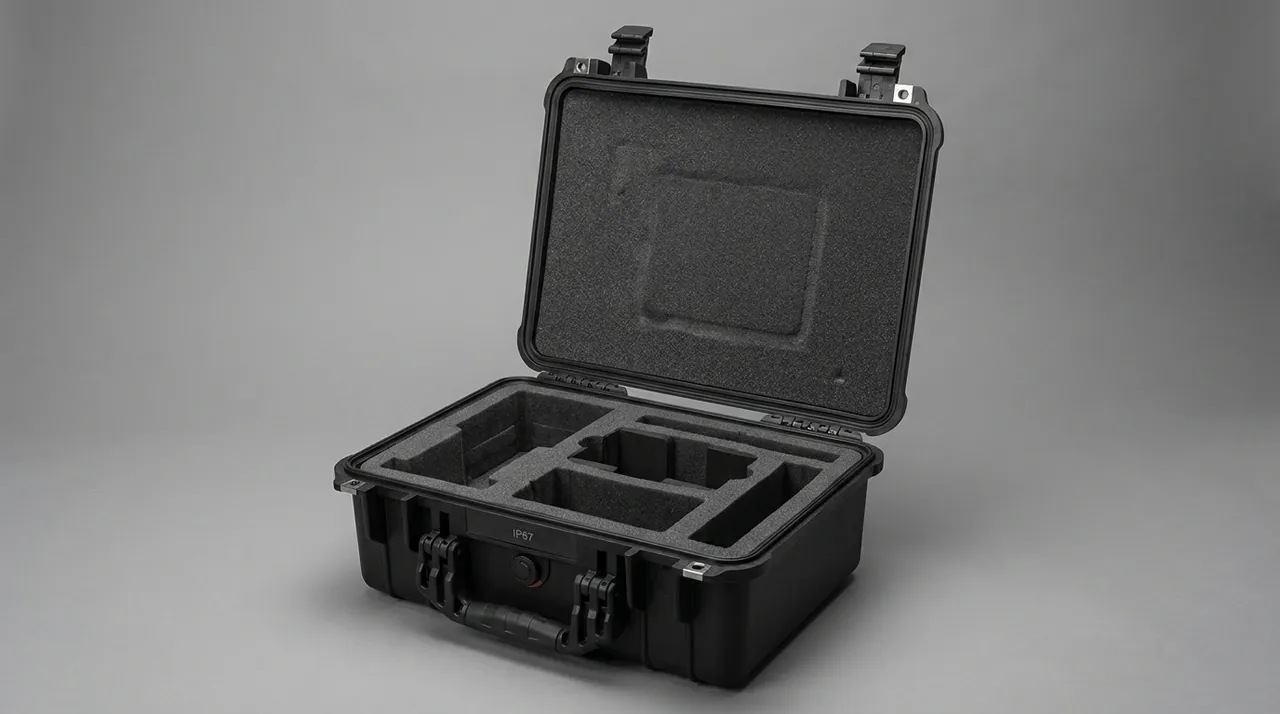
The service life of a firefighting rescue protective case is decided by an executable maintenance system, not by vague claims of how long it lasts. Establish three-tier maintenance: daily post-mission cleaning, monthly functional check, and annual deep verification. Daily cleaning dries interior water, clears ash and sand, and checks the gasket for trapped debris; monthly checks cover smooth latching, loose hinges, clear markings, and liner displacement; annual verification re-tests sampled cases for immersion and drop and records the degradation trend as the basis for batch replacement. For steps, follow the cycle table in the protective case maintenance guide and fix each action into the team daily checklist.
The gasket is the key wear part in lifecycle management. Under constant compression and temperature change it hardens, cracks, or takes a permanent set. Replace wear gaskets every twelve months or before the hot season; choose spares matching the original cross-section and material, and apply a little silicone grease to extend life. Lubricate latches and hinges periodically to prevent salt-spray and dust seizure. If the liner sags or its limit loosens, replace the module promptly rather than making do, or the gear loses protection on drop. Link this maintenance with the expiry management of the first-aid case and the field medical case standard so case care and interior-item shelf life move together and avoid blind spots.
Write clear retirement criteria into the rules: through-crack in the shell, lid that cannot lock evenly, gasket that still leaks after repeated replacement, or liner that cannot regain its limit all mean retirement. Retired cases should not be discarded at random but recycled by plastic or metal class per environmental and asset rules. By closing the loop of maintenance, verification, and retirement, the equipment section knows the true state of every case and keeps it at battle-ready status of grab-and-use, truly serving firefighting and emergency response and lowering on-site risk from equipment failure.
FAQ
Q: What is the core difference between a firefighting rescue protective case and an ordinary toolbox? A: The core difference is that a firefighting rescue protective case is an engineered equipment container built to defined specifications, not a simple storage box. An ordinary toolbox usually only solves the problem of fitting items in, while a rescue case must simultaneously meet IP67 sealing, clearly defined heat tolerance, impact and drop resistance, liner limiting, and fast access. At a fire edge, an ordinary toolbox easily takes in water and dust under spray and dust environments, and damp interior gear may fail; the protective case relies on gaskets, pressure-equalization valves, and reinforced structure to protect rescue tools, personal protective equipment, and on-site medical supplies through immersion, drop, and vibration. Moreover, the case emphasizes standardized grouping and identification so crew fetch by position on deployment instead of searching. Procurement should therefore treat the case as an equipment platform, checking test documents and mission-profile fit rather than appearance and price, to truly raise readiness and equipment reliability for the team.
Q: What does IP67 mean for firefighting scenarios, and can the case stay submerged long term? A: IP67 is the ingress-protection rating under IEC 60529 and GB/T 4208, meaning complete dust protection and waterproofing against one metre of water for thirty minutes with no ingress. For firefighting, this means the case resists fire-scene spray, rain, wading transfer, and accidental drop into water, protecting interior gear from moisture. But IP67 is a static sealing grade validating short immersion, not long-term pressure or continuous submersion, and it does not mean the case endures high temperature, crushing, or permanent underwater placement. In use, avoid long soaking, dry and ventilate after withdrawal to keep the gasket from aging under sustained compression and dampness. If the mission needs higher waterproofing, such as long shallow immersion or high-pressure wash, refer to IP68 or IP69K metrics and judge with shell structure and gasket material, stating test conditions and acceptance in the procurement specification when necessary. For most fire and rescue units the practical rule is to specify IP67 as the baseline and then confirm the real seal by sampling rather than trusting the printed code alone, because the code describes a test condition rather than the field behaviour after a year of use. In practice, pair the IP67 shell with a hydrophobic pressure-equalization valve so the lid opens smoothly after temperature swings, and add that valve to the scheduled spare-parts list so sealing performance stays consistent across the service life rather than fading unnoticed between inspections.
Q: How should the stated heat tolerance of a protective case be correctly understood and verified? A: Correct understanding needs three temperature concepts: short-term contact temperature, sustained ambient temperature, and internal equipment safety temperature. Sustained ambient is the temperature the case sits in for long periods at a fire edge, in a baked vehicle, or near an engine bay, where the case should not soften, deform, or lose gasket seal; internal safety is the highest storage temperature allowed for the gear, and the design target is to keep the interior below it. To verify, require the material heat-deflection report, the UL 94 flame-rating statement, and the post-high-temperature sealing-retention note, and do incoming sampling for that model and batch, for example placing the case in the stated ambient temperature for a set time then checking deformation and seal. Note the case is not fireproof and must not be put into open flame; its value is tolerating surrounding heat and buying evacuation time, so procurement must not read heat tolerance as fireproof.
Q: What specific design points does a fast-access structure include? A: Fast access mainly includes three points: simplified opening, position marking, and stable opening angle. For opening, prefer one-hand butterfly, push, or linked dual latches with clear locked feel and visual indicator; latch points grow with case length, and a long case needs end main latches plus a mid secondary latch. For position, apply colour and graphic markings on the lid interior and liner surface, for example red bays for forcible-entry tools and blue bays for communications, so trained crew fetch by position. For stable angle, the lid should self-stop or limit near one hundred degrees, and vehicle lids can use gas struts to avoid flapping in wind or bumps. Also, high-frequency first-aid and entry tools can have an independent quick-access layer or external pouch reachable without opening the main case. Together these compress pre-deployment access time to the minimum and are a key differentiator from ordinary boxes. These measures reduce the average access time and lower the chance of grabbing the wrong item under stress, which is why fast access is treated as a primary design goal rather than a mere convenience for the crew.
Q: How should liner material be chosen to cushion yet stay safe? A: Liner material selection should weigh cushioning, flame-retardant low-smoke behaviour, and easy cleaning. For cushioning, regular items use pre-cut foam or EVA molded inserts, irregular items use self-adhesive foam or field-poured fill, and heavy items sit near the base with extra bottom-foam thickness. For safety, ordinary polyurethane foam releases much smoke when heated and is unsuitable near heat; prefer flame-retardant-treated EVA, PE, or cross-linked closed-cell foam and request the flame-rating document. For cleaning, the liner surface should wipe dry quickly to avoid long-term dampness, odour, or corrosion after withdrawal. Design the liner as a whole removable module to lower maintenance cost. Procurement can require the maker's environmental and flame documents and include liner-limit performance in drop and vibration sampling so gear stays firmly limited rather than knocked around in transit. Choosing the right liner also reduces secondary damage, because a well-limited item cannot slide into a sharp tool or strike the shell wall during a hard stop, and the low-smoke rating protects crew who must open the case in a hot, enclosed cabin after returning from the scene. When the equipment list changes, a removable module lets crews re-layout the interior without replacing the whole case, which keeps life-cycle cost predictable and shortens turnaround between deployments. Specify the foam density and compression-set tolerance in the acceptance sheet so the liner still holds its limit after repeated shock rather than taking a permanent set that silently weakens protection.
Q: What rules must stacking and vehicle fixation obey? A: Stacking and vehicle fixation must obey three rules: self-alignment, height limit, and mandatory fixation. Self-alignment means top anti-slip ribs, bottom locating grooves, and corner stack posts mesh precisely so multi-layer stacking forms a stable structure rather than relying on friction; stacking height should not exceed four times the case short side or the centre of gravity gets too high. Mandatory fixation means the case must not rest on the floor by weight but connect to the vehicle through straps, rails, or a rack, with straps through reserved channels and anti-slip pads to avoid cutting the shell. In transit, keep rollers inward and handle retracted to remove the roller pivot; zone the bay by flammable, heat-sensitive, and moisture-sensitive cases and ventilate in hot seasons. Temporary piling should put heavy cases low and light high with same-function cases clustered. Write these rules into equipment management so any crew can access in fixed order and lower emergency search risk and driving hazard. Adopting these rules consistently across a fleet keeps cases predictable to handle and prevents the common accident of an unsecured box becoming a hazard during sudden manoeuvres, which is a frequent but avoidable cause of in-vehicle injury on the way to or from a fire.
Q: How can procurement verify that a supplier's test documents are trustworthy? A: Verifying document trustworthiness follows three principles: model-and-batch specific, explicit conditions, and incoming re-test. First, the report must target this model and this batch, not a vague same-category claim, or it cannot serve as acceptance evidence. Second, it must state test conditions, sample status, and conclusions, for example IP test depth and time, drop-test mass class and height, and UL 94 specimen thickness and rating. Third, do incoming sampling on receipt, randomly taking cases for immersion, drop, and latch-cycle tests to confirm consistency with the report. For typification or government procurement, also write IP, high-temperature, and vibration tests into the specification as hard clauses. Prefer mature makers who can issue documents for the specified model, have local spare networks, and offer OEM/ODM customization, to lower later acceptance and maintenance risk and keep equipment reliably in service. A maker with OEM/ODM experience can also supply model-matched gaskets and wear parts on a stable lead time, which removes the later scramble for replacements that quietly degrades field reliability, so evaluate the supplier on document quality, spare-part continuity, and customization depth together rather than on unit price alone.
Q: How often should the gasket be replaced, and can it be swapped by the user? A: The gasket is the most critical wear part; under constant compression and temperature change it hardens, cracks, or takes a permanent set, so replace wear gaskets every twelve months or before the hot season, and shorten the cycle for frequent use or sustained salt-spray and dust environments. User swap is feasible but must use spares matching the original cross-section and material, for example not substituting a solid silicone strip for an EPDM hollow round, or uneven compression and rebound will cause local leakage. When replacing, clean the groove thoroughly, confirm no sand or old adhesive remains, embed the new ring evenly, apply a little silicone grease, then lock and check that lid force is even. Keep gaskets, latches, and hinges on the spare-parts list and lubricate on schedule. If leakage persists after replacement, inspect the lid interface for deformation rather than swapping rings repeatedly, and contact the maker for shell correction or spare support when needed.
Q: What clear criteria define retirement of a protective case? A: Retirement should follow quantifiable criteria rather than vague feel. Retire the case when any of these occurs: a through-crack in the shell that may split under water pressure or drop; a lid that cannot lock evenly, showing permanent deformation of the interface; a gasket that still leaks after repeated replacement, meaning the seal structure has failed; or a liner that cannot regain its limit, leaving gear unprotected in transit. Retired cases should not be discarded at random but recycled by plastic or metal class per environmental and asset rules. To know each case's true state, the equipment section should run three-tier maintenance of daily cleaning, monthly check, and annual verification, re-testing sampled cases for immersion and drop and recording the degradation trend as the basis for batch replacement. Closing the loop of maintenance, verification, and retirement keeps every case at grab-and-use readiness for firefighting and emergency response. Applying these criteria uniformly lets the equipment section plan replacement budgets and avoid the hidden risk of a case that looks serviceable yet no longer protects its contents during a real deployment, which is the exact failure mode the whole maintenance system is built to prevent.