

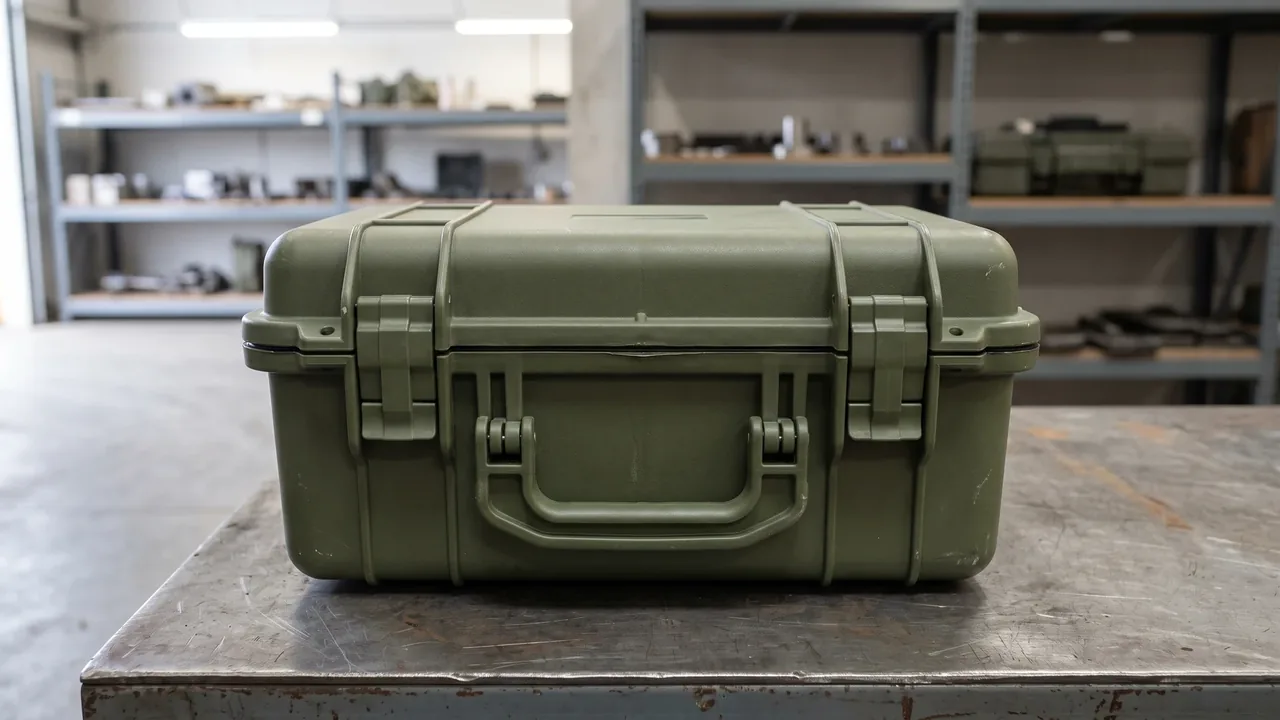
A tri-proof case is a protective enclosure designed for outdoor and harsh environments, built on three core abilities: water proofing, dust proofing and drop protection, to protect gear all around. Its core value is to upgrade the case from a simple storage box to a field storage platform that survives rain, sand, salt spray, drops and vibration, keeping communication, measurement, medical and rescue gear functional and safe under field, vehicle and marine conditions. In border, survey, emergency and film field work, the environment threatens seal, cleanliness and structure at once, so tri-proof is not a simple sum of three abilities but a system of shell, seal, liner and latch. This article explains tri-proof principles, shell and seal, dust design, drop structure, rating standards, outdoor scenes and maintenance, and gives actionable guidance for selecting, designing and using a tri-proof case. For seal design, see the outdoor case waterproof design.
1. What a Tri-Proof Case Is
The tri-proof case targets "water proof, dust proof, drop proof". Its shell uses modified engineering plastic or aluminium with continuous gasket and ribs, and a cushion foam liner, protecting inner gear under rain, dust and drop. The difference from a normal box is "three abilities compliant together" rather than "mere containment". A normal box may only resist bumps, while a tri-proof case must verify water and dust by IP code and impact by IK and drop procedures; it is the hard floor of outdoor storage.
In engineering the case carries outdoor base-station parts, portable instruments, rescue medical kits, geology sample boxes and camera gear. Its job is not "a bit sturdier" but "still usable in rain, sand and drop", so the pass criterion is the combined compliance of IP grade, IK grade and drop height, not whether it looks heavy. Buyers should ask the supplier for rated grade, test standard and ballast, to avoid ordinary thickened boxes passed off as professional tri-proof products. Grade judgement combines with the IP rating guide.
In form the case appears as engineering-plastic injection hard cases, aluminium welded cases and soft-rigid portable hybrids. Whatever the form, the core standard is "no water in, no dust in, no crack under rated rain, dust and drop", not surface lightness. Batch units should combine the protective case selection guide with parameter decisions that include the three abilities with size and mass together.
2. Waterproof Principle and Seal Structure
Waterproof relies on shell continuity and gasket compression. After closing, the elastic gasket around the lid is compressed evenly into a continuous ring blocking liquid entry; latch and hinge areas are seal weak points needing continuous overlap and controlled compression. Shell parting lines, breath valves and openings must be sealed, or one leak fails the whole case. Waterproof grade follows IEC 60529 (GB/T 4208) IP code, for example IP67 means no water in under short immersion.
Gasket material is usually EPDM or silicone; EPDM resists weather and ozone, silicone resists temperature and springs back well. Too little compression leaves a gap, too much accelerates ageing or crushes thin wall; after closing, even gasket overflow with no break is the basic criterion. A pressure-equalisation valve eases altitude and temperature difference but must itself be sealed or it becomes a water point. Opening treatment is detailed in the outdoor case waterproof design.
Understanding the principle helps selection. If gear only meets showers and splash, IP65 is enough; if wading or marine work, go to IP67 or even IP68. Higher water proofing is not always better; over-sealing adds mass and hurts cooling and powered interfaces, so match to exposure risk. For vented cases, use a membrane breath valve not a plain hole, blocking water while balancing pressure. Seal and grade coordination compares with the IP67 vs IP68 guide.
3. Dust Design and Ingress Protection
Dust proofing relies on continuous seal and filtered openings. By IP code the first digit is dust grade, for example IP6X means fully protected against foreign objects and dust. Outdoor dust, sand and fibre enter any gap and wear gear or jam mechanisms, so dust proofing is as key as water proofing. Continuous gasket, latch overlap and filtered openings are the three gates of tri-proof dust control.
Opening dust control uses a breath membrane or metal mesh with filter cotton, balancing pressure yet blocking particles. Cable and interface entries should use watertight connectors with seals to stop dust riding the wire in. For the liner, if gear is cleanliness-sensitive, the liner surface should be easy to clean and shed no fibre. Dust details are in a dedicated chapter of the outdoor case dustproof design, with clear filter-replacement cycle.
In practice the easiest missed dust point is the tiny gap after closing and around latches. Many nominally dust-proof cases let dust in through one uncompressed lid seam, jamming precision mechanisms. At design review, calculate "dust channel" for every gap, and use talc or dust trial on the first article to confirm every gap is controlled, not judging the whole by shell material. For critical gear, attach the gap list to the technical agreement and confirm each seal item by item.
4. Drop Structure and Impact Design
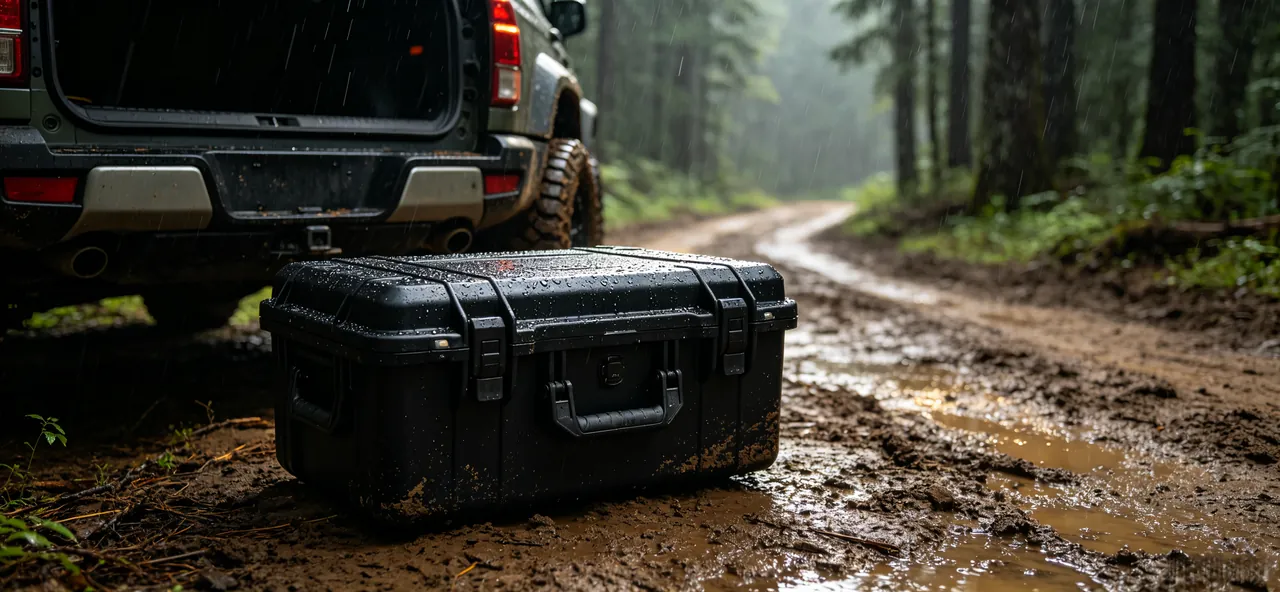
Drop proofing relies on shell stiffness, ribs and liner cushion. Engineering-plastic shell absorbs energy by elastic deformation on drop, aluminium by strength and ribs spreading impact; corners and edges are concentrators and need continuous ribs and local thickening. The liner absorbs remaining impact with cushion foam so gear takes no hard hit. Impact grade follows IK code and drop procedure, for example IK 08 means withstanding five joules, and MIL-STD-810H sets drop heights by mass.
Drop posture decides damage. The same case flat, edge or corner lands differently, corner most likely to crack; so corners should be rounded and thickened or capped. Latches and hinges may deform under impact and leak the lid seam, so surround them with continuous support. For cased wheels and trolley, the wheel frame should land on ribs or metal inserts, never hang on thin wall. Impact design references the IK rating case guide.
Understanding drop proofing balances protection and mass. If gear is valuable and air-dropped repeatedly, keep structural margin rather than minimal mass; if only short manual carry, push mass near the floor. Drop proofing is one term in the objective and must be optimised with water, dust and cost together, avoiding sacrificing overall reliability for one item. For powered gear, also reserve mass budget for filters and waveguides so it is "tri-proof yet usable".
5. Inner Liner and Gear Fixation
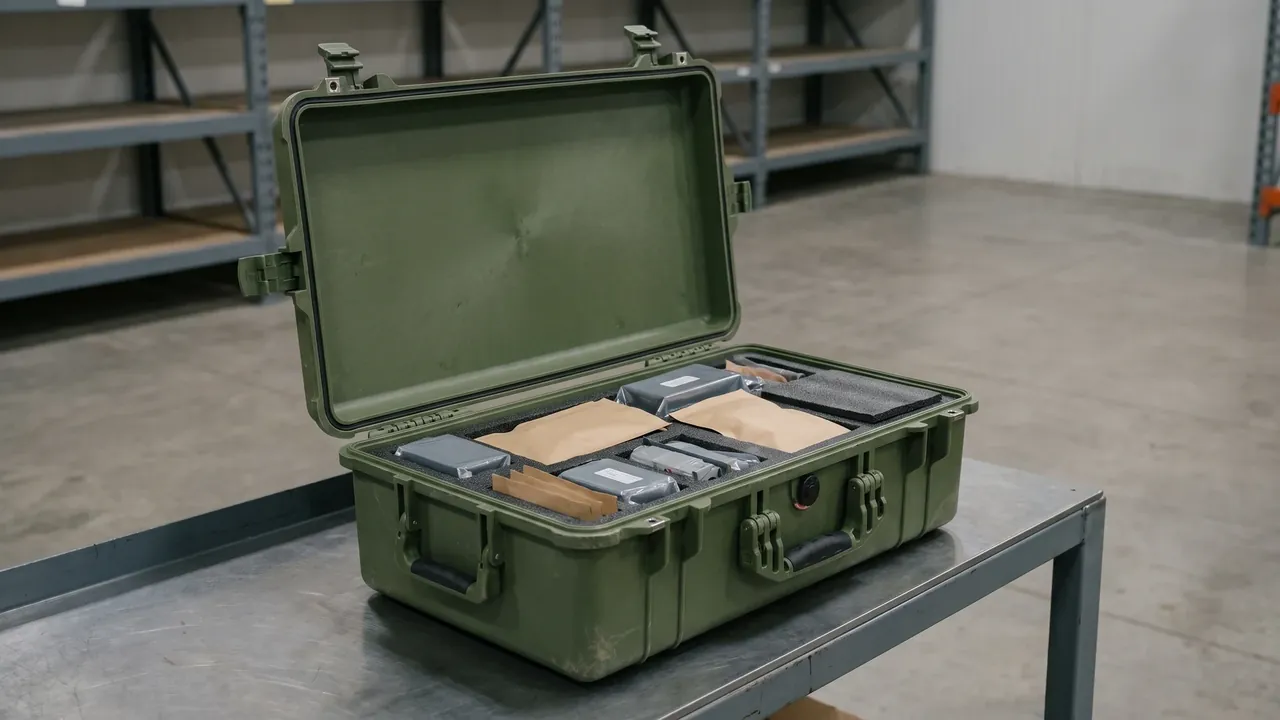
The tri-proof case still needs cushioning, because the gear is mostly precision devices that transit vibration and drop can damage. The liner is CNC-routed from open-cell polyethylene or polyurethane to the gear contour, with a clean, fibre-free surface. If gear is static-sensitive, the liner surface should be antistatic with resistance in a safe band. Liner design points extend in the custom foam lining case guide.
Fixation must not break seal or equipotential. Gear should not press a hard point on thin wall nor hang on ordinary nylon ties. Use embedded routed slots and elastic straps so gear is located in six directions. For parts with antenna or bracket, leave a matching groove and keep the tip off the conductive wall. For mixed loads, independent routed cells locate and isolate and ease counting.
Liner and shell must be "no loosening, no added mass". Large-area heavy glue between liner and shell cancels weight saving, so use spot glue or clips. For mixed loads, independent routed cells locate and isolate, avoiding collision damage in transit. For complex shapes, scan in three dimensions first, then program routing so cavity tolerance stays controlled while foam use is minimised.
6. Latches, Hinges and Opening Life
The latches of a tri-proof case must both secure physically and keep even gasket compression when closed. Butterfly, press and three-point linked latches are common; the three-point lock balances lid pressure and reduces corner gaps. Hinges should be continuous metal piano hinges whose long overlap forms a strength path, better for stiffness and seal continuity than scattered hinges.
Opening life is evaluated by usage. The gasket loses spring-back after repeated compression and is replaced on schedule; latches and hinges in salt-spray and high-humidity need anti-corrosion to prevent rust breaking seal contact. For high-reliability outdoor and emergency scenes, follow the lessons in the protective case accessories guide and write opening life and seal reliability into the specification.
To extend life, avoid violent opening and foreign objects in the seam. Before closing confirm the gasket is not rolled or dirty; after closing check every latch. For frequent transfer, keep an open-cycle log and proactively replace gasket and wear parts before rated cycles, swapping "failure replacement" for "preventive replacement" to keep tri-proof performance stable and lower field risk. Critical-post cases can set a forced-inspection reminder so someone re-tests seal and replaces the dissipative layer on schedule.
7. Standards and Rating Levels
Tri-proof cases usually refer to IEC 60529 (GB/T 4208) for IP, IK code for mechanical impact, MIL-STD-810H for environment and drop, and ISTA for transport simulation. Outdoor and industrial scenes often require IP67 and IK 08 for rain and daily drops; high-reliability scenes refer to MIL-STD-810H drop and random-vibration procedures with stricter ratings.
Testing covers static water, dust and dynamic drop. Buyers require a CNAS- or CMA-accredited report with clear test setup including case state and mass ballast. Higher grade is not always better; over-sealing adds mass and hurts cooling, so match to gear exposure risk. Seal and grade rules compare with the IP rating guide, whose limits complement tests.
When reading a report, watch the "worst posture" not the "best". One face passing drop does not mean all postures; real risk may sit at an edge or opening. The agreement should state "whole-posture minimum protection not below a value" and keep the right to sample by worst posture on arrival, preventing suppliers hiding weak spots behind peak data. For batch units, combine first-article qualification with periodic sampling to ensure consistency.
8. Typical Outdoor and Transfer Scenes
In border and survey tasks, tri-proof cases move communication terminals, batteries, instruments and sample boxes, resisting rain, dust and handling drops. Drone vehicles, temporary observation points and cross-region transfer use tri-proof cases with straps and quick-release mounts to form an "all-weather fast" storage chain.
Medical and rescue field work also use them. Portable instruments, vaccine cold boxes and first-aid kits must be carried between mountains, islands and floods, where tri-proof decides whether gear works. Film and survey sites use tri-proof cases as mobile protection for cameras, lenses and mapping gear. Transport protection for electronics is in the communication electronics protective case, whose location and buffer methods also apply.
Beyond these, power inspection, emergency communication and border patrol all rely on tri-proof cases to stay "waterproof, dustproof, drop-proof" in harsh environments. Once gear fails from water or dust, the mission may suffer, so tri-proof cases pair with full-process protection management. For air and marine transport, also evaluate cabin vibration and checked-weight limits with the transport vibration testing cases to stop the case sliding in the hold or suffering salt spray.
9. Difference from Waterproof and Dustproof Cases
Users confuse "tri-proof", "waterproof" and "dustproof" cases; their focus differs. The tri-proof case weights three abilities together; the waterproof case weights liquid blocking; the dustproof case weights particle protection. Structurally the tri-proof case relies on continuous seal, filtered opening and ribs, while single-ability products may strengthen only one, so material and seal differ.
Clarify the main threat first: rain, dust or drop. If core is wading, prioritise IP67 and gasket; if core is dust, prioritise IP6X and membrane; if core is drop, prioritise ribs and liner. The three abilities can be derived from one shell platform with different seal and liner, so stating the purpose avoids paying for unneeded capability. The detailed comparison is in the waterproof case, with a chapter on outdoor scenes.
With limited budget, rank by "main risk". For short in-camp move on good road, a basic seal with liner is enough; for wading or heavy stacking, add metal inserts and thick ribs. When modifying stock cases, first assess original structure and seal before upgrade, to avoid losing existing protection by change. Any modification should re-test IP and drop and confirm it is still in the qualified band before use.
10. Stacking, Piling and Transport Fixation
Batch transport needs piling stability and total weight control. Corner ribs and locating bosses let stacked load pass along side walls instead of pressing the lid gasket, avoiding permanent deformation under long load. Keep pile height within rated layers and use straps or pallet limits. General piling rules are in the protective case stacking guide.
Transport fixation follows "reduce vibration, prevent slip, control total mass". After gear is located by routed foam, put the case in a tray with anti-slip pads; road transport cares about random vibration and shock, rail and air about low-frequency high acceleration and weight limits. For tri-proof cases, straps must not press the lid seam and break the seal. Piling and transport safety are in the seal shock case, whose buffer and locating blocks can be borrowed directly.
For cross-city or cross-border transfer, also plan the case position and buffering inside the vehicle. Place the tri-proof case at the centre of a damped tray, fixed by locating blocks to avoid collision on hard braking. For long road transport, add an elastic layer between tray and floor to absorb low-frequency vibration. On arrival, re-test key seal and deformation before opening, confirm protection was not harmed. For valuable gear, measure seal and deformation before and after transport to form a comparison record, controlling risk before lid opening.
11. Environmental Adaptation and Temperature-Humidity Control
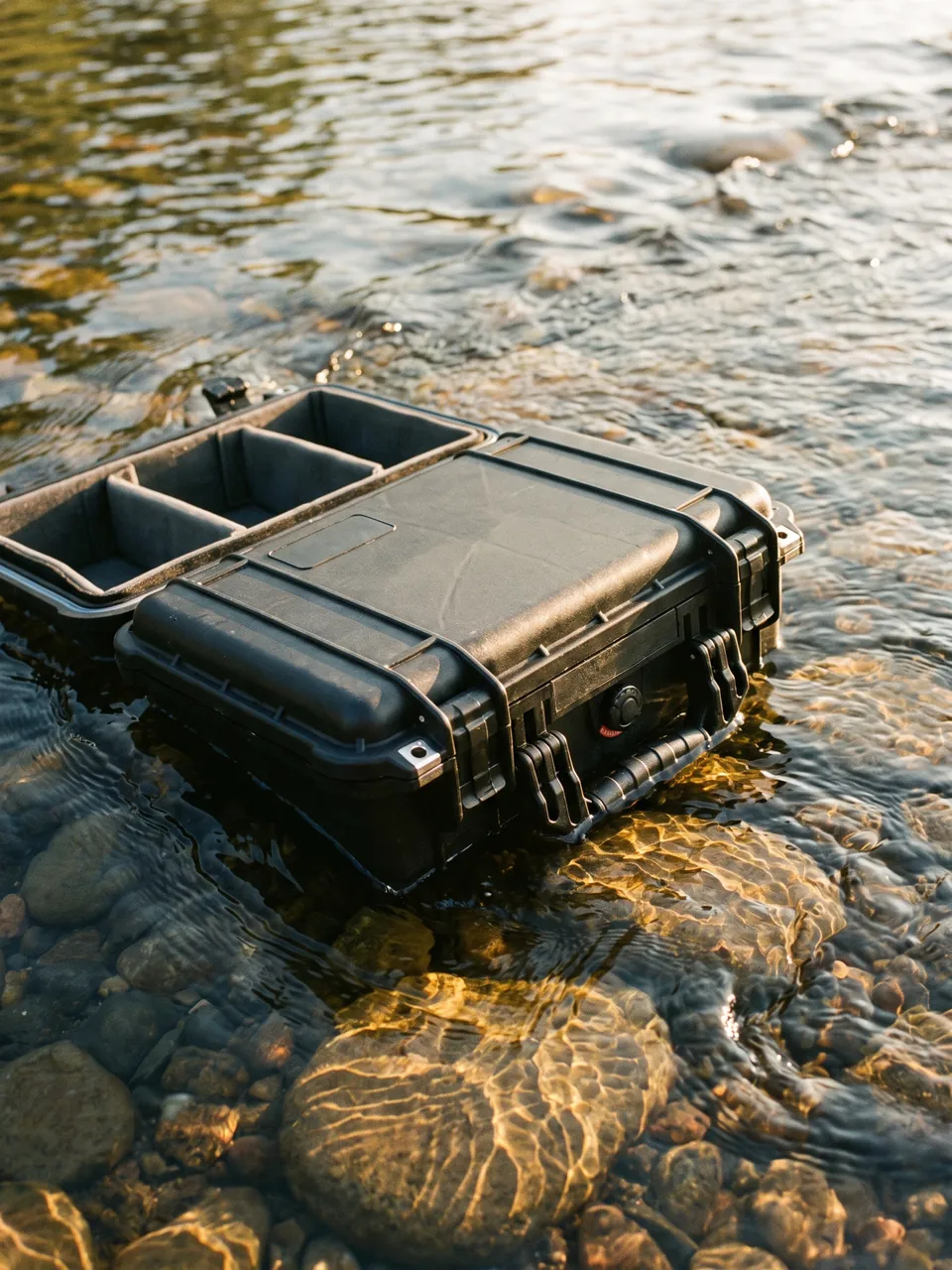
Most tri-proof cases are plastic or composite shells; at low temperature the gasket hardens and the shell brittles, at high temperature it may soften and deform. The fix is a material graded for the use temperature band and controlled opening frequency so internal humidity balances slowly. For high-humidity and tropical use, the shell needs mould treatment and the liner a weather-resistant material to avoid performance drift after moisture uptake.
For temperature, a plastic shell heats up in direct sun; if the gear has an upper working limit, add a thermal shroud or avoid direct light. High-altitude air transport pressure difference is eased by a sealed pressure-equalisation valve, but the area near the valve is still a structural weak point, so keep the overlap continuous. Co-design of temperature-humidity and protection grade is in the IP rating guide, treating tri-proof, water proofing and humidity control as one system.
In extremely cold or hot regions, also watch gasket and shell low-temperature brittleness and high-temperature softening. Some modified foams and silicones keep elasticity at minus forty degrees Celsius, while ordinary foam hardens and loses spring-back when cold. Cold-region selection should specify low-temperature-grade seal and material and do a seal re-check before winter to prevent cold-induced lid leak or shell brittleness. For tropical long storage, check material weather resistance regularly so UV does not accelerate shell ageing and seal failure.
12. Verification and Arrival Acceptance
Arrival acceptance has three steps. Step one, appearance and seal: after closing, visually confirm even gasket overflow with no break. Step two, performance: do a leak sample and free drop, watching for water and crack. Step three, send for third-party IP, IK and drop tests if needed, keeping data at different postures.
Quick field checks use spray and drop to see if it wets or deforms. In routine maintenance, re-test seal and deformation quarterly and replace liner, shell crack or loose latch promptly. Suppliers that provide model-specific test files and material certificates sharply lower acceptance risk, a compliance point stressed in the IP67 vs IP68 guide. Archive acceptance records as the baseline for later re-tests.
To close the loop, put acceptance results into a "one case one file" of purchase batch, arrival data, past re-tests, gasket replacement time and responsible person. Batch units can sample a proportion for re-test to verify consistency. When a batch shows a trend of falling seal or stiffness, trace material or process change, stop loss in time and push the supplier to correct. Critical-gear cases can use a two-person acceptance check to avoid single-point error.
13. Maintenance, Life and Spare Parts
The life weak points of a tri-proof case are usually the gasket, latch and shell crack. The gasket is best replaced every twelve to twenty-four months or by open cycles; shell scratches should be repaired promptly to stop crack growth. Spare parts list should cover gasket, lock core, hinge and wheel frame.
Long-stored cases should be vented every half month and desiccant dried regularly to avoid internal damp. Retired cases with residual sensitive information must be de-magnetised or structurally destroyed before scrap. Batch units should keep a "one case one file" of purchase, test, repair and calibration for full-life traceability. Combined protection and maintenance are also in the protective case maintenance guide, whose maintenance cycle can be referenced.
Maintenance should enter budget and cycle management. Gasket, desiccant and wear parts are consumables that should be stocked above the minimum to avoid shortage-driven sick use. Critical-post tri-proof cases can set a "mandatory overhaul on expiry" mechanism where someone replaces the gasket on schedule and re-tests, ensuring compliant tri-proof state at all times and turning passive repair into active support. For end-of-life gaskets, replace the whole ring rather than patch locally, preventing inconsistent compression between old and new gasket causing lid leak.
FAQ
Q: What exactly are the three proofs of a tri-proof case? A: The three proofs are usually water proofing, dust proofing and drop proof, that is impact-resistant against falls. Water proofing relies on continuous gasket and sealed openings, verified by IP code such as IP67 for no water in under short immersion; dust proofing relies on continuous seal and filtered openings, verified by IP6X for fully blocking dust; drop proofing relies on shell ribs and cushion liner, verified by IK code and drop procedures. All three must comply for a qualified tri-proof case, not just one strengthened. Buyers should require corresponding grade reports and a stated whole-posture minimum. After arrival, also measure the worst posture to confirm rain, dust and drop all pass before use, avoiding misleading by a single peak value. For extremely harsh environments, leave margin on all three and treat tri-proof as a joint goal rather than a single target, ensuring field usability throughout. Record which proof mattered most in each incident, because usage history shows whether water, dust or drop drives your real failures. Share that pattern with the supplier so the next batch strengthens the weak axis instead of raising all three evenly at extra cost. That way every upgrade budget lands where failures actually happen.
Q: How to choose among IP65, IP67 and IP68? A: Choose by the water environment the gear meets. IP65 resists low-pressure spray and splash, suiting showers and vehicle splash; IP67 resists short immersion, typically one metre for thirty minutes, suiting wading, marine and drop-in-water; IP68 resists deeper sustained immersion, suiting long underwater or diving work. Higher grade means stricter seal, more mass and cost, and may hurt cooling and powered interfaces, so do not chase high blindly. If only rain, IP65 is enough; if wading or marine, go IP67; if long underwater, consider IP68. Match to the real threat and ask for the corresponding grade report. For vented cases, choose a membrane breath valve rather than a plain hole, so the case stays sealed while still equalising pressure. Remember that grade numbers describe the lab condition, not your route; a case rated IP67 can still leak through a worn gasket that a monthly check would have caught. Pair the grade choice with a spare gasket in the contract so the protection level survives the whole service life, not just the first season. Also confirm the test depth and duration in the report, because two IP68 cases can differ widely in what they actually survived.
Q: How often should the gasket be replaced? A: It depends on material and opening frequency. EPDM and silicone gaskets at normal temperature and humidity are usually replaced every twelve to twenty-four months or by open cycles; salt spray, high humidity and UV accelerate ageing, so outdoor high-frequency use should shorten the cycle. The criterion is even gasket overflow after closing, no crack or permanent compression set, and re-test still compliant. Keep an open-cycle log and proactively replace before rated cycles, swapping "failure replacement" for "preventive replacement". Replace the whole ring not locally, preventing inconsistent compression causing lid leak. Critical-post cases can set mandatory overhaul where someone re-tests seal and replaces it, keeping tri-proof stable and lowering field water and dust risk. Track replacement dates in the case file so a fleet does not age silently; when one gasket in a batch hardens, its sisters bought the same quarter are usually close behind. Bulk ordering gaskets with the case purchase locks the material recipe and avoids a mid-life swap to an unknown compound.
Q: Will a case with a breath valve take in water? A: Properly designed, no. The breath valve uses a membrane that breathes but not water, balancing pressure while blocking liquid and particles, like a waterproof breath membrane. The key is the valve body must be sealed and continuous with the shell, not a plain punched hole. If the inner gear works powered, power and signal lines should also enter through sealed connectors, or the wires become a water channel. At acceptance, spray the valve outside and open to check the inner wall is dry, confirming no abnormal water before passing. For high water-pressure scenes, raise the valve grade but recalculate breath volume so breathing and water proofing both hold. Daily, avoid the valve facing straight up in rain to extend membrane life. If the case must carry powered gear, ask the supplier for a matched cable gland instead of a field-drilled hole, because a neat factory port keeps both the membrane and the rating intact. Keep a spare membrane in the spares box; it is the cheapest insurance on the whole case. Cheap membranes fail open, so buy the original part rather than a lookalike.
Q: Can a tri-proof case be used as a normal storage case and stacked long term? A: Structurally they overlap but are not equal. The tri-proof case is designed with seal and ribs; its stack layers and per-case load have rated ceilings, and forced multi-layer heavy press will crush the lid gasket or plastically deform ribs, causing water and dust in. If stacking is needed, strictly follow rated layers with pallet limits, load along ribs not on the lid. If the task needs heavy press and crash, choose heavy or metal-insert reinforced type. When buying both, require separate stacking and drop reports from the supplier so one qualification does not substitute for the other. For long warehouse stacking, also check shell creep resistance to prevent slow cold deformation breaking the seal and downgrading tri-proof. Mark the rated layer count on a label at one corner of the top case so forklift drivers see it without opening a manual. When storage space is tight, widen the footprint instead of the height, because a wider, shorter pile sheds load through more ribs and forgives small uneven floors. Check pile alignment weekly during peak season, because one drifted case loads the neighbours unevenly.
Q: Does transport compression that deforms the case affect tri-proof? A: Yes, it does. Thin-wall or local shell dent changes seal fit, and lid-seam misalignment makes gasket compression uneven and creates gaps, lowering water and dust performance; a drop impact may also crack the shell and open a water path. So in piling and lashing, let load pass along the reinforcement ribs and avoid point-pressing the lid seam; the transport tray should add anti-slip and buffer pads. On arrival, if shell deformation or crack is found, first re-test seal and deformation and confirm compliance before use, or repair or replace the gasket. For critical gear, measure seal and deformation before and after transport to confirm with data that protection was not harmed, controlling risk before lid opening. For repairable dents, straighten and reinforce first then re-test; do not use a poorly straightened case. Photograph the dent before straightening so the record shows what the shell endured, and retire the case from critical gear until the re-test report is signed. A dented case that passes again can return to general carry, but never back to precision instruments without fresh data. Keep the photo with the acceptance file for future audits.
Q: What to watch in long-term outdoor storage? A: Long storage needs dry environment, regular ventilation and desiccant replacement to avoid moisture-driven seal and liner drift; monthly check of latch and mount integrity with opening records; quarterly re-test of key seal and deformation state. Store away from strong UV and high-temperature sources, and stack vertically within rated layers. Keep a one-case-one-file for audit and traceability so the protection chain stays controlled end to end. Retired cases with sensitive information must be de-magnetised or structurally destroyed before scrap to stop leakage through residual media, extending management to the full-life end. Also log storage temperature and humidity and investigate any abnormal swing for impact on gasket or shell state. A pre-winter re-check is especially necessary in cold regions to prevent low-temperature brittle crack. Rotate desiccant on a fixed calendar instead of waiting for the indicator, because a saturated card reads fine until the next rain. In coastal or tropical depots, pair ventilation with a simple log of temperature and humidity so gradual drift becomes visible before gaskets or liners suffer. A pre-winter walk-through of the storage area also finds cold drafts that single thermometers miss.
Q: Which details are easiest to miss when purchasing? A: The easiest misses are rated grade, opening seal and third-party reports. Many quotes give only the shell price, excluding breath valve, spare gasket and test files; some suppliers use theory instead of measured values. The technical specification should state IP and IK grade, drop height, test standard, spare list and re-test cycle, and require model-specific test files. For batch purchase, also agree first-article qualification and process sampling to lower systemic risk. Write gasket life, low-temperature suitability and arrival sampling rights into the contract to avoid later disputes and protection holes from missing details. For multi-year supply, require a material-change notification obligation so suppliers cannot silently swap gasket material and weaken tri-proof. For wheeled cases, also count wheel-frame mass into total and check carry limit. Ask for the quoted mass with and without foam, because liner density changes flight weight more than buyers expect. Confirm the wheel rating against loaded mass rather than empty, and require the supplier to state which test documents ship with the case so acceptance does not stall at customs. Finally, confirm spare gasket delivery time, because a two-week wait can idle a whole field team.