

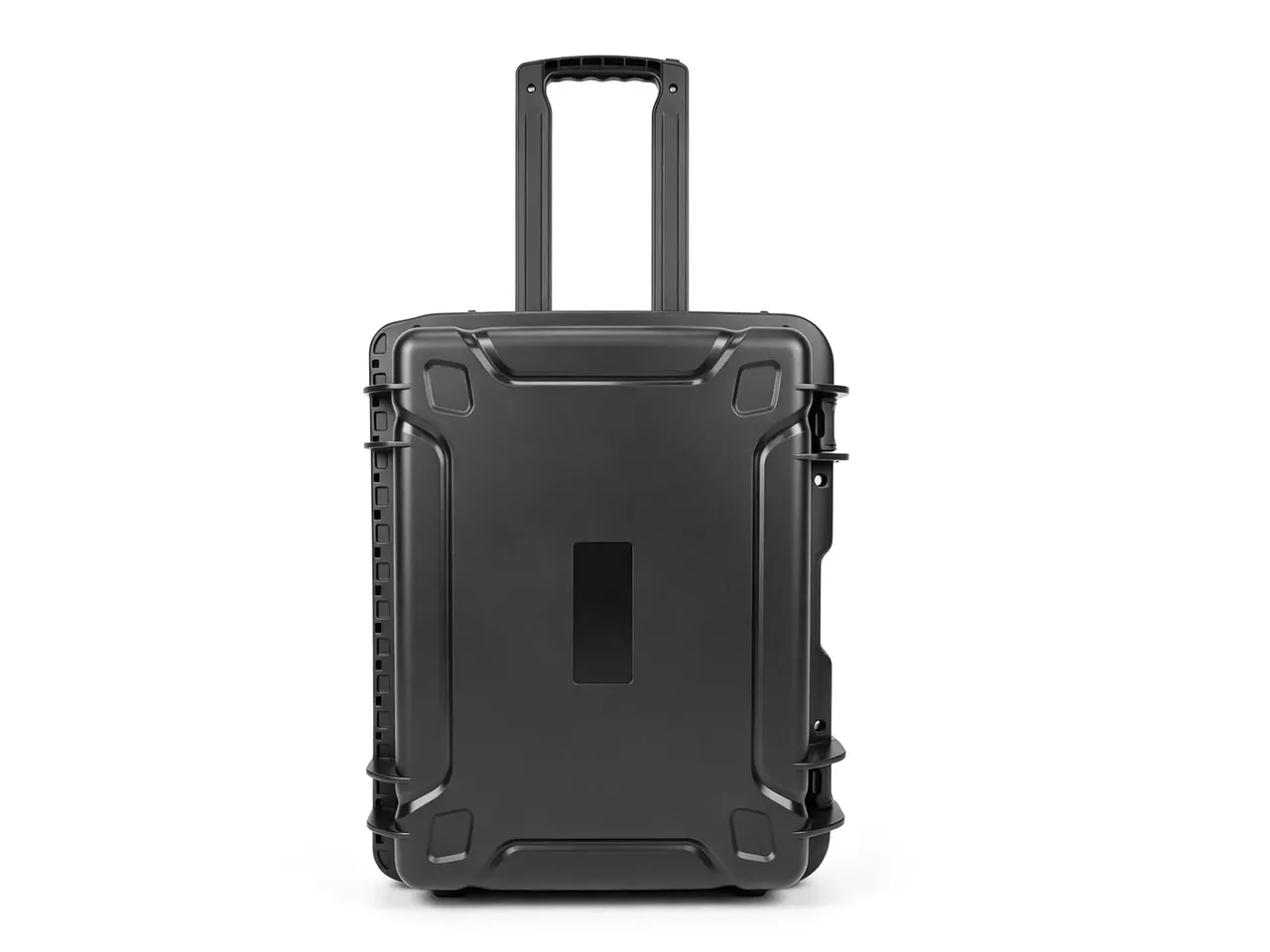
Quick answer: Choose a fire equipment case in three steps: capacity from the internal clear volume, division from the item count, mounting from where it will sit. The order cannot reverse: capacity sets the size, and size decides whether it can hang or ride.
Table of contents
- Capacity: outside size is not usable volume
- Division: dividers, foam and anchor points
- Mounting: wall, vehicle and floor
- Wheels and telescopic handle
- Acceptance: what to measure on arrival
- FAQ
1. Capacity: outside size is not usable volume
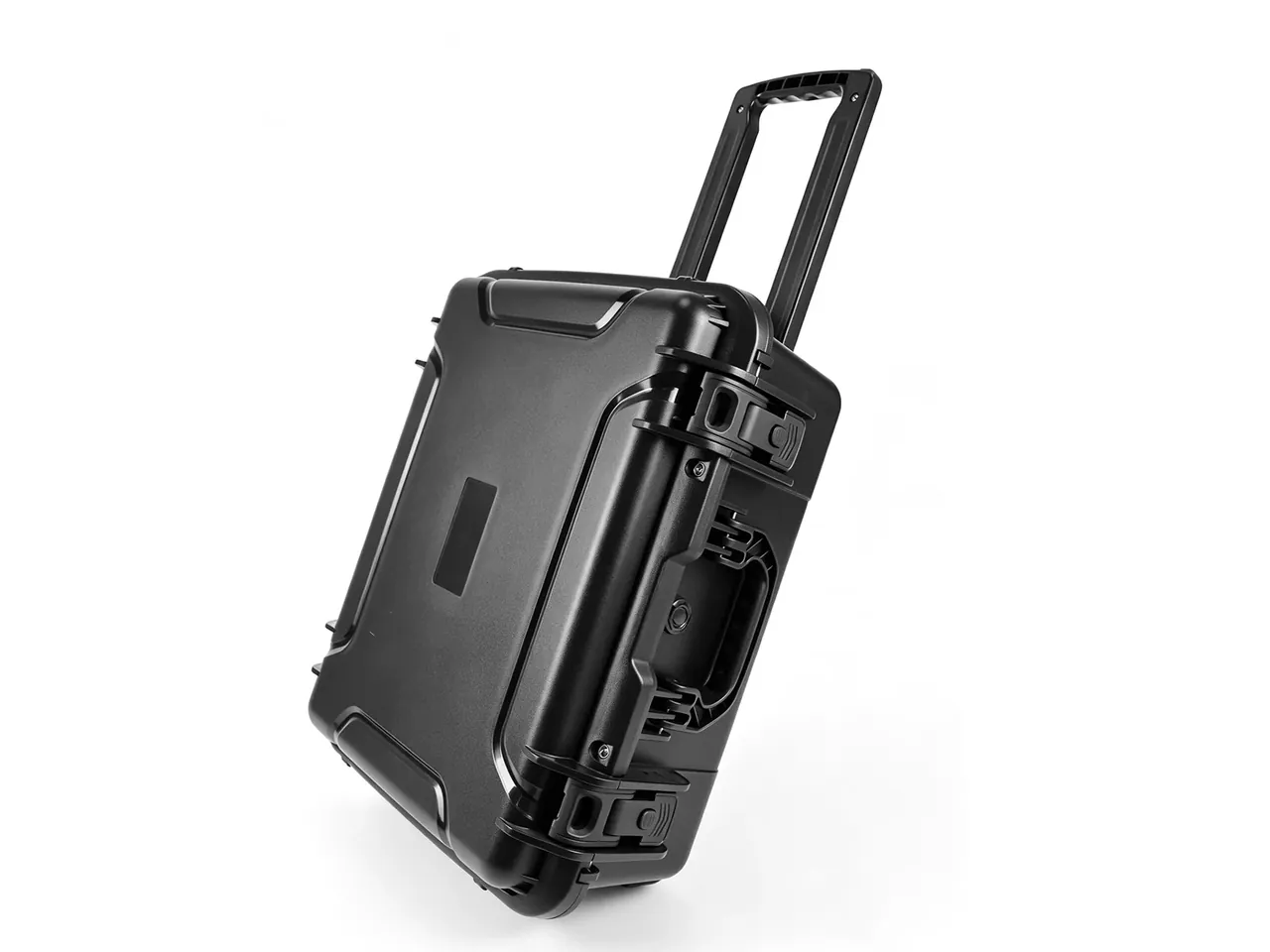
Outside dimensions serve transport and mounting; the cavity holds equipment, and wall thickness, rib crowns and seat bosses take ten to twenty millimetres between them on a rotomoulded case.
Usable volume needs internal length, width and height, with height split into lid and body: the lid share counts only when items stay lower than the lid depth. Length times width times body height gives gross volume, and a factor of 0.6 to 0.7 gives what fits. That factor is geometry: round items leave gaps, square items stand taller than they lie.
| Parameter | Used for | Common error |
|---|---|---|
| Outside size | transport, mounting | excludes handle and wheels |
| Inside size | load calculation | ignores rib crowns |
| Lid depth | standing height | merged with body depth |
2. Division: dividers, foam and anchor points
Division exists for one reason: every item keeps a place, and taking one does not move the rest. Dividers suit regular shapes, with slotted panels cutting the cavity into adjustable squares, so a changed load means swapping panels. Foam suits odd and fragile items, cut to shape for the highest accuracy, at the cost of a new cut-out per item.
Heavy items belong on the hinge side, where wall and hinge share the load; light items on the latch side, so nothing slides out as the lid opens. Leave two or three millimetres between division material and wall: packed tight, the cavity has no travel under impact.
3. Mounting: wall, vehicle and floor
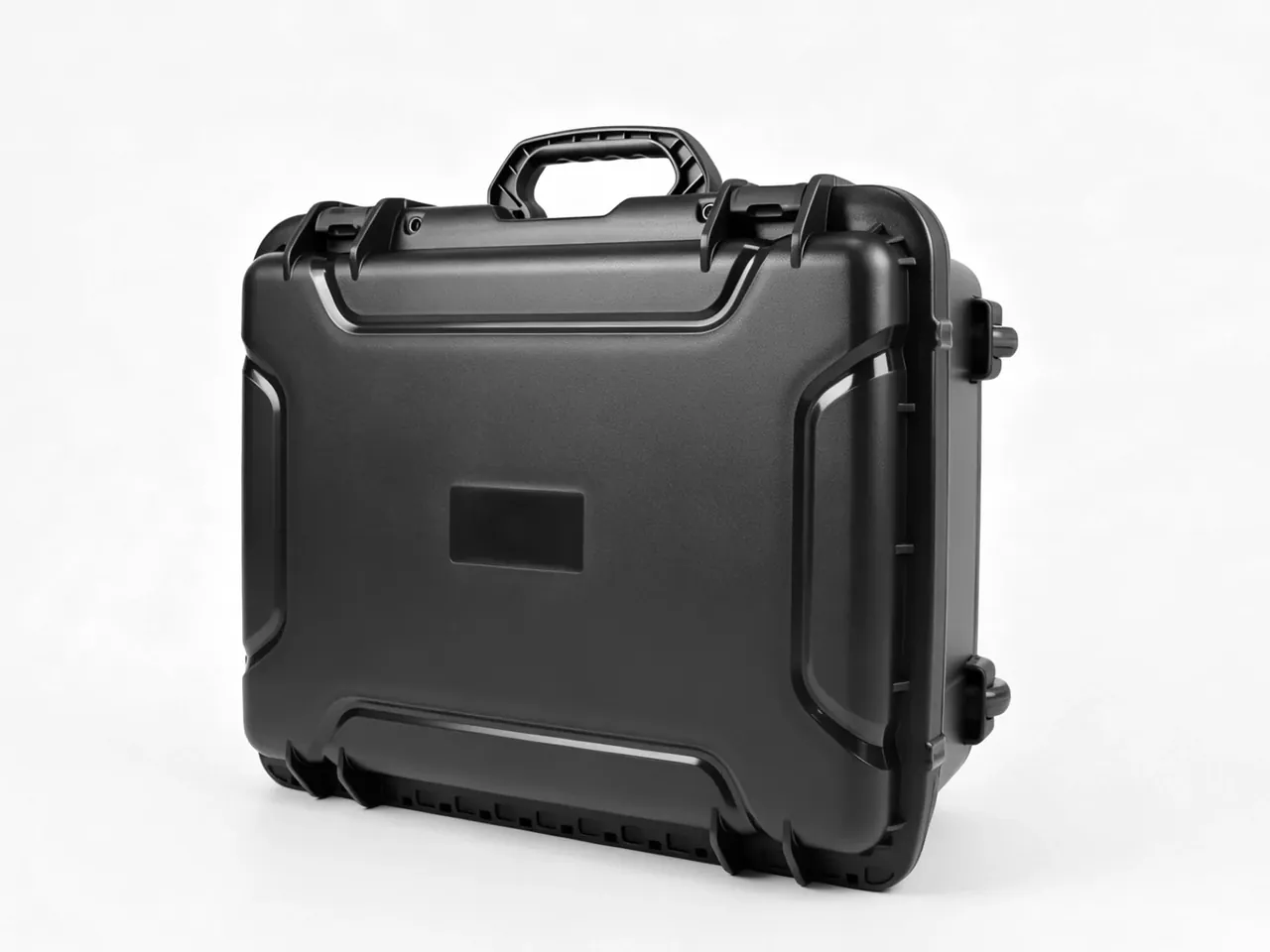
Mounting changes what the shell must do, so say where the case will sit before choosing.
A wall mount hangs on rear ears or prepared holes, and the load runs through the back wall, so the ear reinforcement must reach the side walls; two raised bosses alone crack at the hole edge when loaded. A vehicle mount relies on straps and floor: with feet only, strap contact is small and the case creeps under braking; a grooved floor bites once the strap tightens. Floor standing needs equal feet and a flat stacking face, or the second layer drifts.
4. Wheels and telescopic handle
Once equipment count grows, weight passes what one person carries far, and wheels with a handle become necessary.
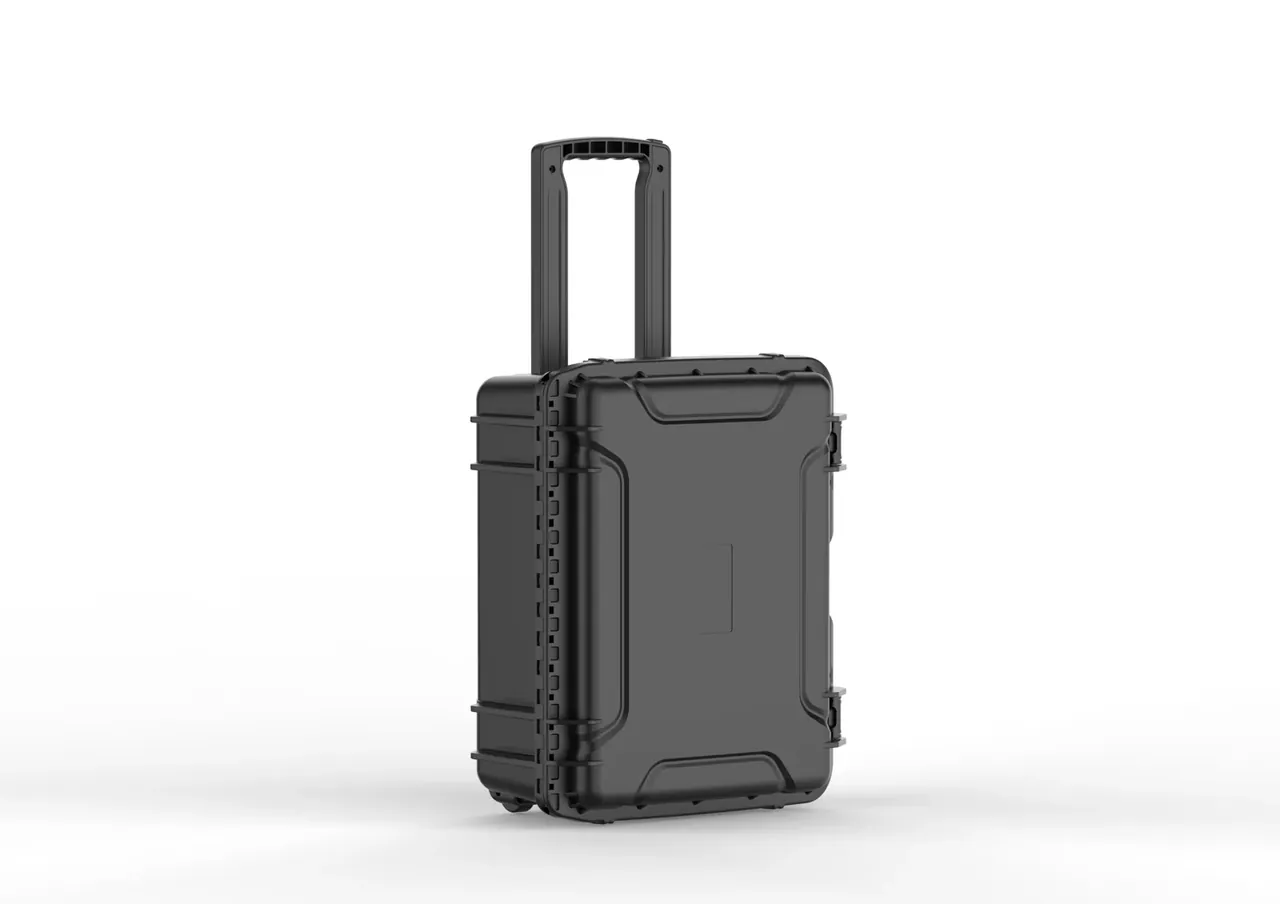
The centre of gravity must sit behind the wheel axis, or the case tips forward: fill it, extend the handle, let go, and a case that falls backwards will sway. Wheel diameter sets what it crosses, and small wheels catch on thresholds and gravel.
The cost is stacking. Handle and wheels occupy one face, that face carries no load, and stacking becomes single layer or a shelf. Work out the carry first: under fifty metres the lid handle is enough, past two hundred metres consider wheels.
5. Acceptance: what to measure on arrival
Acceptance is measurement, not appearance.
Measure outside length, width and height excluding handle and wheels, then internal length, width and height with lid and body apart so the two add up. Third, latch centre distance: the spacing of two latches sets how evenly the gasket compresses, and three millimetres of error leaves an unsealed strip. Then ear hole spacing, which decides whether it fits an existing bracket, and wheel track, which decides whether it pulls straight. Last, stacking flatness: a straight edge across the lid showing a gap over two millimetres means a crowned face that rocks.
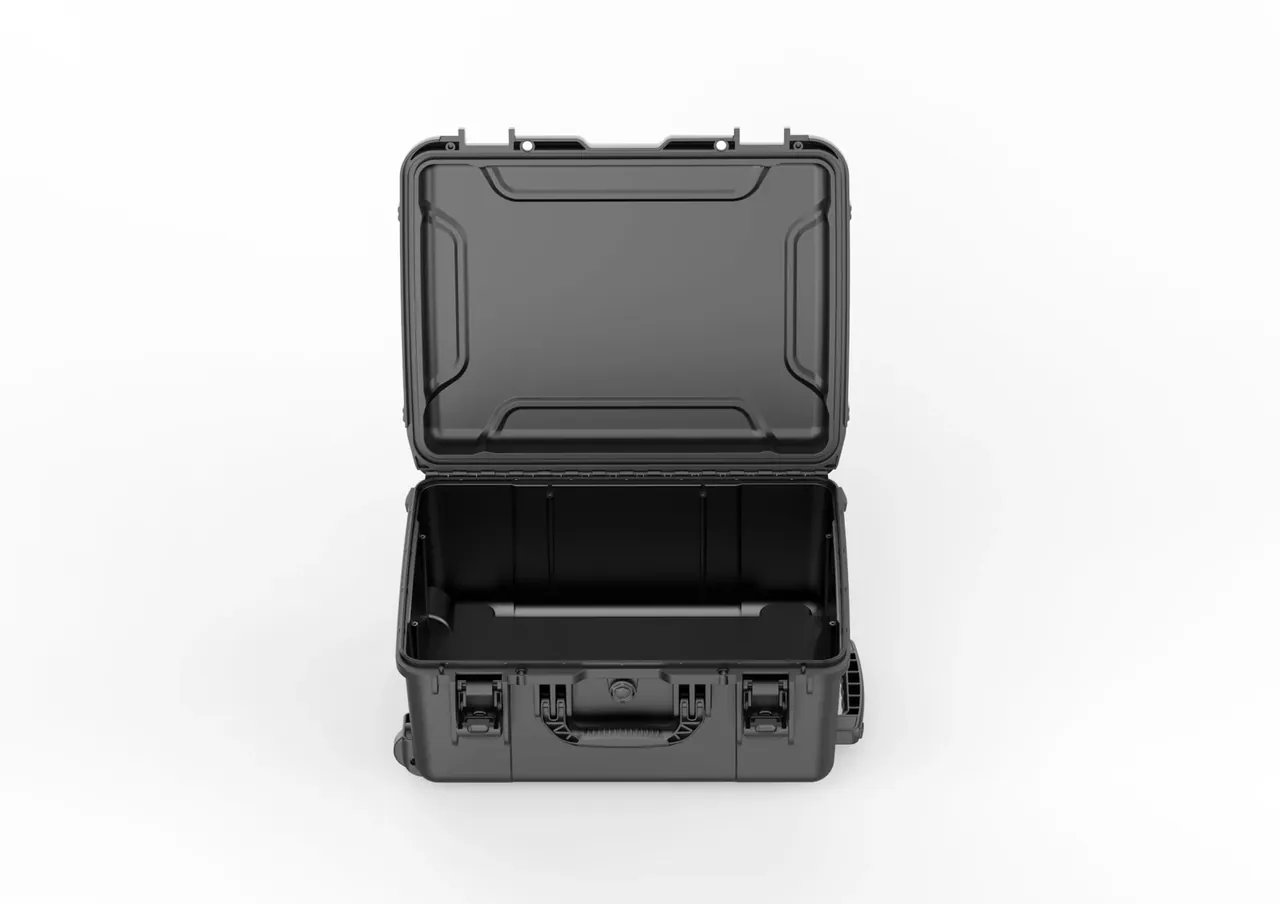
Conclusion
Selection compresses into one line: capacity from the cavity, division from the item shape, mounting from the position, in that order. Do the three steps and measure on arrival, and whether a fire equipment case works is settled before it reaches the store.
This article covers container-side specifications and design implications only, not the handling, loading or use of the contents.
Related Reading
- Access speed and marking of a fire equipment case
- Structure of a fire rescue equipment case
- Field configuration of rescue cases
- Protective design of a fire pump case
Related Products
- 8 Series — Gun Cases; Military Equipment Cases; Camera Equipment Cases; Drone Cases; Watch Cases; Knife Cases; First Aid Cases; Electronics Equipment Cases
- WL8-2812 PP Gun Case — model WL8-2812
- All protective cases and toolboxes: 7 series, 158 models