

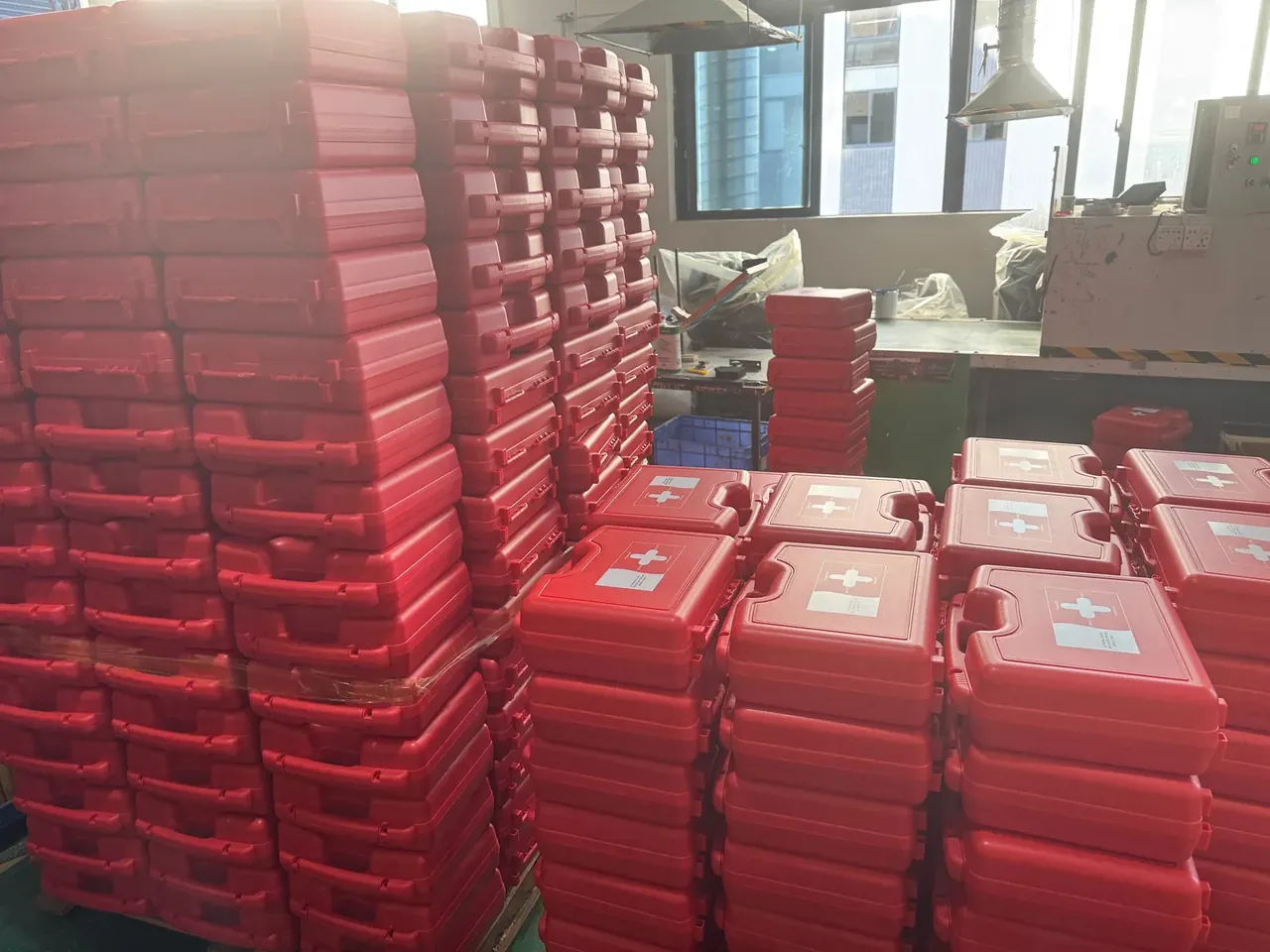
Quick answer: Air-tight sealed instrument latch case keeps decay ≤0.25 kPa / 10 min after 15 kPa / 20 cycles, set by 3.4 mm lip height and 138 mm latch spacing.
Table of contents
- Air-tight sealed instrument latch case seal-lip height
- Latch clamping-point spacing
- Pressure-drop readings after pressurization cycles
- Groove rebound under temperature retest
- Lip-height threshold for airtight batches
- FAQ
1. Air-tight sealed instrument latch case seal-lip height
Pressurization is not a one-off event for a seal: lip height and clamping-point spacing decide how much compression survives each release. The Air-tight sealed instrument latch case cuts a 3.4 mm seal lip into a 4.3 mm wall, with a 570×410×240 mm outer size and a 505×345×175 mm cavity; two gasket rings sit at 20% compression, and the lip root has to return that compression after every cycle. Too low a lip flattens the groove at 15 kPa and rebounds poorly; too high a one drives the latches to the end of travel, so four latches at 375 N each load unevenly.
Lip grades depend only on the lip-to-wall ratio. The 3.4 mm reference of the Air-tight sealed instrument latch case pairs with 4.3 mm for a ratio near 0.79; 2.8 mm lets the groove bottom out at 15 kPa when benchmarked against IP67, while 4.0 mm lifts lid misalignment and shears the lip root. All three are pressed on one tool, and groove rebound ≥92% is the minimum before the pressure bench.
| Lip grade | Lip height | Wall ratio | Reading after pressurization |
|---|---|---|---|
| Thinned | 2.8 mm | 0.65 | Groove bottomed, rejected |
| Reference | 3.4 mm | 0.79 | Rebound clears, decay converges |
| Thickened | 4.0 mm | 0.93 | Lid misalignment, retest needed |
2. Latch clamping-point spacing
A 138 mm clamping-point spacing decides whether compression is even around the lid. The Air-tight sealed instrument latch case places four latches at 375 N each on its 570×410×240 mm mouth; at 138 mm the groove span between two latches is still held by the cover rib, but a wider gap lets the mid span bulge at 15 kPa and the decay reading no longer separates a short lip from sparse clamping points.
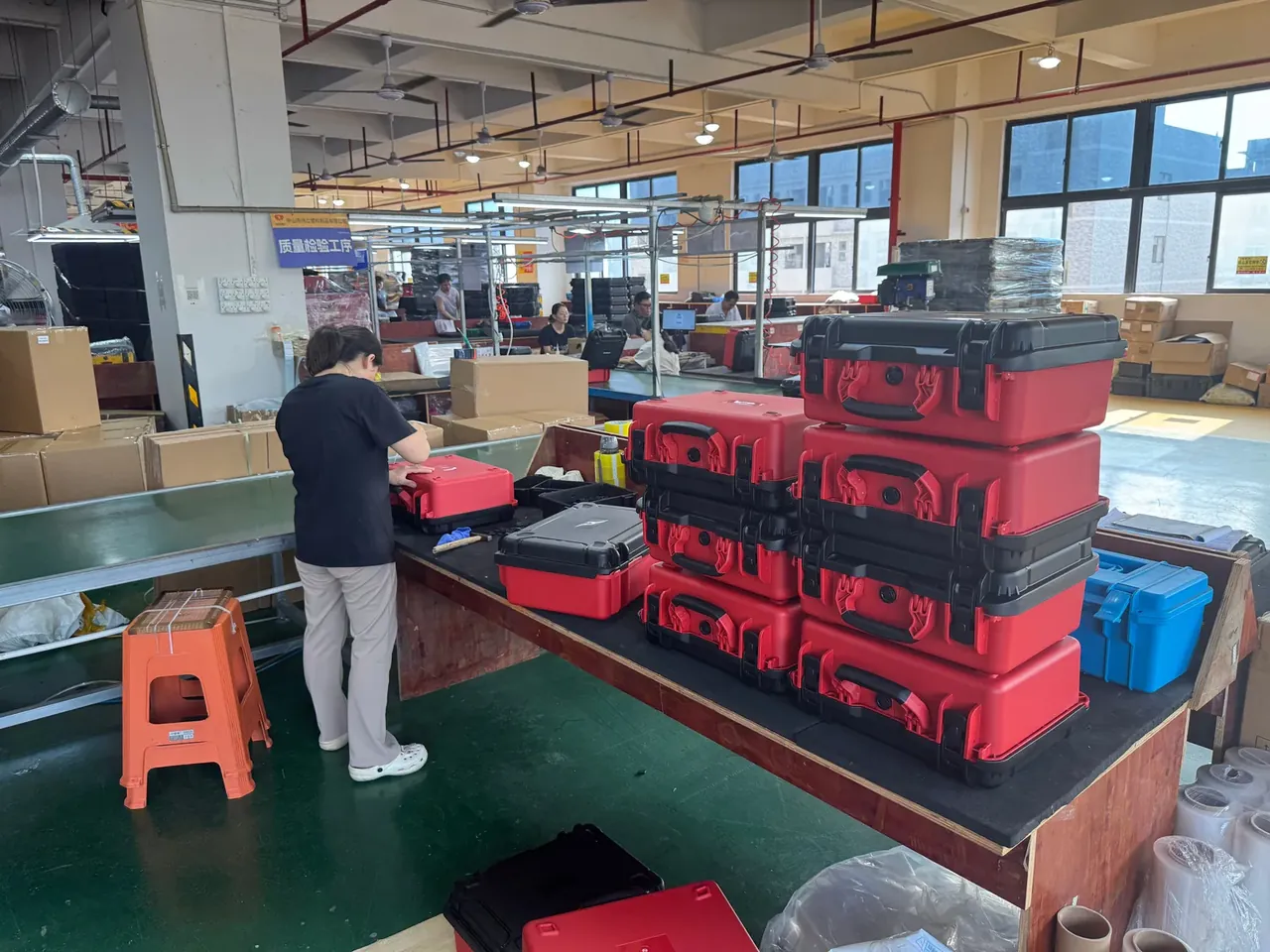
Lip height and clamping points share one compression chain in the Air-tight sealed instrument latch case: 375 N travels through the cover rib to the groove, then the 3.4 mm lip locks in 20% compression. A 5.6 kg empty shell and a 12 kg load flex the lid differently, so 138 mm must hold the groove seated under both. After 4200 cycles the latch seat is remeasured; its shift must sit below the groove pressure-drop line. Lip grade and clamping spacing are logged as a pair, since neither table alone fixes the threshold.
3. Pressure-drop readings after pressurization cycles
A cycle reading is the decay envelope over the full 15 kPa / 20 cycles, not one hold. The Air-tight sealed instrument latch case is charged to 15 kPa and released each round; decay ≤0.25 kPa / 10 min and groove rebound ≥92% are parallel criteria, one for seal retention and one for lip-root recovery. Late cycles eat into groove compression and a small step appears, whose position moves with the lip grade.
| Pressurization cycle | Pressure value | Hold time | Decay reading |
|---|---|---|---|
| Early cycles | 15 kPa / 1–7 | 10 min | Within 0.12 kPa |
| Mid cycles | 15 kPa / 8–14 | 10 min | Near the 0.25 kPa limit |
| Late cycles | 15 kPa / 15–20 | 10 min | Falls back to 0.20 kPa |
Decay values follow the cycle index rather than a 20-cycle mean. The Air-tight sealed instrument latch case is hardest to hold at the 20th cycle: 3.4 mm keeps decay inside 0.25 kPa, while 2.8 mm has already crossed. Stacking the three grades shows which cycle sets the lip-height threshold.
4. Groove rebound under temperature retest
The retest pulls the mouth from -25 C to 55 C, so groove rebound of the Air-tight sealed instrument latch case no longer depends on room temperature alone and the lip-root lag hidden at 5.6 kg empty is exposed. Only late cycles are revisited; rebound ≥92% must match the room-temperature case and no gasket segment may lift out.
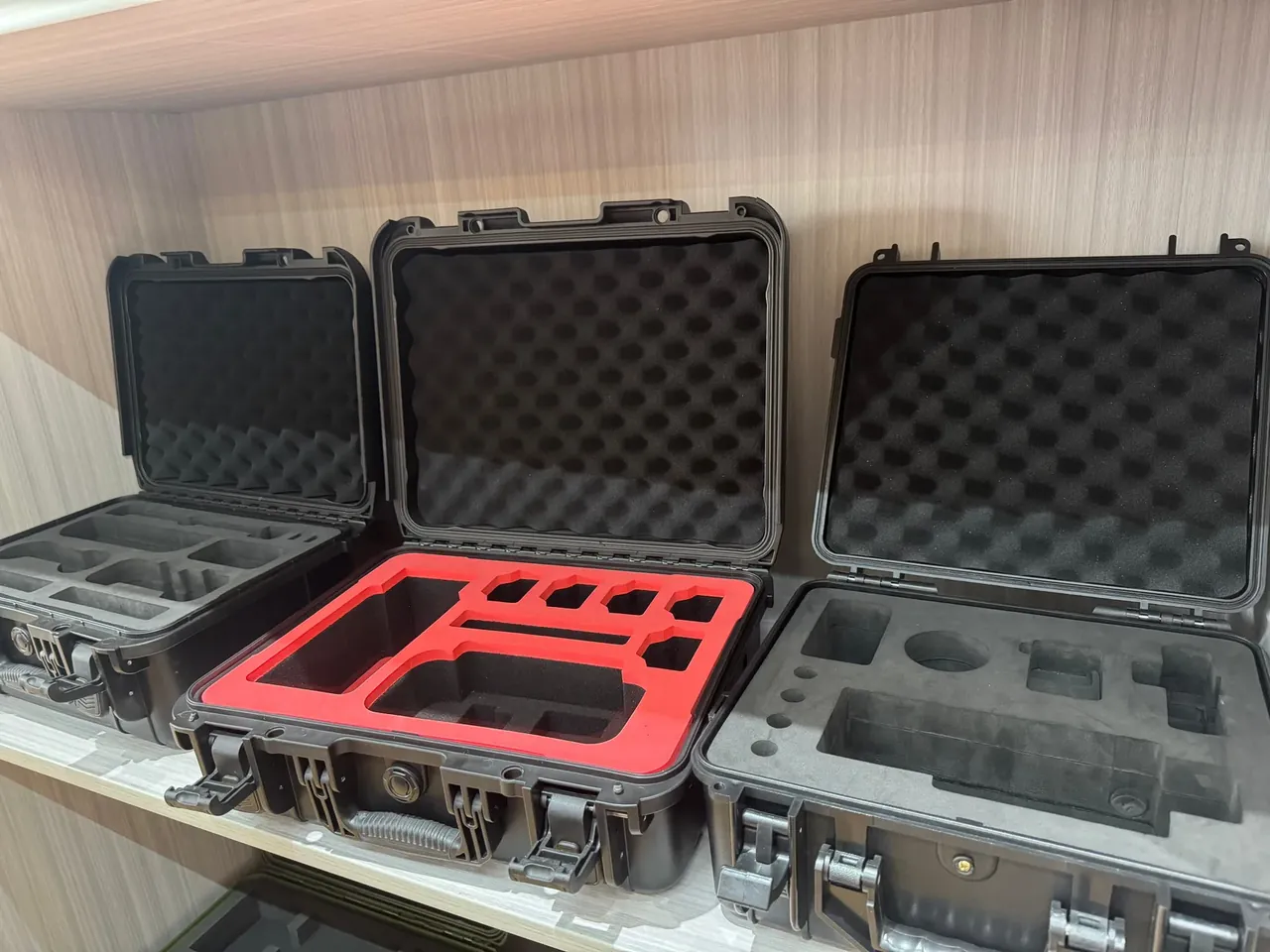
Four latches at 375 N hold the lid of the Air-tight sealed instrument latch case through the temperature swing, two rings seated at 20% compression; benchmarked against IP67, the mouth must not leak after 4200 cycles. A groove flat in the cold binds the lid and lifts decay, and a 0.05 kPa room-versus-ambient gap sends it back for a lip-root check.
| Pressure-drop value | Lip height | Groove rebound | Verdict |
|---|---|---|---|
| 0.14 kPa | 4.0 mm | 94% | Keep |
| 0.22 kPa | 3.4 mm | 92% | Reference |
| 0.31 kPa | 2.8 mm | 87% | Reject |
5. Lip-height threshold for airtight batches
The airtight batch of the Air-tight sealed instrument latch case closes on a lip-height threshold, taken as the lowest grade whose decay still holds 0.25 kPa after the 20th cycle; samples below it are removed as a lot. This rejection line anchors on the late-cycle decay, so tidy early-cycle numbers cannot loosen it.
The threshold settles at 3.4 mm, and 2.8 mm samples are excluded from delivery. The Air-tight sealed instrument latch case writes a 3.4 mm lip, 138 mm spacing, 12 kg load and 15 kPa / 20 cycles onto one card; the 570×410×240 mm outer size and 505×345×175 mm cavity are checked once on the drawing, while the bench measures decay and rebound. The 4200 cycles, 375 N latches and 20% compression stay on the shell side between batches.
Conclusion
Whether the Air-tight sealed instrument latch case passes comes down to a 3.4 mm lip with 138 mm spacing holding ≤0.25 kPa / 10 min and ≥92% rebound through 15 kPa / 20 cycles. Each table pins one variable — lip grade, cycle count, decay value — and together they fix the release basis for an airtight batch of the Air-tight sealed instrument latch case.
Related Reading
- Airtight leak testing: pressure decay, bubbles and tracer methods
- Reading the 0.3 kPa airtight pressure-drop criterion
- Single-lip versus double-lip gasket groove design
- Choosing silicone, EPDM and PVC gasket materials
Related Products
- 8 Series — Gun Cases; Military Equipment Cases; Camera Equipment Cases; Drone Cases; Watch Cases; Knife Cases; First Aid Cases; Electronics Equipment Cases
- WL8-2812 PP Gun Case — model WL8-2812
- All protective cases and toolboxes: 7 series, 158 models