

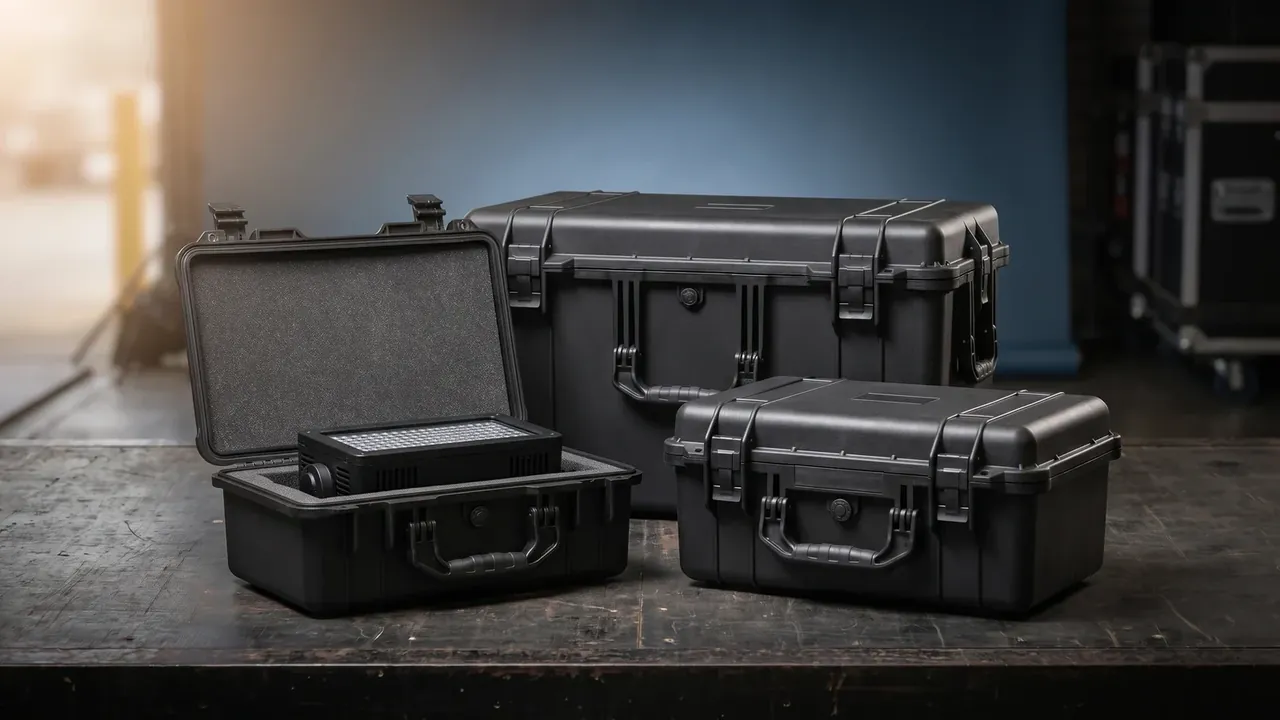
Quick answer: An airdrop case serves four roles: emergency supply delivery, field resupply, whole-set equipment transfer and training gear management. Each role reorders buffer thickness, tie-down count, liner form and marking, so one universal build ends up overbuilt in one place and short in another.
Table of contents
- Where an Airdrop Case Is Used: Four Roles
- Emergency Supply Delivery: Buffer Thickness and Liner Fixing
- Field Resupply: Tie-Down Count and Sling Method
- Equipment Transfer: Compartment Liners and Marking
- Training Gear Management: Cycles and Stacking
- FAQ
1. Where an Airdrop Case Is Used: Four Roles
The same body exposes a different weakness in each role. A buffer that suits emergency delivery eats the compartment space needed for transfer, and a light shell built for daily training will not survive field stacking. What separates the roles is the priority order of four settings.
| Role | Main constraint | Buffer | Tie-downs | Liner |
|---|---|---|---|---|
| Emergency supply | Landing shock | 50 mm, two layers | 6 | Full wrap |
| Field resupply | Long offset load | 35 mm, single | 8 | Corner wrap |
| Equipment transfer | Fast count | 25 mm, single | 4 | Dividers |
| Training gear | Opening life | 20 mm, single | 4 | Removable tray |
Priority order decides where cost lands: emergency work pays for buffer and liner, field work for tie-downs and sling hardware, transfer for compartments, training for latch life. Asking for all four delivers seventy percent of each.
2. Emergency Supply Delivery: Buffer Thickness and Liner Fixing
Emergency delivery is a buffer problem first. This class carries a 50 mm two-layer liner, 25 mm above and below, compression set under 5 percent, and an internal range from minus 20 to plus 55 degrees Celsius. With that much foam the wall can relax to 4 mm.
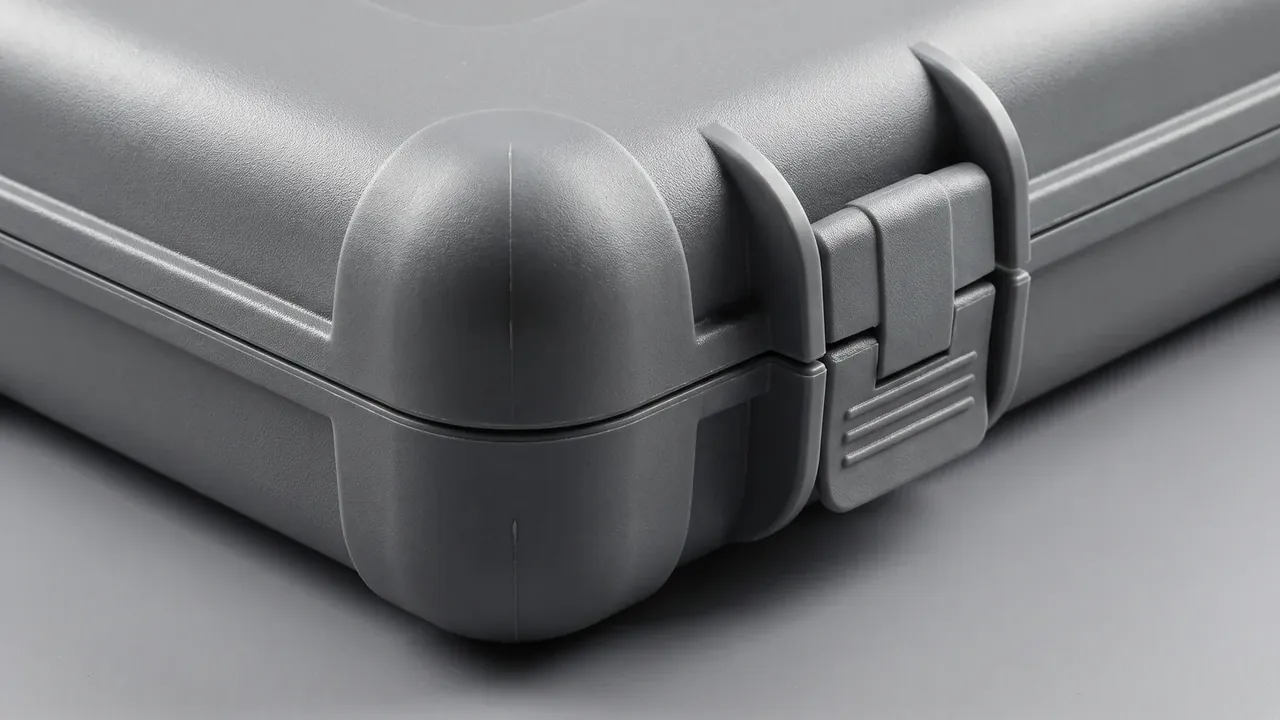
Liner fixing fails more often than thickness here. A full-wrap liner held by friction alone shifts after repeated shock and the buffer stops being even; corner posts plus a mating lid liner keep the layers interlocked.
A 50 mm two-layer liner costs about thirty percent of net volume, so these bodies go flat and wide at a length-to-width ratio near 3 to 2.
3. Field Resupply: Tie-Down Count and Sling Method
Field resupply lives with offset load. The centre of gravity rarely sits in the middle, so tie-downs go from four to eight, spaced every 150 mm along the long side at 2.5 kN each, removing the reliance on two hard-working corners.
Sling method follows: field bodies take a pass-through webbing strap, 50 mm wide, so the edges it crosses need a thickened transition.
Edge radius is the quietest figure here. It costs nothing and decides strap life: at 18 mm instead of 10 mm the same webbing wears visibly slower, which is why an airdrop case for field work looks rounder than a transfer body.
4. Equipment Transfer: Compartment Liners and Marking
For whole-set transfer, compartments set the agenda. Liners use 8 mm dividers, a 20 L body taking 12 compartments with a 2 mm gap so they do not jam under vibration. Once the count is fixed, the cavity derives from the grid.
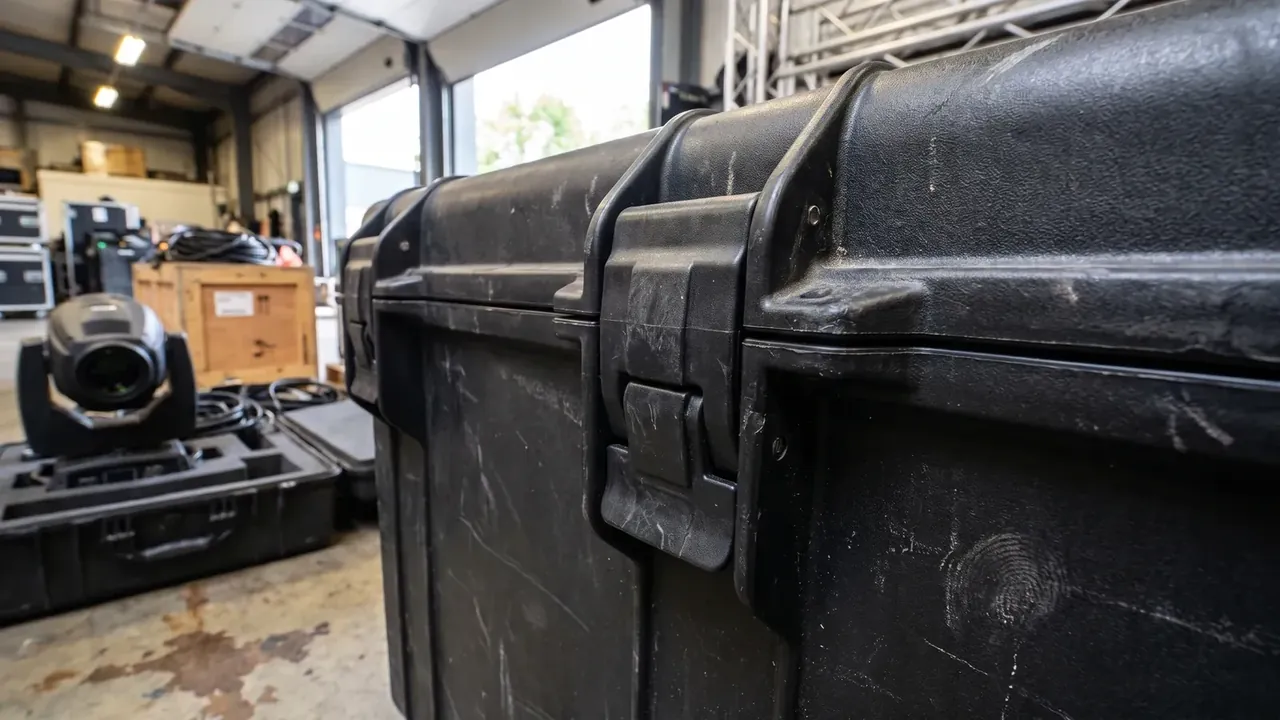
Marking is the other half: a 12-compartment airdrop case carries label pads of 100 by 70 mm, moulded into the lid above each compartment and sunk in a 0.5 mm recess.
Stackability is the third requirement: a 6 mm boss around the lid seats in the base recess above. Too shallow and the stack slides, too deep and water collects.
5. Training Gear Management: Cycles and Stacking
Training gear is a life question, not an impact question. These bodies turn over hundreds of times a year, so the numbers shift from single-impact protection to cycle life and stacking, and both push the wall away from thin sections.
| Metric | Value |
|---|---|
| Latch cycles | 3000 openings |
| Stacking | 4 high, 45 kg per case |
| Base rib height | 8 mm |
| Body weight ceiling | 7 kg |
The liner here is removable: gear shapes change and fixed compartments lose their fit within months, so a tray sits on four base ribs at least 8 mm high and lifts out whole.
Stacking load and the 7 kg ceiling pull in opposite directions, so reinforcement concentrates in corners and base ribs while the mid-wall stays lean.
Conclusion
The four roles differ in four settings: buffer thickness sets protection margin, tie-down count sets load spread, liner form sets counting speed, marking sets usability. Ranking them per role beats chasing one universal body, and that is where an airdrop case earns its place.
This article discusses only the container (case body) side of specifications and design intent, and does not cover any handling, loading or use of the contents.
Related Reading
- How Emergency Supply Cases Are Configured
- How a Military Supply Case Is Built
- Where Logistics Support Boxes Are Used
- Structural and Cushioning Requirements for an Airdrop Case
Related Products
- 8 Series — Gun Cases; Military Equipment Cases; Camera Equipment Cases; Drone Cases; Watch Cases; Knife Cases; First Aid Cases; Electronics Equipment Cases
- WL8-2812 PP Gun Case — model WL8-2812
- All protective cases and toolboxes: 7 series, 158 models