

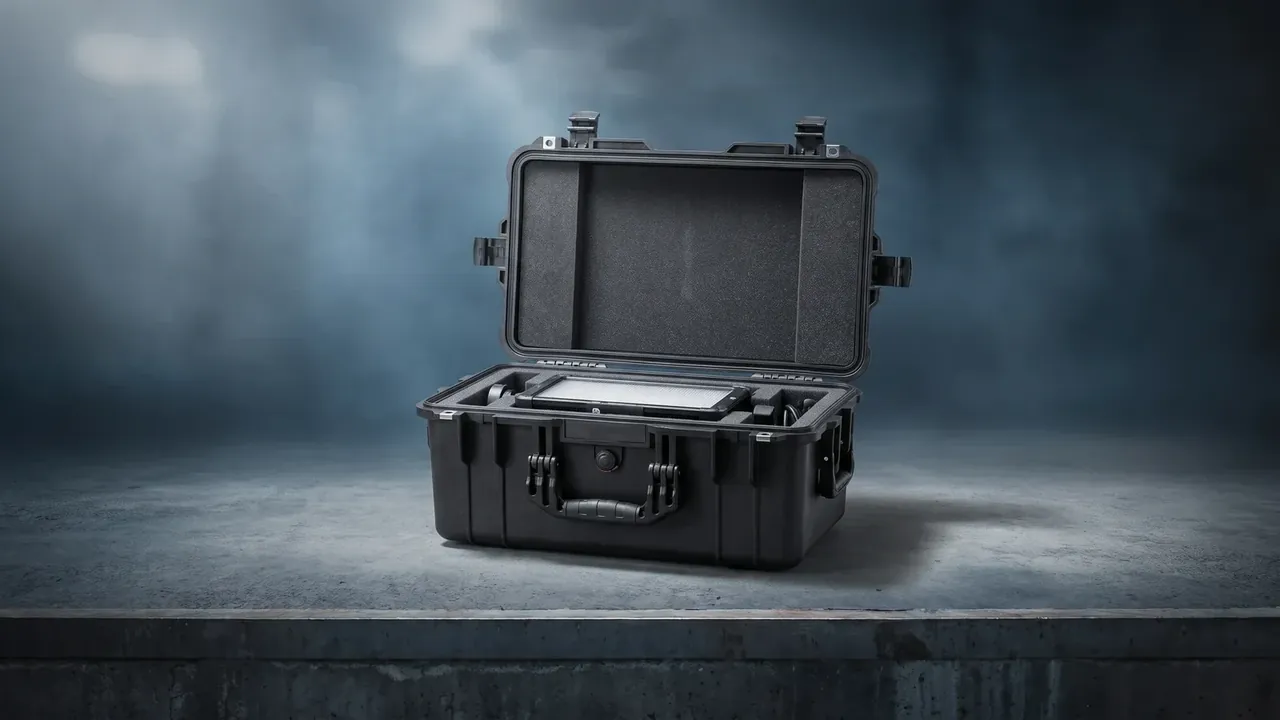
Quick answer: An Airdrop Case is checked on four levels: visual before every drop, full inspection every 10 deliveries, airtightness and torque at 25 deliveries or 12 months, drop re-test at 50 deliveries or three years. Four thresholds drive replacement: wall wear, seal compression set, insert torque decay and latch opening force.
Table of contents
- Inspection Levels and Intervals
- Reading Wall Wear and Thickness
- Seal Compression Set and Airtightness
- Insert Torque Decay and Latch Preload
- Replacement Lines and Scrapping
- FAQ
1. Inspection Levels and Intervals
Intervals follow delivery count, not the calendar: damage happens at landing and at transfer, not while a case sits in a store.
| Level | When | Items | Time |
|---|---|---|---|
| One | Before each drop | Cracks, latch closure, handle, markings | 5 min |
| Two | Every 10 deliveries | Wall thickness, seal, inserts, hinges, liner | 20 min |
| Three | 25 deliveries or 12 months | Airtightness, torque, latch force | 40 min |
| Four | 50 deliveries or 3 years | Drop re-test, salt spray sample | Out of house |
Each level filters what the one before could not; skip one and the saving returns as a scrapped Airdrop Case.
2. Reading Wall Wear and Thickness
Thickness is the only wear figure measured continuously: from 4.5 mm, five points on each base edge and vertical corner, read from inside with an ultrasonic gauge, 15 mm clear of rib roots and inserts.
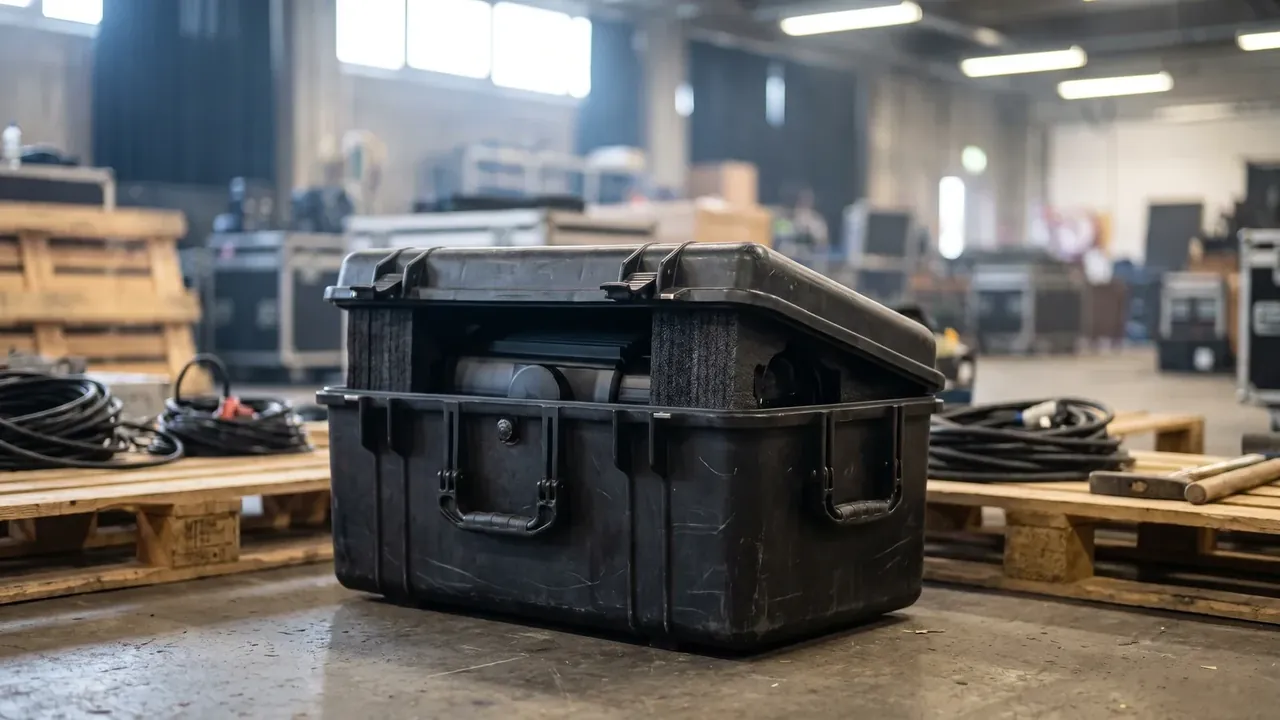
Up to 0.3 mm is normal; 0.3 to 0.8 mm is logged and the interval cut to every five deliveries; past 0.8 mm comes a 2 mm PE patch or a new part; under 3.2 mm remaining the Airdrop Case is scrapped, since that wall no longer holds insert pull-out.
Sliding wear spreads sideways: once a skid wears through, loss runs 200 mm across and a patch lifts within two drops, so judge at the thinnest point.
3. Seal Compression Set and Airtightness
Two numbers decide the seal: a 12 mm cord closes to 8.5 mm, a 29 percent squeeze inside the 25 to 30 percent window: more kills rebound, less leaks.
| Item | Pass | Replace |
|---|---|---|
| Compression set | Within 25% | Over 35% |
| Surface cracks | None | Through, or two |
| Joint offset | Within 0.2 mm | Over 0.5 mm |
Set follows GB/T 7759.1: 70°C for 24 h, 30 minutes recovery, then measure. Up to 25 percent passes, 25 to 35 percent halves the interval to six months, past 35 percent the cord is replaced rather than glued or flipped.
Airtightness runs at 20 kPa for 60 s with no more than a 2 kPa drop. On an Airdrop Case that fails, check cord, then latch preload, then rim flatness: a rim out by 0.5 mm will not seal with a new cord.
4. Insert Torque Decay and Latch Preload
Torque decays two or three cycles before anything looks loose. An M8 insert goes in at 12 N·m, is re-checked quarterly, and below 9.6 N·m, a 20 percent loss, is re-torqued and measured after 24 h.
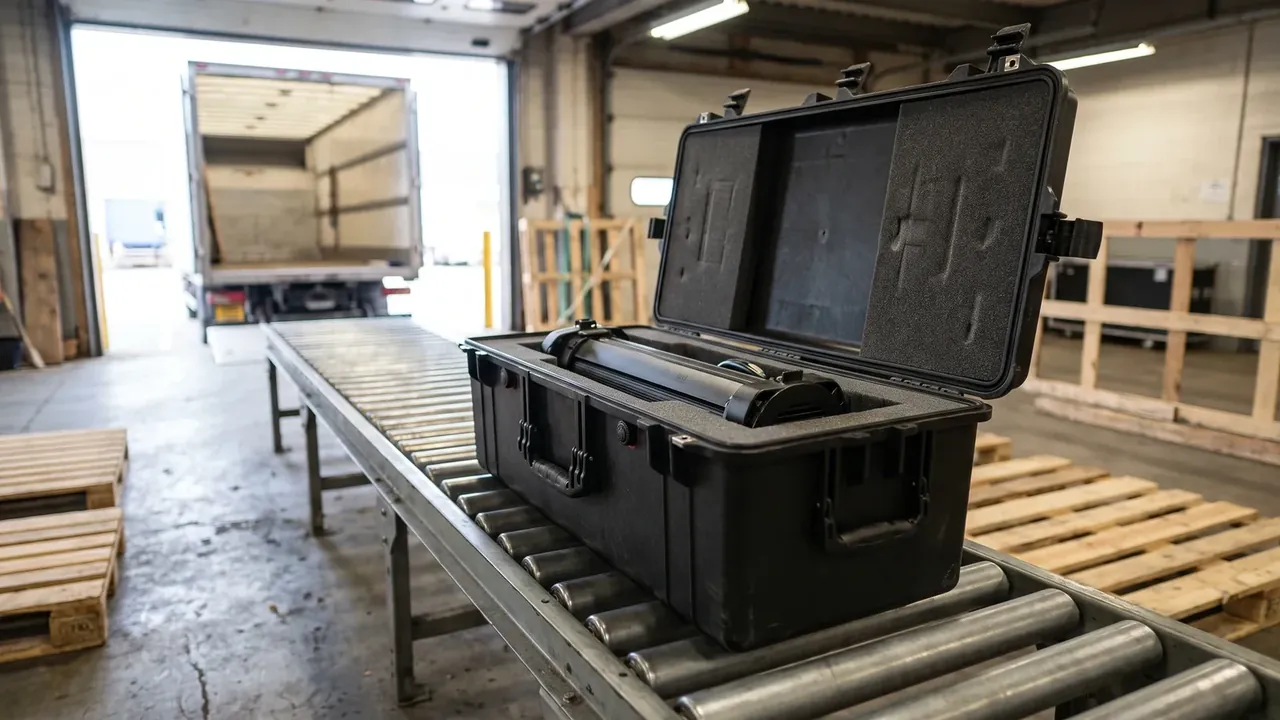
Two failed re-torques, or pull-out down from 3 kN to 2.4 kN, mean a new insert with a bored hole and sleeve, not a longer bolt.
Latches: below 80 N it is replaced, above 160 N cleaned and greased, and travel worn from 8 mm to under 6 mm means replacement. Hinge pin clearance starts at 0.3 mm; past 0.8 mm the bushes go.
5. Replacement Lines and Scrapping
| Part | Threshold | Action | Scrap line |
|---|---|---|---|
| Wall | 0.8 mm wear | Patch or replace | Under 3.2 mm |
| Seal | 35% set | New cord | Still leaking after |
| Insert | 9.6 N·m twice | New insert | Pull-out under 2.4 kN |
| Latch | 80 N opening | New latch | Travel under 6 mm |
The order is fixed: repair, then replace, then scrap. Three conditions together end an Airdrop Case: wall under 3.2 mm, rim flatness past 0.5 mm that will not true up, and a second crack at a repaired area.
Three log fields cover it: delivery count, last part replaced with date, verdict. Chained, they show whether a case fell behind at delivery 30 or 45.
Conclusion
The difficulty in Airdrop Case maintenance is not the checking but the verdict: thinnest wall point, seal set, insert torque decay, latch force, each with its own line. Counting intervals in deliveries keeps the schedule close to how damage accrues; a log of actual values leaves a measurable life in every Airdrop Case.
This article discusses only the container (case body) side of specifications and design intent, and does not cover any handling, loading or use of the contents.
Related Reading
- Inspection items and acceptance
- Inspection practice for military supply cases
- Quality control on the assembly line
- Cushion specifications and replacement
Related Products
- 8 Series — Gun Cases; Military Equipment Cases; Camera Equipment Cases; Drone Cases; Watch Cases; Knife Cases; First Aid Cases; Electronics Equipment Cases
- WL8-2812 PP Gun Case — model WL8-2812
- All protective cases and toolboxes: 7 series, 158 models