

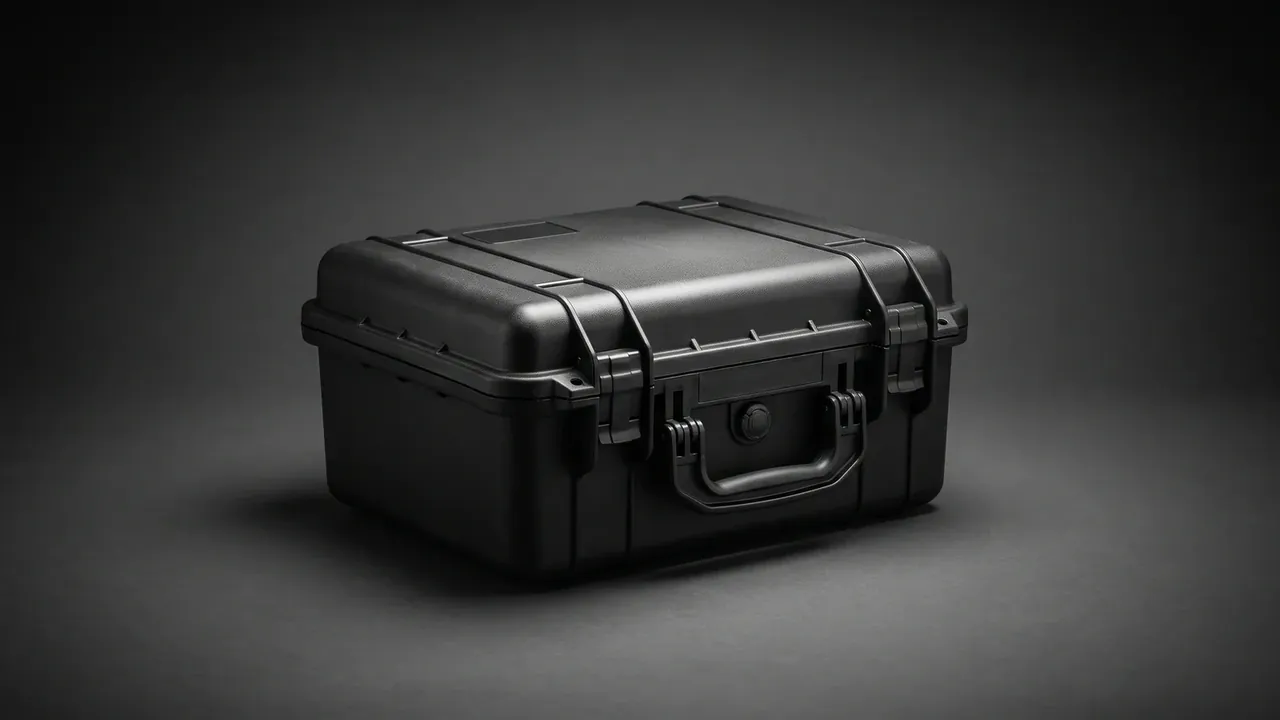
Quick answer: Choosing an airdrop case is not a matter of picking the thickest shell. Rank five criteria first: buffer demand and allowable g load, weight against volume efficiency, sling and tie-down points, latch security, and landing behaviour, then fix the numbers.
Table of contents
- What an Airdrop Case Selection Comes Down To
- Buffer Demand and Allowable G Load
- Case Weight Against Volume Efficiency
- Sling and Tie-Down Point Configuration
- Latch Security and Landing Recovery
- FAQ
1. What an Airdrop Case Selection Comes Down To
Buyers usually open with wall thickness, but on the case body thickness is an outcome. Five criteria decide whether a case fits a task, and they conflict: a thicker buffer eats cavity, a stiffer wall adds weight.
| Criterion | Question | Typical range |
|---|---|---|
| Buffer and allowable load | Shock the body absorbs | 35–50 g |
| Weight and volume efficiency | Cavity per envelope | Ratio 0.62–0.74 |
| Sling points | Load reaching corners | 4–6 points, 1.2–2.0 kN |
| Latch security | Staying shut after impact | 2–3 latches, 90–120 N |
| Landing behaviour | Righting and reopening | 15 degrees |
Allowable g load sets the ceiling on everything else: lower it and the buffer grows, the ratio falls, wall and weight climb with both. Sling points decide whether load reaches the corners; latches and landing decide whether the case still works.
2. Buffer Demand and Allowable G Load
Allowable g load is the peak acceleration the contents may see. At 40 g the foam needs about 40 mm of compression travel; at 30 g that grows to 55 mm. Travel is subtracted from the cavity, so an error here reshuffles every dimension downstream.
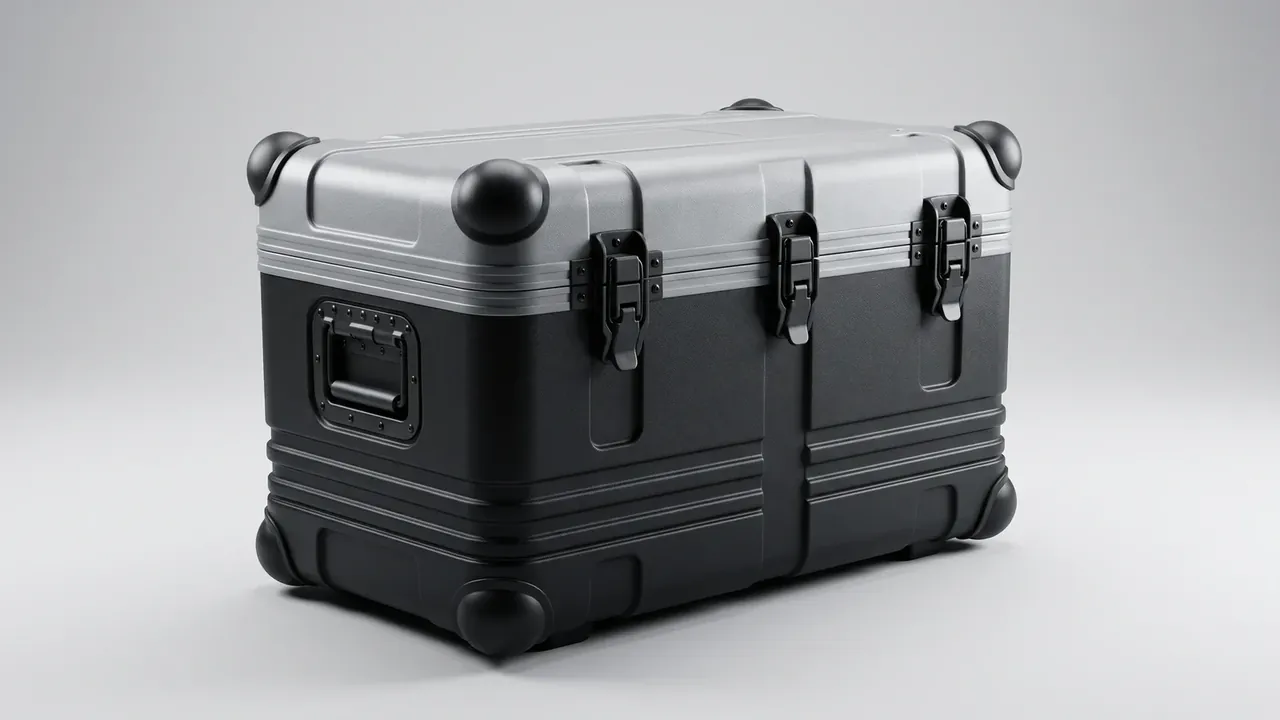
The wall is credited with more than it delivers. A 5 mm polyethylene wall deflects little in a single impact; the energy goes into foam compression. Line up allowable load, buffer thickness and wall thickness in one row and see which number fails first: 50 g pairs with 30 mm and a 4.5 mm wall, 40 g with 40 mm and 5.0 mm, and the denser foam goes from 28 to 45 kg/m³ as the buffer thickens.
3. Case Weight Against Volume Efficiency
Net volume ratio compares usable cavity to outer envelope, and an airdrop case usually lands between 0.62 and 0.74. A 60 L case with a 5 mm wall and 40 mm buffer weighs 8.5 kg at a ratio of 0.68; at 6 mm it rises to 11 kg and 0.62.
The criterion is marginal return. That extra millimetre buys puncture resistance and costs 2.5 kg per case, which changes how a set of four is carried. Below 4 mm the corners buckle first, and no amount of foam compensates. Lid engagement is the quieter loss: every 5 mm costs about 0.02 in net volume ratio.
4. Sling and Tie-Down Point Configuration
Sling hardware and tie-down points are the only interfaces that pass load into an external structure, and position matters more than count. Four symmetric points over the corner reinforcements, rated at 1.6 kN each, is common; move them to mid-wall and the same rating forces a thicker wall.
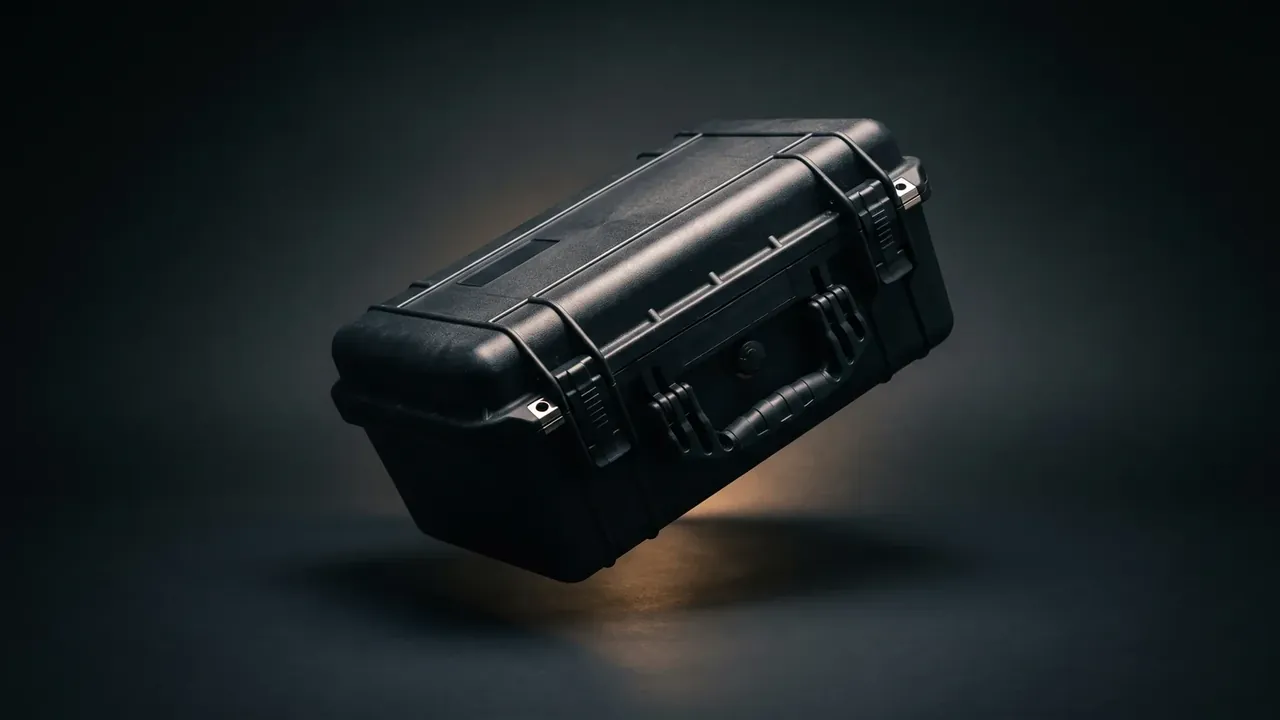
Six points spread load only marginally while hardware cost climbs. Once the centre of gravity sits more than 30 mm off the geometric centre, six earn their place. Hardware must also sit below the lid line, or it bears on the case stacked above and concentrates pressure on one spot.
5. Latch Security and Landing Recovery
Latches fail first after impact. Two suit small volumes, three suit a long side beyond 600 mm where the centre latch holds the lid, and 90 to 120 N is the usable opening window.
Security is geometry rather than force: a recessed latch resists snagging, a safety pin resists vibration, a stop step prevents one side opening first. Below one third of case height with a 20 mm base radius, the case rights itself from a 15 degree tilt.
| Layout | Latches | Base radius | Recovery |
|---|---|---|---|
| Small short case | 2 | 15 mm | Opens from one side |
| Standard mid case | 2 plus centre catch | 20 mm | Rights from 15 degrees |
| Long side over 600 mm | 3 | 25 mm | Two people to roll |
Conclusion
Order beats individual figures: set the buffer from the allowable load, check weight against net volume ratio, then close with sling points, latches and landing behaviour. Raising one criterion alone sends the bill to the other two. A well-chosen airdrop case is where five constraints meet.
This article discusses only the container (case body) side of specifications and design intent, and does not cover any handling, loading or use of the contents.
Related Reading
- How an Airdrop Case Is Built: Structural and Cushioning Requirements
- Airdrop Case vs a Standard Transit Case Under Impact
- How a Shockproof Case Absorbs Impact
- How to Match Case Cavity Size to the Outer Envelope
Related Products
- 8 Series — Gun Cases; Military Equipment Cases; Camera Equipment Cases; Drone Cases; Watch Cases; Knife Cases; First Aid Cases; Electronics Equipment Cases
- WL8-2812 PP Gun Case — model WL8-2812
- All protective cases and toolboxes: 7 series, 158 models