

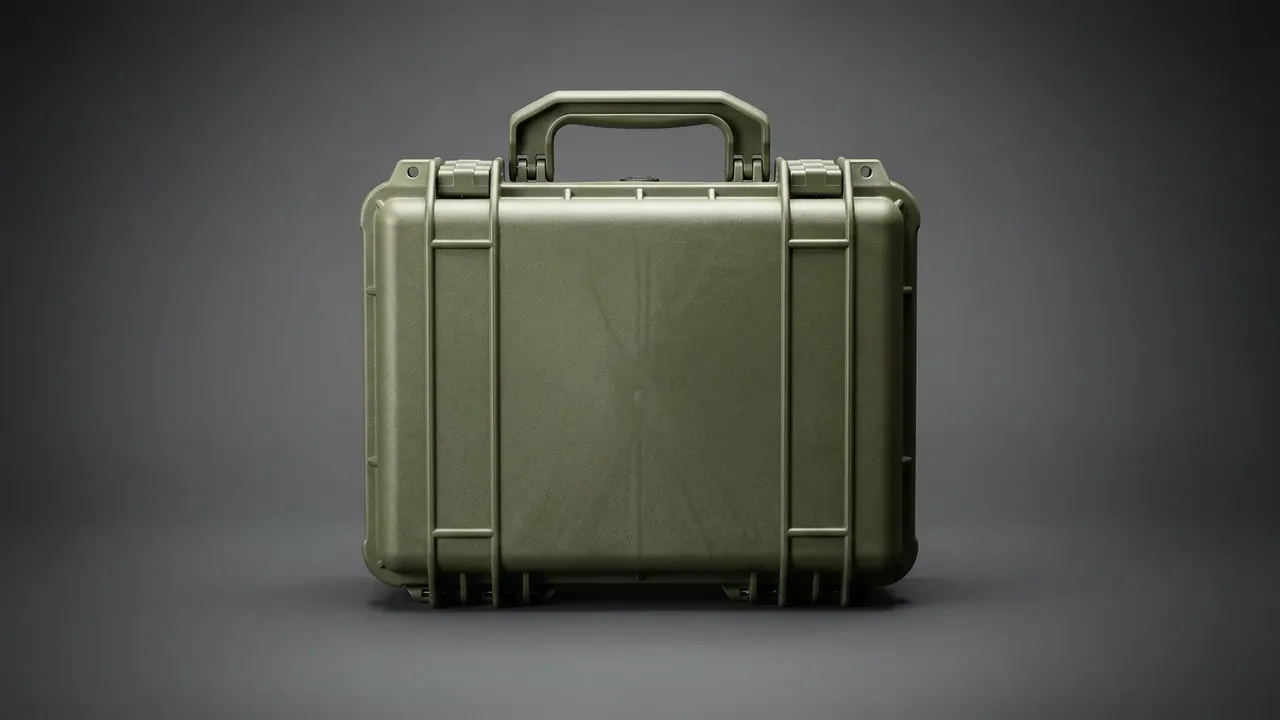
Quick answer: A shockproof case is not a thicker box. It splits one impact into three stages: the shell spreads a point load into an area, the foam flattens the peak, the lining holds the load still so it cannot strike twice. Break one stage and the other two lose their effect.
Table of contents
- What a shockproof case is: one load path
- Impact: g values and drop height
- Cushioning: foam thickness and density
- Restraint: constraint is cheaper than cushioning
- Load path: bumpers, ribs and wall thickness
- FAQ
1. What a shockproof case is: one load path
An impact enters at the contact point and travels through the bumper, wall, ribs and foam. Each stage rewrites the force-time curve: the peak drops, the duration stretches.
Two numbers judge it: peak acceleration and pulse width.
Thicker walls do not absorb more: stiffness shortens the pulse and lifts the peak, while cushion stroke and density lower it.
| Stage | Role | Failure looks like |
|---|---|---|
| Bumper | Spreads a point load | Local dent |
| Ribs | Resist bending | Wall bulges |
| Foam | Lengthens the pulse | Bottoming out |
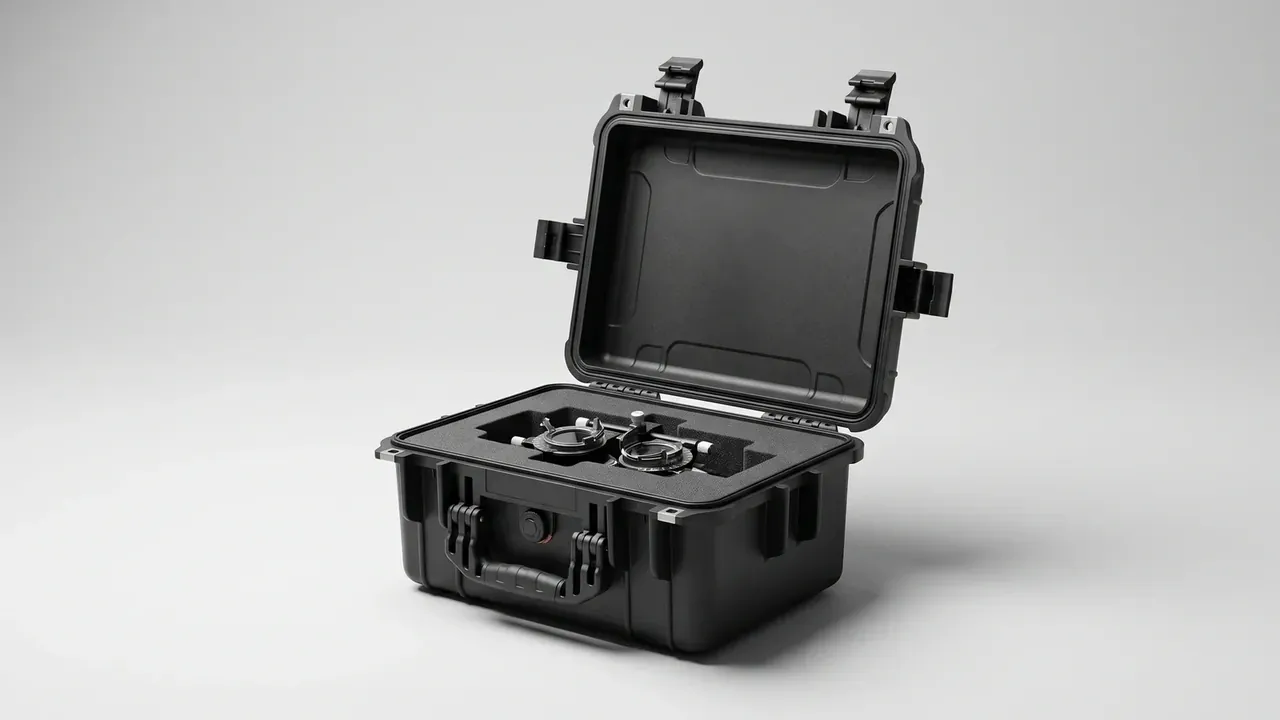
2. Impact: g values and drop height
Drop height becomes landing speed: 1.2 m is 4.85 m/s, 1.8 m 5.94 m/s. Once speed is fixed, peak acceleration depends only on stopping distance.
With 25 mm of stroke, a 1.2 m drop peaks near 48 g and 1.8 m near 72 g; doubling the stroke halves both, which is why foam beats wall thickness.
A corner drop is worst: the impact lands on one point, little material deforms, and the peak can double. Test corner, edge, face.
| Drop | Speed | 25 mm stroke | 50 mm stroke |
|---|---|---|---|
| 0.8 m | 3.96 m/s | about 32 g | about 16 g |
| 1.2 m | 4.85 m/s | about 48 g | about 24 g |
| 1.8 m | 5.94 m/s | about 72 g | about 36 g |
3. Cushioning: foam thickness and density
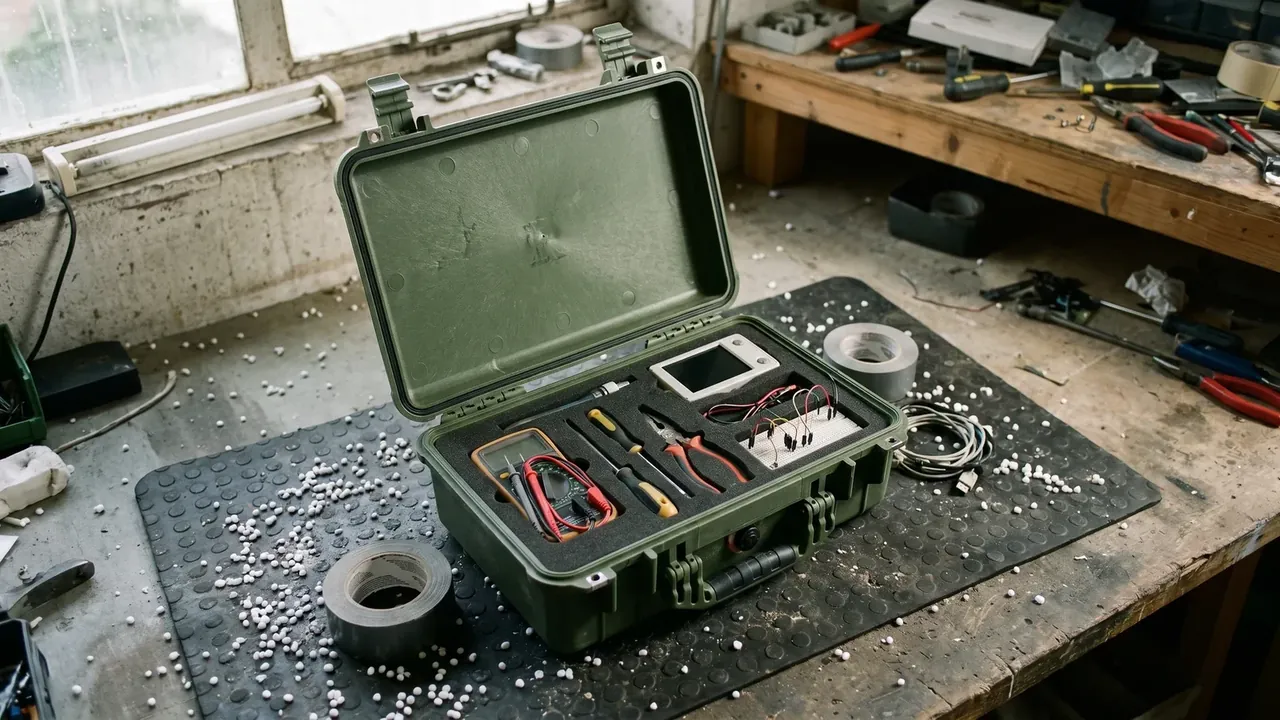
Softer is not better: too soft bottoms out and the peak rises, too hard never deflects. Peak efficiency sits near 2–3.5 kPa.
EPE at 25–35 kg/m³ rebounds well and costs little; EVA at 60–120 kg/m³ is stiff and clean to cut; PU is efficient but absorbs moisture.
Match thickness to drop: 25–30 mm at 1.2 m, 40–50 mm at 1.8 m, corners half again thicker. Keep 5–10% interference.
| Material | Density | Trait | Use |
|---|---|---|---|
| EPE | 25–35 kg/m³ | Good rebound | General transit |
| EVA | 60–120 kg/m³ | Stiff, clean cut | Precision cavities |
| PU | 30–60 kg/m³ | Efficient, moisture sensitive | Heavy loads |
4. Restraint: constraint is cheaper than cushioning
Once a load moves more than 2 mm it strikes again on rebound, and the second peak often exceeds the first. Restraint costs far less than foam, so it comes first.
Four means: dividers, preload, straps, plates. Divider walls run 10–15 mm with clearance under 1 mm; preload is a 5–10 mm lid layer; straps anchor on reinforced areas.
A heavy load sits low and central so the case does not rotate; an off-centre one turns, moving the impact from face to corner.
5. Load path: bumpers, ribs and wall thickness
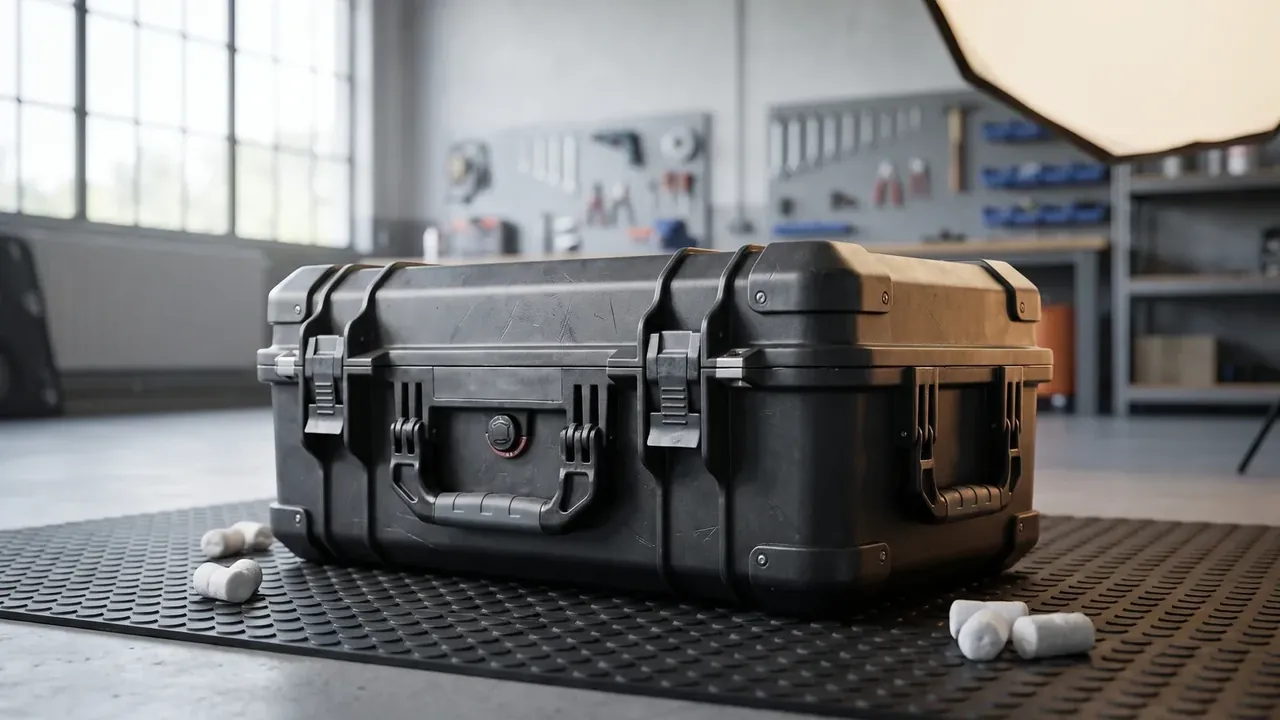
The bumper turns a point impact into a 20–30 mm area, dropping local stress by an order of magnitude. Mould it in one piece; bolt-on bumpers loosen in cold.
Ribs run 3–5 mm tall at 40–60 mm spacing; taller ones crack at the root. A 3–4 mm wall is normal for rotomoulded shells; another millimetre adds 15% weight for a few g.
Hinges and latches take load first, so failures start there. Metal pins outlast plastic, clearance stays under 0.2 mm, and the foam-and-load natural frequency should sit above the 3–15 Hz truck band.
Conclusion
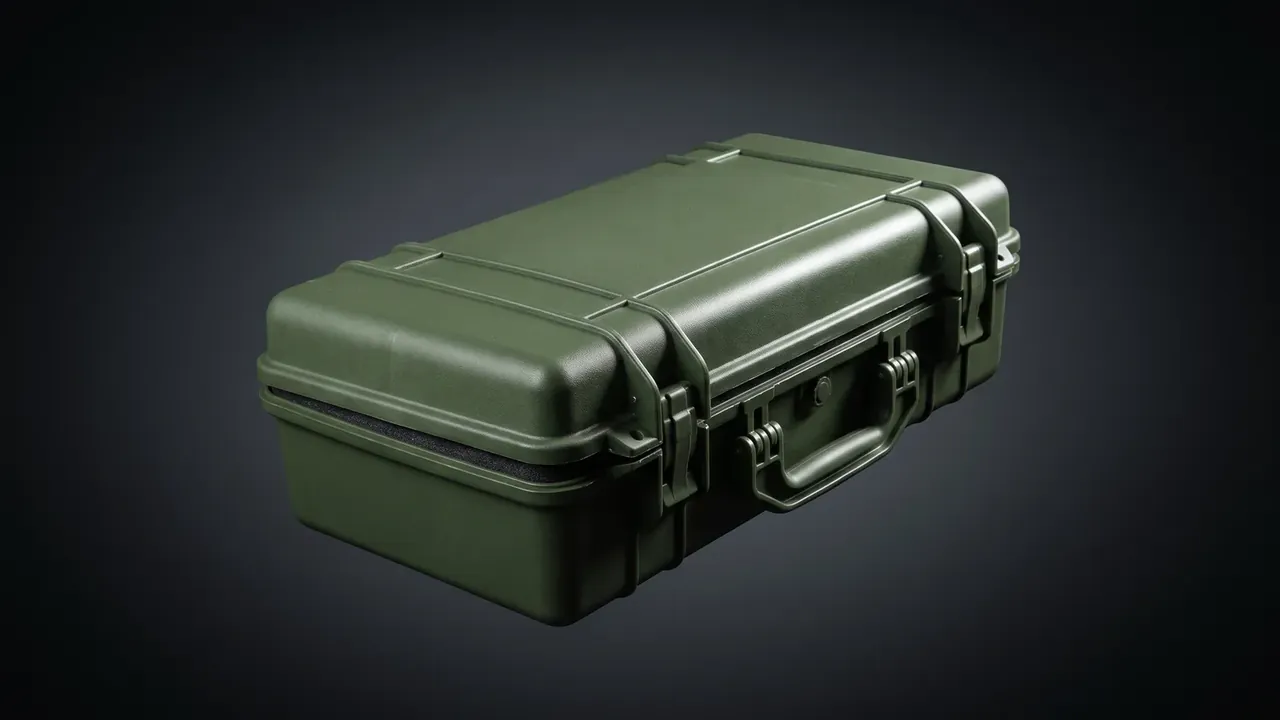
A shockproof case is a path: the shell spreads the impact, the foam stretches the time, the lining locks the movement. Thicken one stage and the weakness only moves; the shockproof case works when all three hold.
This article covers container-side specifications and design implications only, not the handling, loading or use of the contents.
Related Reading
- Fixing precision tools inside a shockproof case
- Rib layout and height on case walls
- Foam types for case interiors
- How transport vibration testing works
Related Products
- 8 Series — Gun Cases; Military Equipment Cases; Camera Equipment Cases; Drone Cases; Watch Cases; Knife Cases; First Aid Cases; Electronics Equipment Cases
- WL8-2812 PP Gun Case — model WL8-2812
- All protective cases and toolboxes: 7 series, 158 models