

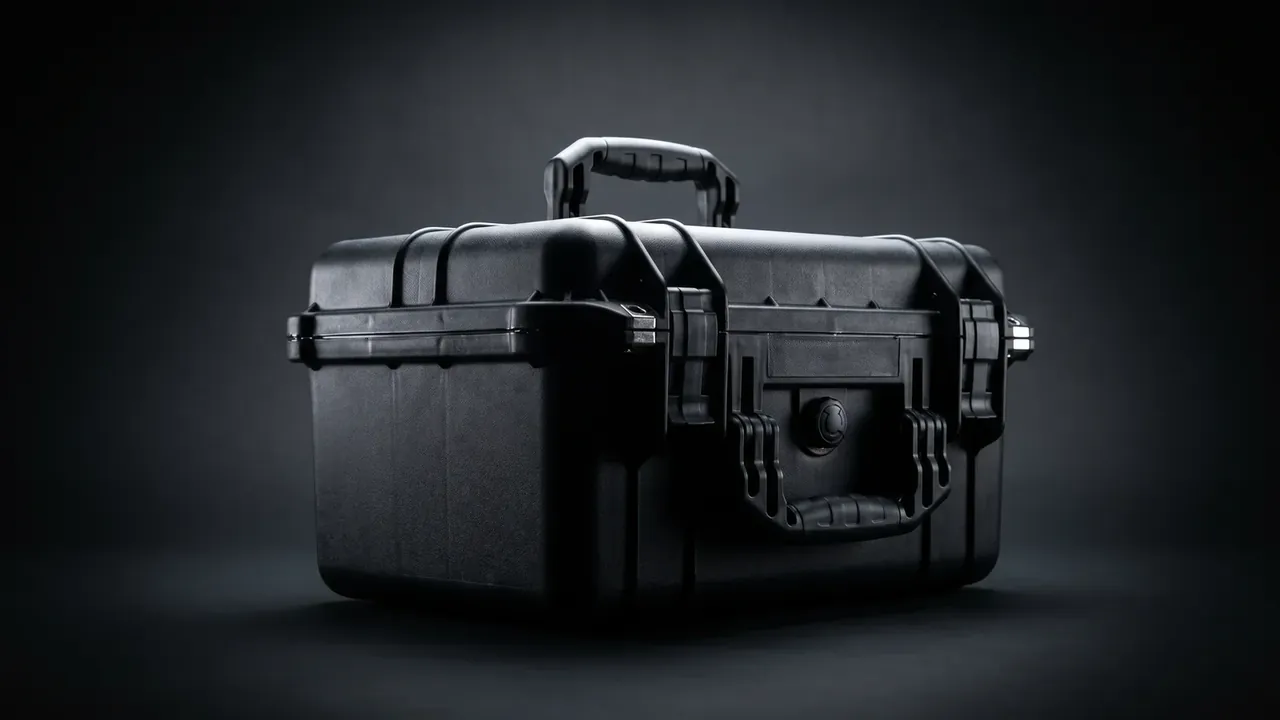
Quick answer: An Airdrop Case is specified from the inside out. Fix the cavity, add cushion, wall and rib height, and the outline falls out; tolerances and test notes make it measurable.
Table of contents
- Setting the Dimensional Chain of an Airdrop Case
- Turning Wall Thickness into Case Weight
- Load Rating and Stacking Layers
- Putting Tolerances on the Drawing
- Where the Test Conditions Belong
- FAQ
1. Setting the Dimensional Chain of an Airdrop Case
An Airdrop Case drawing is built inward from the cavity. An 800 × 500 × 400 mm cavity, 40 mm of cushion per side, a 4.0 mm wall, a 12 mm lid rib and a 12 mm base skid, with 0.5 degrees of draft, give an 892 × 592 × 472 mm outline.
| Chain link | Value | Marking |
|---|---|---|
| Internal cavity | 800 × 500 × 400 mm | Basic, toleranced |
| Cushion allowance | 40 mm per side | Reference |
| Wall thickness | 4.0 mm | Critical |
| Outline | 892 × 592 × 472 mm | Bracketed, not inspected |
Only the cavity is an anchor, taken from the carried outline plus 2 mm of clearance. Work backwards from a 900 × 600 × 470 mm outline and the cushion collapses to 20 mm, with the peak climbing from 45 g to 90 g. Lifting centres fail next: at 700 mm instead of 620 mm the sling angle closes and the backing plate takes about 18 percent more horizontal load.
2. Turning Wall Thickness into Case Weight
Developed area times density: 2.6 m² at 0.94 g/cm³ is a 4.0 mm wall of about 9.8 kg, each extra 0.5 mm adds 1.2 kg, and inserts add 3.1 kg.
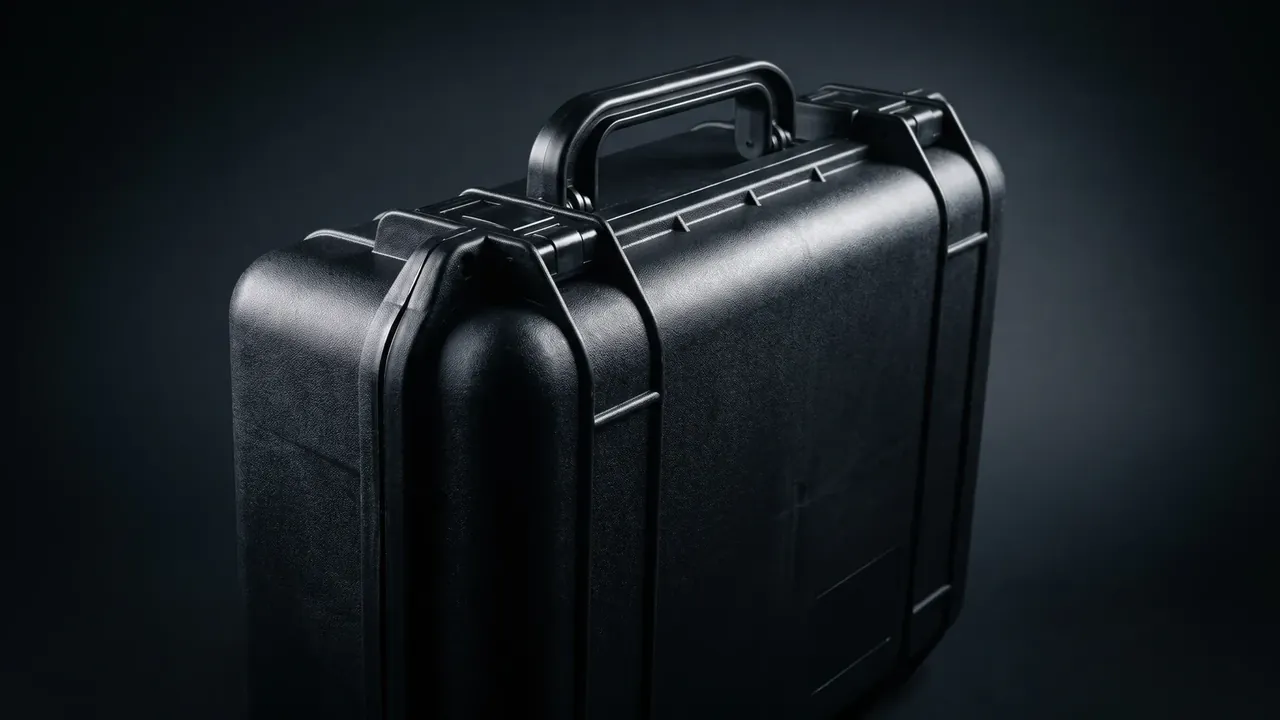
Thicker is not better. A 5.0 mm shell adds 2.4 kg and 6 percent more kinetic energy, so the cushion must grow from 40 mm to 48 mm to hold 45 g.
Tolerance travels with the number. Rotomoulding varies 0.3 mm in one cycle, so write 4.0 ± 0.4 mm and hold the 3.6 mm minimum to the drop-ball test, allowing 1.4 mm of dent.
3. Load Rating and Stacking Layers
An Airdrop Case carries two ratings. The static top load is short term: 120 kg over the lid for 24 hours at 23 °C on a 4.0 mm wall, with 2 mm of set. Stacking is judged months later: three layers at 40 °C under 90 kg, two at 55 °C under 60 kg.
PE loses about 25 percent of its modulus at 40 °C, taking four layers to three. Read permanent set after 48 hours and one hour of unloading, against a 3 mm limit.
Corner caps on an Airdrop Case send pressure down four posts and earn one extra layer, while a body bearing on its side walls bulges at the second. State whether the rating covers loose cases or a palletised block.
4. Putting Tolerances on the Drawing
Tolerances fall into three families: fit (lid closure, insert position), assembly (hinge, latch, lifting holes) and appearance (outline, flatness). Each needs its own gauge and sampling.
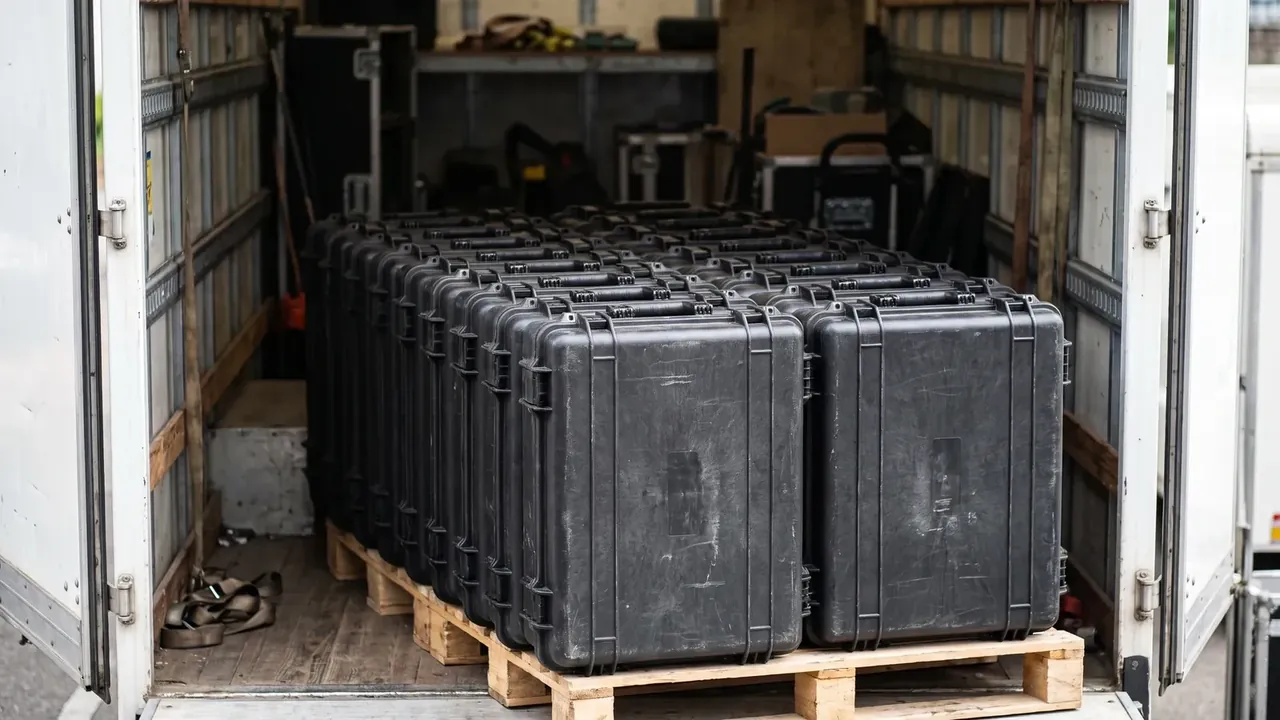
Over 800 mm a rotomoulded outline shrinks 1.2 to 1.8 mm, so ± 0.5 mm rejects whole batches, while a cavity looser than ± 2 mm will not take the cushion.
| Item | Tolerance | Sampling |
|---|---|---|
| Internal cavity | ± 2.0 mm | 5 per batch |
| Outline | ± 1.5 mm | 2 per batch |
| Wall thickness | ± 0.4 mm | 9 points, 5 per batch |
| Lid gap | ≤ 1.0 mm | 100 percent |
The lid gap belongs on the drawing as a ceiling for an Airdrop Case. A 1.0 mm gap is what the seal absorbs; below 0.3 mm the latch loses travel.
5. Where the Test Conditions Belong
Test conditions live in the notes block bottom right: speed, attitude, preconditioning temperature, soak time, number of events, pass value. Leave one out and the supplier fills a default.
A workable note reads: six-face drop at 8 m/s; -40 °C for 4 hours, dropped within 30 minutes; stack at 40 °C for 48 hours; sweep 10 to 500 Hz for 2 hours; salt spray 48 hours. Pass values go in millimetres and g. Conditions and tolerances should share a page, or one side gets skipped.
Conclusion
Specification work is translation: the cavity sets the datum, the wall sets the weight, the rating sets the layers, and the test note sets the verdict. A missing tolerance gives the workshop a second way to build. Once all five groups are written down, the Airdrop Case specification is closed.
This article discusses only the container (case body) side of specifications and design intent, and does not cover any handling, loading or use of the contents.
Related Reading
- Inspection items and acceptance
- How shockproof case specs are set
- Standards for military air transport cases
- Choosing a rotomoulded case
Related Products
- 8 Series — Gun Cases; Military Equipment Cases; Camera Equipment Cases; Drone Cases; Watch Cases; Knife Cases; First Aid Cases; Electronics Equipment Cases
- WL8-2812 PP Gun Case — model WL8-2812
- All protective cases and toolboxes: 7 series, 158 models