

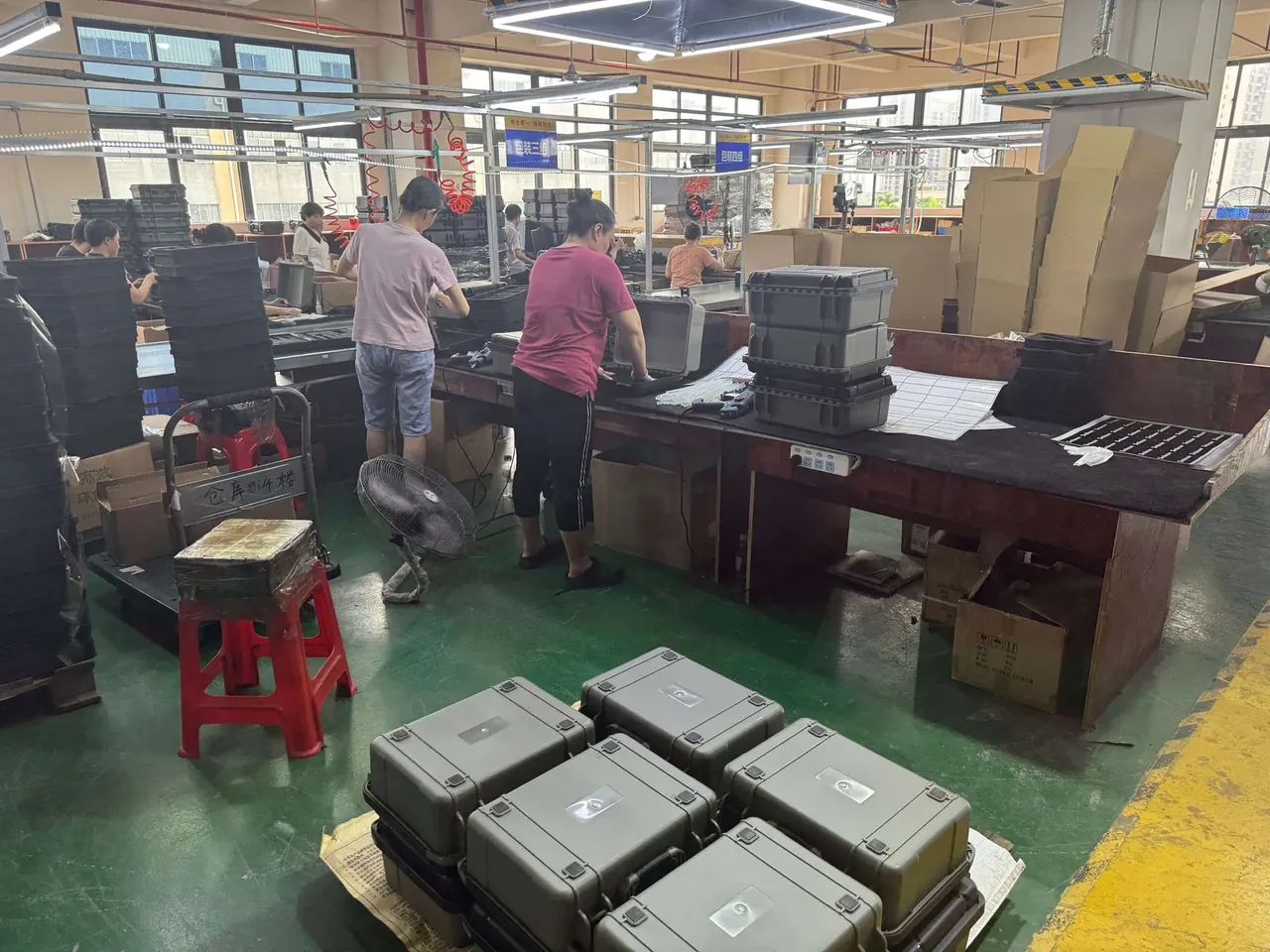
Quick answer: An Airdrop grade impact resistant safety container holds 88 percent corner rebound after a 2.0 m six-face drop with an 18 mm corner bumper.
Table of contents
- Corner bumper height of the Airdrop grade impact resistant safety container
- Density gradient of the base foam
- Rebound readings after each face drop
- Seal pressure decay in the cold retest
- Bumper-height rejection line for impact batches
- FAQ
1. Corner bumper height of the Airdrop grade impact resistant safety container
The Airdrop grade impact resistant safety container seats an 18 mm bumper at each corner, taking the first strike before the wall does. The 4.6 mm shell leaves limited seat depth between a 600 x 440 x 280 mm envelope and a 530 x 375 x 205 mm cavity. At 14 kg over a 2.0 m six-face drop the corner is the sharpest load, so JUNZHIJIA pairs block height with seat depth at trial.
The 18 mm height is checked at six points on the block top, each within 0.3 mm of nominal, and the shortest point is logged since rebound fails there first. Block height sets the corner travel while the 35/50 kg/m3 base foam sets how much energy that travel absorbs; the 88 percent rebound after 2.0 m / 6 faces needs both, and neither figure alone predicts the result.
| Block tier | Measured height | Corner rebound after 2.0 m / 6 faces |
|---|---|---|
| Short | 14 mm | 82 percent, reject |
| Nominal | 18 mm | 91 percent |
| Tall | 22 mm | 94 percent |
2. Density gradient of the base foam
Base foam in the Airdrop grade impact resistant safety container is not one density but two layers at 35/50 kg/m3: 50 kg/m3 against the floor carries load, 35 kg/m3 toward the cavity yields travel. Reverse the gradient and the 2.0 m drop drives the corner into the hard layer, pulling rebound below 88 percent. The layers are heat-bonded, not glued, so no bond turns brittle in the cold.
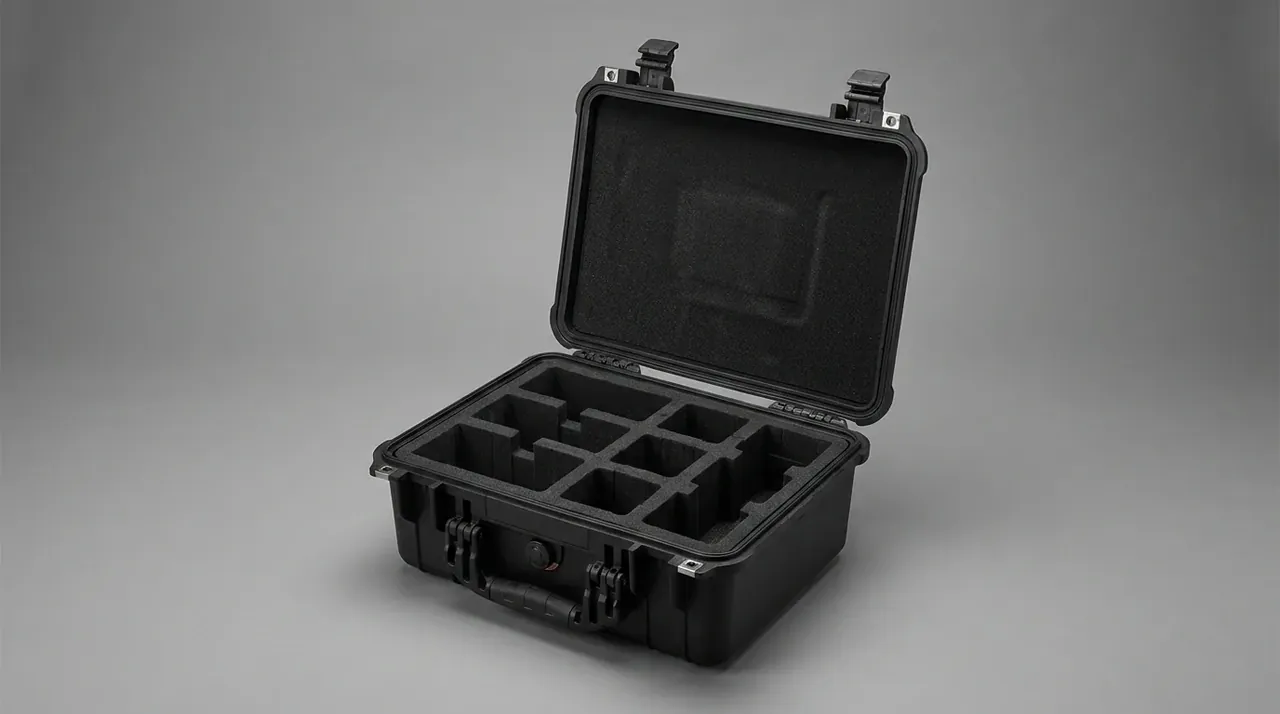
Between 6.6 kg empty and 14 kg loaded the foam absorbs differently, so 4600 empty open-close cycles run before the drop rig to confirm the lining has not packed down. Four latches at 440 N each are checked in the same round; cycles with the lid not fully seated stay out of the rebound figures. Opening cycles and drop cycles are filed as two separate records.
3. Rebound readings after each face drop
The Airdrop grade impact resistant safety container drops 2.0 m onto six faces in turn, base, lid, two long sides and two short sides, measuring corner rebound after each. The floor is 88 percent, and the smallest of the six is the record rather than an average. Both 6.6 kg empty and 14 kg loaded states are run, with the heavier load giving the lower rebound.
The landing platform carries about 0.05 mm of flatness error, removed from the readings in a separate card column. Six corrected curves placed together show which face crushed a bumper and which only saw slow tooling return. The 2.0 m height and six-face order are both tied to the 88 percent release line.
| Drop face | Drop height | Corner rebound reading |
|---|---|---|
| Base | 2.0 m | 89 percent |
| Long side | 2.0 m | 91 percent |
| Corner | 2.0 m | 88 percent |
4. Seal pressure decay in the cold retest
After the six-face drop, the Airdrop grade impact resistant safety container goes into a -35 C cold retest, where a stiffened gasket makes the mouth most likely to leak. The ceiling is 0.3 kPa / 10 min of mouth pressure decay, a separate judgement from corner rebound. The cold check follows the drop because any mouth warp left by impact shows up as measurable decay at low temperature.
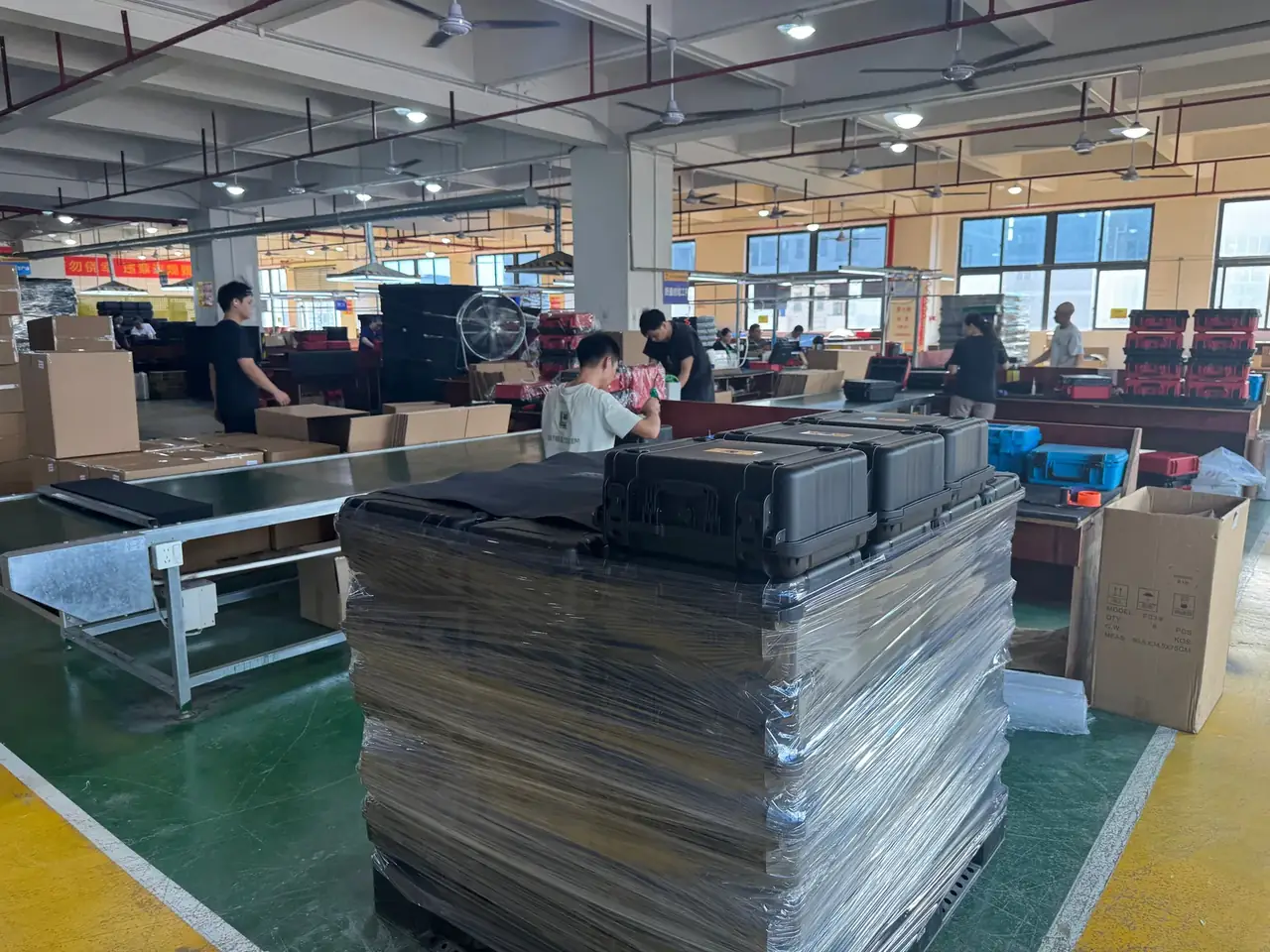
An IP67 spray and air-tightness retest looks at whether the two gaskets at 22 percent compression still meet, or have gaped as the mouth shifted. This shell files pressure decay on its own card, apart from rebound, and the cold retest governs the mouth only. The two records are kept apart so a margin on one side never covers a shortfall on the other.
5. Bumper-height rejection line for impact batches
Eight shells per batch are measured at the bumper, and for the Airdrop grade impact resistant safety container a reading 2.0 mm under the 18 mm nominal is a reject; two such shells return the whole batch.
The line holds the shortest bumper still clearing 88 percent rebound after a 2.0 m six-face drop. Go shorter and corner travel runs out, breaking the smallest face reading. Mould temperature, hold time and block height go into the JUNZHIJIA process card, and a tool or material change calls for one more full drop run. The Airdrop grade impact resistant safety container binds each rebound reading to its release decision, filed by shell number. The batch code matches only that shell's data. The table below sorts three rebound bands into outcomes, so a retester does not treat the tall tier's margin as a batch-wide tolerance.
| Rebound value | Matching block tier | Disposition |
|---|---|---|
| at least 88 percent | nominal 18 mm | release |
| 84 to 88 percent | short 14 mm | remeasure bumper |
| below 84 percent | reject band | whole batch rework |
Conclusion
An 18 mm bumper paired with a 35/50 kg/m3 base foam gradient is what lets the Airdrop grade impact resistant safety container hold corner rebound at 88 percent after a 2.0 m / 6 face drop and mouth decay within 0.3 kPa / 10 min at -35 C. Measured block height, six-face curves and the rejection line are filed in tiers by JUNZHIJIA and rerun after any tool or material change. When specifying an impact-resistant shell of this kind, ask first whether bumper height and foam gradient come with measured figures.
Related Reading
- Case drop sequence: corner, edge and face drops
- Protective case drop test: why the base cracks first
- Foam density case: 25 vs 45 kg/m3
- Case falling ball impact test
Related Products
- 8 Series — Gun Cases; Military Equipment Cases; Camera Equipment Cases; Drone Cases; Watch Cases; Knife Cases; First Aid Cases; Electronics Equipment Cases
- WL8-2812 PP Gun Case — model WL8-2812
- All protective cases and toolboxes: 7 series, 158 models