

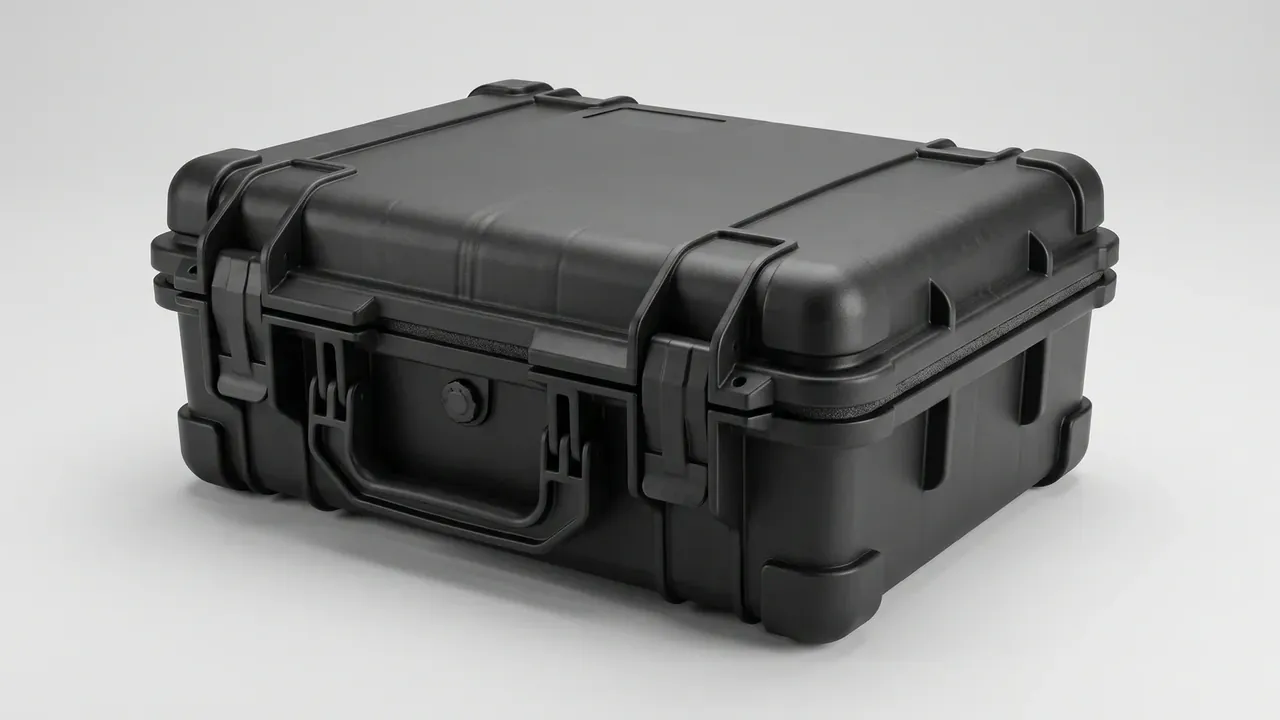
Quick answer: An airtight plastic safety case is judged on three numbers: pressure drop under 0.3 kPa after 60 seconds at 20 kPa, gasket compression between 25 and 30 percent, and a 0.15 mm feeler gauge that will not enter around the lid.
Table of contents
- Air Tightness Is Not Waterproofing and What Must Be Held
- Gasket and Groove Dimensions You Can Measure on Site
- Valve and Thermal Cycling from Minus 20 to 60 Degrees
- Latches and Shell Stiffness Measured at the Lid Joint
- Turning the Criteria into a One-Page Acceptance Sheet
- FAQ
1. Air Tightness Is Not Waterproofing and What Must Be Held
A batch is closed at 20 °C, sails for 40 days, sees minus 20 °C in the hold and is opened at the destination. Whether the gasket held is a question only a pressure reading answers.
Waterproofing rates water entry; air tightness rates pressure retention. An airtight plastic safety case is holding a decay curve, which is a different claim from an IP number.
| Level | Site criterion | Test | Common overstatement |
|---|---|---|---|
| Airtight | 20 kPa held 60 seconds, drop ≤0.3 kPa | gauge and plug | IP marked, drop unmeasured |
| Watertight too | above plus 1 m immersion, 30 minutes | immersion tank | soft gasket, never seated |
| Equalised | valve opens at 0.35 bar | differential bench | valve body without diaphragm |
The levels differ by groove depth and a valve, and most field rejections come from the second level sold as the first.
Plug the valve port, apply 20 kPa and watch the needle. A 0.1 kPa fall in a minute is normal absorption; 0.4 kPa is a leak.
2. Gasket and Groove Dimensions You Can Measure on Site
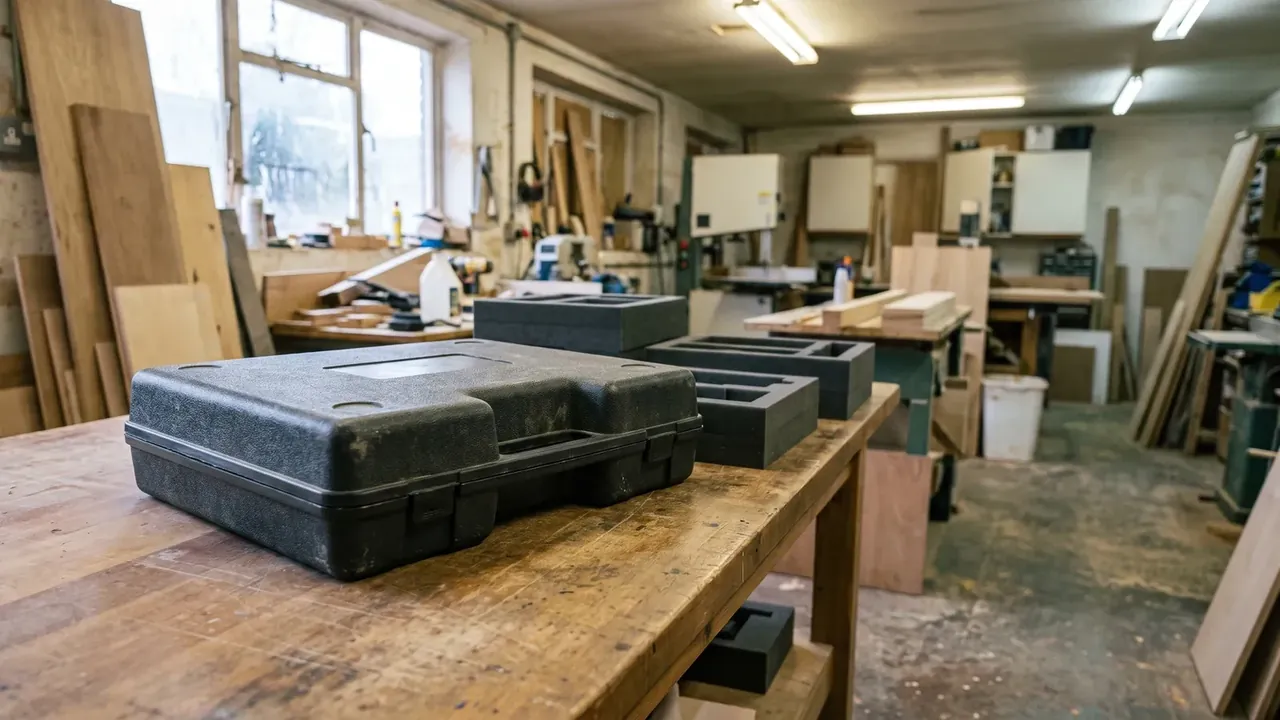
Judging the seal needs no teardown, only a caliper and a depth gauge reading groove width, groove depth and cord diameter.
| Point | Tool | Acceptable | What failure looks like |
|---|---|---|---|
| Groove width | caliper | 6.2 mm ±0.2 | wide, the cord wanders; narrow, it will not seat |
| Groove depth | depth gauge | 4.1 mm ±0.1 | shallow, the lid stands off; deep, nothing compresses |
| Cord diameter | caliper | 5.5 mm ±0.1, 55A | soft cord recovers slowly, hard cord will not bed |
| Joint | eye and pull | 45 degree mitre, no step | butt cut leaves a 0.3 mm gap |
A 4.1 mm groove with a 5.5 mm cord gives 25.5 percent compression, mid-band. Under 20 percent it will not seal; over 35 percent it takes a permanent set within three months.
The joint is the easiest place to be fooled. On a mitred case it sits at mid-run with 5 mm of tail each end for thermal movement.
3. Valve and Thermal Cycling from Minus 20 to 60 Degrees
A lid of 1,000 square centimetres facing an 80 °C swing carries about 0.14 bar, or 14 kg of extra force to open. Without a relief path, an airtight plastic safety case puts that on the latches and the wrist.
A valve is not a free upgrade either. Set cracking pressure at 0.35 bar; below that it leaks in transport, above it may as well not exist.
Four checks settle a valve in ten minutes:
- Press the cap and time the return, under one second
- Hold the diaphragm to the light: no cracks, no tackiness
- Bake at 60 °C for four hours, open at once, listen for inrush
- Freeze at minus 20 °C four hours, open without tools
Steps 3 and 4 compress a sea voyage into an afternoon; a slow inrush means a stiff diaphragm.
4. Latches and Shell Stiffness Measured at the Lid Joint
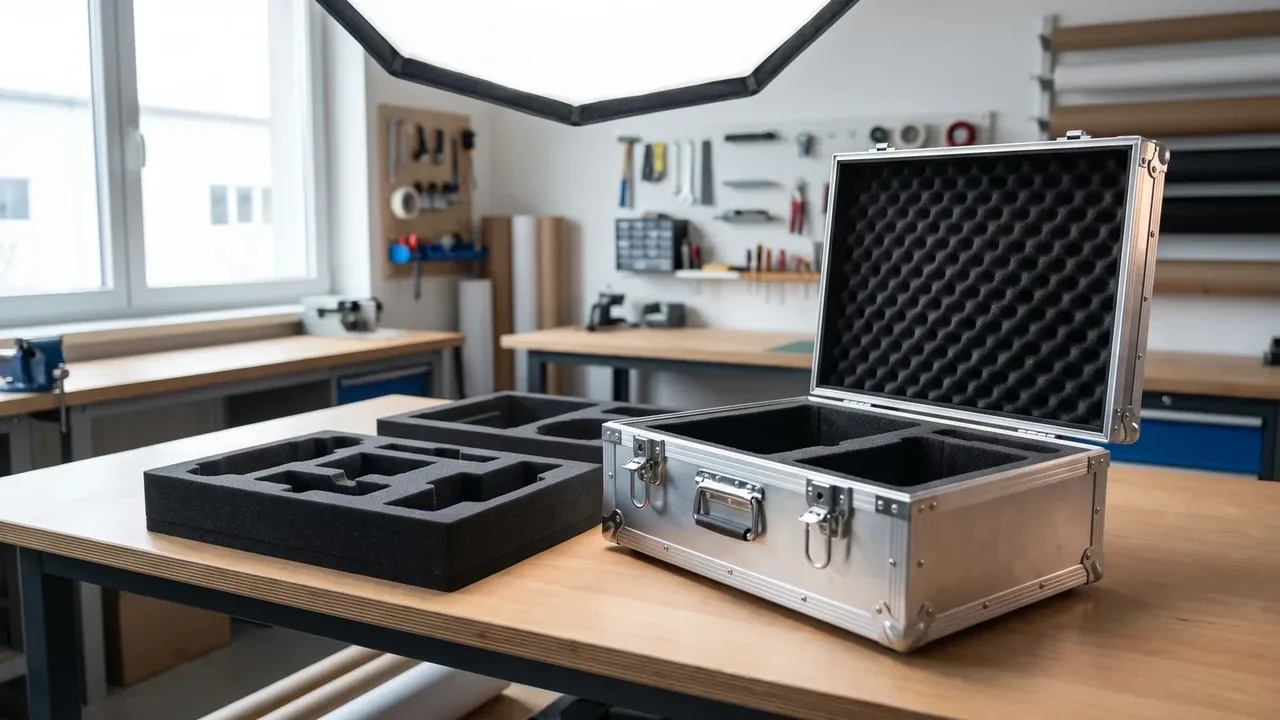
The joint gap mirrors stiffness. Close an airtight plastic safety case and run a 0.15 mm feeler gauge around the rim; wherever it enters, that section is not sealing.
| Check | Tool | Limit |
|---|---|---|
| Lid joint gap | 0.15 mm feeler gauge | no entry anywhere |
| Mid-span deflection | straight edge and 30 kg | 0.8 mm or less |
| Latch opening force | pull gauge | 120 to 200 N |
| 1.5 m drop, six faces | concrete | latches shut, lid not sprung |
Latches set too tight hold the gasket past 35 percent and it stops recovering; too loose, and the gap opens first at mid-span.
Measure the gap again after five cycles; that reading beats the one out of the carton.
5. Turning the Criteria into a One-Page Acceptance Sheet
Inspect within 24 hours of arrival, after which responsibility is no longer provable.
Five lines are enough:
- Pressure drop: 20 kPa for 60 seconds, record start and end
- Compression: three readings of depth and cord, averaged
- Valve action: return time, plus opening feel after hot and cold cycles
- Gap: 0.15 mm feeler gauge around the rim
- Latch force: pull gauge between 120 and 200 N
Draw 20 units from a 500 unit lot at AQL 1.5, always testing the corners and the long-side mid-span.
Conclusion
The quality of an airtight plastic safety case does not live in a datasheet; it lives in a caliper, a depth gauge and a pressure reading on the floor. Groove depth, cord, compression, gap and valve action, five numbers that agree, carry a 40 day voyage.
Ask an airtight plastic safety case supplier to let you measure; the answer tells you most of what you need.
This article discusses only the container (case body) side of specifications and design intent, and does not cover any handling, loading or use of the contents.
Related Reading
- How leak testing is actually run
- Case selection for battery transport
- How protective cases differ from older options
Related Products
- 8 Series — Gun Cases; Military Equipment Cases; Camera Equipment Cases; Drone Cases; Watch Cases; Knife Cases; First Aid Cases; Electronics Equipment Cases
- WL8-2812 PP Gun Case — model WL8-2812
- All protective cases and toolboxes: 7 series, 158 models