

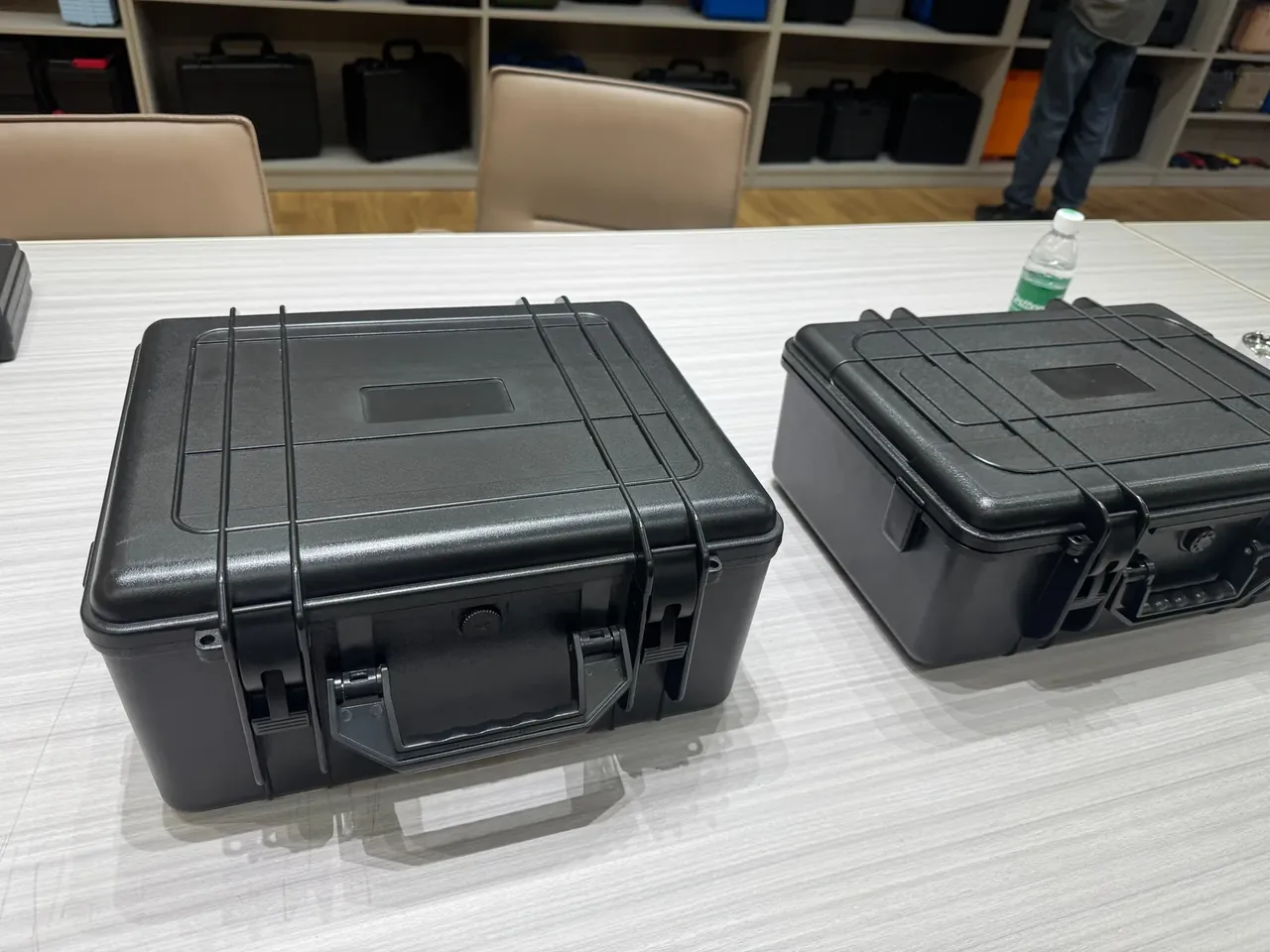
Quick answer: An Aluminum-Frame ABS Panel Carry Case quote has seven blocks, material at 55%–65%; a 1.5 to 2.0 mm panel step moves price more than a supplier swap.
Table of contents
- How Profile Weight Per Metre and Corner Blocks Enter the Quote
- Cost Gap Between 1.5 and 2.0 mm Panels
- Ranking Insert Options by Their Effect on Total Price
- Hardware and Surface Finish Surcharges
- Tooling Amortisation and the Order Quantity Threshold
- Six Lines Every Quotation Must Carry
- FAQ
1. How Profile Weight Per Metre and Corner Blocks Enter the Quote
Send one outline drawing to three plants and the unit prices can come back four tenths apart, with the gap sitting in two lines: profile weight per metre and panel thickness. This Aluminum-Frame ABS Panel Carry Case runs a 20×20 mm section at 1.2 mm wall, 0.42 kg per metre, and the quote moves per metre, not per unit.
Per metre means four side runs plus four corner blocks times that unit weight: a mid-size body burns 1.6 m of profile, about 0.67 kg, and at 2.2 m the profile alone reaches 0.92 kg while labour barely shifts. Corner blocks are counted per piece, four castings set into the profile ends, and their wall has to match a 1.2 mm profile wall. Profile, panel and insert then form the 55%–65% material block of an Aluminum-Frame ABS Panel Carry Case quote.
| Cost block | Billed by | Where it sits | What moves it |
|---|---|---|---|
| Profile | Metre | Own line | Perimeter and section |
| Panel | Square metre | Own line | Thickness tier |
| Insert | Tier | Merged or split | Bond, cavity or tray |
| Hardware | Set | Own line | Latch and handle model |
| Surface | Square metre or unit | Own line | Anodising, paint, brushing |
| Tooling | Per unit | Split or merged | Order quantity |
| Packing | Per unit | Last line | Carton count and freight |
2. Cost Gap Between 1.5 and 2.0 mm Panels
The panel line refers to extruded sheet, not a moulded part. Sheet is priced by the square metre in 1.5, 1.8 and 2.0 mm tiers, and each step adds material in proportion, so 2.0 mm carries a third more than 1.5 mm on the same blank.
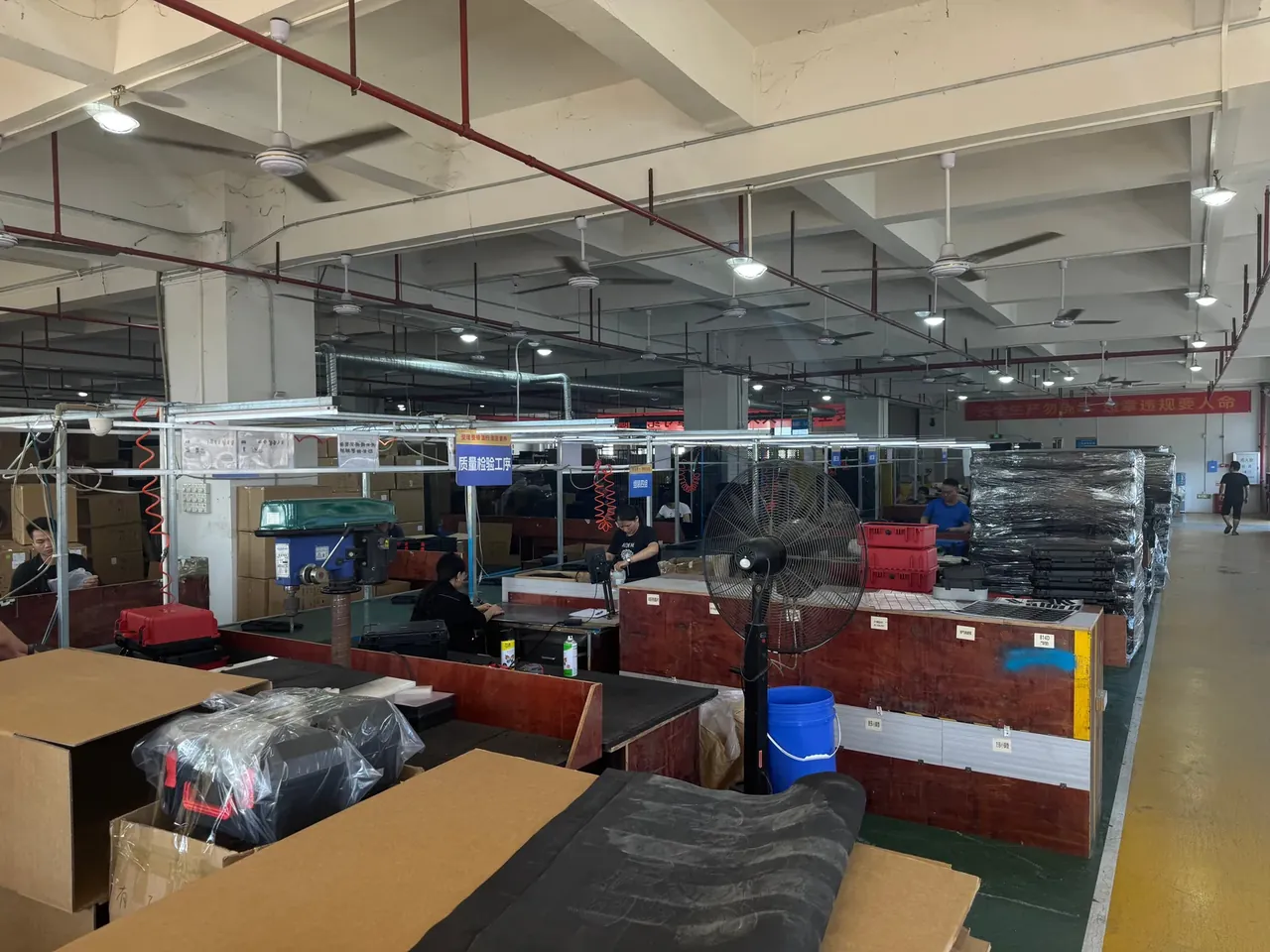
Thin sheet usually pays back into structure: a 1.5 mm blank bows across a wide span, so ribs tighten or the frame steps up a section size, while at 2.0 mm the rib pitch opens and assembly time drops instead. ABS moulding shrink at 0.4%–0.7% sets corner-block clearance, yet extruded sheet shrinks far less along its length, so panel-to-frame gaps come from cutting tolerance. Two shells on one outline can land two tenths apart, and this is the line most easily adjusted unnoticed in an Aluminum-Frame ABS Panel Carry Case quote.
| Thickness | Material on one blank | Rib requirement | Typical duty |
|---|---|---|---|
| 1.5 mm | Baseline | Tight pitch | Hand-carried samples |
| 1.8 mm | Twenty percent more | Medium pitch | Travelling display |
| 2.0 mm | A third more | Open pitch | Instrument display |
3. Ranking Insert Options by Their Effect on Total Price
Inserts come in three tiers: flat bond, cut cavity, vacuum tray. Flat bond glues sheet to the inner wall and is the shortest operation; a cut cavity opens a pocket at object height by die-cutting; a vacuum tray needs its own mould and tooling charge.
Tier order is not quote order. On short runs flat bond is cheapest, a cavity sits about two tenths above it, and the tray carries tooling on every unit; push volume up and cavity set-up spreads thin, so the three converge. Insert and panel thickness move together as well, and a shell with rounded corners yields less usable floor than length times width suggests, which is why an Aluminum-Frame ABS Panel Carry Case drawing size never equals its fit size.
4. Hardware and Surface Finish Surcharges
Hardware is quoted by the set: two latches, one folding handle, two hinges and rivets. Change the latch model and the mounting holes shift, so the panel punch tool and the price follow them.
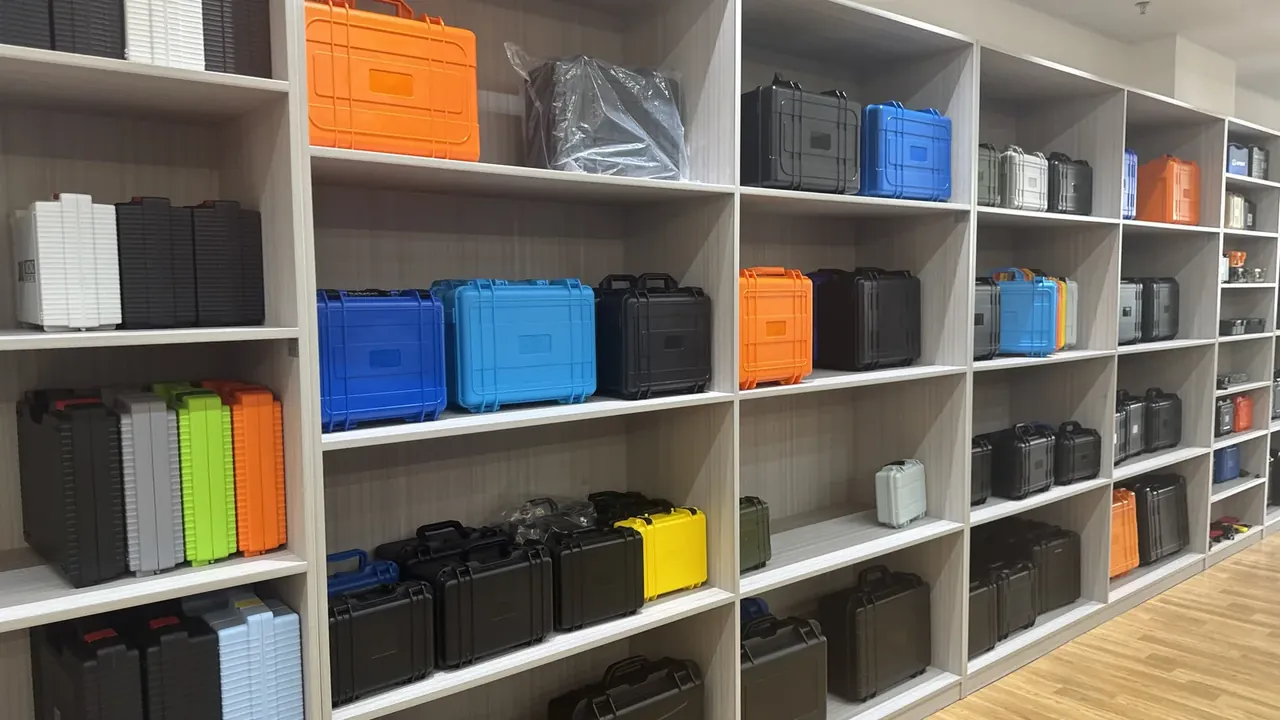
Surface work splits three ways: anodising the frame by square metre, where darker colours are harder to hold in the bath, and paint or brushing on the ABS panel per unit or per square metre, two lines when both are used. Marking and bonding are the surcharges most often swallowed, because screen print, hot stamp and laser price by position while foam adhesive hides inside the insert line. On this Aluminum-Frame ABS Panel Carry Case the frame is narrow, so laser marking has to clear the groove.
5. Tooling Amortisation and the Order Quantity Threshold
Tooling lands between 60,000 and 120,000 RMB and is amortised by order quantity: 300–600 RMB per case at 200 units, 120–240 at 500, and 60–120 at 1,000. Five times the volume, one fifth of the load.
The threshold sits near 500 units, where tooling still outweighs material; past 1,000 units amortisation gives way to material and labour, and squeezing volume further buys little. Orders stall between 200 and 300 units, where the quote has to be read line by line. Lead time runs 25–35 days, since tool build, trial and correction each take a slot a rush order cannot compress.
6. Six Lines Every Quotation Must Carry
The six are profile spec and weight per metre, panel thickness tier, insert tier, hardware list, surface process, and tooling ownership with amortisation method. Miss one and every revision is reinterpreted, so two quotes for one outline stop being comparable.
When quotes jump: if three suppliers on the same spec spread more than 15%, go back to panel thickness and insert tier for a check; never place an order at the original price when the spread passes 20%. Nine tenths of a same-outline gap sits in those two lines, and leaving them vague is how an Aluminum-Frame ABS Panel Carry Case spread of forty percent survives.
| Line | What to write | Cost of leaving it out |
|---|---|---|
| Profile | Section, wall, weight per metre | Material swap untraceable |
| Panel | Tier and blank size | Gap blamed on labour |
| Insert | Bond, cavity or tray | Second invoice |
| Hardware | Latch and handle model, sets | Holes redrilled |
| Surface | Process and billed area | Colour dispute |
| Tooling | Charge and title | Exit argument |
Related Reading
- How a custom case quote is built
- Case cost structure line by line
- Tooling cost and amortisation
- Cavity volume and usable ratio
This article covers only the specifications and design meaning of the container (case) itself, not any handling, loading or use of the items inside.
JUNZHIJIA
Related Products
- 8 Series — Gun Cases; Military Equipment Cases; Camera Equipment Cases; Drone Cases; Watch Cases; Knife Cases; First Aid Cases; Electronics Equipment Cases
- WL8-2812 PP Gun Case — model WL8-2812
- All protective cases and toolboxes: 7 series, 158 models