

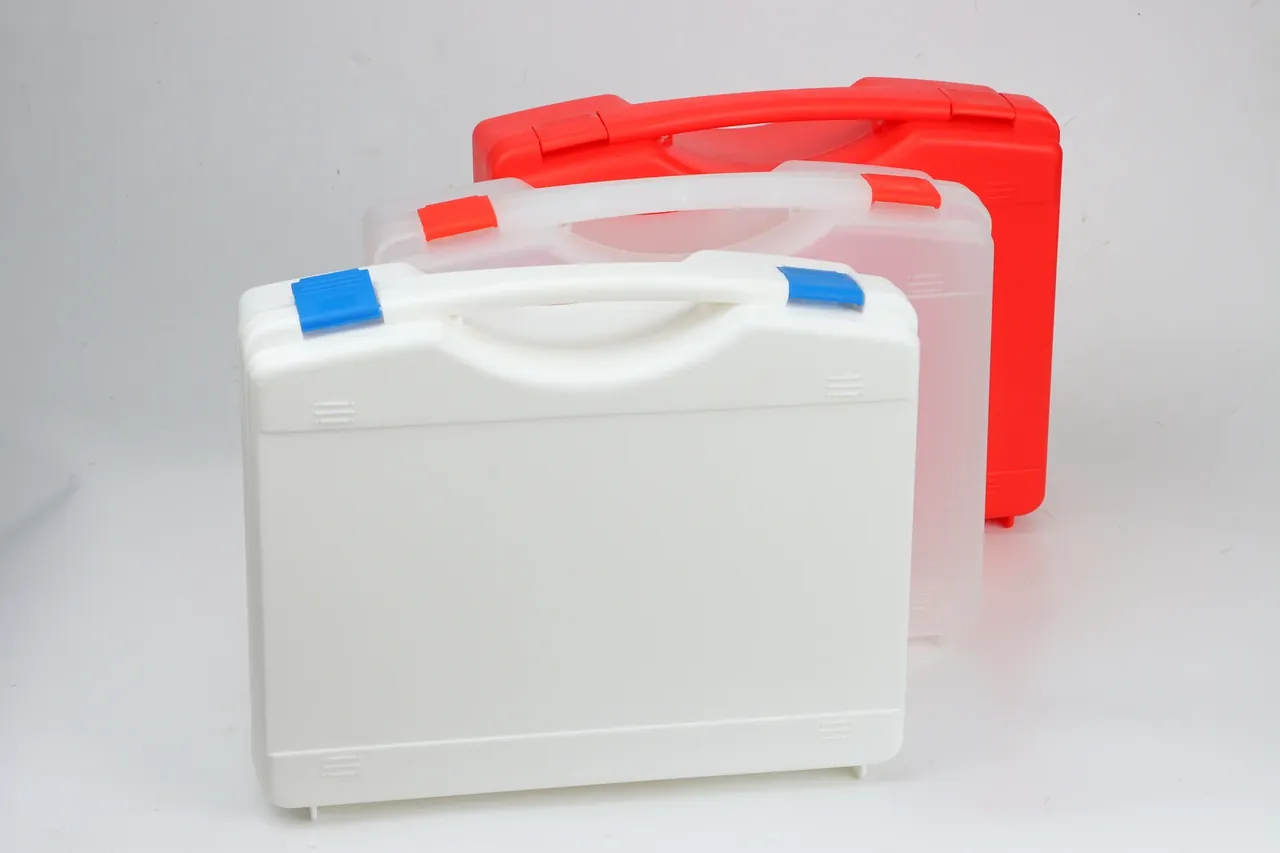
Quick answer: Case project pricing works only when NRE, unit price and changes stay three blocks, each with its own basis, so the quotes line up.
Table of contents
- Why a Case Project Pricing Sheet Splits Into Three
- Stage One: NRE, Sampling Rounds and Cavity Count
- Stage Two: Reading the Unit Price by Five Shares
- Stage Three: Pricing Changes by Point, Run and Ratio
- Validity, Currency and Three Quotes Side by Side
- FAQ
1. Why a Case Project Pricing Sheet Splits Into Three
A case project pricing sheet that can be signed carries three blocks: NRE, unit price and change pricing. Merge them and three suppliers stop being comparable, since reviewers rank numbers on different bases. At 5,000 units a 120,000 CNY mould adds 24 CNY per case and an 80,000 CNY mould adds 16 CNY, a 40,000 CNY gap on tooling basis alone.
Page one also carries a 30-day validity and a 30/70 payment split, without which the table cannot be levelled.
2. Stage One: NRE, Sampling Rounds and Cavity Count
In a case project pricing sheet, NRE has three parts, counted in separate units. Sampling runs 1,200–2,500 CNY per round for three samples and a dimensional report, and 520 mm × 430 mm × 210 mm cases price at the top of that band because a temporary mould comes first. Tooling runs 80,000–120,000 CNY: a single-cavity 718H tool sits near 86,000 CNY, a two-cavity tool near 110,000 CNY. A gauge costs 3,000 CNY per set, checking cavity length, depth and flange flatness.
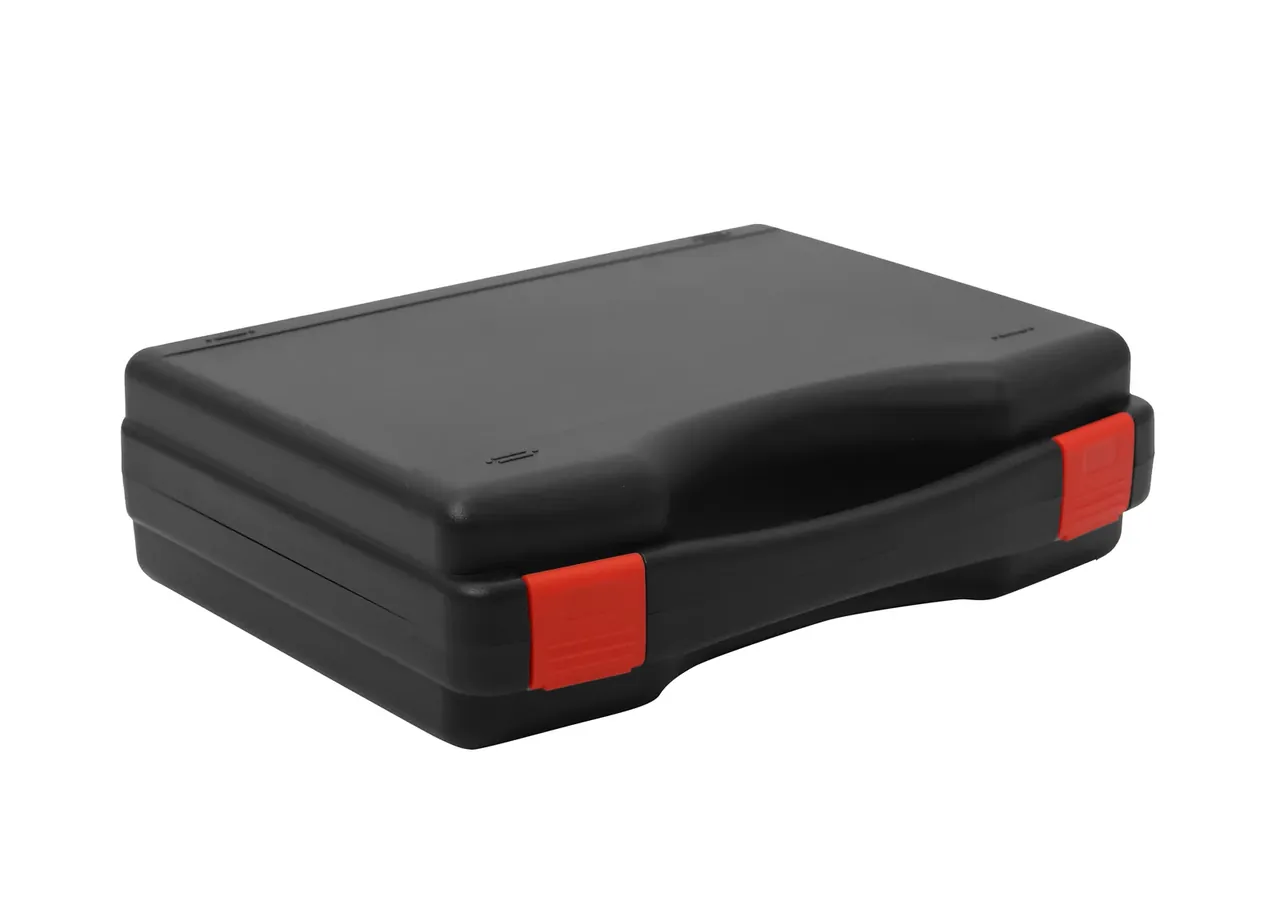
Sampling money is not sunk once the credit rule is printed. The usual tiering credits the full fee from 3,000 units, half from 1,000 to 3,000, nothing below 1,000, and the rule belongs in the sampling row's remark, which survives an amendment.
Tooling is quoted one of two ways, never both. Paid in full, 90,000 CNY clears within 30 days of invoice and the unit price carries no tooling; amortised, 3 CNY over 30,000 cases equals the same 90,000 CNY.
The totals match and the cash does not. Paying up front ties up 90,000 CNY for three months but keeps milestones visible. Amortising costs 3 CNY more on each of the first 10,000 cases. It needs one clause: the price drops 3 CNY after 30,000 cases. Without that clause the buyer pays for the mould twice. Both routes also fix acceptance: trial samples charged or not, and leftover amortisation on a scrapped mould.
| Block | Content | Typical amount | Basis |
|---|---|---|---|
| NRE sampling | Three samples per round plus report | 1,200–2,500 CNY per round | Per round, creditable |
| NRE tooling | Single-cavity steel mould | 80,000–120,000 CNY | Lump sum or per unit |
| NRE gauge | Cavity and flange gauge, one set | 3,000 CNY per set | One-off |
| Production | Ex-works unit price | 148 CNY per case | Volume tiered |
| Changes | Mould edits, rush, secondary work | From 1,500 CNY per point | Per point or per run |
3. Stage Two: Reading the Unit Price by Five Shares
The 148 CNY unit price is an outcome; the five shares are the substance. Material takes 38%, labour 17%, manufacturing overhead 15%, administration and profit 20% together, packing and freight 10%.
Material at 38% sets how exposed the case is to resin. At 1.6 kg per case, PP rising from 9.2 to 10.4 CNY per kg adds 1.92 CNY, or 1.3% of 148 CNY, so a 13% resin rise justifies a 1.3% move.
Labour at 17% follows shifts and cycle discipline, overhead at 15% bundles machine time and mould depreciation, and at 5,000 units changeover hours stop spreading thin.
| Item | Share | What moves it |
|---|---|---|
| Material | 38% | Grade, 1.6 kg per case, regrind ratio |
| Labour | 17% | Shift pattern, cycle discipline, mould changes |
| Manufacturing overhead | 15% | Machine rate, energy, mould depreciation |
| Administration and profit | 20% | Order volume, payment terms, credit period |
| Packing and freight | 10% | 4.6 kg gross weight, carton and pallet layers |
4. Stage Three: Pricing Changes by Point, Run and Ratio
Change pricing causes the most argument, having no natural quantity base. A mould edit runs 1,500 CNY per point, one point being one cavity surface or insert, so three points on a single tool come to 4,500 CNY. Wear rework inside warranty is free and must be listed apart.
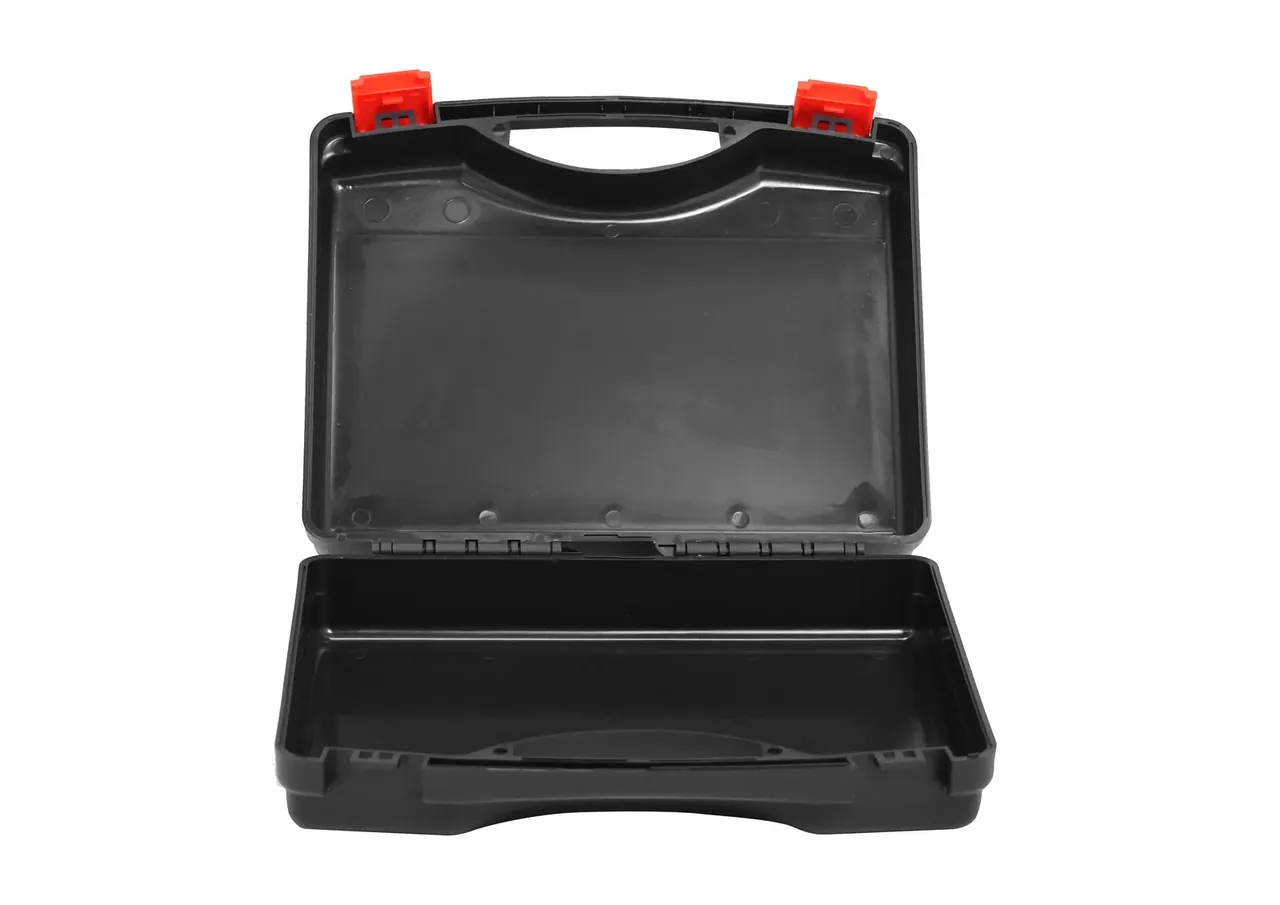
A 15% rush fee is charged on order value and buys queue position, not a faster cycle. On 3,000 units it reaches 66,600 CNY, 3.7 times the 18,000 CNY of twelve points; cut points before discussing the rush.
Secondary work stays outside the mould edit, priced by process.
Every change order needs three elements: how many points, who bears the cost, and whether the delivery date moves.
5. Validity, Currency and Three Quotes Side by Side
A 30-day validity in a case project pricing sheet is the first gate against resin and currency turning a quote into an empty promise. Beyond 30 days the sheet is reissued; a move past ±3% triggers one renegotiation, by forward cover or repricing.
A comparable case project pricing sheet carries twelve fields: item and drawing number, drawing revision, material grade, cavity dimensions and wall thickness, colour and surface treatment, hardware configuration, sampling rounds and fee, tooling and gauge cost, unit price and tiers, packing, delivery point and trade term, validity and payment terms.
Three case project pricing sheets are compared on how completely those fields are filled, not on the lowest total.
Payment runs 30/70: 30% up front covers NRE and the first material batch, 70% before shipment, and the sheet states whether that 30% covers tooling.
Conclusion
Case project pricing earns its name when the three blocks stay apart and each basis is fixed in writing. NRE splits into sampling, tooling and gauge, sampling credited by first-order volume, tooling either paid in full or amortised at 3 CNY per case. The unit price is read through five shares, turning a 13% resin rise into a 1.3% move. Changes are counted by point, run and ratio.
This article discusses only the container (case body) side of specifications and design intent, and does not cover any handling, loading or use of the contents.
Related Reading
- How a case quote breaks down by cost structure
- Who pays for the mould: three clause options
- Where custom case cost actually comes down
- Payment terms and credit periods for case orders
Related Products
- 8 Series — Gun Cases; Military Equipment Cases; Camera Equipment Cases; Drone Cases; Watch Cases; Knife Cases; First Aid Cases; Electronics Equipment Cases
- WL8-2812 PP Gun Case — model WL8-2812
- All protective cases and toolboxes: 7 series, 158 models