


Ammunition is a classic "steady-state fears water, heat and mixing" item: propellant and primers are sensitive to humidity and temperature, long dampness raises the misfire rate, and heat accelerates propellant decomposition; cases are mostly brass or copper-washed steel and oxidise or rust in humid conditions; and mixing different calibres or batches both slows access and harms counting and safety traceability. The value of an ammo box is therefore not "how much it holds" but "how well it seals, how clearly it divides, and how well it is managed". JUNZHIJIA's protection principle for ammo boxes is organised along four lines: sealed moisture resistance, calibre-based compartments, stackable bulk handling, and traceable markings. Use an airtight structure and desiccant to hold internal humidity low for the long term, dividers and inserts to separate calibres and batches, a stackable case structure to raise storage and transport efficiency, and clear durable traceable markings to support counting and handover, instead of tipping ammunition into an ordinary tin box.
Most problems in ammunition storage and transport are not "it breaks when used" but "it fails after long storage". Someone stores ammunition in a garage or on a balcony for a long time; after seasonal temperature and humidity cycles, primers absorb moisture and cases oxidise, and misfires and extraction anomalies appear at the range. Someone mixes different calibres and batches in one box; access means repeated rummaging, which is not only inefficient but hides management errors. Someone uses an ordinary carton or open container in storage and transport; once it is damp or dropped, the ammunition spills, which is neither safe nor easy to count. These share one trait: invisible in normal times, exposed only after long accumulation, and once ammunition is damp or oxidised it can rarely return to its original performance. This article addresses licensed ammunition users and managers, shooting-sport and range practitioners, hunting and outdoor practitioners, and equipment managers in law enforcement and security units. It works through sealing, compartment management, stackable handling, compliant safety and acceptance criteria, with a configuration table and FAQ.
Table of Contents
- Failure Modes and Protection Logic in Ammunition Storage
- Sealing and Moisture Control: The Core Method for Internal Humidity
- Compartments and Calibre Division: Management by Design
- Temperature and Light: Environmental Boundaries for Propellant and Primers
- Case Oxidation and Material Compatibility
- Stackable Storage and Transport: Efficiency and Safety
- Locking and Safety Compliance: Hard Constraints in Use and Management
- Transport Test Basis: ISTA, GB/T 4857 and ASTM D4169
- Packing Marks, Traceability and Receiving Inspection
- Configuration Checklist and Selection Table
- Turnaround Maintenance and Long-Term Storage Management
- OEM/ODM Customisation and Branded Delivery
- Frequently Asked Questions FAQ
- Conclusion and Related Reading
Failure Modes and Protection Logic in Ammunition Storage
Ammunition failure differs clearly from that of ordinary equipment: its aging is driven by chemistry and humidity, not simply by mechanical damage. Understanding this is the premise of ammo box design. Propellant accelerates its decomposition at high temperature and changes its burning characteristics; primer compound is humidity-sensitive and loses ignition reliability when damp; cases oxidise and even pit in humid and acidic conditions; and long severe vibration can affect charge consistency. The emphasis for ammunition is therefore environmental isolation, with mechanical cushioning secondary.
From failure statistics, ammunition storage and transport problems concentrate in four classes. The first is damp primers causing misfires. With internal humidity high for a long time, primer compound absorbs moisture and ignition reliability falls, showing as intermittent misfires. The second is propellant decomposition from heat. A case left in the sun or near a heat source for a long time accelerates propellant decomposition, changing burning characteristics and affecting muzzle-velocity stability while raising a safety concern. The third is case oxidation and pitting. Brass cases oxidise on the surface in humid, sulphur-bearing or acidic conditions and pit in severe cases, affecting appearance and extraction. The fourth is mixing chaos. Different calibres, batches and states (new versus reloaded) mixed together slow access and make traceability and management hard.
The table below lists measures by failure path as a pre-storage checklist.
| Failure Class | Cause | Consequence | Measure |
|---|---|---|---|
| --- | --- | --- | --- |
| Damp primer | High internal humidity | Misfire, unstable ignition | Airtight seal + desiccant + humidity indication |
| Propellant decomposition | Heat, sun exposure | Velocity fluctuation, safety risk | Avoid heat storage, insulate and shade the case |
| Case oxidation | Humidity, acidic environment | Discolouration, pitting | Low-humidity storage, neutral liner, no acid contact |
| Mixing chaos | No compartments, no markings | Slow access, hard to trace | Calibre compartments, markings matching the list |
| Vibration loosening | Long transport vibration | Charge consistency affected | Compartment fixing, stable stacking, moderate cushion |
Once this table is understood, the design logic is clear: sealing and desiccant are the core, compartments and calibre division are the management base, heat insulation and shading are environmental assurance, and markings and lists are the traceability support. None of the four can be omitted; any missing one shows up in long-term storage.
Sealing and Moisture Control: The Core Method for Internal Humidity
Sealing is the first performance of an ammo box. Ammunition's high humidity sensitivity means an ammo box must aim for "long-term low humidity" rather than merely "short-term protection". Sealing combined with desiccant to hold internal humidity low for the long term is what distinguishes an ammo box from an ordinary storage box.
The sealing rating decides how well the case resists dust and moisture penetration, described by the IP code of IEC 60529 and GB/T 4208. IP65 means dust-tight and protected against water jets; IP67 means dust-tight and protected against short immersion. For ammunition the point of sealing is mainly to block water vapour and dust, so a structure with a continuous gasket should be chosen, and the latches must provide sufficient and even clamping so the gasket is compressed to its working set. A case with a single latch and a gasket often leaks away from the latch point.
Desiccant is the key to controlling internal humidity. At packing, add enough desiccant for the cavity volume, the air humidity at packing, the moisture adsorbed by the liner and the expected storage period, and place a humidity indicator card so the manager can judge whether internal humidity is excessive without opening the case. For long storage or humid regions, use a desiccant with greater capacity and replace it on a cycle. Note that sealing and desiccant work together: sealing alone without desiccant leaves the moisture carried in at packing inside; desiccant alone without good sealing saturates quickly and fails.
The pressure-equalisation valve is also important in an ammo box, but its use needs care. In a well-sealed case, a temperature swing or altitude change creates a pressure difference; without a valve, the lid may be hard to open or the seal may be forced. A pressure-equalisation valve uses a waterproof breathable membrane to equalise pressure slowly while blocking liquid water. For ammo boxes crossing climate zones or stored long-term, the valve helps keep sealing effective over the long run. JUNZHIJIA's sealing and pressure-equalisation approach in ammo boxes follows the selection points for the case pressure-equalisation valve.
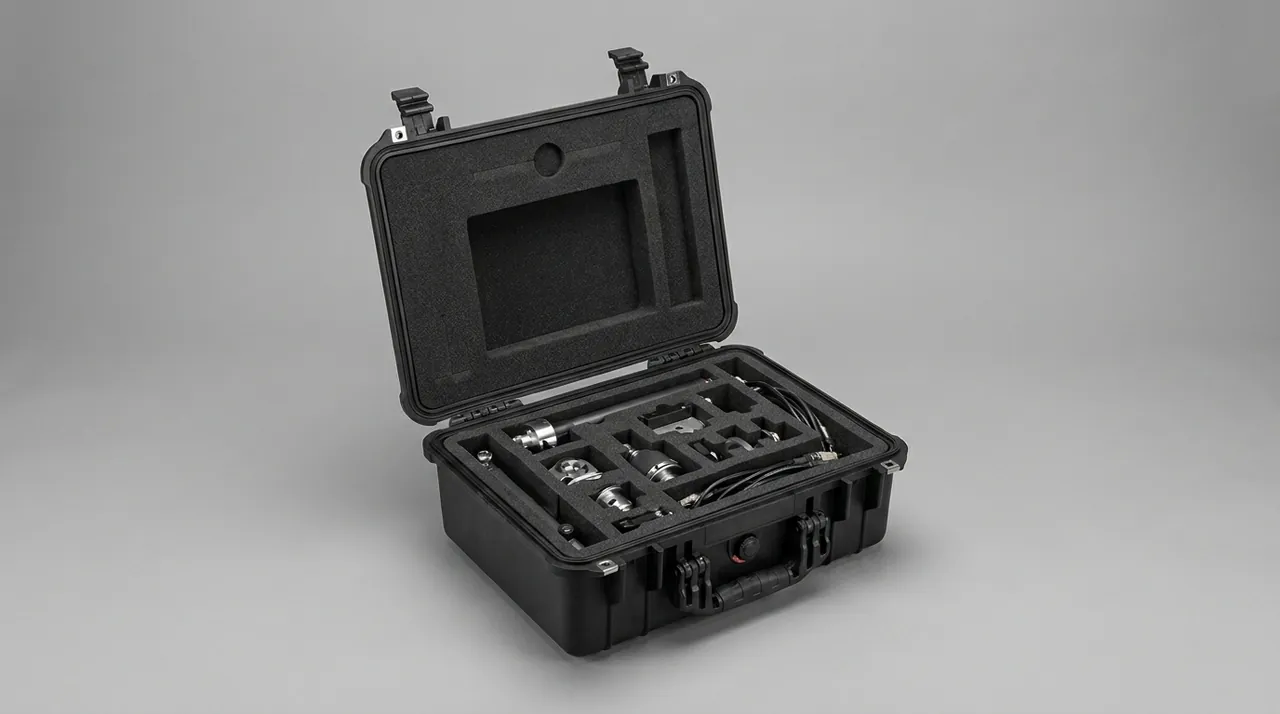
Compartments and Calibre Division: Management by Design
Compartments are the management core of an ammo box. The hazard of ammunition is not "weight" but "mixing": mixed calibres slow access, mixed batches harm traceability, and mixed new and reloaded rounds blur the state. A sound ammo box uses compartments and dividers to separate calibres and batches, with an internal layout matching the list.
Compartment design should follow several principles. First, divide by calibre, storing large and small calibres in separate zones to avoid compression and confusion. Second, divide by batch or state, separating new from reloaded rounds and using colour labels. Third, keep it adjustable, using removable dividers so the layout can change with stock and use rather than being fixed. Dividers should have some rigidity so ammunition cannot cross them and strike one another in transport.
Fixing ammunition within cells matters too. If ammunition can roll freely inside, it strikes other items in transport and may loosen the charge; for loose rounds, a compartment tray or clip strip holds a stable arrangement, while boxed ammunition should not shake in its cell. Every cell layout should correspond to the shipping list so opening, counting and packing records match one to one, raising management efficiency and safety.
Compartment materials should be neutral and not react with ammunition. A liner containing plasticisers, sulphides or acidic additives may accelerate case oxidation over long contact, so compartments and liners should use low-release, chemically inert materials such as closed-cell foam of PE, EVA or IXPE, or neutral engineering plastic, avoiding sulphur-bearing rubber or recycled material in direct contact.
Temperature and Light: Environmental Boundaries for Propellant and Primers
Temperature is often overlooked in ammunition storage yet is extremely critical. Propellant decomposition accelerates at high temperature, and long heat exposure changes its burning characteristics, affecting velocity consistency and the pressure curve; primer compound also ages faster in heat. An ammo box therefore needs not only good sealing but also avoidance of heat exposure in storage and transport.
There are three engineering measures. First, avoid long storage of ammunition in sun-exposed or hot environments such as a summer closed trailer, a balcony or a warehouse near a heat source. Second, give the case some heat insulation and shading, using a light-coloured exterior, a double wall or an insulating liner to reduce radiant heat transfer. Third, keep ventilation in storage, avoiding tight stacking in hot dead corners. For ammunition crossing climate zones, plan the transport window and temporary storage to reduce time in hot environments.
Light also affects some materials' stability. Ultraviolet light ages certain plastics and rubber liners, affecting sealing and liner performance. An ammo box should therefore be stored away from light, with shading for long-term storage. Temperature and light management is essentially control of the ammunition's aging rate, and the case design should serve that goal rather than chasing strength alone.
It should be noted that different countries may have specific rules on ammunition storage temperature and conditions, and users should comply with local laws and management requirements. The content above concerns the structure and storage management of case products and does not involve the use or performance of ammunition.
Case Oxidation and Material Compatibility
Cases are mostly brass or copper-washed steel and are sensitive to humidity and chemicals. Brass oxidises and discolours in humid conditions, and in the presence of water vapour with acidic or sulphur-bearing substances it can pit, affecting appearance, extraction and storage life. The chemical inertness of the liner and compartment materials therefore directly affects the long-term state of cases.
There are three points of compatibility design. First, neutralise the liner: avoid sulphur-bearing rubber, plasticised soft PVC or recycled material as the layer in direct contact with ammunition, preferring low-release materials such as PE, EVA and IXPE. Second, prevent galvanic corrosion: if different metals are stored together (such as a steel tool with brass cases), avoid direct contact that forms a galvanic couple, using an isolating pad or separate compartments. Third, maintain low humidity: case oxidation is highly humidity-dependent, so sealing and desiccant are the root means of suppressing oxidation, with liner material only auxiliary.
For ammunition stored long-term, also consider whether other materials in the case might release corrosive gas, such as certain rubbers, adhesives or wrapping paper. Acid paper and some inks may release acidic substances in humid conditions and accelerate case oxidation, so shipping documents and labels should use neutral materials or sit in a separate bag not in direct contact with the ammunition.
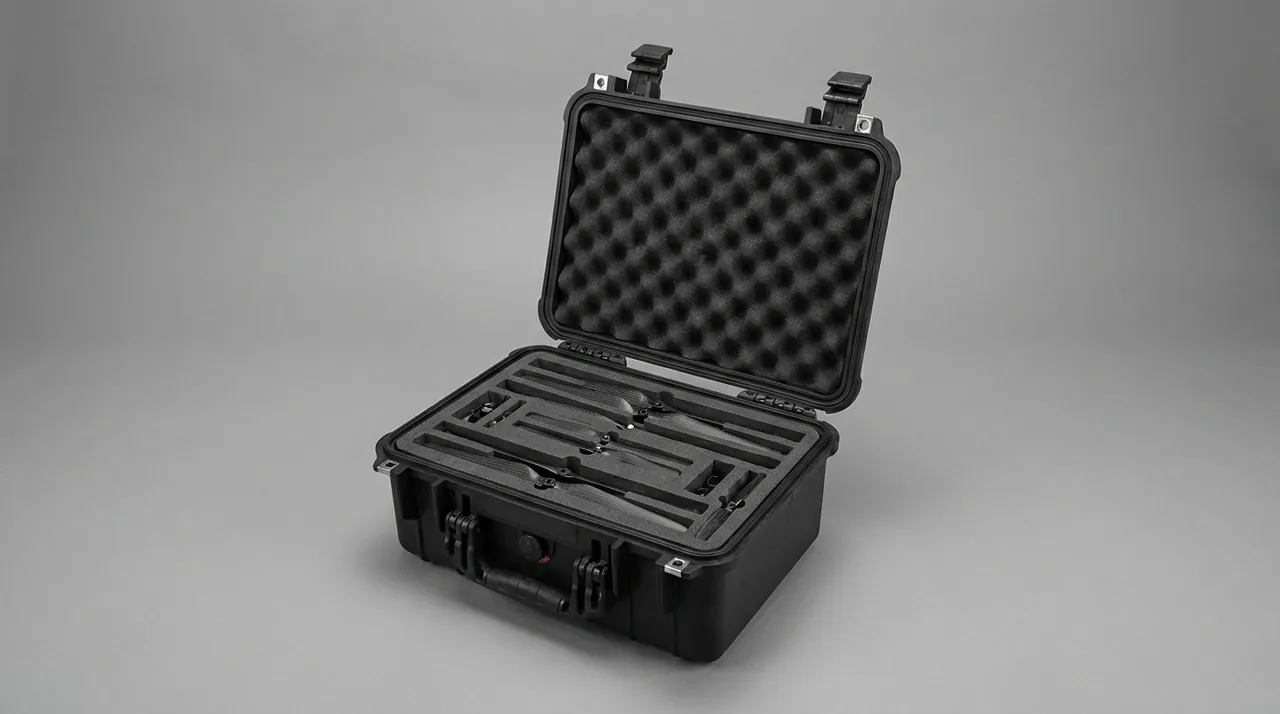
The corrosion resistance of hardware such as latches, hinges and screws should also be considered, especially in salt-spray or coastal environments. See foam material comparison for liner choice and case pressure-equalisation valve for the sealing-relief pairing. The neutral salt spray test of GB/T 10125 can be used to compare surface treatment schemes by the time to red rust under the same conditions. Note that salt spray is for process comparison and screening, not a direct field-life conversion. The figure below shows ammunition stored by calibre with a neutral liner.
Stackable Storage and Transport: Efficiency and Safety
Ammunition storage and transport often bring large volumes and concentrated weight, so the case's stacking and load-bearing design directly affects efficiency and safety. A stackable case should use mating top-and-bottom locating features so layers do not shift; the base and top should have corresponding load-bearing structures that spread upper weight evenly to the lower layer rather than concentrating at corners. The number of tiers should be set from case strength and contents weight and marked clearly on the case.
Load-bearing design in transport is especially critical. An ammo box may meet stacking, vibration and handling impact, so it needs sufficient compression and impact resistance. For heavy ammo boxes, forklift pockets can be added for mechanical handling, reducing the drop risk of manual handling. Handles should sit near the centre of gravity and join the wall through through-bolts or reinforcement, avoiding load on a single wall thickness. Transport should also include restraint to stop the case sliding or tipping in the vehicle.
For storage management, ammunition boxes should be stored by batch and category in separate zones, combined with first-in-first-out so earlier batches are used first. Case markings should be clear enough to identify the content category and batch "without opening the case", raising inventory efficiency and cutting mis-operation risk. For humidity-sensitive storage, the warehouse humidity should be controlled overall, working with the internal desiccant to form a two-level "warehouse-case" humidity management.
Locking and Safety Compliance: Hard Constraints in Use and Management
Ammunition storage and transport are strictly regulated, and the case lock must satisfy both safety and compliance. The core includes: the container should have a reliable locking structure that cannot be opened without authorisation; contents should be ordered and traceable; and transport should meet the carrier's and destination's requirements on container and quantity limits. Against these, the lock and structural design should balance "prevent mis-opening" with "be manageable".
For locking, choose a reliable scheme that stands up to inspection, avoiding a single latch or a soft lock. Where batch management is needed, use a uniform lock specification and keep a lock record for handover and management. The case should have no hatch or side door openable by hand once locked, so the locked state can be confirmed. For transport, confirm the carrier's specific interpretation of a hard, lockable, internally fixed container so the case is not blocked by a non-compliant one.
It must be specially stressed that the possession, storage and transport of ammunition must strictly comply with the laws and regulations of each jurisdiction, including specific requirements on quantity, packaging, storage location and transport method. The case product design serves only safety, compliance and protection, and does not involve the use or performance of ammunition. For cross-border transport, confirm the destination's specific rules on ammunition packaging and container. During selection, keep the lock specification, sealing rating statement and container test records for explanation at transport or customs.

Transport Test Basis: ISTA, GB/T 4857 and ASTM D4169
An ammo box's protection capability should ultimately be verified by transport testing rather than claimed by parameters. By test object and purpose, the basis falls into three groups. The first is whole-case performance testing, represented by the ISTA series, evaluating a packaged case in real logistics through combined vibration, impact, drop and stacking. The second is domestic transport package test methods, represented by the GB/T 4857 series, covering vibration, impact, stacking and drop. The third is distribution cycle testing, represented by ASTM D4169, combining multi-stage sequences per the expected transport cycle.
For an ammo box, three load classes matter most. The first is stacking, since ammo boxes are often stored and shipped in multiple tiers, so compression resistance directly affects the safety of the lower layers. The second is vibration, since long vibration may affect charge consistency and internal compartment stability. The third is drop, simulating slips and throws in handling, checking the combined cushioning of shell, latch and liner. Sealing should be verified separately through immersion or spray tests.
When setting a test plan, first define the case's actual storage and transport route and expected loads, then choose the corresponding sequence. Test conditions should be written into the purchase technical agreement, defining items, severity levels and criteria. The criteria are not only "the case does not break" but also "contents have no displacement, locking functions normally, no seal leakage, humidity indication not exceeded". It should be stated honestly that transport testing verifies the packaged case under given conditions and cannot be converted directly into an absolute guarantee for any real logistics.
Packing Marks, Traceability and Receiving Inspection
The marking and traceability design of an ammo box directly relates to safety, counting and handover management. The exterior should carry clear, durable markings that are hard to change without damaging the case, usually including the case number, the owning unit or holder information, content category, batch information and necessary handling and warning marks. Handling marks can follow convention with "this way up", "keep dry", "do not roll" and "tier limit" symbols, combined with the case number to form a unique identity.
The internal list is an important management feature of an ammo box. The list should correspond to the internal compartment layout, itemising ammunition category, calibre, batch and quantity so that opening, counting and packing records can be cross-checked one to one. Receiving inspection should follow a fixed sequence: first check the case exterior and lock state, then check the gasket and pressure-equalisation valve and the humidity indicator reading, then open and check the list against the physical contents. The opening sequence matters, because a wrong order can spill or load the contents during removal.
Problems found at acceptance should be recorded on the spot and photographed, compared with the packing record, to judge whether they occurred in transport or at packing. Any nonconformance should be recorded and notified to the sender rather than absorbed on site. For ammo boxes that turn around many times, acceptance is not only arrival inspection but also return inspection, checking latch springs, gasket compression set, liner compartment shape and hardware rust on each return, and checking the desiccant state.
Configuration Checklist and Selection Table
Selection should proceed through three layers of "use — environment — load". The first layer defines use: small personal storage, range and sport shooting, or batch reserves for law enforcement and security. The second defines environment: long storage, humid or coastal conditions, or cross-climate transport. The third defines load: stacking needs or mechanical handling. Once the three layers are set, case size, sealing rating, compartment form, lock and stacking structure converge accordingly.
The table below gives configuration suggestions for three typical scenarios as a starting point to be fine-tuned to actual needs.
| Item | Small personal storage | Range and sport shooting | Unit batch reserve |
|---|---|---|---|
| --- | --- | --- | --- |
| Case size | Small case + one calibre | Medium case + several calibres | Large case + several calibres and batches |
| Sealing | IP67 | IP67 | IP67 + pressure-equalisation valve |
| Compartments | Removable dividers | Calibre dividers + tray | Modular compartments + batch correspondence |
| Drying | Desiccant + humidity card | Desiccant + humidity card | High-capacity desiccant + periodic replacement |
| Stacking | Single layer | 2–3 tiers | Multiple tiers + forklift pockets |
| Traceability | Case number | Number + list | Number + list + stock records |
A common misconception in selection is "compare only capacity and price". The value of an ammo box lies mainly in sealing reliability, compartment management, environmental adaptability and compliant safety, none of which is easy to judge from appearance. At the procurement stage, ask for the sealing rating statement, compartment plan and stacking load data, and verify them against the actual storage and transport conditions.
Turnaround Maintenance and Long-Term Storage Management
In long-term use, wear concentrates on the latch, gasket, hinge and compartment dividers. Latch springs under long compression lose elasticity, showing as loose closure or hard opening; aging gaskets lose rebound, showing as reduced protection rating; worn hinge pins loosen the lid and affect seal compression; dividers worn by repeated use deform, letting ammunition rock in the cell. Maintenance should build a periodic inspection system around these four, with intervals based on use frequency.
Long-term storage management should build a two-level "warehouse-case" humidity control. At the warehouse level, keep the space dry, ventilated and shaded, with dehumidification if needed; at the case level, check the humidity card periodically and replace desiccant on a cycle. For ammunition stored long-term, apply first-in-first-out to use earlier batches first, avoiding long backlog. Temperature management matters too, avoiding long exposure of the case to high temperature or sharp temperature swings.
Another meaning of turnaround maintenance is the retirement decision. When the shell cracks, the latch pocket breaks, the seal groove deforms or the compartment structure is damaged, the case cannot return to its original protection level even with part replacement, so it should be retired rather than patched. A faulty case entering storage and transport carries far more risk to the internal ammunition than its residual value. The maintenance system should define retirement criteria so that "use it while it works" does not cause damp oxidised ammunition or a safety hazard.
OEM/ODM Customisation and Branded Delivery
For ammunition dealers, shooting-sport brand owners and security equipment suppliers, ammo boxes often need customisation for their own product line and brand image. Common dimensions include: tooling the case size and compartment layout for calibre and batch needs; choosing the lock type for the target market's compliance requirements; making colour, silk-screen and packaging marks to the brand standard; shaping the liner and dividers to the customer's list; and compiling the documents and warning marks to the customer's template.
The customisation process should proceed as "requirement confirmation — structural design — sample verification — volume delivery". Requirement confirmation should define the target market's storage and transport compliance; structural design sets case size, sealing rating and compartment layout; sample verification confirms the design boundary through stacking, vibration, drop and sealing tests; volume delivery ensures batch consistency and complete documents. JUNZHIJIA provides ammunition dealers and security equipment suppliers with an integrated plan from structural tooling to compartment moulding, lock selection and branded delivery, bringing compliance and protection requirements forward into design. KeXin New Materials (Guangdong) Co., Ltd. acts as the manufacturer providing production and quality assurance for that customisation.
For export projects, packing marks and traceability numbers should also be unified so the customer can count and warehouse by one numbering logic at destination. The case file should contain lock specification, sealing rating statement, compartment configuration table and transport test records so the customer can provide a compliance basis at transport or customs. It must again be stressed that the possession, storage and transport of ammunition must comply strictly with the laws of each jurisdiction; the content above concerns the structure, storage and transport management of case products, not the use or performance of ammunition.
Frequently Asked Questions FAQ
Q: Why is moisture control the first priority in ammunition storage?
A: Ammunition failure is driven by chemistry and humidity, not simply mechanical damage. Primer compound is humidity-sensitive and loses ignition reliability when damp, showing as intermittent misfires; brass cases oxidise and discolour in humid conditions and pit in severe cases; and moisture accelerates the degradation of some packaging materials. Mechanical damage, by contrast, is secondary in normal storage and transport. The first task of ammunition storage is therefore to hold internal humidity low for the long term, using an airtight seal with enough desiccant and a humidity indicator card to monitor. Sealing alone without desiccant leaves the moisture carried in at packing inside; desiccant alone without good sealing saturates quickly and fails, so the two must work together. In practice the card is read on opening rather than on closing, so a rising reading between two inspections is the signal that the seal or the desiccant needs attention before the ammunition is affected rather than after.
Q: What sealing rating does an ammo box need?
A: For ammunition the point of sealing is mainly to block water vapour and dust, so a structure with a continuous gasket should be chosen, generally designed to IP67. IP65 means dust-tight and protected against water jets; IP67 means dust-tight and protected against short immersion; both protect against dust equally and differ in water tolerance. More importantly, the sealing result is decided by the whole case system: gasket material, groove dimensions, latch clamping force and pressure-equalisation valve together decide it, and any single poor fit defeats the rating. So when comparing options, check the sealing design and latch count rather than looking only at the rating number, and confirm the valve works with the gasket. A useful check is to confirm the groove is continuous through the corners, because a corner that is bridged or pinched by a moulding seam is the place where a sealed case most often leaks after a few temperature cycles.
Q: Why must ammunition of different calibres be stored in separate compartments?
A: The hazard of ammunition is not weight but mixing. Mixed calibres slow access, and rummaging is not only inefficient but hides management errors; mixed batches harm traceability, so a problem cannot be located quickly; mixed new and reloaded rounds blur the state and create a use risk. The sound approach is to divide by calibre, batch and state through compartments and dividers, with colour labels for identification. Dividers should have some rigidity so ammunition cannot cross them and strike one another in transport, and the compartment layout should correspond to the shipping list so opening, counting and packing records match one to one. Colour labels and a simple tally on the lid also save time at the range, because a store divided by calibre and batch can be counted at a glance instead of being tipped out and sorted every time. A fixed inspection interval is easier to keep than a rule of thumb, because it removes the guesswork about when the store was last checked.
Q: Why is a "neutral" liner material emphasised?
A: Cases are mostly brass or copper-washed steel and are sensitive to chemicals. A liner containing sulphur-bearing rubber, plasticised soft PVC or recycled material may release corrosive components over long contact, accelerating case oxidation and even pitting. The layer in direct contact with ammunition should therefore use low-release, chemically inert materials such as closed-cell foam of PE, EVA or IXPE, or neutral engineering plastic. Also avoid direct contact between a steel tool and brass cases, which forms galvanic corrosion, using an isolating pad or separate compartments. Shipping documents and labels should use neutral materials or sit in a separate bag not in direct contact with the ammunition. It is also worth checking that no printed insert or label is pressed against the cases, since some inks and papers contain compounds that are harmless in dry air but can contribute to case discolouration once humidity rises. Labelling the liner lets a replacement be ordered to the same specification.
Q: Why must an ammo box control temperature, not just humidity?
A: Because propellant decomposition accelerates at high temperature, long heat exposure changes its burning characteristics, affecting velocity consistency and the pressure curve, and primer compound also ages faster in heat. Humidity mainly affects damp primers and case oxidation, while temperature mainly affects propellant stability; both need management. Engineering measures include avoiding long storage of ammunition in sun-exposed or hot environments such as a summer closed trailer or a warehouse near a heat source; using a light-coloured exterior or an insulating liner to reduce radiant heat transfer; and keeping ventilation in storage, avoiding tight stacking in hot dead corners. Plan the transport window across climate zones. For a store kept for years, a log of temperature and humidity readings is more useful than a single check, because it shows whether the ammunition has been held in a stable environment or has repeatedly moved through damp and warm cycles. A simple rule is to keep records at the same time each month so seasonal swings show up as a trend rather than as a single reading taken on an unusual day. Q: What should be noted when stacking ammo boxes?
A: Ammo boxes are often stored and shipped in multiple tiers, so the stacking and load-bearing design directly affects safety. For heavy ammo boxes, forklift pockets allow mechanical handling and reduce the drop risk of manual handling, with restraint in transport to stop the case sliding or tipping. It also helps to keep the heaviest cases at the bottom of a stack and the lightest at the top, so the lower boxes are not crushed and the stack stays stable when a lower box is pulled out for stock rotation. Checking the base of the stack for crushing catches an overloaded tier early. The stack should also be restrained in transit so braking and cornering cannot walk the tiers apart, and the pallet should sit on a flat, dry surface rather than on a slope. Where boxes are handled by fork-lift, pocket spacing and entry depth should match the equipment available on site, and a photograph of the stack before dispatch settles any later dispute about how it was built. Q: What transport tests should an ammo box pass, and what are the criteria?
A: Three groups of basis can be used: whole-case performance testing such as the ISTA series, evaluating a packaged case in real logistics through combined vibration, impact, drop and stacking; domestic transport package test methods such as GB/T 4857 covering vibration, impact, stacking and drop; and distribution cycle testing such as ASTM D4169, combining multi-stage sequences per the expected transport cycle. An ammo box mainly verifies stacking, vibration and drop, with sealing separately verified by immersion or spray. Test conditions should be written into the purchase agreement. The most useful evidence names the tier load and the drop height used, so a buyer can compare it with the way the boxes will actually be stacked in a warehouse and handled on a loading dock. Where the boxes travel by sea, a salt-spray check on the latch and hinge hardware is worth adding, because corrosion there does not show up in a drop test but does cause failures after a season in service. Q: How is internal humidity managed during long-term ammunition storage?
A: Build a two-level "warehouse-case" humidity control. At the warehouse level, keep the space dry, ventilated and shaded, with dehumidification if needed; at the case level, add enough desiccant for the cavity volume, air humidity at packing and storage period, with a humidity indicator card checked periodically and desiccant replaced on a cycle. For humid or coastal regions, use a desiccant with greater capacity and shorten the interval, and apply first-in-first-out to use earlier batches first and avoid long backlog. If humidity is exceeded or cases show oxidation, find the source and treat it rather than simply replacing the desiccant.
Conclusion and Related Reading
The logic of an ammo box is to use environmental isolation to answer the three things ammunition fears most: moisture, heat and mixing. Sealing and a pressure-equalisation valve address moisture, an insulating shell and a controlled storage window address heat, and dividers with a packing list address mixing. JUNZHIJIA supplies custom ammo boxes with divider tooling, lock options and compliant documentation for distributors and security-equipment suppliers.
Related Reading