

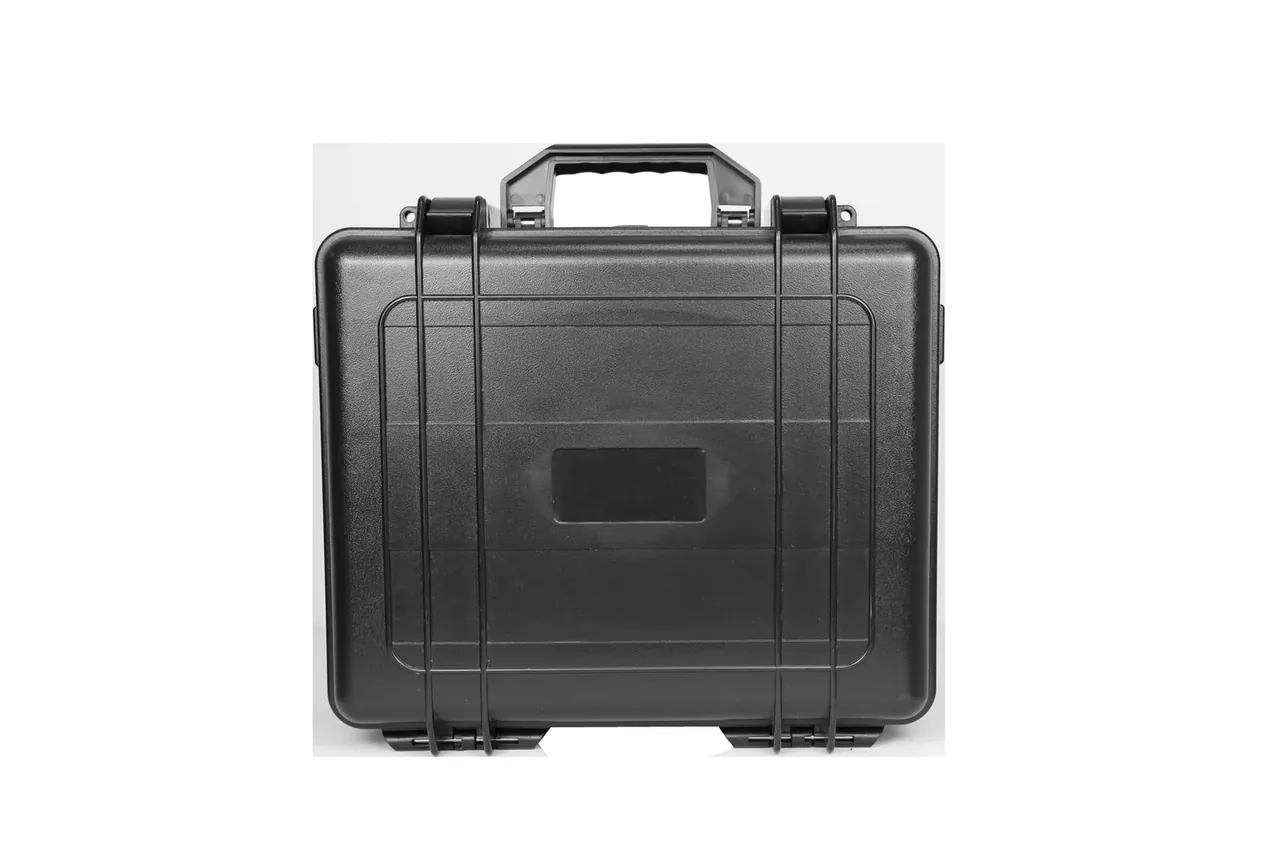
Quick answer: Ammunition and nuclear ordnance boxes is a procurement term for a range, not a model: ammunition, fuze, missile and nuclear ordnance packaging. What unites them is high unit value, small batches and itemised verification against an ordnance packaging standard.
Table of contents
- What ammunition and nuclear ordnance boxes cover
- The size ladder: hand case to pallet unit
- Shared structure: wall, ribs, seal, latches
- Marking and traceability: the information layer
- Five questions before selection
- FAQ
1. What ammunition and nuclear ordnance boxes cover
The phrase is a range, not a model. Under it sit four families: ammunition boxes for cartridges, fuze boxes for fuzes, missile boxes for bodies and boost stages, and nuclear ordnance packaging for components.
Three things hold the family together. Unit value is high, so a failed case costs more than the case. Batches are small, often tens to hundreds, so tooling is amortised over few parts. Verification is itemised: drop, stack, seal, vibration and salt spray are each tested and reported. Those three, not size or colour, separate the class from industrial cases.
2. The size ladder: hand case to pallet unit
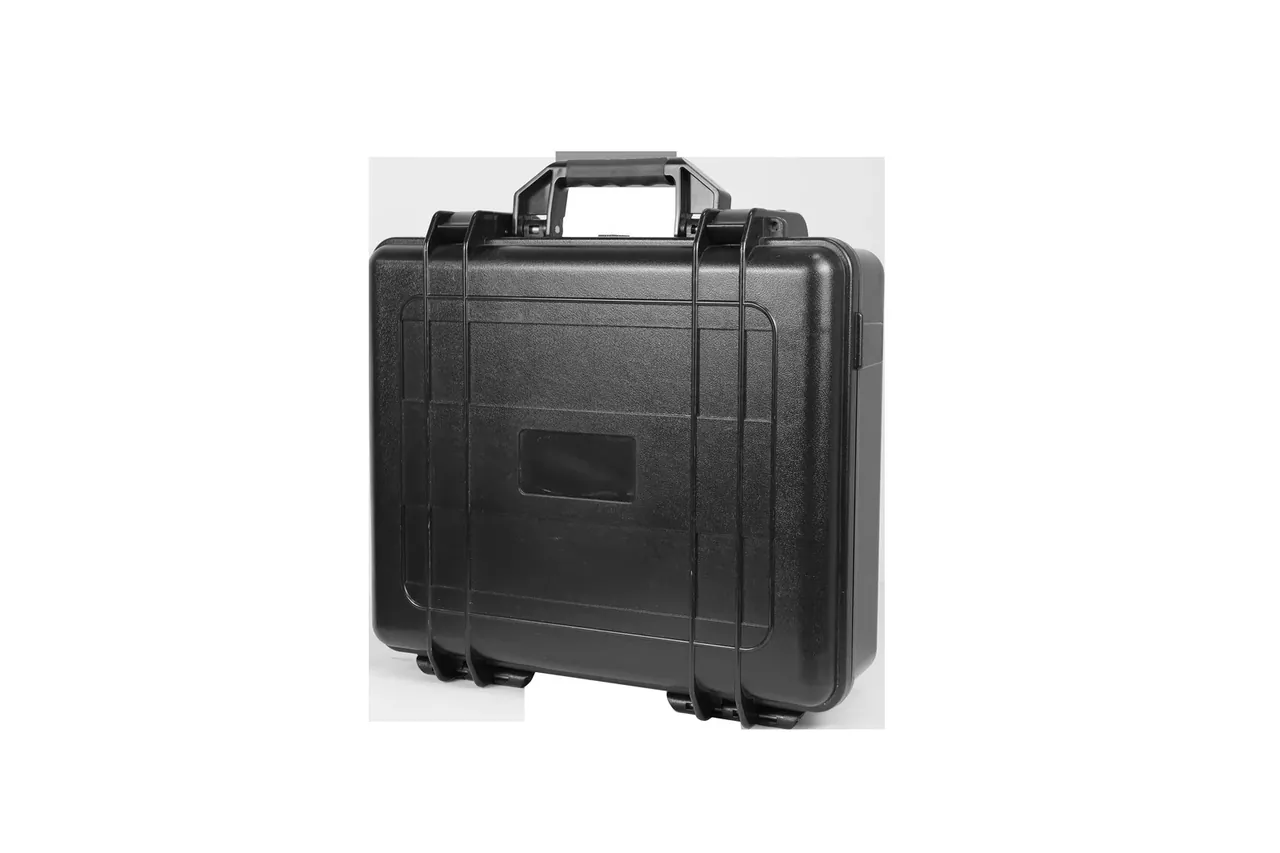
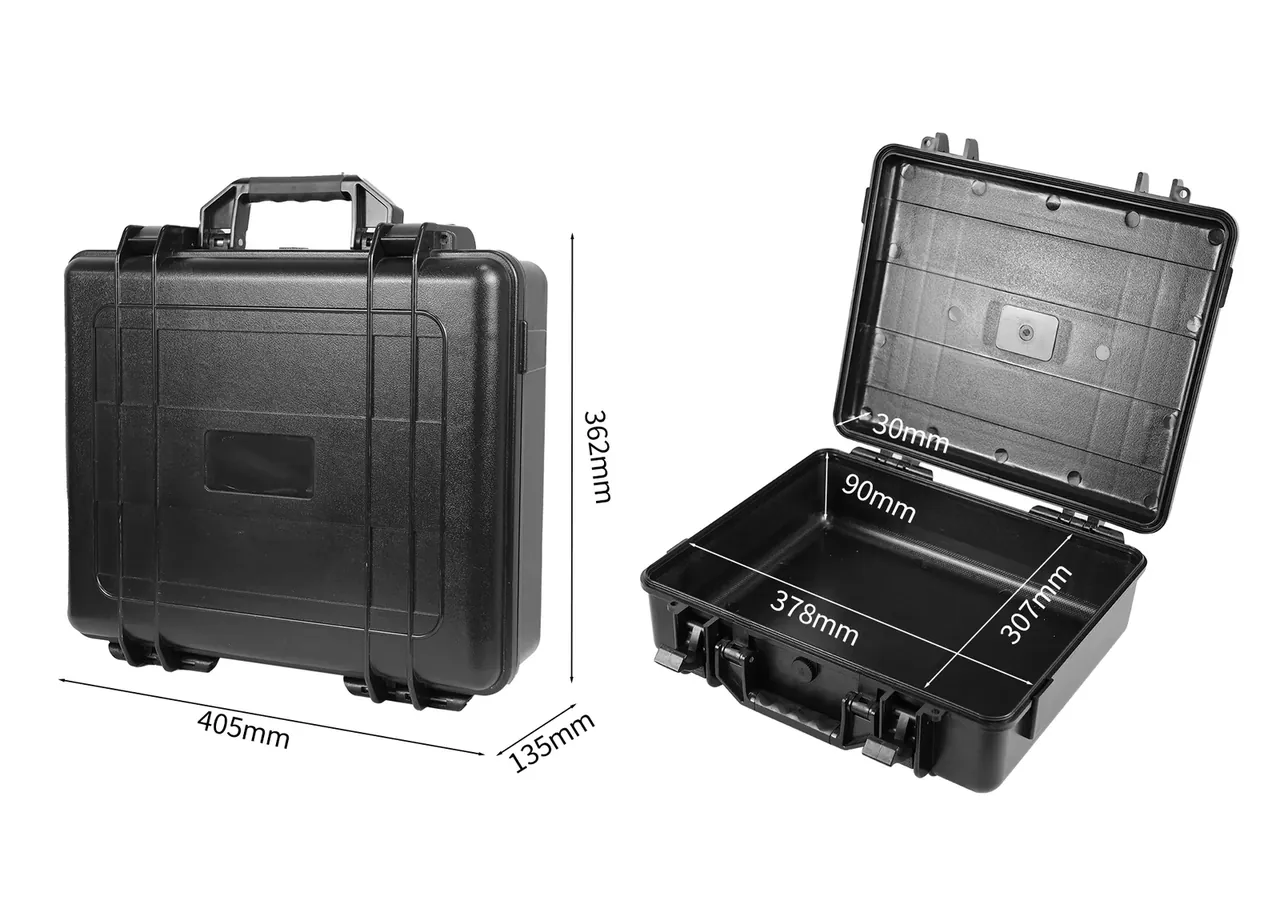
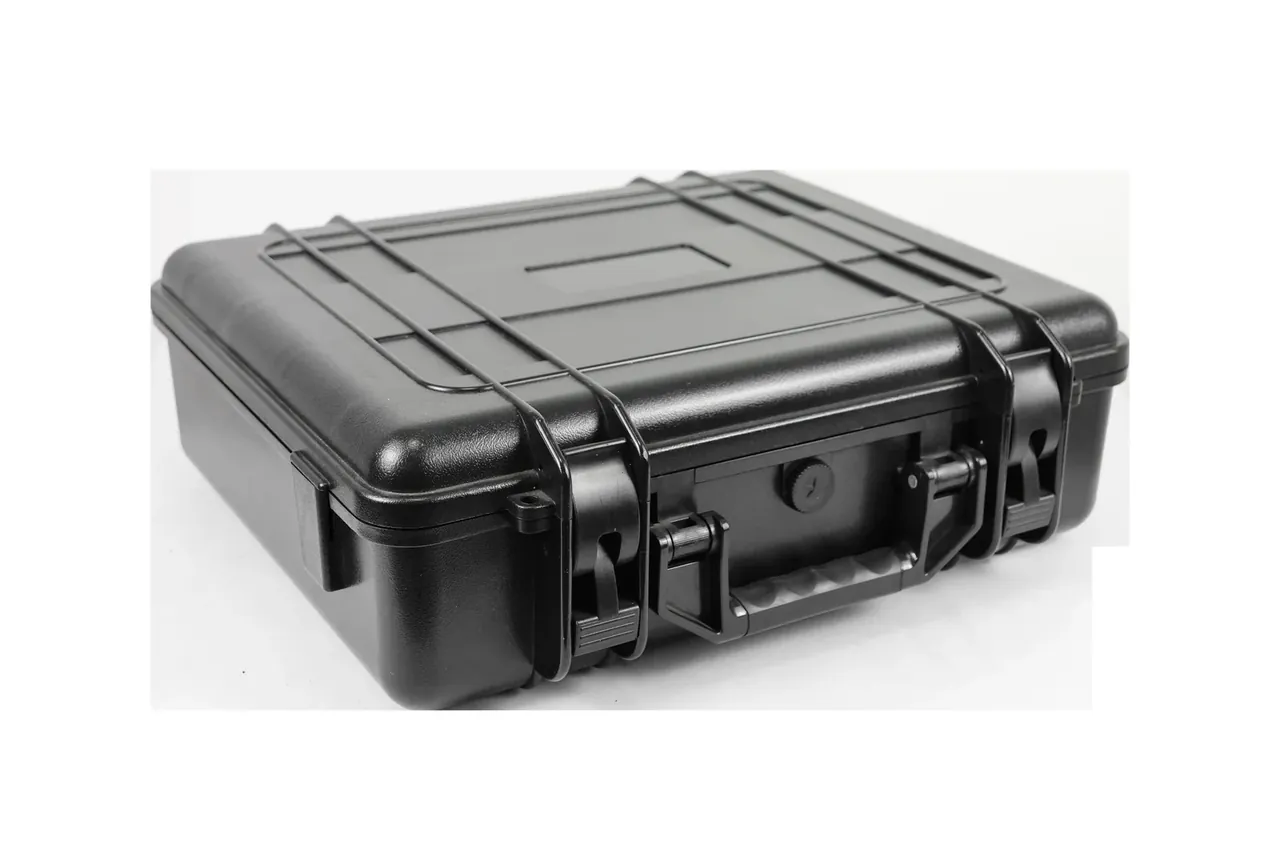
Size spans a factor of ten. The hand tier runs near 300 mm square and 90 to 100 mm deep, with a folding handle and two latches. The medium tier runs near 400 mm square and 130 mm deep, adds ribs and moves to four latches. Above sits the pallet tier, moved by forklift or sling.
Structure follows size: small leans on wall and radii, medium uses ribs to steer load into corners, large needs a frame and corner fittings or the sides bulge. Quote interior, exterior, lid depth and stack height together.
3. Shared structure: wall, ribs, seal, latches
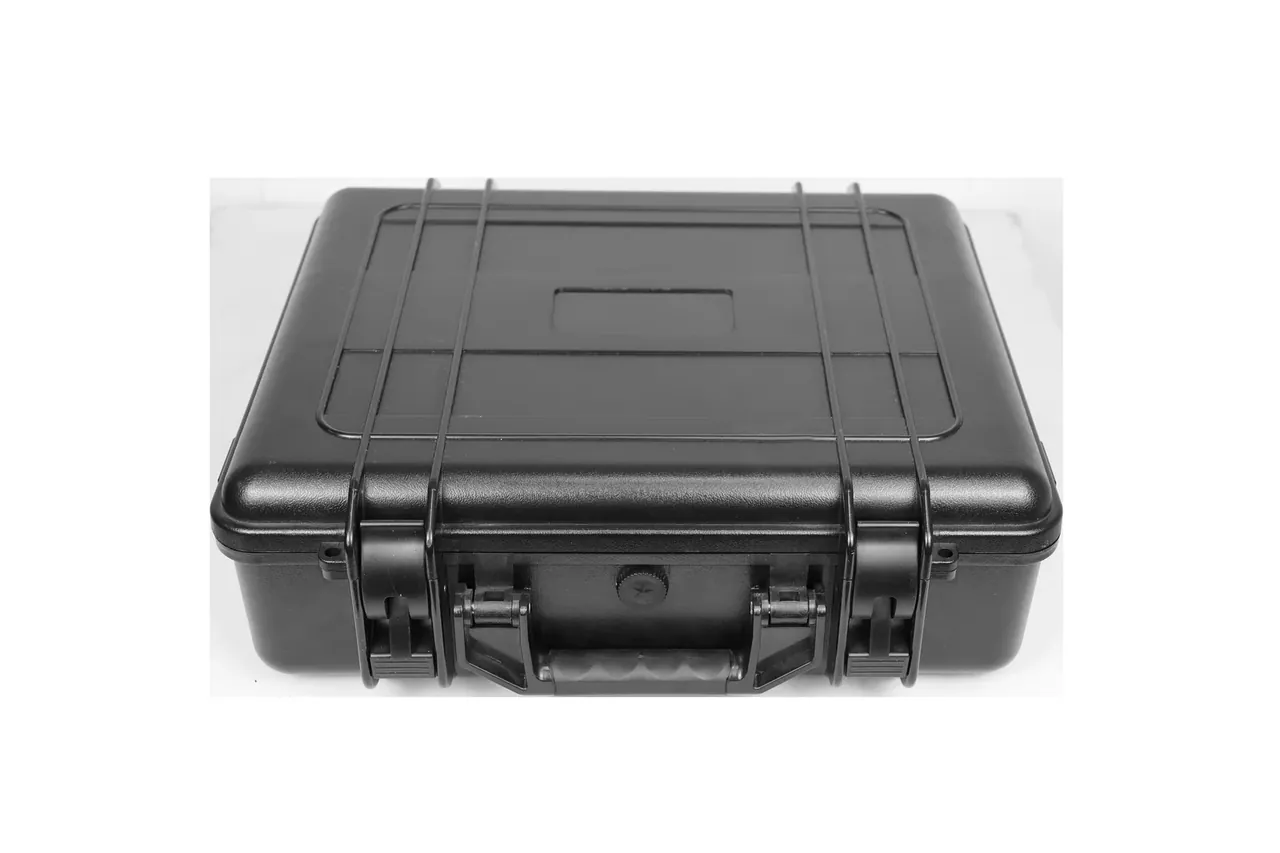
Thicker is not stronger. Added wall brings weight, while drop performance is decided by corner radius and rib layout: radii move impact away from the corner, ribs shorten the span the side wall has to bridge. Three to five millimetres covers most of the range.
Sealing uses a double lip with a gasket, plus a pressure valve. The lip keeps the gasket from being extruded while preserving rebound; the valve equalises pressure, so a case that spent a cold night at altitude still opens. Latch count decides how evenly the flange loads.
| Feature | Job | Typical failure |
|---|---|---|
| Corner radius | Moves impact away | Corner cracks |
| Rib | Shortens wall span | Stress at the rib root |
| Double lip and gasket | Hold pressure | Insufficient compression |
| Pressure valve | Equalise differential | Blocked core |
4. Marking and traceability: the information layer
Marking carries model and batch, destination and unit, and item serial. Drop one and traceability breaks. Inkjet suits volume, plates suit readability, QR codes suit scanning.
Placement matters. A label field must clear the sealing face and the latch travel, or the label holds the flange open. Ink has to survive salt spray and UV; paper labels curl within two months at sea. A repaired case gets new marking; the old batch number is struck through, not covered.
5. Five questions before selection
Clear interior, sized from the largest item plus cushioning, not from the outside. Loaded weight, which sets latch count and handle type. Stack height, which sets rib density and corner fittings. Transport mode, where air favours weight, sea favours salt spray and road favours vibration.
The fifth is the verification standard. Ordnance packaging usually cites a national military standard, and drop height, stack load and seal method belong in the contract. Answer all five and the specification writes itself.
| Question | Design item | Common misjudgement |
|---|---|---|
| Clear interior | Case tier | Ordered from exterior |
| Loaded weight | Latches, handle | Cushioning ignored |
| Stack height | Ribs, corner fittings | Single layer assumed |
| Verification standard | Test list and reports | Raised at acceptance |
Conclusion
Read together, the picture holds: this is a class defined by verification requirements, not dimensions. Put the standard into the contract before arguing structure or price. The failure to avoid is treating these ammunition and nuclear ordnance boxes as ordinary cases with a new label.
This article covers container-side specifications and design implications only, not the handling, loading or use of the contents.
Related Reading
- How to write ordnance case specifications
- The ordnance packaging standard system
- Key points of ammunition box standards
- Military standards and case verification
Related Products
- 8 Series — Gun Cases; Military Equipment Cases; Camera Equipment Cases; Drone Cases; Watch Cases; Knife Cases; First Aid Cases; Electronics Equipment Cases
- WL8-2812 PP Gun Case — model WL8-2812
- All protective cases and toolboxes: 7 series, 158 models