

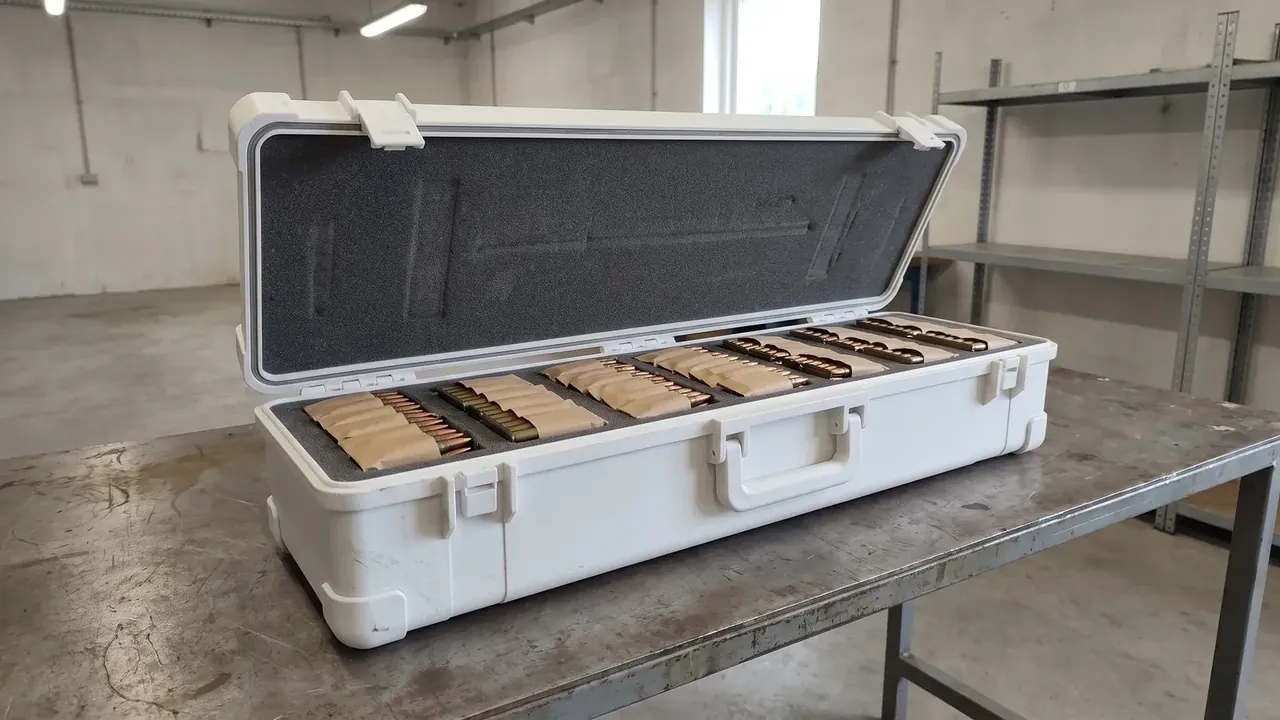
Quick answer: Maintenance is three inspection intervals matched to three failure speeds: latches weekly, gasket compression and internal humidity monthly, full-case air tightness and stack load quarterly. The criteria are numbers — compression below 25%, rebound under 80%, latch free play over 1 mm.
Table of contents
- How to Set the Inspection Cycle for an Ammunition Box
- Gasket Compression and Ageing Criteria
- Latch Fatigue and Crack Repair
- Desiccant Replacement and Humidity Records
- Stack Load Re-check and the Scrap Line
- FAQ
1. How to Set the Inspection Cycle for an Ammunition Box
Intervals for an ammunition box follow failure speed: a gasket ages in months, a latch fatigues over thousands of closures, a crack grows over years. So latches weekly, gasket monthly, air tightness quarterly.
The store rewrites the interval: above a 15 °C daily swing, monthly becomes fortnightly, and in salt spray hinges join the weekly round. Every criterion needs a record tied to a box number.
| Interval | Item | Tool | Criterion |
|---|---|---|---|
| Weekly | Latch feel, rivets | Hand and eye | Free play |
| Monthly | Gasket, humidity | Calliper, hygrometer | Under 25%, over 50% |
| Quarterly | Air tightness, stack load | Pressure decay | Over 10% drop in 5 min |
| Yearly | Cracks, foot wear | Loupe, depth gauge | Crack over 0.5 mm |
2. Gasket Compression and Ageing Criteria
A gasket on an ammunition box works by compression. The band is 25% to 30%: below it contact stress is too low, above 35% permanent set starts early. Close the lid for 24 hours, then read the thinnest witness mark.
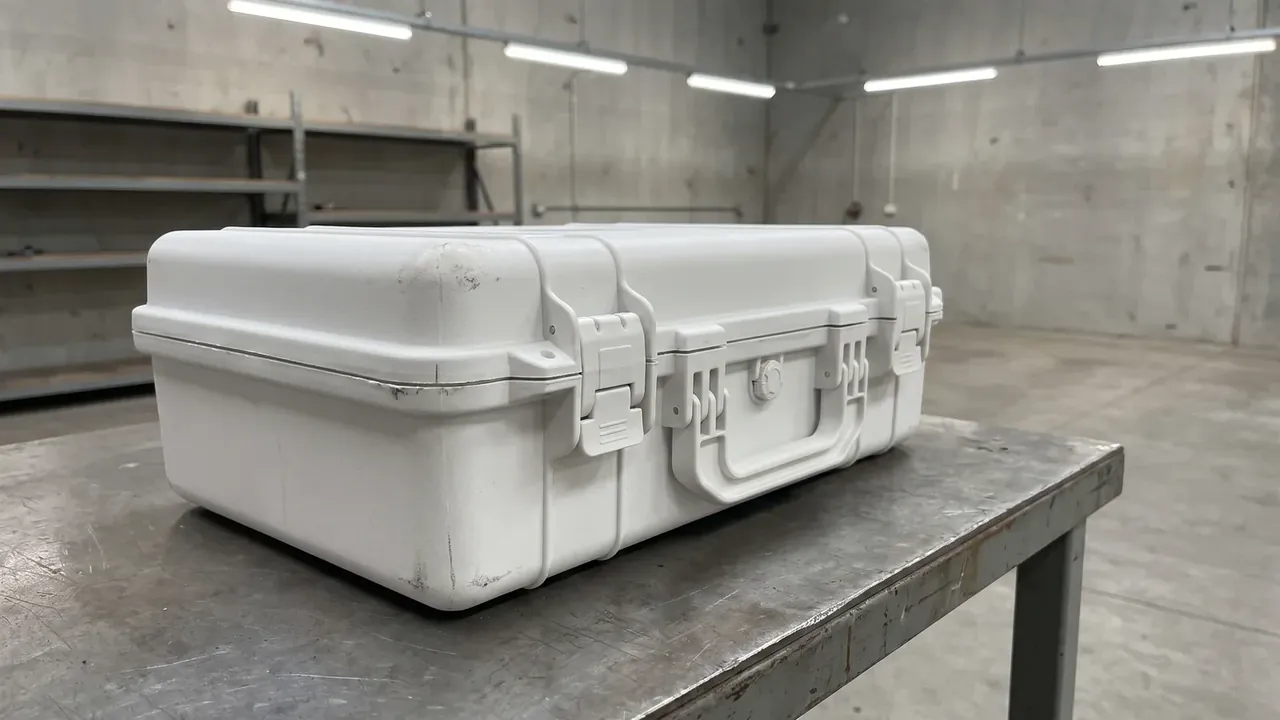
Ageing shows in hardness and rebound: a 15-point rise on the Shore A scale, or under 80% rebound after ten minutes flat. A white bloom is only a symptom.
Replace the full perimeter, never a splice: a patch looks fine on a flat run and leaks at four corners. Keep spares at 10%.
3. Latch Fatigue and Crack Repair
A latch is a fatigue part, counted in closures: 15% of preload gone after 5,000, free play after 8,000 — three and a half years at four a day, eight months at twenty.
The criterion is free play, not breakage: push the closed latch body, and over 1 mm the gasket is not compressed, so humidity climbs.
| Part | Symptom | Criterion | Action |
|---|---|---|---|
| Gasket | Thin witness mark | Under 25% | Replace perimeter |
| Latch | Loose when closed | Over 1 mm play | Replace latch |
| Wall | Open crack | Over 2 mm or 60 mm | Scrap |
Cracks get three grades: hairlines up to 0.5 mm are marked and measured quarterly; 0.5 to 2 mm is grooved and hot-air welded at 260 °C; anything wider than 2 mm or longer than 60 mm is scrapped.
4. Desiccant Replacement and Humidity Records
Desiccant in an ammunition box is changed by weight gain: silica gel nears saturation in three months at 25 °C and 60% humidity, but a dry store may take eight to reach 40%.
Weigh a fresh bag once, write the figure outside, and compare later. Without a baseline the hand cannot tell a 40% gain.
| State | Gain | Humidity | Action |
|---|---|---|---|
| Normal | Under 20% | Under 40% | Keep |
| Warning | 20% to 40% | 40% to 50% | Schedule, check seal |
| Failed | Over 40% | Over 50% | Change, test seal |
Records stay cheap: one colour-change card per box, blue turning pink above 50%, and a glance down a rack finds the outlier.
5. Stack Load Re-check and the Scrap Line
Stack load must be re-checked, not proven once at goods-in. A plastic ammunition box under load at 40 °C settles about 2 mm on the lid in 12 months. Re-check yearly at 1.5 times rated load.
| Part | Scrap criterion | Re-check |
|---|---|---|
| Lid | Settlement over 4 mm | 12 months |
| Feet | Worn or through-cracked | 6 months |
| Sealing face | Pit over 1 mm | Quarterly |
Three entries end an ammunition box's life: lid settlement over 4 mm, feet worn through, a sealing face pitted beyond repair. Any one is enough.
Conclusion
The hard part is the numbers, not the work: 25% compression, 80% rebound, 1 mm of play, a 2 mm crack. They turn replacement from opinion into a decision. Set intervals by failure speed and keep records by number, and an ammunition box usually gains 30% more life.
This article discusses only the container (case body) side of specifications and design intent, and does not cover any handling, loading or use of the contents.
Related Reading
- Quarterly checks and retirement criteria
- Anti-corrosion and seal replacement on metal cases
- Reading load and specification figures
- The evolution of forms and structures
Related Products
- 8 Series — Gun Cases; Military Equipment Cases; Camera Equipment Cases; Drone Cases; Watch Cases; Knife Cases; First Aid Cases; Electronics Equipment Cases
- WL8-2812 PP Gun Case — model WL8-2812
- All protective cases and toolboxes: 7 series, 158 models