

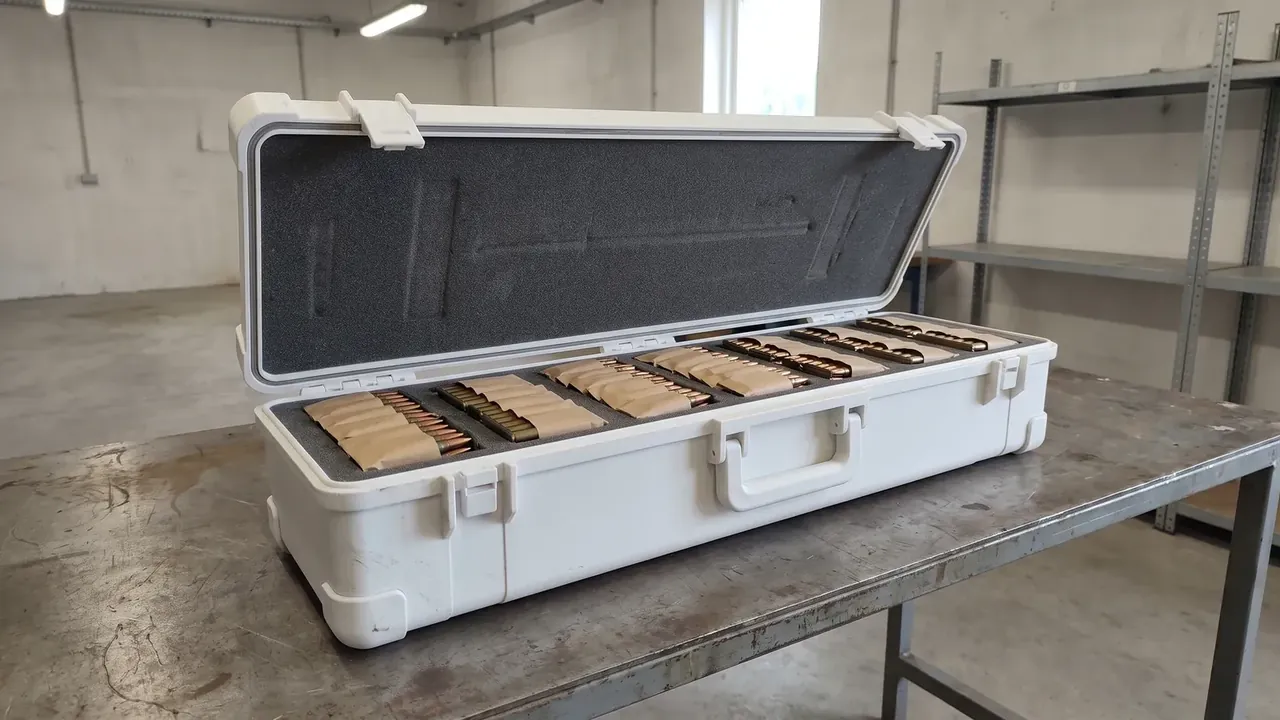
Quick answer: Measure internal clear dimensions first, then wall thickness and stacking tiers, then sealing class, latch count and padlock bore, and finish with handling and marking. Score the five by weight; anything under seventy points never reaches the price comparison.
Table of contents
- Start with internal clear dimensions
- Matching wall thickness to empty weight
- Sealing class and pressure relief
- Latch count and padlock bore
- Stacking, handling and marking fields
- FAQ
1. Start with internal clear dimensions
The inside of an ammunition box decides whether it works, yet it is the harder side to measure. Draft and corner radii mean a case quoted at four hundred and twenty millimetres externally often measures three hundred and ninety-six inside. Start from the contents envelope plus ten millimetres and derive the outer size.
| Nominal | Internal | Slots | Typical fit |
|---|---|---|---|
| 420 | 396 | 6 | short rounds |
| 560 | 534 | 8 | two layers |
| 780 | 752 | 12 | long rounds |
Denser slots mean thicker dividers, and every millimetre of divider comes out of clear width. Below diameter plus three of slot width, foam stays compressed and the geometry drifts, so use eight-millimetre dividers and lengthen the case rather than squeeze the slots.
2. Matching wall thickness to empty weight
Wall thickness and empty weight move against each other. Rotomoulded polyethylene runs three and a half to five millimetres, and each extra millimetre adds about one point eight kilograms, paid on every return. Stiffness comes from hoop geometry: one transverse rib equals a millimetre of wall.
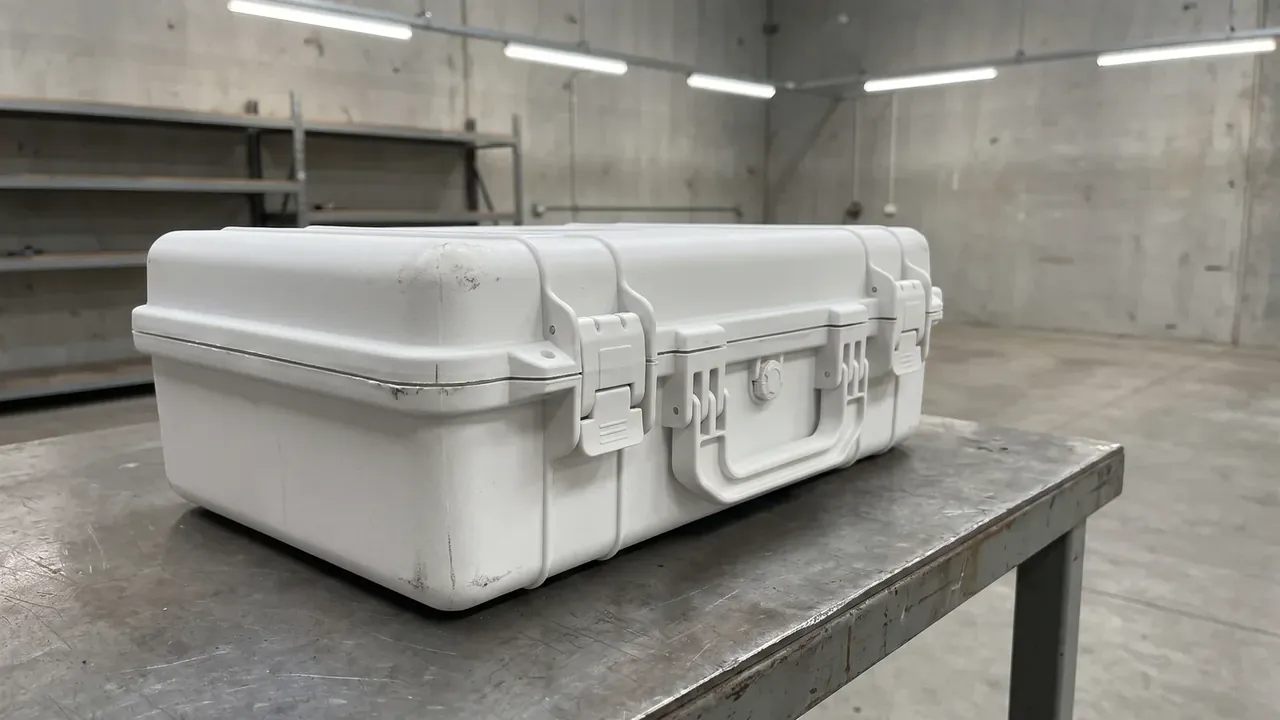
A six-kilogram case rated for twenty kilograms carries one hundred and four kilograms on the bottom tier of a five-high stack, which sets the creep check. A thin wall sags at the base centre first, visible only with light raking across the surface.
3. Sealing class and pressure relief
Sealing class follows the store, not the price list. A controlled room takes IP54, a covered shed IP65, an open yard or sea freight IP67 with a relief valve. An unvalved body pumps its gasket twice a day once the diurnal swing passes fifteen degrees.
| Class | Build | Suitable store | Check point |
|---|---|---|---|
| IP54 | single gasket | indoor | continuous rim |
| IP65 | gasket plus valve | covered shed | membrane intact |
| IP67 | twin gasket, capped | open yard, sea | dry inside |
Valves usually crack at zero point two to zero point four bar, quoted with a dust membrane. On the gasket, check solid or hollow section, compression of twenty-five to thirty percent, and joint position; a corner joint is where water first appears.
4. Latch count and padlock bore
Latch count follows length: two at four hundred and twenty millimetres, three at five hundred and sixty, four beyond seven hundred and eighty, always symmetrical. An off-centre middle latch loads the rim unevenly and lifts the long side about two millimetres, where the gasket stops sealing.
Padlock bores are most often missed: below eight millimetres most shackles will not pass, and nine to ten with a raised boss gives compatibility and pull resistance.
5. Stacking, handling and marking fields
Tiers come from the fit between top recesses and base bosses. Recesses under five millimetres deep start walking at the fourth tier; eight millimetres deep with one millimetre of clearance holds a five-high stack within ten millimetres. Multiply tiers by loaded weight and hold the result under the base rating.
Handling rests on a moulded-in handle, forklift apertures and pallet location: a handle rated at twice the loaded weight, and apertures aligned to pallet pitch. Reserve four marking fields, front, sides and lid, the only one visible once stacked.
| Criterion | Weight | Pass line | Reject line |
|---|---|---|---|
| Size and slots | 30 | ten millimetres spare | slot too narrow |
| Wall and weight | 20 | three point five plus | base fails load |
| Sealing and relief | 25 | matches store, valved | no valve outdoors |
| Latches and bore | 15 | three symmetric, nine | bore below eight |
| Stacking and marking | 10 | four tiers, four fields | no lid field |
Any reject line ends the comparison whatever the total, because each describes a structure that can no longer be changed.
Conclusion
The order cannot be shuffled: internal size, then wall and weight, then sealing and latches, then stacking and marking. The first two decide whether the case works; the last three how long it keeps working. Score all five before discussing price, and an ammunition box stops being a contest between unit prices.
This article discusses only the container (case body) side of specifications and design intent, and does not cover any handling, loading or use of the contents.
Related Reading
- How the ammunition box evolved, and three tests that still apply
- Specification rules for stackable cases
- Setting specifications for custom foam inserts
- Selection order for ammunition transit chests
Related Products
- 8 Series — Gun Cases; Military Equipment Cases; Camera Equipment Cases; Drone Cases; Watch Cases; Knife Cases; First Aid Cases; Electronics Equipment Cases
- WL8-2812 PP Gun Case — model WL8-2812
- All protective cases and toolboxes: 7 series, 158 models