

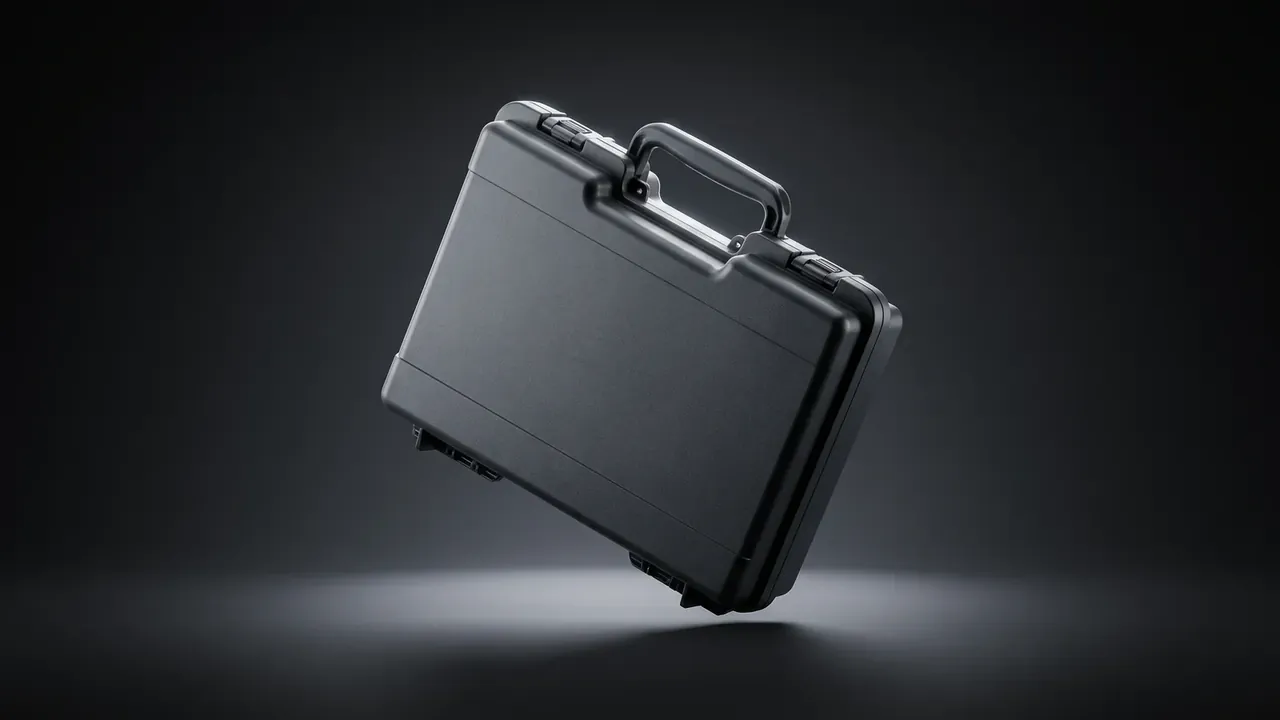
Quick answer: Fit an ammunition storage container to the station by measuring bench height, reach and lid clearance first; the footprint only says whether it passes a door. Of the three stations, the duty desk is easiest to get wrong and the vehicle the most expensive.
Table of contents
- Drop the footprint rule first
- Three stations, three ways to mount
- The reach decides hinge side and bench height
- Four mistakes and their fixes
- FAQ
1. Drop the footprint rule first
Sizing a station by footprint is the easiest mistake to make and the hardest to notice. A footprint answers two questions: will it pass the door, will it sit on the shelf. It says nothing about whether a standing operator can reach the bottom, or whether the lid hits the wall. A 620 mm ammunition storage container on a 750 mm bench is comfortable; on a 450 mm cupboard it costs a bend forty-two times a shift.
| Station | Bench height | Reach | Mounting point | Usual mistake |
|---|---|---|---|---|
| Duty desk | 750 mm | 600 mm | 100 mm gap behind | Lid hits the wall |
| Vehicle | Cabin floor | 500 mm | Four corner straps | Handle strapped instead |
| Store shelf | 600 mm per tier | 600 mm | Heavy low, light high | Heavy unit on top |
| Field post | Folding table or pad | 400 mm | 100 mm off the ground | Set straight on mud |
A 600 mm reach is the area a person covers without stepping; outside it, every retrieval costs a step. A footprint also hides lid clearance, since an open lid sweeps nearly the same floor area as the body.
Draw the lid arc first.
2. Three stations, three ways to mount
The mount differs; the unit can be identical. At a duty desk the lid must not block the sight line, so leave 100 mm behind the body for it to swing past vertical, and set the bench at 750 mm. Below 400 mm of bench width, add a non-slip mat, or opening drags the unit forward.
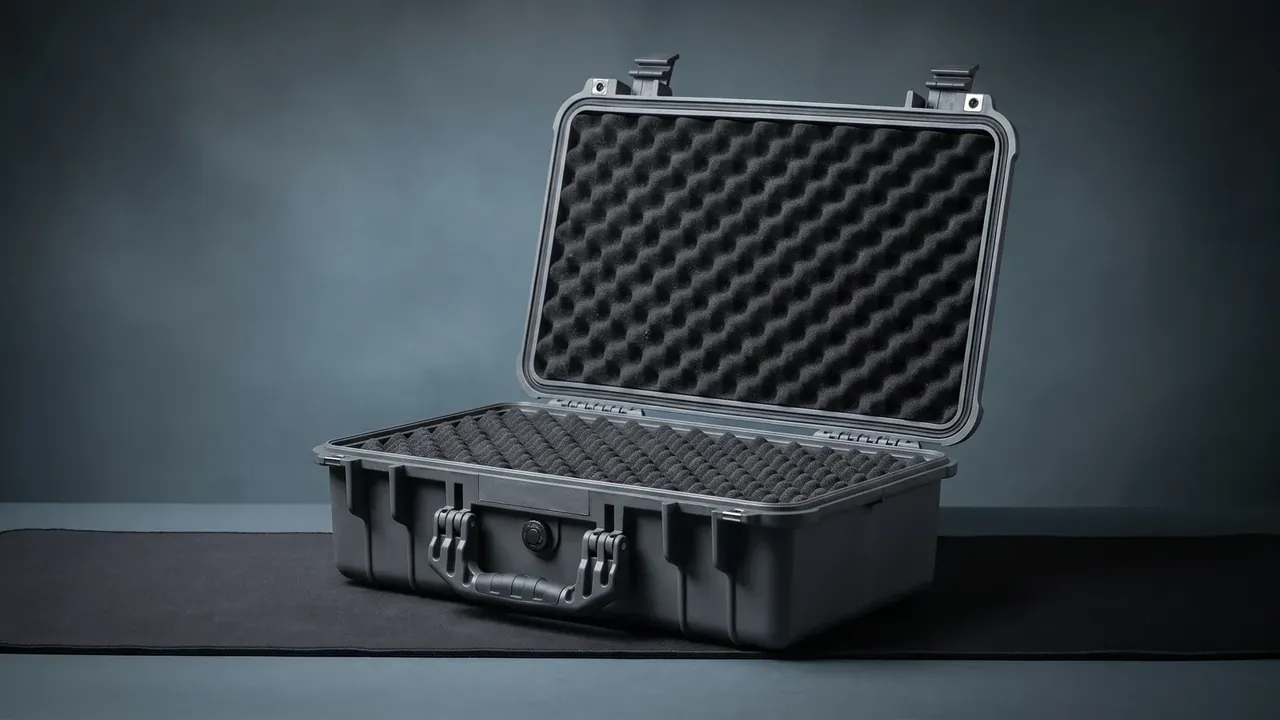
Vehicle mounting is the strictest: four 25 mm polyester straps run around the base ribs to the frame at about 150 N, never around the handle. Tiers sit at 600 mm with the loaded unit under 450 mm, so a hand reaches in from above; a three-tier rack stands 1.8 m, and 40 kg on top bows the beam until the row leans. A field post needs a pad lifting the base 100 mm clear of mud.
| Station | Fixing | Key figure | Check before dispatch |
|---|---|---|---|
| Duty desk | Free standing | 100 mm wall gap | Unit still in position |
| Vehicle | Four straps | 25 mm webbing, 150 N | Strap still on the rib |
| Store | Tiered rack | 600 mm tiers, 1.8 m | No heavy unit on top |
| Field | Raised pad | 100 mm clearance | Pad not crushed |
3. The reach decides hinge side and bench height
Hinge side should follow the operator, and it is skipped more often than bench height. With the long side facing the aisle and the lid opening that way, the operator stands aside to work; move the hinge across and the motion becomes a straight one-handed push. Re-hanging a lid costs far less than replacing a unit.
An action repeated forty-two times a shift deserves a structural fix.
- Lid stop at 105 degrees: it holds open without extra floor space and will not fall back.
- Open and close under 8 seconds: slower, and people use a knee or a boot, which is how gaskets die.
- 30 mm label text at 1.4 to 1.6 m eye height; a label you must stoop to read does not exist.
Bench height follows posture, not box size: 700 to 800 mm standing, near 680 mm seated, plus 50 mm if the operator looks down into compartments. The same ammunition storage container works at all three; what changes is how tired the operator is.
4. Four mistakes and their fixes
First, strapping the handle, which is built for one hand's momentary load, not a vehicle's cyclic load. Fix: strap the body at four corners and let it sit on the floor.
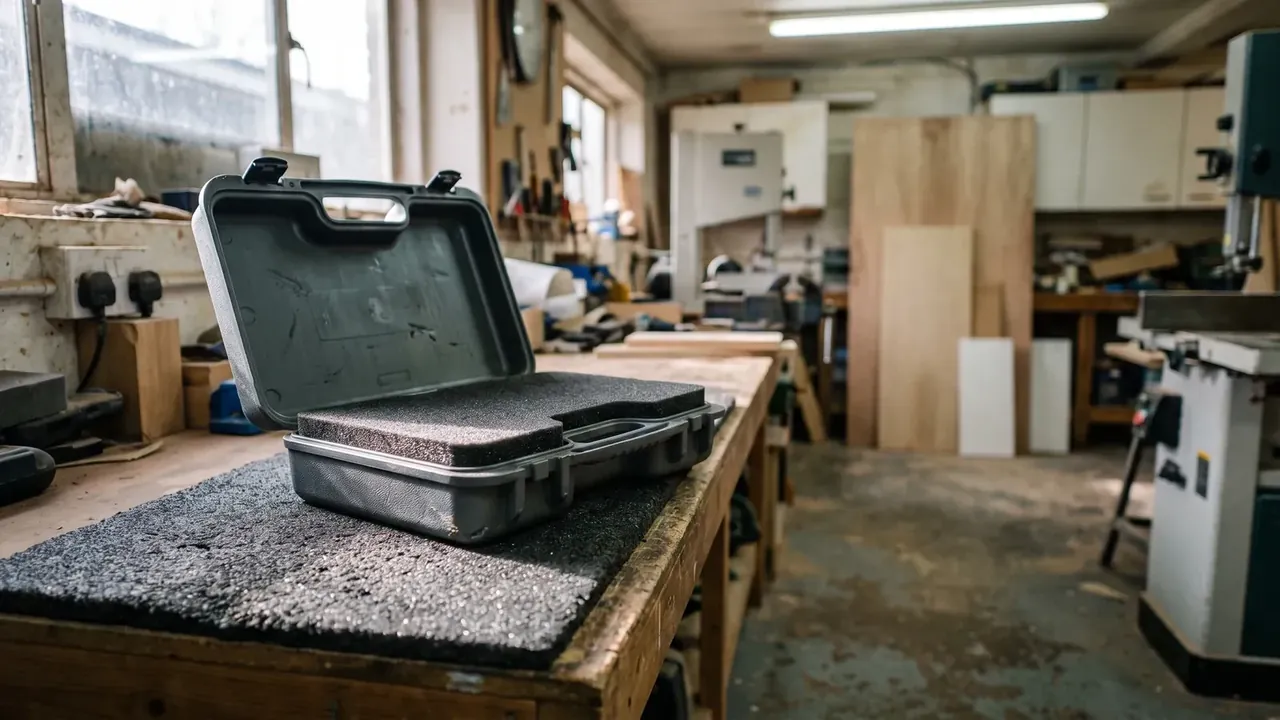
Second, heavy units on top. Beam deflection rises with load, so 40 kg bows the beam a few millimetres and the row leans. Fix: heavy low, nothing above 15 kg up top.
Third, a lid opening into the aisle. Below 900 mm of width an open lid takes half the passage and the unit gets knocked. Fix: turn it 90 degrees or move the hinge to the wall side.
Fourth, no gap behind the unit. The 100 mm is the space the lid needs, not politeness; once it is gone, people force the lid and crack the hinge block.
Conclusion
Fitting a station around an ammunition storage container starts with the operator's motion, not the footprint. Settle bench height, reach and lid clearance and the size range narrows on its own; pick the box first and one of the four mistakes will find you.
This article discusses only the container (case body) side of specifications and design intent, and does not cover any handling, loading or use of the contents.
Related Reading
- Gasket and latch replacement points
- Case layouts for different equipment scenes
- Carry case types and how the lid opens
Related Products
- 8 Series — Gun Cases; Military Equipment Cases; Camera Equipment Cases; Drone Cases; Watch Cases; Knife Cases; First Aid Cases; Electronics Equipment Cases
- WL8-2812 PP Gun Case — model WL8-2812
- All protective cases and toolboxes: 7 series, 158 models