

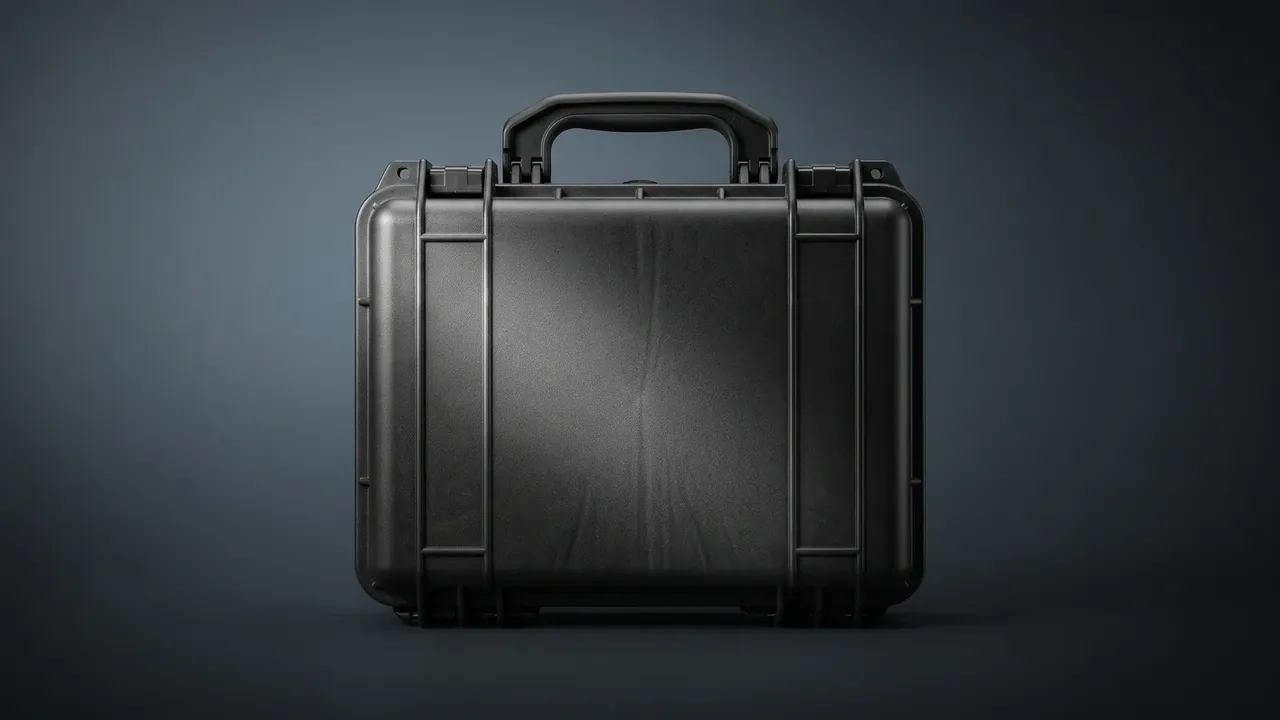
Quick answer: Most disputes about an ammunition storage container at goods-in come from each side quoting a different layer of standard. This article splits acceptance into three layers, gives numbers you can measure on the floor, and sets out three disposition routes.
Table of contents
- Three Layers of Acceptance Criteria
- Immersion Testing on Site
- Stacking, Drop and Vibration Limits
- Re-inspection and Disposition
- FAQ
1. Three Layers of Acceptance Criteria
The contract cites a military standard. The supplier hands over an internal control sheet, the inspector arrives with a third sampling plan, and nobody agrees on what a failure means. Splitting an ammunition storage container specification into three layers collapses that argument.
| Layer | Clause to cite | What you can measure | What you keep |
|---|---|---|---|
| Material and structure | MIL-STD-810H Method 501.7, 502.7 | Deformation after 4 h at 71 °C and at -40 °C | Chamber curve, lid-open photos |
| Ingress protection | IEC 60529, IPX7 | Mass gain after 1 m for 30 min | Weighing sheet, groove photos |
| Transport packaging | ISTA 3E, ASTM D4169 | 760 mm corner drop, 1 h vibration per axis | Rig settings, video |
For an ammunition storage container, order matters more than wording. Structure sets the deformation margin left in the body, sealing decides whether water gets in, packaging decides how much margin survives the journey.
Take wall thickness. An ultrasonic gauge reads six points and any point below 2.8 mm fails the item; the average is reference only. On a 420 × 300 × 160 mm cavity, profile tolerance is held to ±1.5 mm, and an oversize reading sends you to mould wear, not to a rejection note.
Records from the three layers have to dovetail, or the judgement becomes a verbal agreement by the end of the week.
2. Immersion Testing on Site
IPX7 states two numbers: 1 m depth, 30 minutes. Depth is rarely what goes wrong; water temperature is. Pull an ammunition storage container from a 35 °C store into a 12 °C tank and the air inside contracts, drawing water past the gasket.
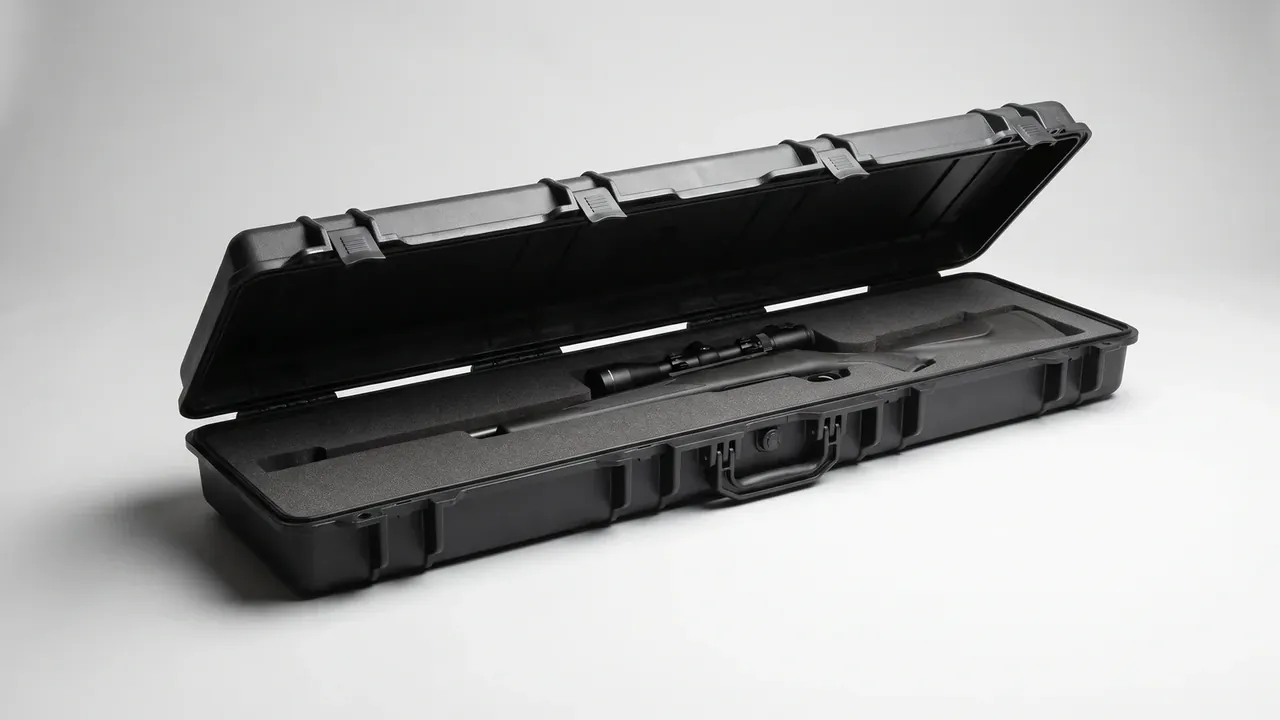
Hold water at 20 °C plus or minus 5 °C, let the sample stand beside the tank for 30 minutes to equalise, and leave a tenth of the internal volume empty. A silicone gasket at Shore A 70 with 25 percent compression works; over-compress it and the rubber takes a permanent set.
Judgement runs in two steps. Weigh on the same balance before and after: pass below 0.3 g, inspect between 0.3 g and 1.0 g, fail above 1.0 g. A continuous film along the groove floor is a leak even at tiny mass gain, because water has already passed the first lip.
Five records are mandatory:
- Measured tank depth and water temperature
- Mass before and after immersion
- Start and end time, to the minute
- Groove section where traces appeared
- Names of tester and reviewer
3. Stacking, Drop and Vibration Limits
Sequence is the part people skip. Vibration runs first because it loosens without breaking; drop comes next, since impact changes latch preload; stacking runs last, because residual set needs 24 hours before it reads. Reverse the order and micro-cracks opened early are amplified by later loads, so sound samples get scrapped while weak lots slip through. That rework usually ends in a second full test round, which costs more time than getting the order right.
| Item | Condition | Pass criterion | Action on failure |
|---|---|---|---|
| Static stacking | 480 kg on top, three high, 24 h | Residual set under 2 mm after 1 h | Double the sample, restrict use |
| Corner drop | 22 kg loaded, 760 mm | No through-crack, still passes IPX7 | Scrap the unit, add three |
| Random vibration | 1.04 g rms, 5 to 500 Hz, 1 h per axis | Latches closed, insert shifts under 3 mm | Re-test the lot for 2 h |
Fixture the base of the ammunition storage container, not the side wall, or rig stiffness becomes the thing under test.
Drop a loaded 22 kg case onto 20 mm steel plate, once per bottom corner, edge and face, and redo any impact landing more than 10 mm off target.
Two criteria only: no through-crack, and the seal still holds IPX7.
4. Re-inspection and Disposition
A failed sample is not a failed lot. Write the disposition routes into the contract before the first delivery. Sample to GB/T 2828.1 level II at AQL 1.0: 50 units from a 500-unit batch, with 50 more on two seal failures and a cumulative three rejecting the lot.
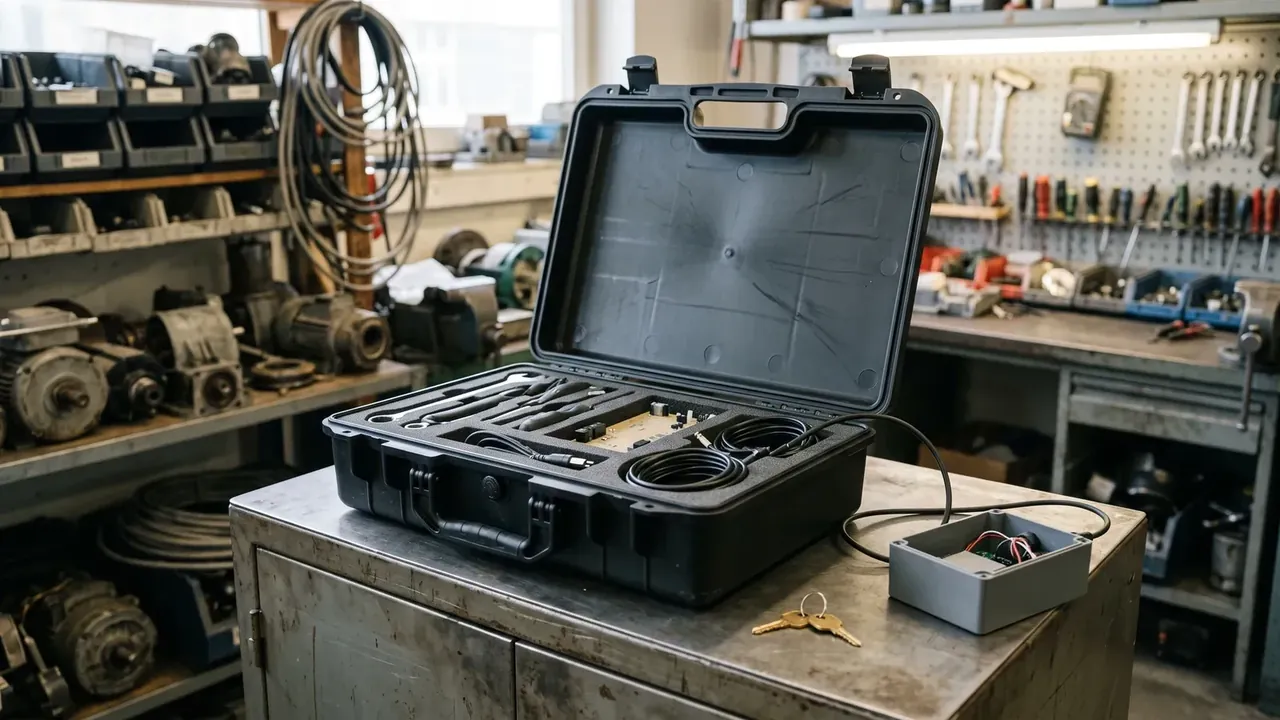
For an ammunition storage container, concession applies only to non-sealing attributes. Colour drift, a shifted label, a fuzzy insert cut: these move on a signed deviation note with a 3 to 5 percent allowance.
Returns against an ammunition storage container need an evidence chain: sampling sheet, test curve, lid-open photos, raw weighing data. Leave one out and the supplier will attribute the water to freight.
Conclusion
The hard part of acceptance is not equipment, it is vocabulary. Put the three layers, five records and three disposition routes into the contract and the floor work becomes execution. Once the numbers for an ammunition storage container can be reproduced by two parties, price talks get shorter too.
This article discusses only the container (case body) side of specifications and design intent, and does not cover any handling, loading or use of the contents.
Related Reading
- Standard clauses for munitions shipping and storage
- Quarterly checks and retirement criteria
- Standard inspection items for ammunition packing
Related Products
- 8 Series — Gun Cases; Military Equipment Cases; Camera Equipment Cases; Drone Cases; Watch Cases; Knife Cases; First Aid Cases; Electronics Equipment Cases
- WL8-2812 PP Gun Case — model WL8-2812
- All protective cases and toolboxes: 7 series, 158 models