

Quick answer: Automotive After-Sales Service Tool Case planning starts from a 92% kit completeness target across four job types and a 25 kg full load.
Table of contents
- Space Limits on a Service Van
- Layering Frequent and Occasional Parts
- Kit Completeness on Call-Out Jobs
- Securing the Case on Rough Roads
- Handover and Counting
- FAQ
1. Space Limits on a Service Van
The most expensive cost on a call-out is the technician climbing to the sixth floor and coming back down for a tool. One round trip runs 12 min, so a single missed part in six daily jobs costs 4 h a month in fuel and waiting.
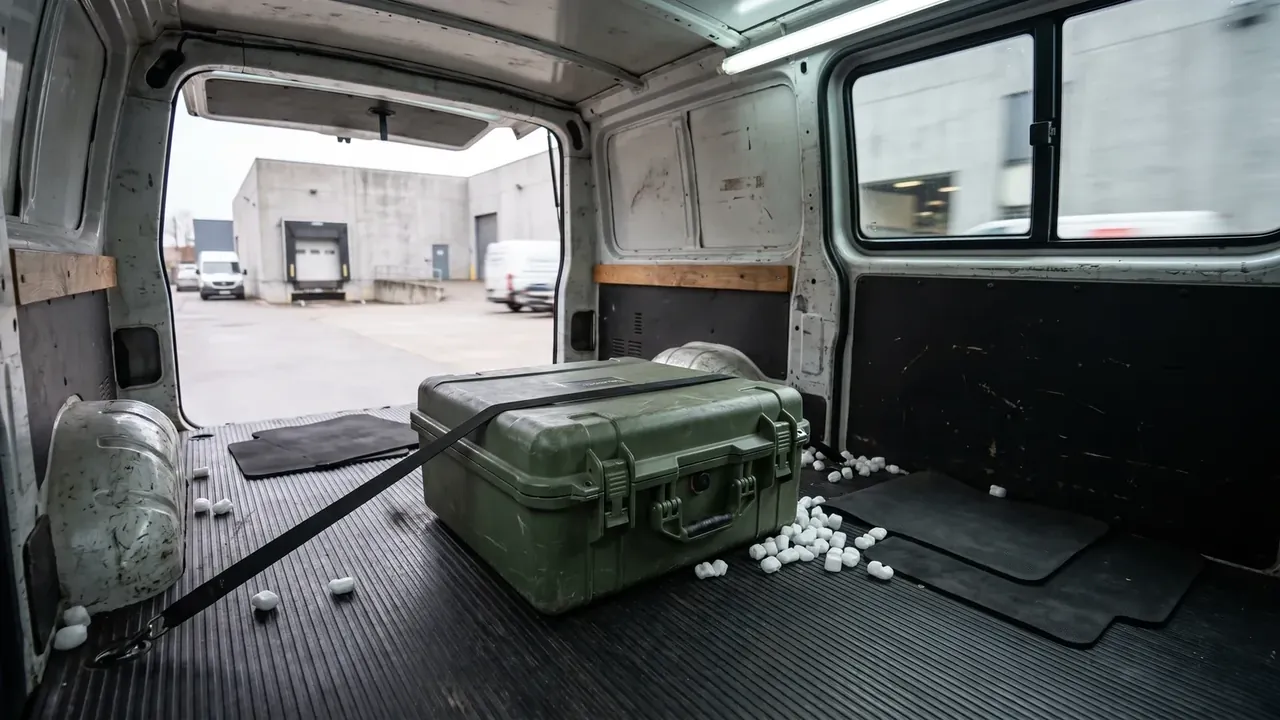
A service van is laid out at 2.4 m by 1.5 m, and three shelf tiers take 0.9 m of height, leaving a 600×400 mm patch of floor. Automotive After-Sales Service Tool Case dimensions settle around 560×380×240 mm; anything larger will not fit behind the seats.
Weight comes first. A 25 kg full load is the ceiling for one person climbing six floors, and with 4.5 kg of shell that leaves 20.5 kg for parts. Past that line the technician sets the Automotive After-Sales Service Tool Case down on the third landing, where the lid meets a stair corner.
| Job type | Typical parts | Carried per job | On-site time |
|---|---|---|---|
| Service | oil, oil filter, air filter, drain washer | 9 items | 45 min |
| Quick repair | pads, bulbs, fuses | 6 items | 70 min |
| Electrical | diagnostic head, adapters, meter | 5 items | 50 min |
| Tyres | valve cores, weights, repair plugs | 7 items | 40 min |
2. Layering Frequent and Occasional Parts
Layers split by how often a part is reached for, not by category. An Automotive After-Sales Service Tool Case uses two levels: the top holds anything used weekly, the bottom holds once-a-month spares. The top opens straight away; the bottom needs a flap lifted.
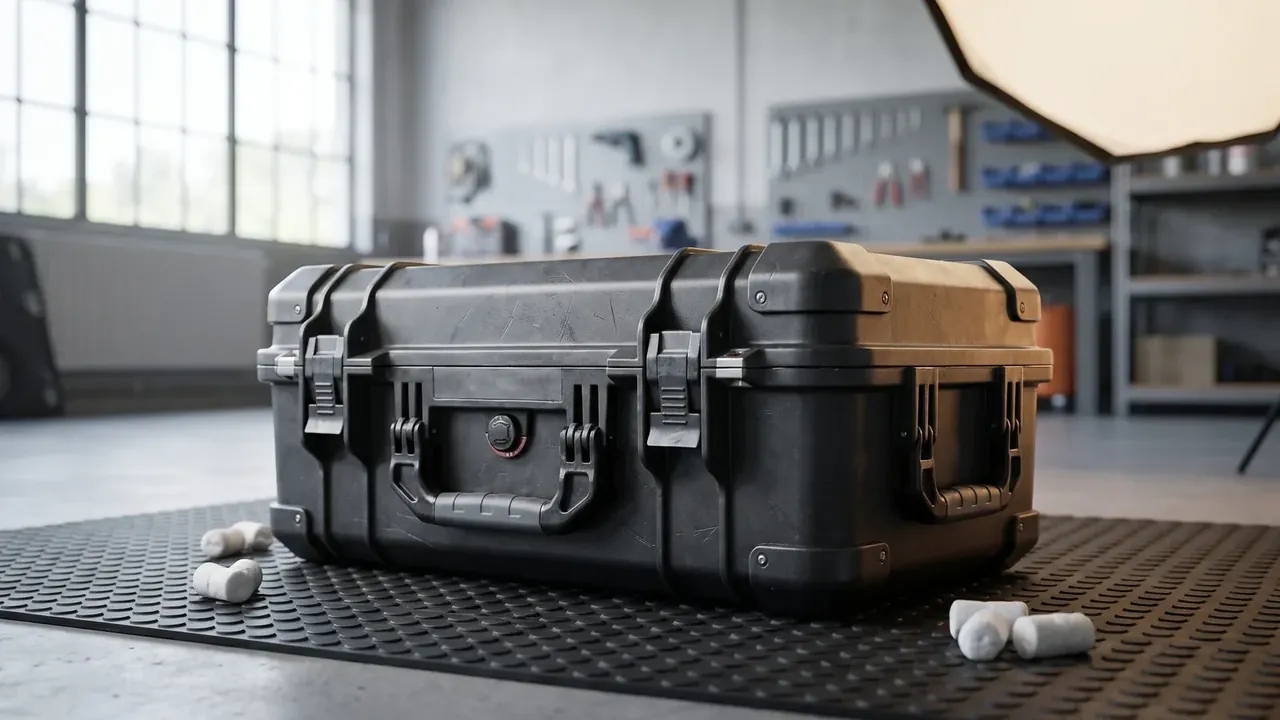
Frequency comes from a month of job records. Of the parts missing against a 92% target, seven in ten sit on the bottom level, and the cause is visibility rather than forgetting.
Automotive After-Sales Service Tool Case levels also balance volume against reach. The top takes 35% of the volume and 60% of all reaches; the bottom carries the other 40% in 65% of the space. Nothing heavier than 0.8 kg goes on top, or the layer tips forward and jams the hinge.
Labels belong on the front edge of each divider, never on the lid, where nothing can be read once it closes.
| Level | Contents | Unit limit | Share of reaches |
|---|---|---|---|
| Top | parts touched within a week | 0.8 kg | 60% |
| Bottom | replenishment and low-use specials | 3.0 kg | 40% |
| Lid | job cards and a pen | 0.3 kg | once per job |
3. Kit Completeness on Call-Out Jobs
Completeness is counted per job, not per part. A job is complete only when every listed part is in the case; one missing item makes the whole job incomplete. The target is 92%, and the remaining 8% is left for judgement after disassembly.
The cost of one missing part totals easily: a return trip is 30 min and 8 km, so 8% of 120 monthly jobs is 10 jobs, or 5 h and 80 km.
Completeness lives on a list, not in memory. Each job type gets an A5 card: parts and quantities on the front, room for on-site additions on the back, stored in the lid pocket and checked in 30 s before departure.
The figure also has to be counted honestly. An Automotive After-Sales Service Tool Case is scored on the check before departure, so a job that turns back for a part still counts as incomplete, or the weak divider never shows in the data.
4. Securing the Case on Rough Roads
City vibration concentrates at speed humps and manhole covers. A 30 km route with four humps and six covers puts about 1.5 g vertically on the case, which at 25 kg is close to 370 N on the latches and straps.
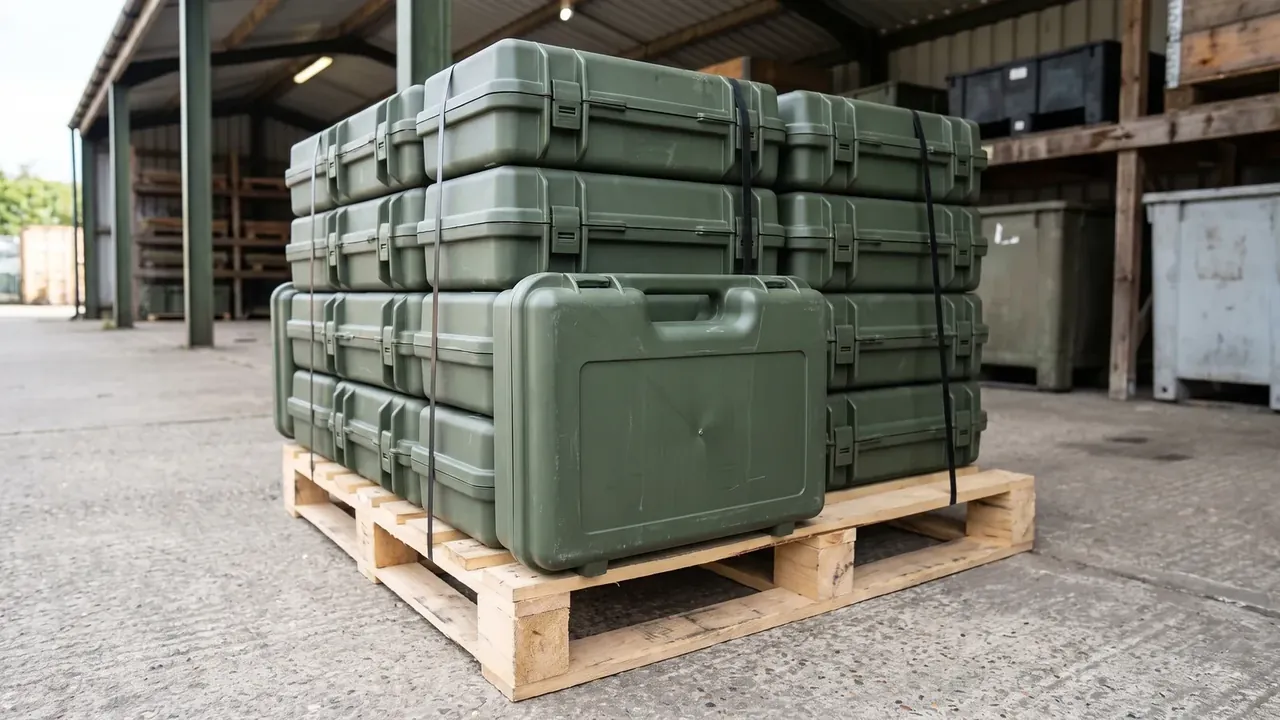
On an Automotive After-Sales Service Tool Case, straps do the holding, not spring clips. Two 25 mm polyester straps pull from either side at 300 N of preload, and 3 mm of anti-slip rubber under the base lifts friction from 0.3 to 0.6. Anchors sit on the floor rail, never on a seat frame.
Insert creep is the other symptom of a rough route. After 30 km, a gap of 2 mm or more between insert and wall means the pockets are not holding the parts, and the next hard stop sends a tool sliding forward.
Rejection is triggered by more than two missing items on one job, or by insert movement after a 30 km city route; either sends the layout back for re-dividing.
The corners take load too. A van floor carries a 15 mm rail channel, and two 12 mm ribs moulded into the base drop into it, one load point front and rear.
5. Handover and Counting
Counting an Automotive After-Sales Service Tool Case fits inside 30 min. One person calls the pockets, one writes: 8 min for the top, 15 min for the bottom, 7 min for the lid and loose items, and the three blocks add up to half an hour.
Counting covers condition as well as quantity. Missing, damaged and due-for-calibration are logged separately: missing parts are replaced the same day, damaged ones within three days, and anything awaiting calibration carries a yellow tag and stays off the van.
Handover is signed against three numbers, completeness, missing count and insert movement, and if they do not match, the case is opened and recounted on the spot.
The paperwork follows the case: an Automotive After-Sales Service Tool Case carries an ID tied to one vehicle, and swaps move it whole rather than splitting it.
| Counting step | Action | Time | Logged |
|---|---|---|---|
| Top level | call part names by pocket | 8 min | missing count |
| Bottom level | lift flap, check each pocket | 15 min | replenishment count |
| Lid and loose items | check against job card | 7 min | condition tag |
Related Reading
- Industrial auto repair plastic latch briefcase
- Portable power tool plastic latch case
- Protective case versus carton for e-commerce
JUNZHIJIA
Related Products
- 8 Series — Gun Cases; Military Equipment Cases; Camera Equipment Cases; Drone Cases; Watch Cases; Knife Cases; First Aid Cases; Electronics Equipment Cases
- WL8-2812 PP Gun Case — model WL8-2812
- All protective cases and toolboxes: 7 series, 158 models