

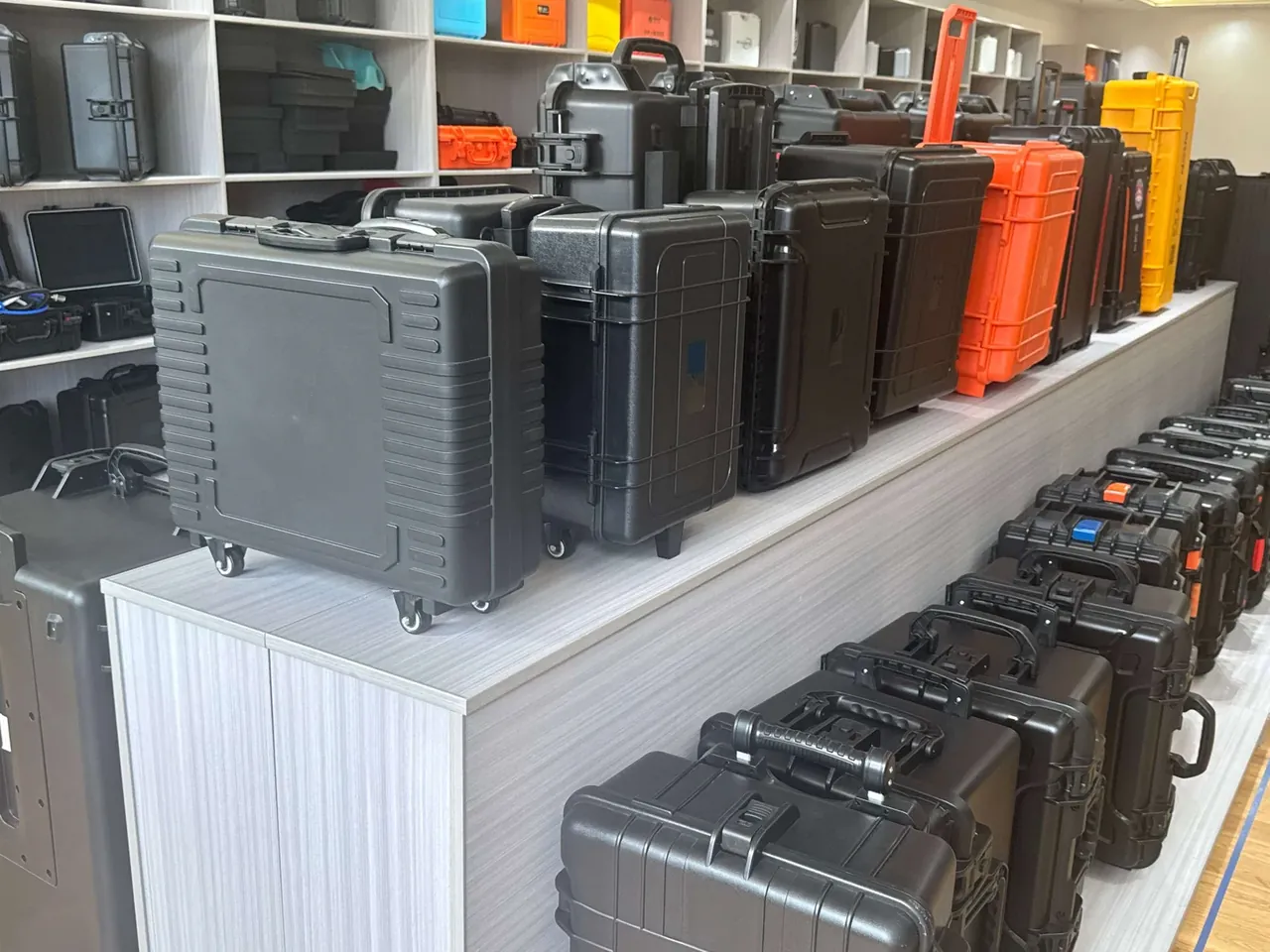
Quick answer: The case vs carton choice barely moves packaging cost: ¥3.2 against ¥3.4 a shipment over 20 cycles, while freight and returns decide.
Table of contents
- Where the cost gap really sits
- A 0.8 m six-face drop
- Volumetric weight divided by 6,000
- Twenty cycles and the order value line
- FAQ
1. Where the cost gap really sits
A carton costs ¥3.2 and a protective case costs ¥68, a factor of 21. That number means nothing, because the carton is crushed after one shipment while the case is designed for 20: 68 ÷ 20 = ¥3.4 a shipment, a gap of ¥0.2.
The real difference sits on another line. One return costs ¥26 in two-way freight, the price of eight cartons. What the case saves is not packaging.
The arithmetic runs per shipment: a case making 20 shipments a year carries ¥3.4 each, while one return brings ¥26 of freight, ¥15 of service time and a 20% write-down on order value.
| Item | Carton | Protective case |
|---|---|---|
| Unit price (¥) | 3.2 | 68 |
| Cycles | 1 | 20 |
| Packaging per shipment (¥) | 3.2 | 3.4 |
| Sealing consumables (¥ per shipment) | 0.4 | 0 |
| Volumetric weight (kg, ÷6,000) | 4 | 10 |
| Courier cost (¥ per shipment) | 14 | 26 |
| Return rate | 4.2% | 0.6% |
A roll of 48 mm tape costs ¥12 and seals about 30 cartons at 1.6 m each, so ¥0.4 a shipment; the case trades tape for wiping at about the same cost.
Whether the ¥68 includes foam is the second trap: a die-cut EVA insert adds ¥12, so a set lands at ¥4 a shipment, ¥0.8 above the carton.
A returned carton rarely ships again, so it needs a new box and tape at ¥3.2; a 4.2% return rate adds ¥13 per 100 orders that the case never pays.
2. A 0.8 m six-face drop
A 0.8 m drop matches a parcel falling from a sorting belt to the floor plus one parcel height. Dropped once on each of six faces, cartons kept 91.2% of contents intact and cases 98.7%.
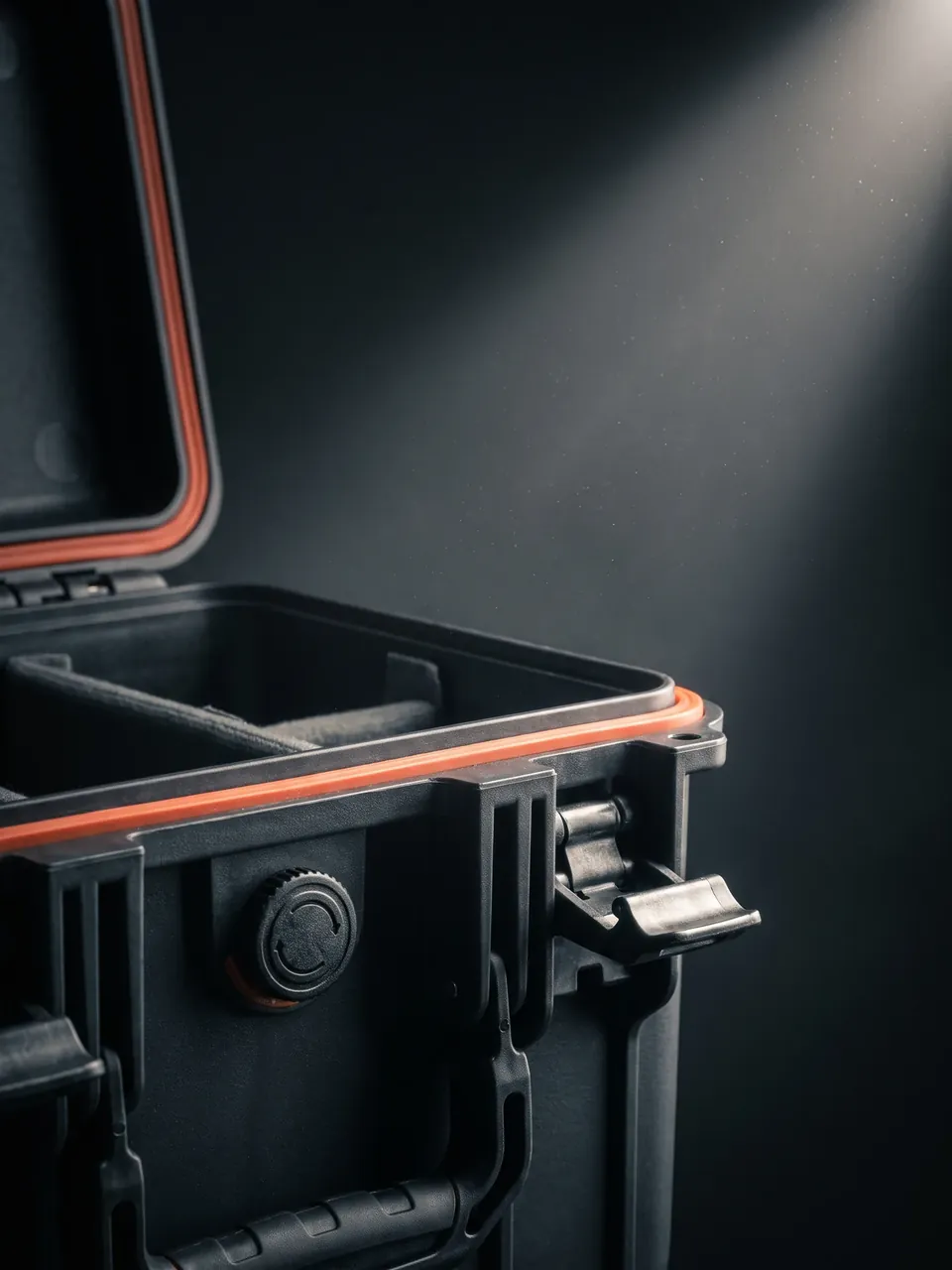
A carton offers 5 mm of corrugated board and one layer of bubble wrap, so corners crush first and the second drop lands on the goods; a 12 mm insert spreads the load across the whole face.
The difference lives in the tail, not the average. Of 100 carton shipments, 8.8 arrive with damaged contents against 1.3 for cases, and that 7.5-point spread becomes the 4.2% against 0.6% return rate.
Sequence matters: 62% of carton damage appears between the third and fourth face, once the corners have collapsed, while case damage concentrates in replaceable latches and hinges.
One test afternoon is enough: pack the same product in both, drop each six times, and log displacement and scuffing.
The insert is the more common mistake. A 12 mm EVA sheet suits goods under 1 kg; above 3 kg it needs 20 mm or a cross divider, otherwise the foam bottoms out and the product reaches the wall anyway.
Small, soft or already boxed goods need none of this and simply donate ¥12 of freight an order.
3. Volumetric weight divided by 6,000
A case at 60 cm × 40 cm × 25 cm measures 60,000 cm³, which divides by 6,000 to 10 kg; a carton at 40 cm × 30 cm × 20 cm measures 24,000 cm³, or 4 kg. Actual weights are 4.5 kg and 1.8 kg, and the carrier bills the larger figure.
At ¥8 for the first kilogram and ¥2 for each additional one, the case costs 8 + 9 × 2 = ¥26 a shipment and the carton 8 + 3 × 2 = ¥14, a gap of ¥12. That ¥12 is not packaging; it is air.
Twelve yuan times 100 orders is ¥1,200 a month. Most shops stop calculating here, which is why the carton stays; for the case to win, returns have to give back more than that ¥1,200.
Cutting the cavity from 25 cm to 18 cm drops the box to 43,200 cm³ and the volumetric weight to 7.2 kg, so freight falls to ¥20.4 and the gap to ¥6.4; half of the case vs carton freight problem is geometry.
Billing rounds up in 0.5 kg steps, so 7.2 kg is charged as 7.5 kg and another ¥2 disappears.
The divisor of 6,000 is a courier convention; LTL freight often uses 5,000, so the same case bills at 12 kg and costs ¥4 more.
A 55 cm × 40 cm × 22 cm shell at 48,400 cm³ bills at 8.1 kg and saves ¥3.8 a shipment, bringing the ¥12 gap under ¥8.
4. Twenty cycles and the order value line
Twenty cycles is a design figure, not a promise: latches and hinges wear out while the shell survives, and a ¥8 latch adds ¥0.4 a shipment, where a carton never needs repair.
Opening is a cost as well. A carton sealed with 48 mm tape needs a blade, and blade damage accounts for 6.1% of after-sales claims; two latches open in 8 s against 40 s of cutting.
Paying ¥12.2 more per shipment buys 3.6 fewer returns per 100 orders, so the account turns positive only when one return costs more than ¥339: ¥26 freight plus ¥15 service plus 20% of order value.
Working backwards, ¥1,490 is the line. Below it, the case vs carton question answers itself as carton; above it, the returns the case prevents outweigh the freight it adds.
Twenty cycles is also a calendar: at five shipments a year a case lasts four years, and the shelf space it occupies for three is not free.
Reverse logistics narrows the lead. A returned case needs cleaning, latch checks and a new insert label at ¥2.5, while a returned carton is scrapped for ¥3.2, so the two nearly cancel and the case has to win on freight and breakage alone.
Whether customers keep the case matters most: at 14 real trips instead of 20, cost per shipment rises from ¥3.4 to ¥4.9.
Conclusion
Putting order value and return rate into one conversion table turns the case vs carton boundary into a number rather than a preference.
| Order value (¥) | Return loss per 100 (¥) | Case premium per 100 (¥) | Net (¥) | Verdict |
|---|---|---|---|---|
| 300 | 364 | 1,220 | −856 | Carton |
| 800 | 724 | 1,220 | −496 | Carton |
| 1,500 | 1,228 | 1,220 | +8 | Borderline, trial 50 |
| 3,000 | 2,308 | 1,220 | +1,088 | Case |
| 3,000, returns only to 2.0% | 1,410 | 1,220 | +190 | Case, recheck |
The action runs in three steps. Convert ¥12 a shipment into a per-100 premium, convert 3.6 points into the loss avoided on 100 orders, and subtract; buy cases only when the net is positive. When it is negative, cut the cavity to 18 cm and run it again, because the ¥6.4 gap pulls the line from ¥1,490 down to roughly ¥800. If returns only fall from 4.2% to 2.0%, the line climbs to ¥2,570, and fixing the insert and the tape is the cheaper move. A mixed policy usually beats either extreme: cases above ¥1,500, cartons below ¥300, and a five-wall carton with 10 mm foam in between at ¥8 packaging and ¥18 freight, which holds returns near 2.2% for half the premium.
This article discusses container-side specifications and design implications only, and does not cover any handling, loading or use of the contents.
Related Reading
- Corrugated carton strength and stacking
- Cartoning methods and packing speed
- Case cycles inside parcel hubs
- Packaging cost as a share of price
Related Products
- 8 Series — Gun Cases; Military Equipment Cases; Camera Equipment Cases; Drone Cases; Watch Cases; Knife Cases; First Aid Cases; Electronics Equipment Cases
- WL8-2812 PP Gun Case — model WL8-2812
- All protective cases and toolboxes: 7 series, 158 models