

Quick answer:An industrial auto repair plastic latch briefcase is sized around three figures: 400×300×120 mm outside, 2.3 kg empty, and a 25 kg static handle load. A 2.8 mm PP wall with a 3.5 mm floor and two latches holding about 40 N each keeps it shut through 60 openings a shift.
Table of contents
- The route between bays
- PP, ABS and wall thickness
- Latch count and latch feel
- Foam layout and handle loads
- Oil, washing and service life
- FAQ
1. The route between bays
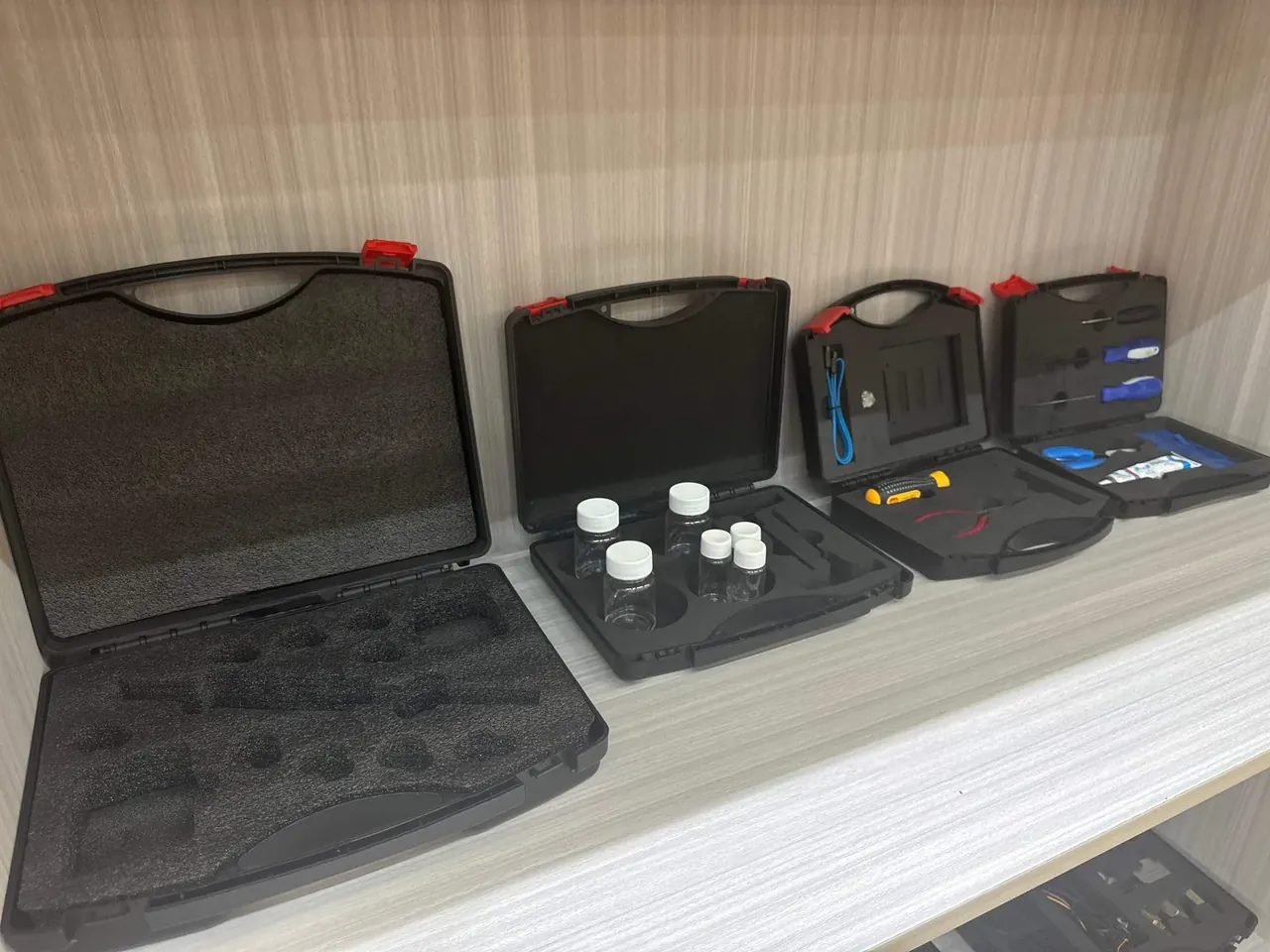
Four briefcases on a shelf is what a workshop looks like: one for diagnostic heads, one for measuring tools, one for specialty sockets, one left empty. The point of an industrial auto repair plastic latch briefcase is not capacity. It is that one person can pick it up with one hand, set it down without thinking and find the right tool first try.
The walk between bays runs 20–60 m over two sills and an oily floor. Failures cluster in three places: the handle root splits, a latch gets knocked open, the floor wears through on grit. All three follow from dimensions and wall thickness, not from packing.
Fix the outer size first. At 400×300×120 mm a loaded case weighs 6–9 kg, and an average adult walks 50 m without switching hands. Step up to 460×350×150 mm and volume rises by a third while weight rises by the same third, which is where a trolley starts to pay. Past 320 mm in width, a one-handed carry has to turn sideways to clear a door frame.
Inner depth is easier to overlook. Tools standing upright need 90 mm of clear depth, tools lying flat 45 mm. Build one case at 100 mm clear and the flat-packed version rattles, so settle that number on the drawing.
2. PP, ABS and wall thickness
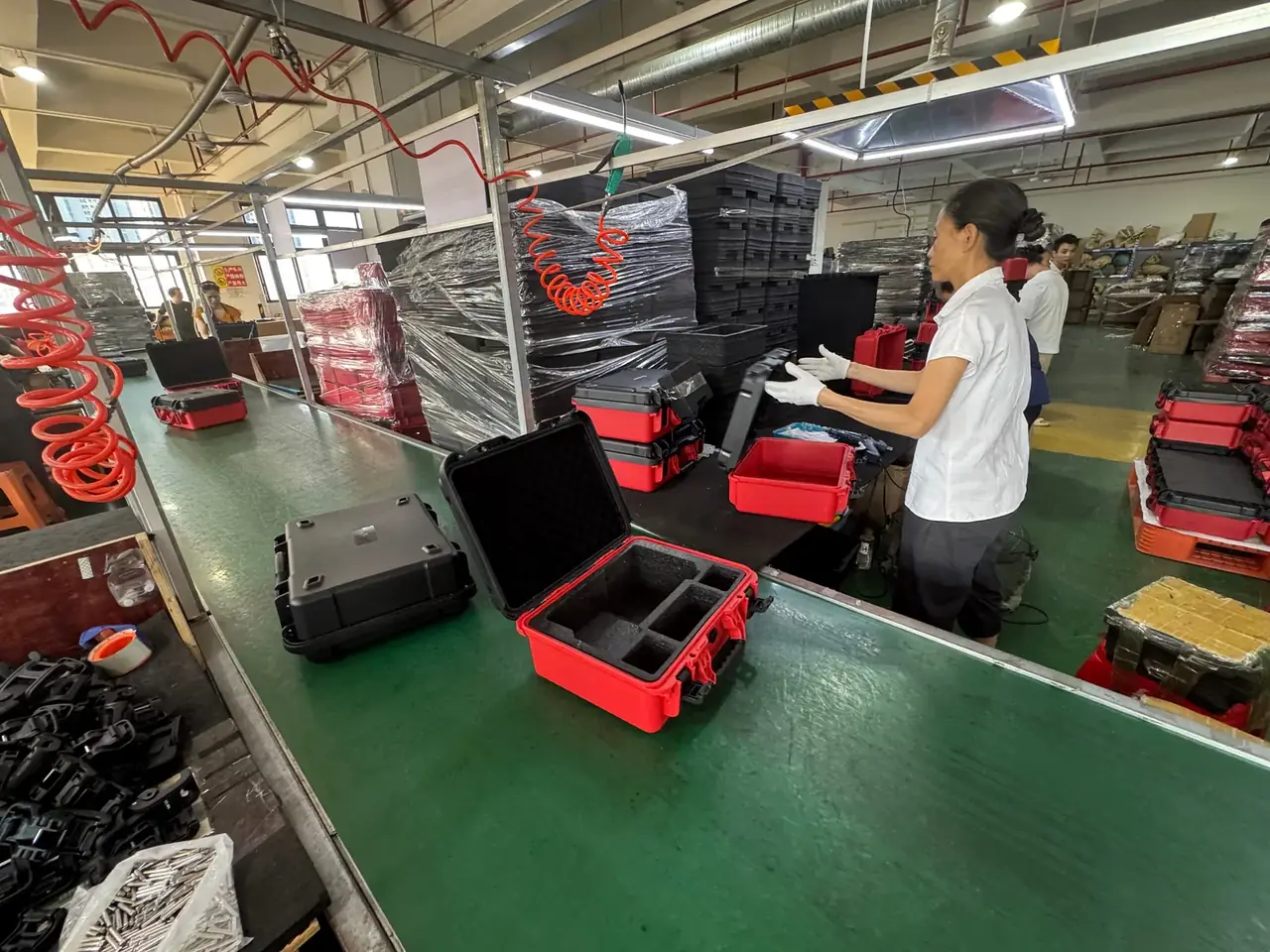
Two things in a repair shop damage a shell: 15W-40 engine oil and a winter yard below freezing. PP shrugs off mineral oil. ABS left in contact with oil goes chalky, then brittle. That is why these briefcases are mostly moulded in PP, with 2.8 mm as a common starting wall.
| Zone | Wall | Function |
|---|---|---|
| Side wall | 2.8 mm | Standard moulding, balances weight and stiffness |
| Floor | 3.5 mm | Carries tool weight, resists grit |
| Handle root | 4.0 mm | Extra melt where stress concentrates |
| Lid | 2.5 mm | Lighter, stiffness from ribs |
The thick floor is not decoration. Setting a case down on swarf puts a point load on one spot. A 2.8 mm panel dented by a 3 mm chip stays dented; at 3.5 mm with two ribs the dent is half as deep, and empty weight climbs only from 2.1 kg to 2.3 kg.
Cold is the second limit. PP keeps only about 40% of its room-temperature impact strength at -20℃, so a 1.2 m drop onto concrete can chip a corner. An R8 radius and a double-wall corner do more than added thickness for 60 g of weight.
ABS costs 12% more in resin and 8% more in tooling, but its gloss finish dies within two months of daily oil wipes.
3. Latch count and latch feel
Latches are where these cases fail. Two up to 450 mm of length, three above that, with the middle one on the handle line so the lid loads evenly. A single central latch lets both lid corners lift 2–3 mm and the gasket never seats.
Pick retention between 35 and 45 N. Below 30 N the lid is pushed open by its own weight once the case holds 9 kg. Above 55 N a gloved hand needs both thumbs, and people stop latching the case at all.
Opening force and retention are different numbers. Opening feels right between 25 and 35 N, set by the cam bump: 1.2 mm is loose, 1.8 mm is tight, 1.5 mm is the usual compromise.
PA66 with 15% glass fill outlasts plain PA6 on fatigue: after 8,000 cycles the tongue wears about 0.4 mm and still engages. Glass makes it brittle, so the tongue root needs a 1 mm radius. Fix latches with blind rivets, never ultrasonic welds, and a swap takes 3 minutes instead of a lid going back to the plant.
4. Foam layout and handle loads
The insert decides how fast a tool is found. Six EVA pockets is the common layout: 30 mm stock cut for sockets, wrenches and diagnostic heads, 2 mm clearance per pocket so nothing scrapes or rattles. Leave an 8 mm web between pockets so a drop does not collapse the tray.
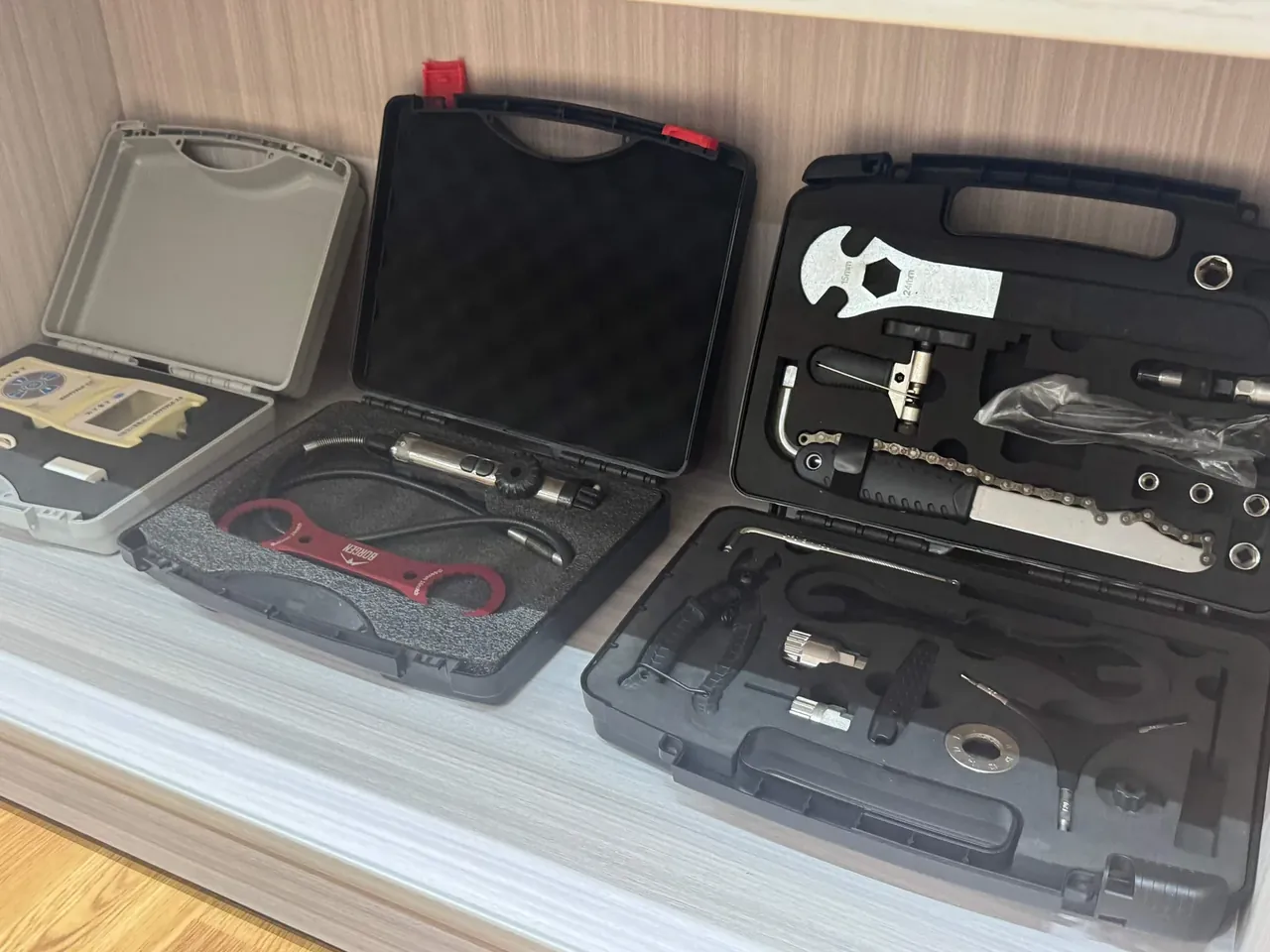
Aim for foam around 45 kg/m³. At 25 kg/m³ pockets crush after two trips; at 80 kg/m³ the foam is brick-hard and dents the tools it should cushion. Cut pockets to two-thirds of clear depth, let lid foam press on the rest, and the tray survives an upside-down carry.
The handle is the most underrated part. A 25 kg static rating is the label, but the real load is dynamic: an 8 kg case carried 100 m takes two impacts near twice its weight, so the handle sees 16 kg. A 4 mm root with an R3 radius is the minimum.
| Load | Handle type | Continuous carry |
|---|---|---|
| ≤6 kg | One-piece moulded handle | Up to 100 m |
| 6–9 kg | Moulded handle with overmould | 50–80 m |
| 9–12 kg | Wide overmoulded handle | Under 30 m, add a strap |
| >12 kg | Folding handle plus trolley | Not for hand carry |
Soft handles get slippery where grip matters most: nitrile swells 5%–8% in engine oil and turns tacky within two weeks. A moulded grip pattern outlasts any coating in a shop.
5. Oil, washing and service life
PP does not fear oil, it fears how the case gets cleaned. A neutral detergent under 40℃ with a soft cloth once a week is enough. Blast it with carburettor cleaner and the surface goes white in 30 s, then crazes, and that does not reverse.
Keep a pressure washer off the latch pin, the hinge pin and the gasket groove. Water trapped there does not dry, and white corrosion shows within two weeks on zinc-plated steel. Blow those spots out with air.
UV is the outdoor limit. A case living in a pickup bed starts chalking near 3 years; black shells with 2% carbon black reach 5 years, so think twice about a pale colour outdoors.
Price life by part: latches every 2 years, gasket every 3, handle every 4, shell good for 8 or more. One latch costs under 2% of the unit price.
Conclusion
Four numbers define an industrial auto repair plastic latch briefcase: a 400×300×120 mm footprint that decides one-hand carry, a 2.8/3.5 mm wall that decides whether the floor survives swarf, two 40 N latches that decide whether the lid stays shut, and 30 mm EVA pockets that decide how fast a tool is found. Put those on the drawing and eight years in a workshop is normal.
This article discusses container-side specifications and design implications only, and does not cover any handling, loading or use of the contents.
Related Reading
- Foam types used inside cases
- Choosing 5, 10 or 15 mm foam
- Dividers versus foam
- Cleaning and disinfecting a case
Related Products
- 8 Series — Gun Cases; Military Equipment Cases; Camera Equipment Cases; Drone Cases; Watch Cases; Knife Cases; First Aid Cases; Electronics Equipment Cases
- WL8-2812 PP Gun Case — model WL8-2812
- All protective cases and toolboxes: 7 series, 158 models