

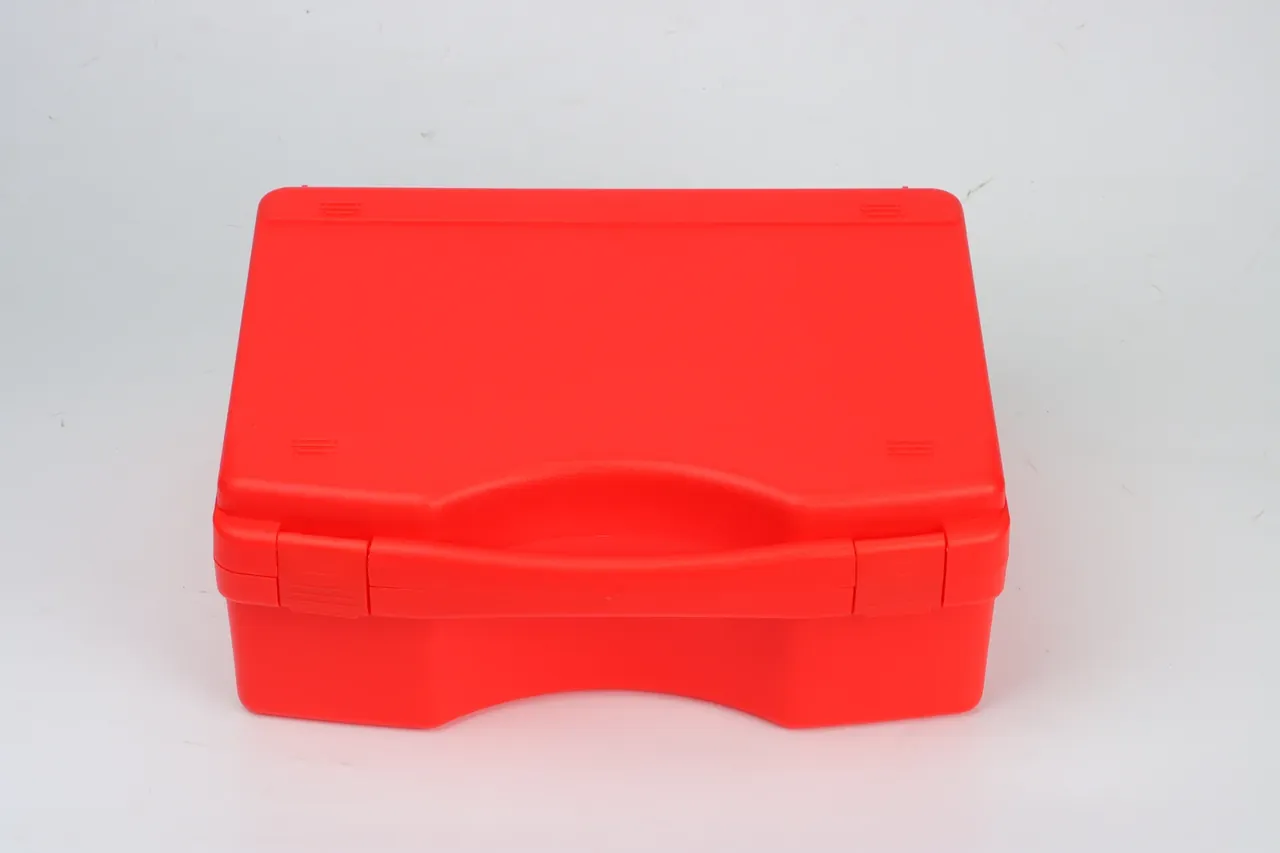
Quick answer: A case only tolerates what its weakest material allows, which is why 5000 mg/L hypochlorite for 30 min lifts PP roughness from Ra 1.6 to 2.8 μm.
Table of contents
- Four Materials Decide the Answer
- Oxidisers: Hypochlorite Attacks the Gasket First
- Alcohols and Quats: Time in Seconds, Not Minutes
- Peroxide and UV: Two Damages That Leave No Mark
- Three Settings, One Retest
- FAQ
1. Four Materials Decide the Answer
Inside a case sit four materials, not one: the shell, the gasket, the print, the foam. An agent is judged against the weakest. Soak PP at any pH from 2 to 12 for 24 hours and it sheds under 0.3 percent of its mass; hold an EPDM gasket above pH 11 for the same time and hydrolysis has started.
Cleaning and disinfecting cases has to be written around the seal, not the wall.
The print is the third weak point. Cross-cut adhesion to ISO 2409 reads grade 1 out of the mould; six chlorine wipe-downs take it to grade 3. Foam is worse: 30 s in 5000 mg/L hypochlorite carries liquid 2 mm deep, past any cloth.
| Agent, setting | Shell | Gasket | Foam | Verdict | |
|---|---|---|---|---|---|
| Hypochlorite 5000 mg/L, 30 min | Ra to 2.8 μm | +8 percent | grade 3 | wet 2 mm | reject |
| Ethanol 75 percent, 60 s | no change | within 3 percent | 4 passes | flash-off | limited |
| Quat 2000 mg/L, 10 min | no change | plasticiser drawn | none | tacky | limited |
| Peroxide 3 percent, 30 min | no change | within 2 percent | none | intact | acceptable |
| UV, 30 min | ΔE 1.5 | chalked | pigment fades | brittle | surface only |
Strength multiplies concentration, dwell and temperature, so doubling one means pulling the other two back. A 40 °C solution reacts twice as fast as the same mix at 20 °C, turning 30 min into an hour in a sun-warmed case. Temperature never appears on the label.
2. Oxidisers: Hypochlorite Attacks the Gasket First
Hypochlorite at 5000 mg/L is the hospital-floor strength. A PP coupon soaked 30 min comes out at Ra 2.8 μm instead of 1.6 μm, with cracks along the weld lines. Past Ra 2.5 μm the surface holds soil, so the next clean takes longer.
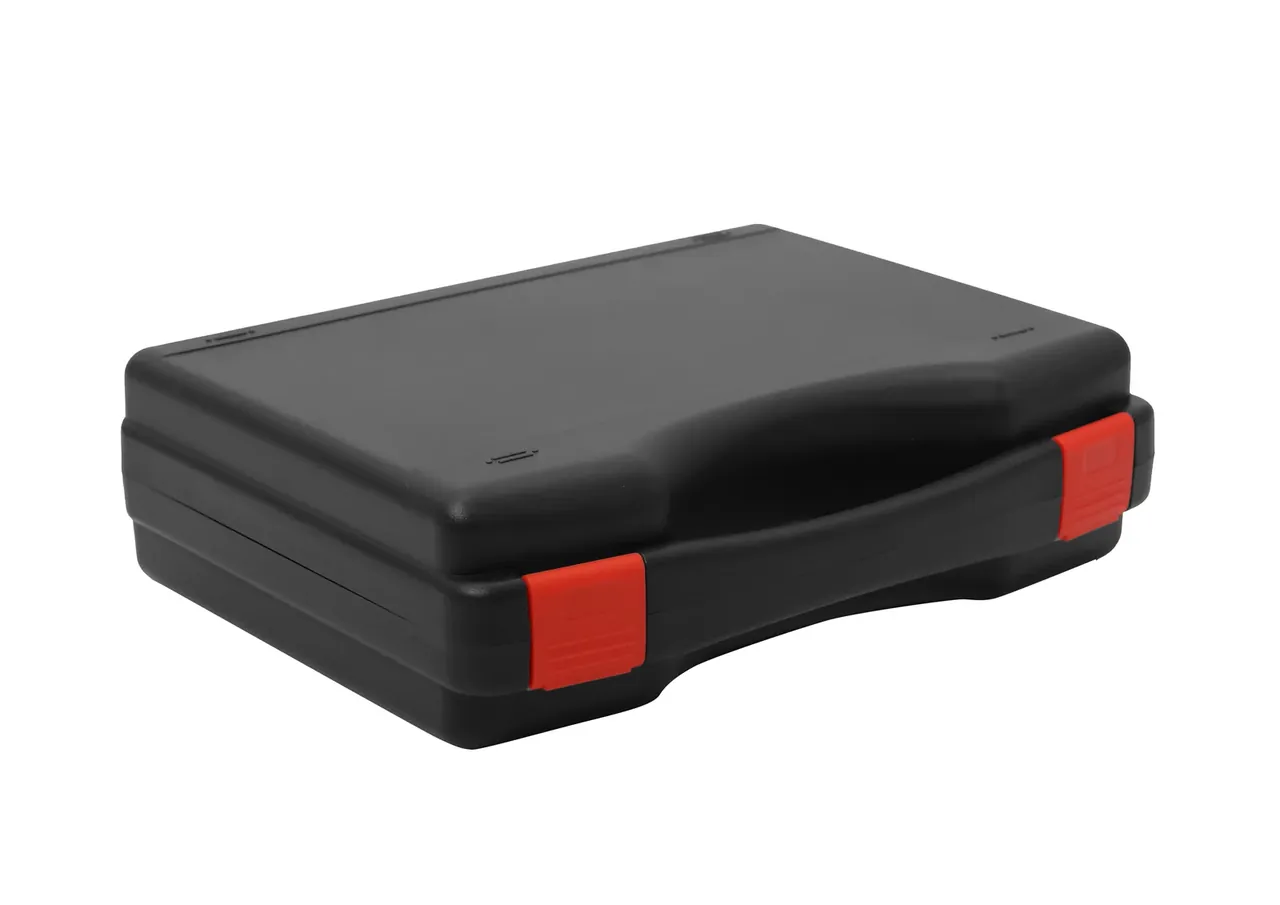
The gasket fails first. Thirty minutes swells an EPDM section by 8 percent; two hours takes it past 10 percent, and 10 percent is the line. A section over that will not seat in its groove, the lid edge never bottoms out, and the seal is done.
Residue is what costs money.
Drying is not removing. Chloride under screw heads waits for the next damp spell, and 304 springs pit within four weeks. Where chlorine is unavoidable, cap contact at 30 min, hold strength at or below 1000 mg/L, wipe twice, and dry below 45 °C for 6 h.
3. Alcohols and Quats: Time in Seconds, Not Minutes
Ethanol at 75 percent is the easiest option in the cabinet: it flashes off and moves PP and EPDM by under 3 percent of mass. The limit is dwell and frequency. Keep one pass under 60 s and stay at or below 4 passes a month; past that the print loses gloss first.
Quats go in at 1000–2000 mg/L, 10 min. The shell barely notices, yet the residue pulls moisture into the groove and turns tacky, and once the lid closes that film is trapped against the sealing face. Leak-down climbs from 0.6 kPa to 2.2 kPa in 60 s, over the 2 kPa line.
Write the pH rule separately: 4 to 10 works, anything above 11 stays out. Caustic only dulls PP, but it hydrolyses the silicone backbone, so the two cannot share one scale.
One detail runs against instinct. Ninety-five percent ethanol works worse than 75 percent, because the stronger mix coagulates protein and shields what lies underneath, while attacking print harder. For cleaning and disinfecting cases, stay on 75 percent.
4. Peroxide and UV: Two Damages That Leave No Mark
Three percent peroxide held 30 min breaks into water and oxygen, the lowest-residue option where carry-over matters. PP shrugs it off; copper alloy springs and plated rivets do not, so hardware gets a thin silicone film within 48 h.
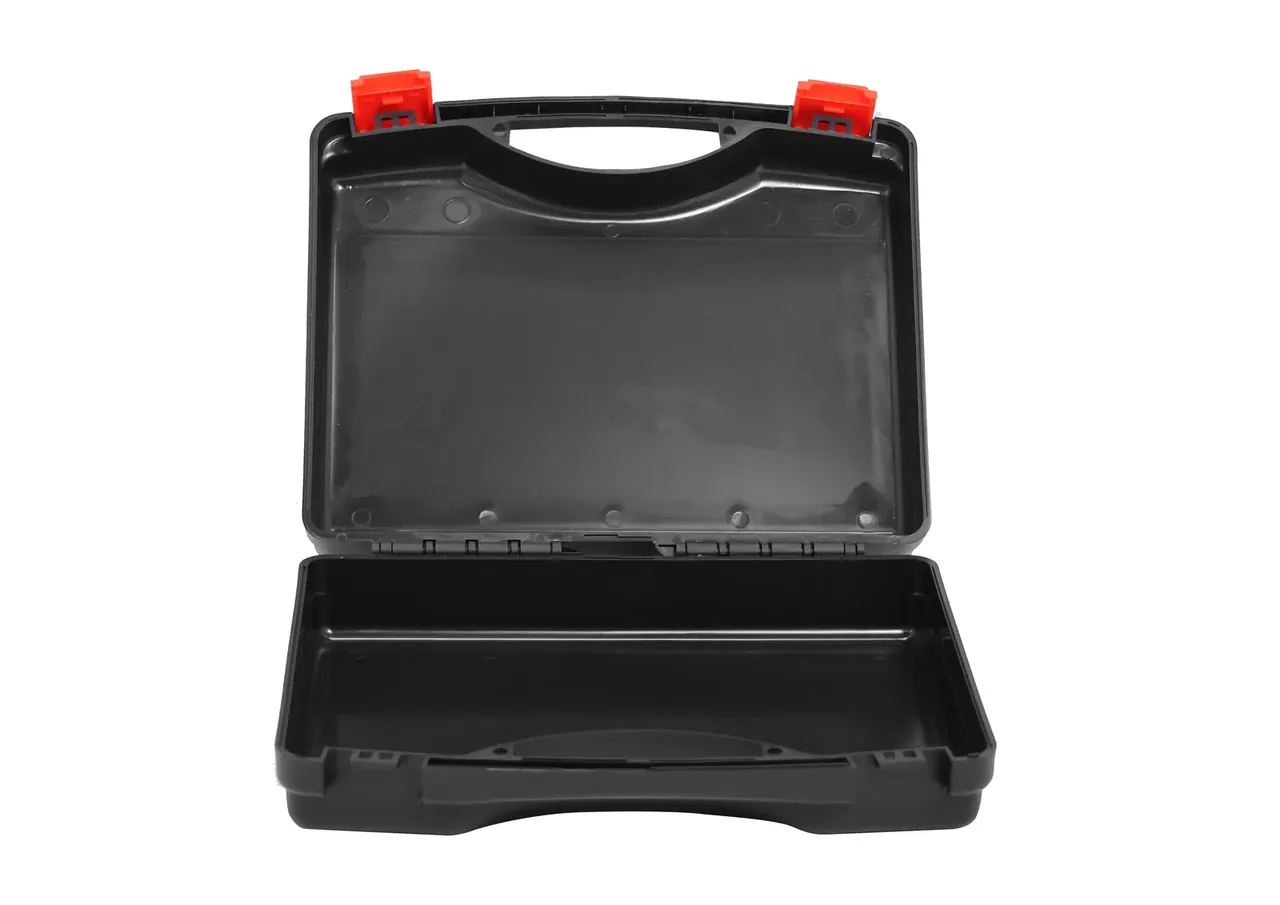
Ultraviolet runs another track. Thirty minutes shifts PP yellowing to ΔE 1.5; by 2000 hours impact strength keeps around 70 percent under the GB/T 16422.3 cycle. UV travels in straight lines, so lid grooves and hinge bores sit in shadow. For cleaning and disinfecting cases the lamp covers exposed surfaces only; gaps still need chemistry.
Neither damage announces itself. Both simply change the material.
5. Three Settings, One Retest
Medical use has the longest kill list and runs 1000 mg/L chlorine or 75 percent ethanol for 10 to 30 min, then two water wipes. Laboratories lean on quat at 2000 mg/L for 10 min. Food-contact surfaces take 3 percent peroxide for 30 min, where residue limits bite.
| Setting | Agent | Strength | Dwell | Follow-up |
|---|---|---|---|---|
| Medical | hypochlorite | 1000 mg/L | 30 min | 2 wipes, dry 6 h |
| Medical | ethanol | 75 percent | 60 s | air dry |
| Laboratory | quat | 2000 mg/L | 10 min | 1 wipe |
| Food contact | peroxide | 3 percent | 30 min | 2 wipes |
| Rotation | quat | 1000 mg/L | 10 min | tub only |
The retest takes 2 readings, no shipping. A 60 s leak-down at 2 kPa or less says the sealing face carries no film; three caliper readings say whether the gasket grew past 0.3 mm.
Log 3 fields: agent and strength, dwell, retest figure. Once the chemistry changes, they are the only way to compare rounds.
Conclusion
The hard part of cleaning and disinfecting cases is the finish, not the kill: agent left in a groove, in foam or on print shows up four weeks later. Pick chemistry against the gasket rather than the shell, fix dwell at 60 s and 4 passes a month for ethanol, 30 min and 1000 mg/L for chlorine, then close each round with two water wipes, drying below 45 °C for 6 h and a leak-down under 2 kPa. Hold all three and a case survives three years of cycles; skip the finish and the gasket goes first.
This article discusses only the container (case body) side of specifications and design intent, and does not cover any handling, loading or use of the contents.
Related Reading
- Wipe order from dry cloth to air dry
- Cleaner chemistry against gasket compounds
- Rinsing salt out of a case after sea use
- Where gasket ageing turns into a leak
Related Products
- 8 Series — Gun Cases; Military Equipment Cases; Camera Equipment Cases; Drone Cases; Watch Cases; Knife Cases; First Aid Cases; Electronics Equipment Cases
- WL8-2812 PP Gun Case — model WL8-2812
- All protective cases and toolboxes: 7 series, 158 models