

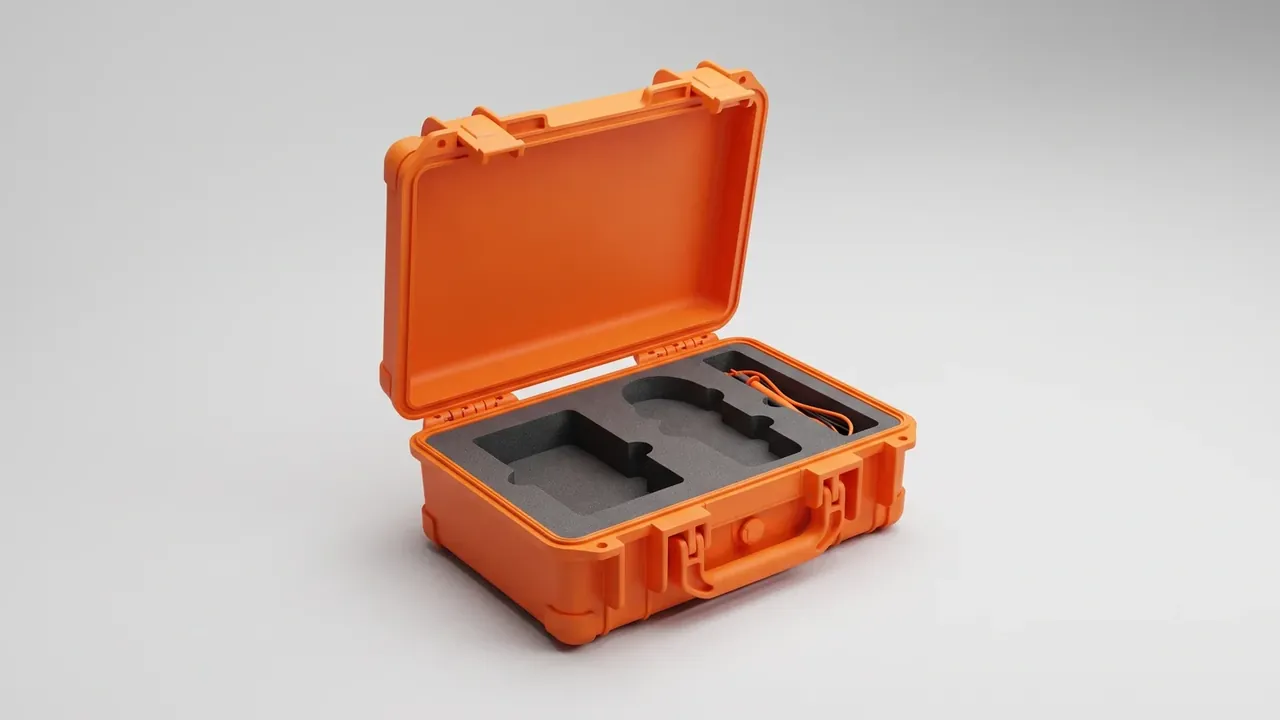
Quick answer: B2B sourcing plastic protective boxes starts with the internal cavity, not the price list. A 600 mm case often measures 540 mm inside, and 60 mm can reject equipment that fits its old box.
Table of contents
- B2B Sourcing Plastic Protective Boxes Starts Inside the Cavity
- Material and Wall Thickness: PP Moulding versus Rotomoulded HDPE
- Three Bench Tests for Seal, Latches and Hinge
- Foam Choice: PU, EPE and EVA
- Turning Promises into Testable Clauses
- FAQ
1. B2B Sourcing Plastic Protective Boxes Starts Inside the Cavity
B2B sourcing plastic protective boxes begins inside: two cases with the same footprint can differ by 30 mm, enough to reject equipment that already fits.
A 600 × 450 × 250 mm case with a 4.5 mm wall measures about 540 × 390 × 210 mm inside; 18 mm of EPE leaves 192 mm usable. Work to plus or minus 2 mm.
| External size | Wall | Internal cavity | Usable depth | Unit weight |
|---|---|---|---|---|
| 400 × 330 × 170 | 3.2 mm | 352 × 282 × 138 | 122 mm | 1.6 kg |
| 500 × 400 × 210 | 3.8 mm | 448 × 348 × 176 | 158 mm | 2.4 kg |
| 600 × 450 × 250 | 4.5 mm | 540 × 390 × 210 | 192 mm | 3.5 kg |
| 700 × 520 × 320 | 5.2 mm | 632 × 452 × 272 | 248 mm | 4.8 kg |
2. Material and Wall Thickness: PP Moulding versus Rotomoulded HDPE
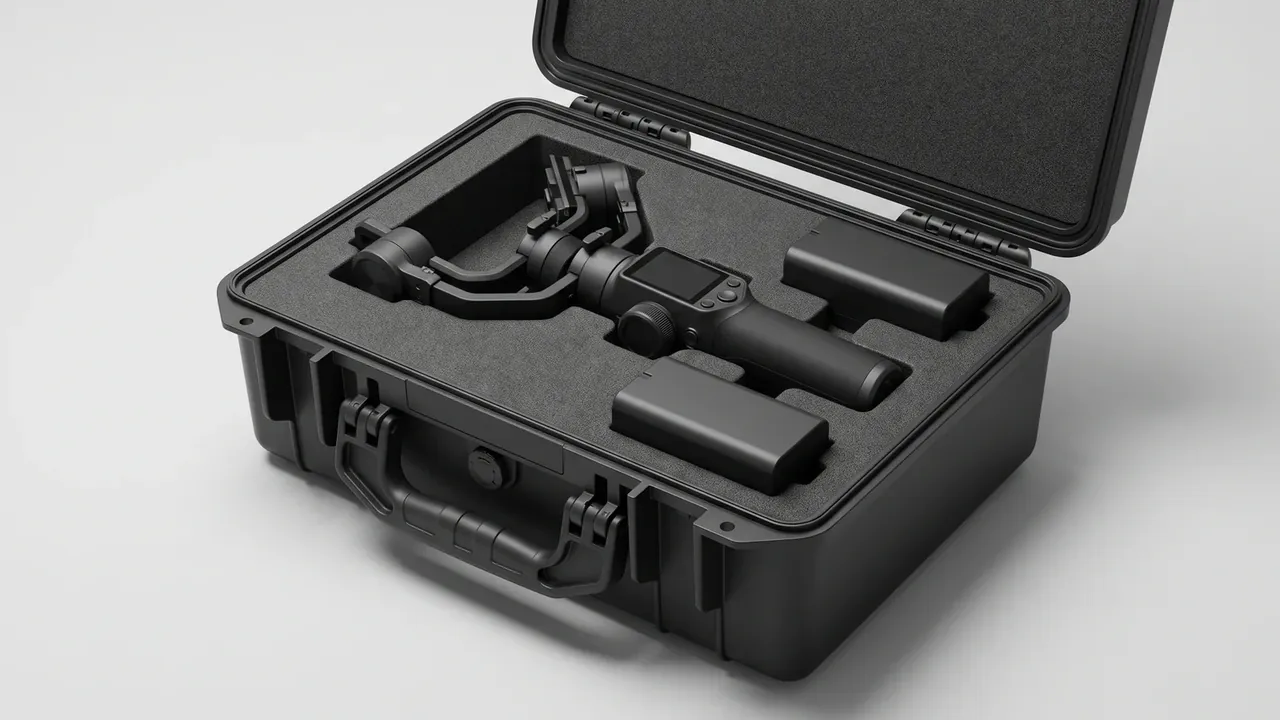
Material sets the wall. Injection PP runs 2.5 to 3.5 mm at 0.91 and holds minus 20 to 60 °C; rotomoulded HDPE runs 4.0 to 6.0 mm at 0.94 and holds minus 30 to 70 °C.
| Material | Wall | Density | Range | Cold drop |
|---|---|---|---|---|
| Injection PP | 2.5 to 3.5 mm | 0.91 | minus 20 to 60 °C | passes at minus 20 °C |
| Injection ABS | 2.5 to 3.5 mm | 1.05 | minus 10 to 70 °C | cracks at minus 20 °C |
| Rotomoulded HDPE | 4.0 to 6.0 mm | 0.94 | minus 30 to 70 °C | passes at minus 30 °C |
Volume decides the process: rotomoulding needs a cheap mould but 25 minutes per 600 mm shell, injection a costly one and a 45-second cycle that pays back past five thousand units. ABS turns brittle in cold, and a 1.2 m drop at minus 20 °C starts a crack.
3. Three Bench Tests for Seal, Latches and Hinge
B2B sourcing plastic protective boxes gets decided in ten minutes at a bench. Trap A4 paper on the rim, close and pull: it should not slide, with gasket compression between 30 and 35%.
A single latch should hold 300 N static on a force gauge. Cycle the hinge 8,000 times and measure play past 0.5 mm, where most hinges start to rattle.
4. Foam Choice: PU, EPE and EVA
B2B sourcing plastic protective boxes rarely fails on the shell and often fails on foam. PU at 30 kg/m³ cushions precision gear slowly, EPE at 25 kg/m³ costs less for regular shapes, EVA at 45 kg/m³ is closed-cell and shrugs off moisture.
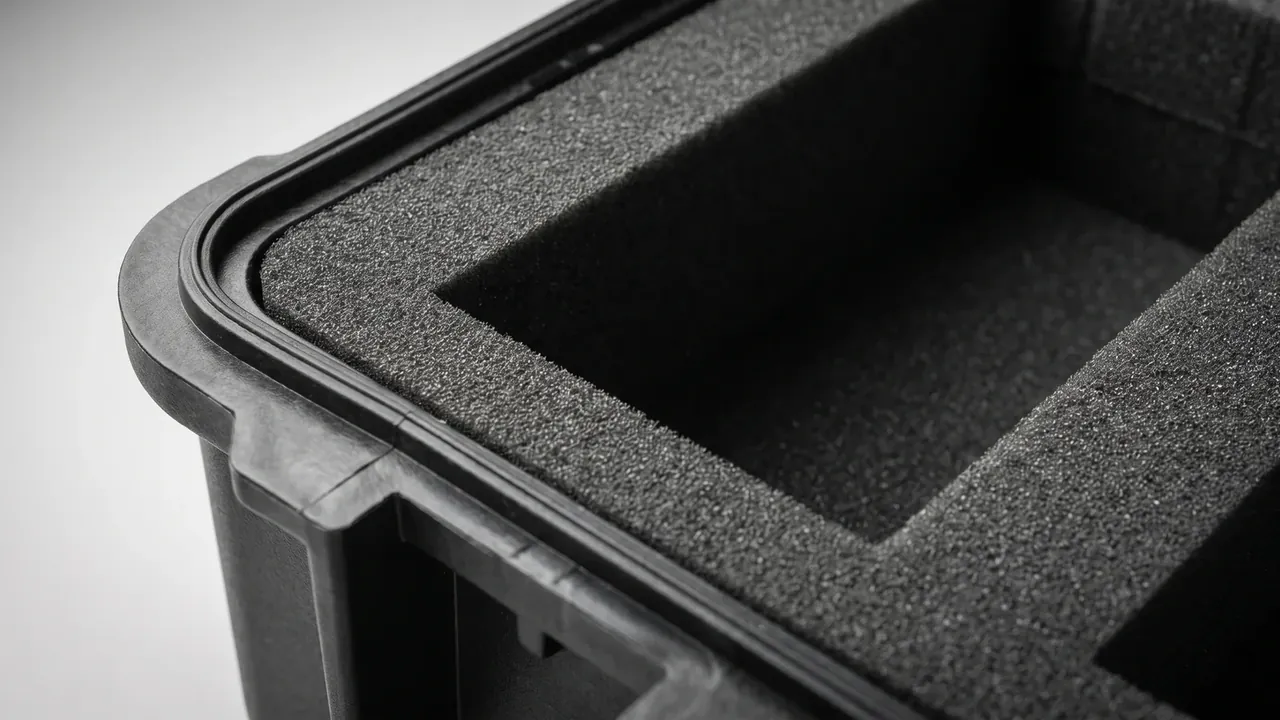
Dies run about 1,200 CNY, with five working days per revision. In a 210 mm cavity, 18 mm top and bottom leaves 174 mm; past 25 mm the foam presses the lid.
5. Turning Promises into Testable Clauses
Every B2B sourcing plastic protective boxes clause needs a condition and a pass mark. Drop testing runs at 1.2 m onto six faces, three edges and one corner, fully loaded.
| Test | Condition | Pass mark |
|---|---|---|
| Drop | 1.2 m, six faces, loaded | no crack, latches stay shut |
| Thermal cycling | minus 30 to 70 °C, five cycles | no warp, gasket stays soft |
| Humidity | 40 °C, 93% RH, 48 hours | no condensation, no rust |
| UV ageing | 480 hours | colour shift at or below ΔE 3 |
Humidity runs 48 hours at 40 °C and 93% RH, sampling at inspection level II and AQL 1.5. Reports refresh every 12 months, so the number belongs in the annex.
Conclusion
Choosing a protective case means choosing dimensions and tests that can be verified. Cavity measured to 2 mm, wall matched to material, three bench tests run and clauses annexed to the contract, and the decision stops depending on showroom lighting, which is the discipline behind B2B sourcing plastic protective boxes.
This article discusses only the container (case body) side of specifications and design intent, and does not cover any handling, loading or use of the contents.
Related Reading
- How an injection moulded case is built
- Picking a protective case size band
- Foam cutting process and dies
- How to audit a case supplier
Related Products
- 8 Series — Gun Cases; Military Equipment Cases; Camera Equipment Cases; Drone Cases; Watch Cases; Knife Cases; First Aid Cases; Electronics Equipment Cases
- WL8-2812 PP Gun Case — model WL8-2812
- All protective cases and toolboxes: 7 series, 158 models