

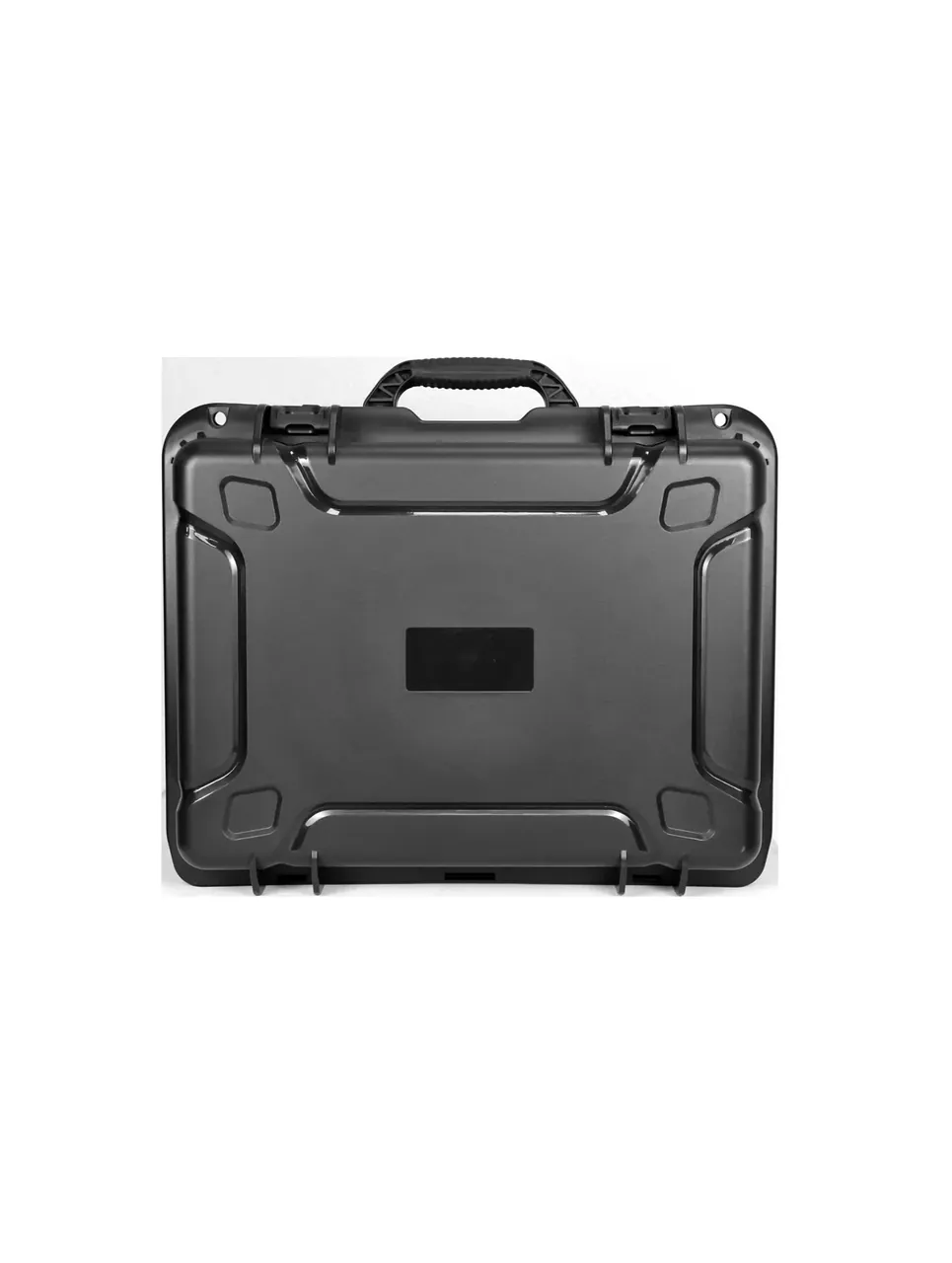
Quick answer: A Battery Safety Case and an ordinary case of the same size often share one shell. The gap sits inside: bays or one foam block, one valve or two on the diagonal, a sticker or a recessed plate, and whether the base has feet and lashing holes. With all four missing, the ordinary case is enough.
Table of contents
- Same Shell, Four Differences
- Compartments: Bays versus One Foam Block
- Venting: None, One Valve, Two on the Diagonal
- Marking: Sticker, Silk Screen, Recessed Plate
- Tie-Down and Stacking: Feet, Recess, Lashing
- FAQ
1. Same Shell, Four Differences
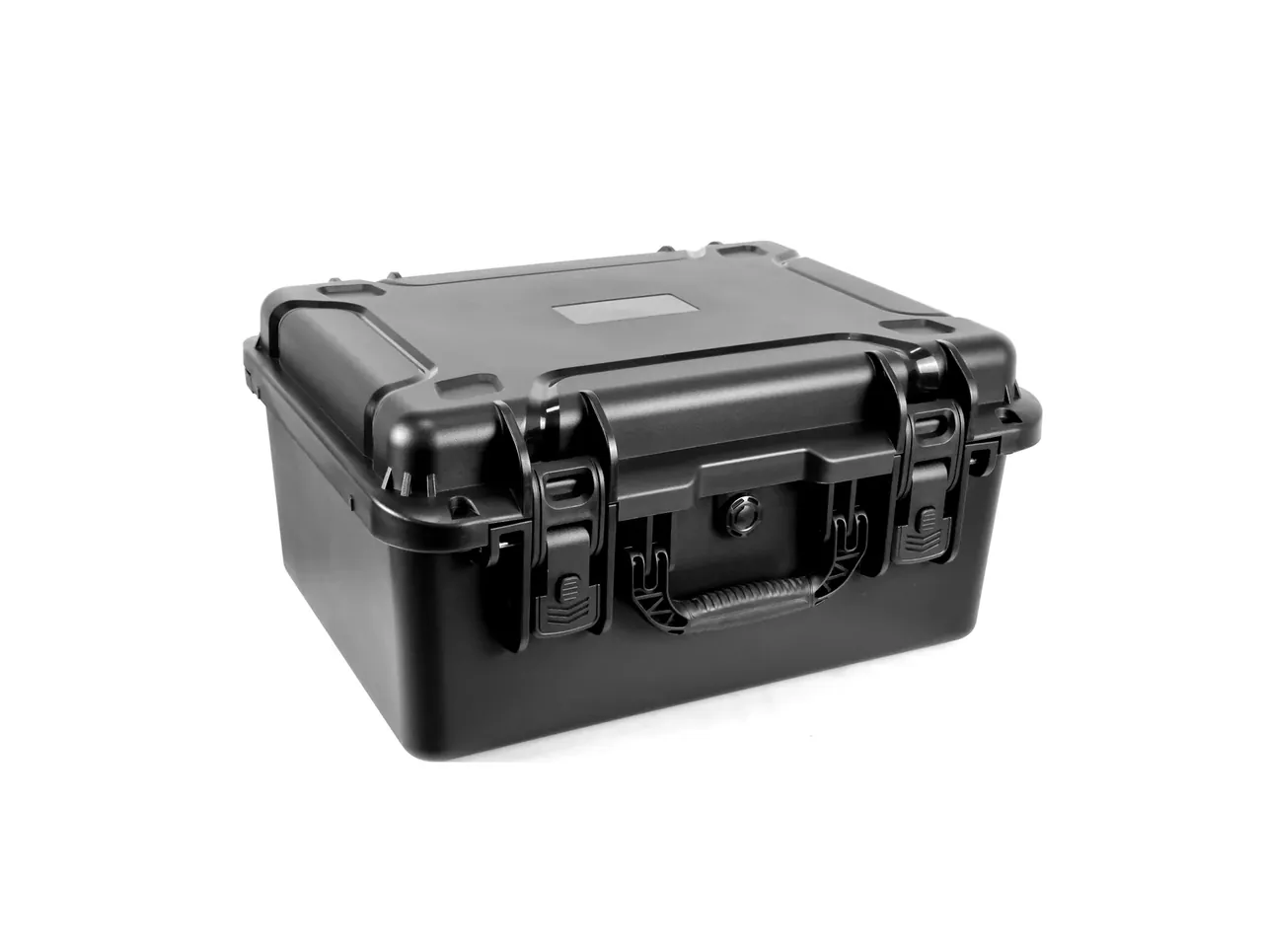
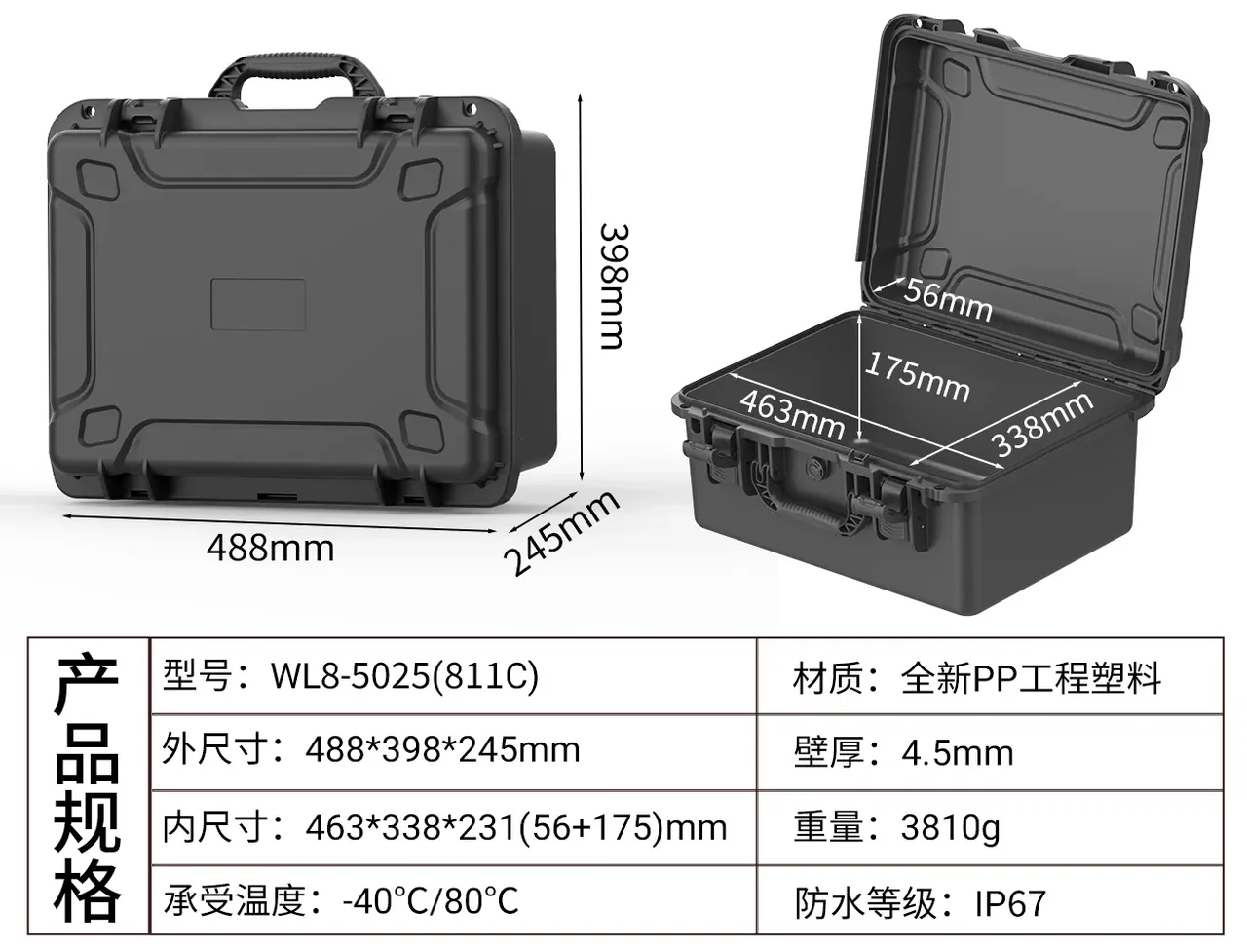
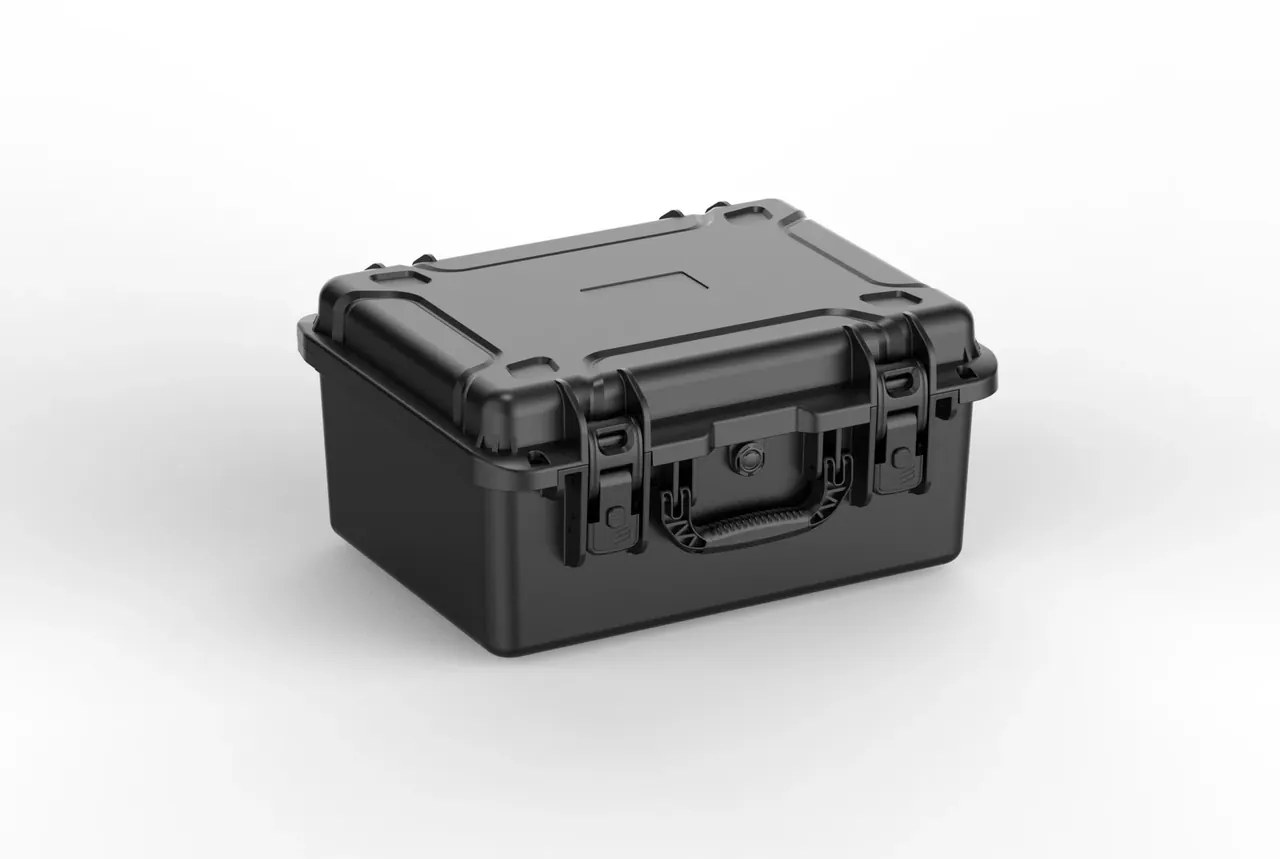
Two cases from one mold match in shell, wall, hinges and gasket. Everything that differs happens at assembly: liner, valves, plate and feet.
Four questions decide it: item-level location, a wide temperature or altitude band, outside traceability, and lashing or stacking. One yes and an ordinary case works; two or more and all four fittings must be specified.
| Item | Ordinary case | Battery Safety Case |
|---|---|---|
| Liner | One pluckable foam block | Rigid dividers plus slotted foam |
| Venting | No valve or one | Two valves, diagonal |
| Marking | Sticker or silk screen | Recessed plate, laser marked |
2. Compartments: Bays versus One Foam Block
A pluckable block adapts to any outline, but a torn cavity cannot be restored and a new item means a new block.
Separate bays buy repeatability: rigid boards set the skeleton, slotted foam sets each item, and every clear size is fixed on the drawing. Counting is one item per bay; a block has no bay edges, so a missing item means emptying the case.
3. Venting: None, One Valve, Two on the Diagonal
Most ordinary cases have no valve and rely on the gasket. That holds on short trips; after air freight or a fifteen-degree swing the differential deforms the gasket, the lid needs a tug, and the seal takes a set.
One valve balances pressure along a single path, leaving a dead corner and often too little flow for a large case.
A Battery Safety Case carries two valves at opposite ends of the lid, so air crosses the whole volume and one blocked by a strap leaves the other working. Flow matches volume, a few hundred millilitres a minute, at 3 to 10 kPa, through an expanded PTFE membrane, ports sideways above the waterline.
Retrofit rarely seals: a drilled wall has no valve seat, and the washer cannot hold IP67.
4. Marking: Sticker, Silk Screen, Recessed Plate
Ordinary cases use silk screen or a sticker, a few dollars, placed wherever needed. Both fail: silk screen fades under solvent, adhesive lifts under heat and oil.
A recessed plate turns marking into structure: a 90 by 60 mm recess, 1 to 2 mm deep, takes weather-resistant polyester or laser marking, and the recess absorbs abrasion. Information is layered as ID, rating and weight, then date.
Marking is not decoration: an ID must read through oil and rain, and colour ties a shell to a bay configuration. A second recess holds the inspection sticker.
5. Tie-Down and Stacking: Feet, Recess, Lashing
An ordinary base is flat with ribs: fine on a bench, poor in a vehicle, where nothing resists sliding and nothing locates a second tier.
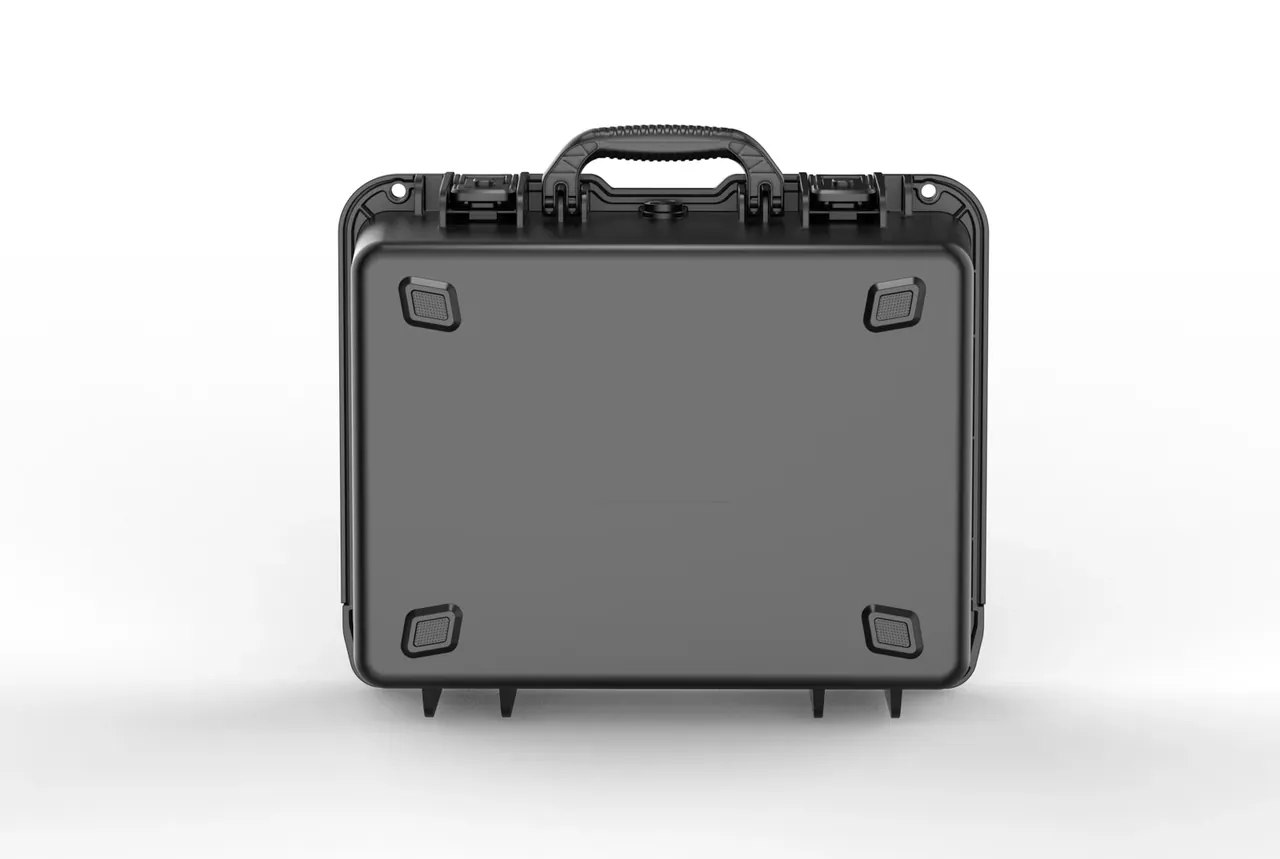
A Battery Safety Case adds four corner feet that lift the base 5 to 8 mm and create four load points; stacked, the upper feet drop into the lid recess and lock. Side lashing holes take a four-point strap.
Feet carry load on a small area, so three tiers need a pallet, and the lid recess is only 3 to 5 mm deep; a taller boss presses on the ribs and cuts crush resistance.
Conclusion
The gap between a Battery Safety Case and an ordinary case is not shell strength but four checkable details: separate bays, diagonal valves, a recessed plate, and feet with lashing holes. Fit all four and the box becomes a managed asset; fit one and the rest surface at the next count.
This article covers container-side specifications and design intent only. It does not address any handling, loading or use of the contents.
Related Reading
- How a battery case is built and protected
- Compartment design for power tool battery cases
- Choosing and mounting a case pressure valve
- Case marking and asset tracking
Related Products
- 8 Series — Gun Cases; Military Equipment Cases; Camera Equipment Cases; Drone Cases; Watch Cases; Knife Cases; First Aid Cases; Electronics Equipment Cases
- WL8-2812 PP Gun Case — model WL8-2812
- All protective cases and toolboxes: 7 series, 158 models