

Quick answer: A battery swap case is judged on three measured values: 100 MΩ insulation resistance, 20 mm leakage distance, and 60 mm slot width for 1000 V tools.
Table of contents
- Why the Tool Rating Sets the Voltage Class
- Twelve Slots and the 20 mm Gap
- Shell, Mat and the 100 MΩ Reading
- Torque Tools, Re-tests and Sampling
- FAQ
1. Why the Tool Rating Sets the Voltage Class
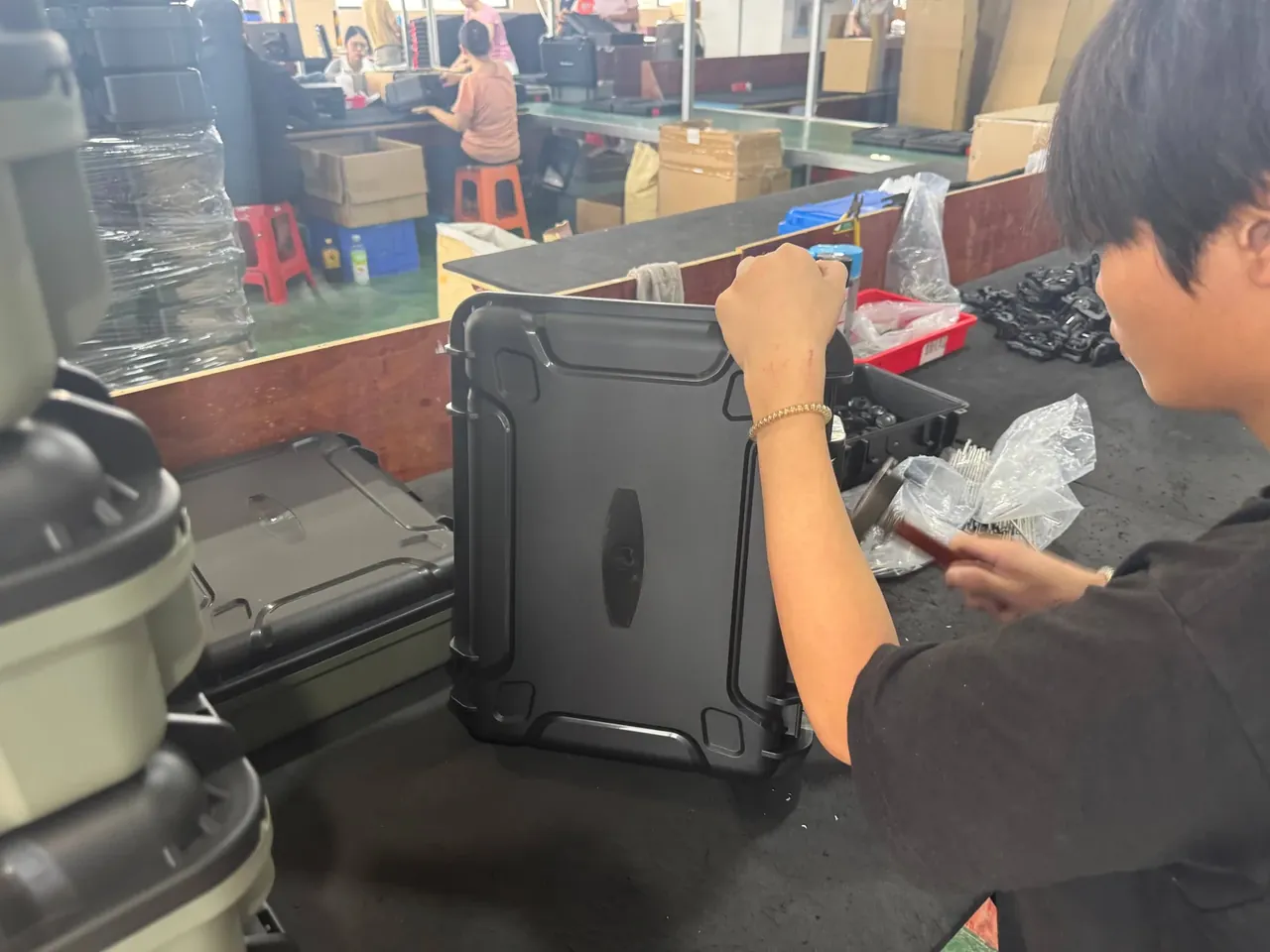
A 560×420×210 mm shell holds twelve insulated tools and weighs 21 kg empty. Its rating comes from the tools inside, not from the wall. The shell never enters a live circuit; it only keeps handles apart and dry between two jobs.
IEC 60900 stops insulated hand tools at 1000 V AC or 1500 V DC. DC work at a swap station is planned at the 1000 V class, so a ratchet grows from 280 mm with a 3 mm sleeve to 320 mm with 6 mm, and the handle from 32 mm to 42 mm.
Higher class means tighter space.
Twelve 1000 V tools need 90 mm more width than the same count at 400 V. A 45 mm slot only takes the low class, 1000 V needs 60 mm, and 1500 V needs 70 mm.
| DC class | Sleeve | Largest tool | Minimum slot | Re-test |
|---|---|---|---|---|
| 400 V | 3 mm | 320×60×45 mm | 45 mm | 500 V |
| 750 V | 4.5 mm | 340×70×52 mm | 55 mm | 500 V |
| 1000 V | 6 mm | 360×80×60 mm | 60 mm | 500 V |
| 1500 V | 8 mm | 380×90×70 mm | 70 mm | 1000 V |
No class is printed on the outside of the shell. Two quantities are: insulation resistance and leakage distance, both checkable with a 500 V tester and a caliper.
2. Twelve Slots and the 20 mm Gap
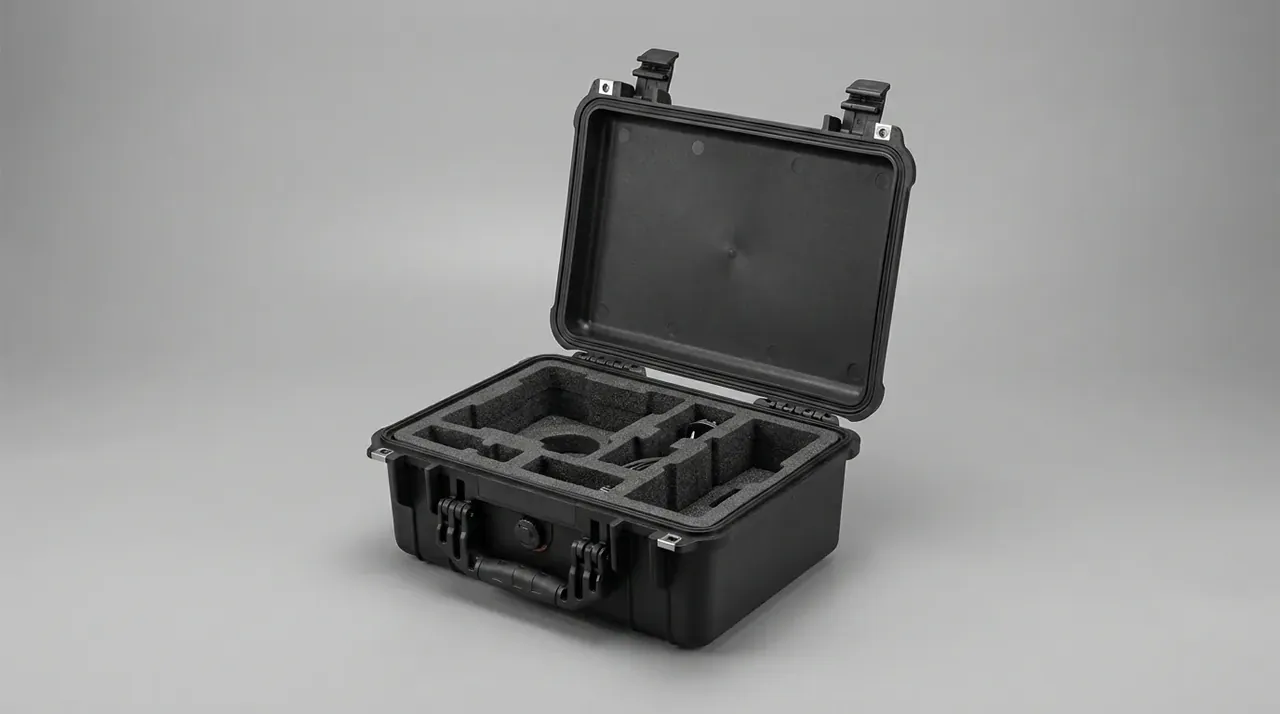
After a 25 mm transition band on each side, a 560×420 mm footprint leaves 510×370 mm. Slots at 45, 60 and 90 mm give twelve pockets and a 480 mm channel for the wrench. Dividers are 8 mm solid PP, pushed fully home.
Between any two tools the nearest metal stays 20 mm apart. That is leakage distance, not kerning. A 1000 V handle resting on the socket next door cuts real clearance to 8 mm while the tester still passes, because a megohmmeter reads resistance rather than spacing. Slot walls carry a 2 mm chamfer so nothing is scraped on the way in.
A φ70 mm bore takes the socket set on a 6 mm mat; the 480×55 mm channel holds a 25–120 N·m wrench behind a 15 mm notch at the mouth.
| Slot group | Width | Stowed | Mat | Order |
|---|---|---|---|---|
| 01–03 | 60 mm | Ratchet and bars | 6 mm | First out |
| 04–06 | 45 mm | Socket set | 6 mm | Second |
| 07–09 | 60 mm | Scrapers, cutters | 3 mm | Third |
| 10–12 | 90 mm | Detector, extension | 6 mm | Last back |
Above every pocket 5 mm of clearance remains with the lid shut, and a 10 mm EVA strip presses the tools down. Names are engraved at 12 mm. The voltage detector is the awkward one: it fits the two 90 mm pockets only once collapsed to 460 mm.
3. Shell, Mat and the 100 MΩ Reading
A 100 MΩ figure is not one material. It is a 5 mm PP copolymer wall, a 2 mm liner at 10^14 Ω·cm, a 6 mm class 0 mat in the base and another in the lid, proof tested at 5 kV for 1 min, plus the gasket. Stacked, they leave no bare metal path from inside to outside.
Fix the test method or the number means nothing: 200×200 mm copper foil inside, damp cloth of the same size outside, read at 500 V after 1 min. Below 100 MΩ, check oil on the mat, then a lifted liner seam, and only then the compound.
The gasket is φ5.0 mm silicone sponge in a 4.2 mm groove, compressed to 3.8 mm when the lid shuts. Too light and vapour crosses the joint; too heavy and rebound is half gone in two years. A 150 g desiccant pack and a humidity card finish the job; above 60% RH the pack is swapped, not dried.
| Storage | Ambient | Inside | Resistance | Action |
|---|---|---|---|---|
| Winter garage | -10–5 ℃ | 45% RH | 320 MΩ | Use as is |
| Tool room | 5–25 ℃ | 50% RH | 480 MΩ | Use as is |
| Summer container | 25–45 ℃ | 70% RH | 130 MΩ | Air 30 min |
| Sun-exposed roof | above 45 ℃ | 85% RH | 60 MΩ | Re-test first |
Same shell, same mats, one day in the sun, and the reading falls from 480 MΩ to 60 MΩ on a film of water. That is why humidity and ambient temperature are logged beside the resistance figure, not the resistance alone.
4. Torque Tools, Re-tests and Sampling
Five percent of a batch, minimum three units, goes through three checks: resistance at 100 MΩ or better, 24 h at two high with 68 kg bearing on the lower lid and deflection under 2 mm, and a 0.6 m drop on six faces leaving a lid gap below 0.5 mm with both catches shut.
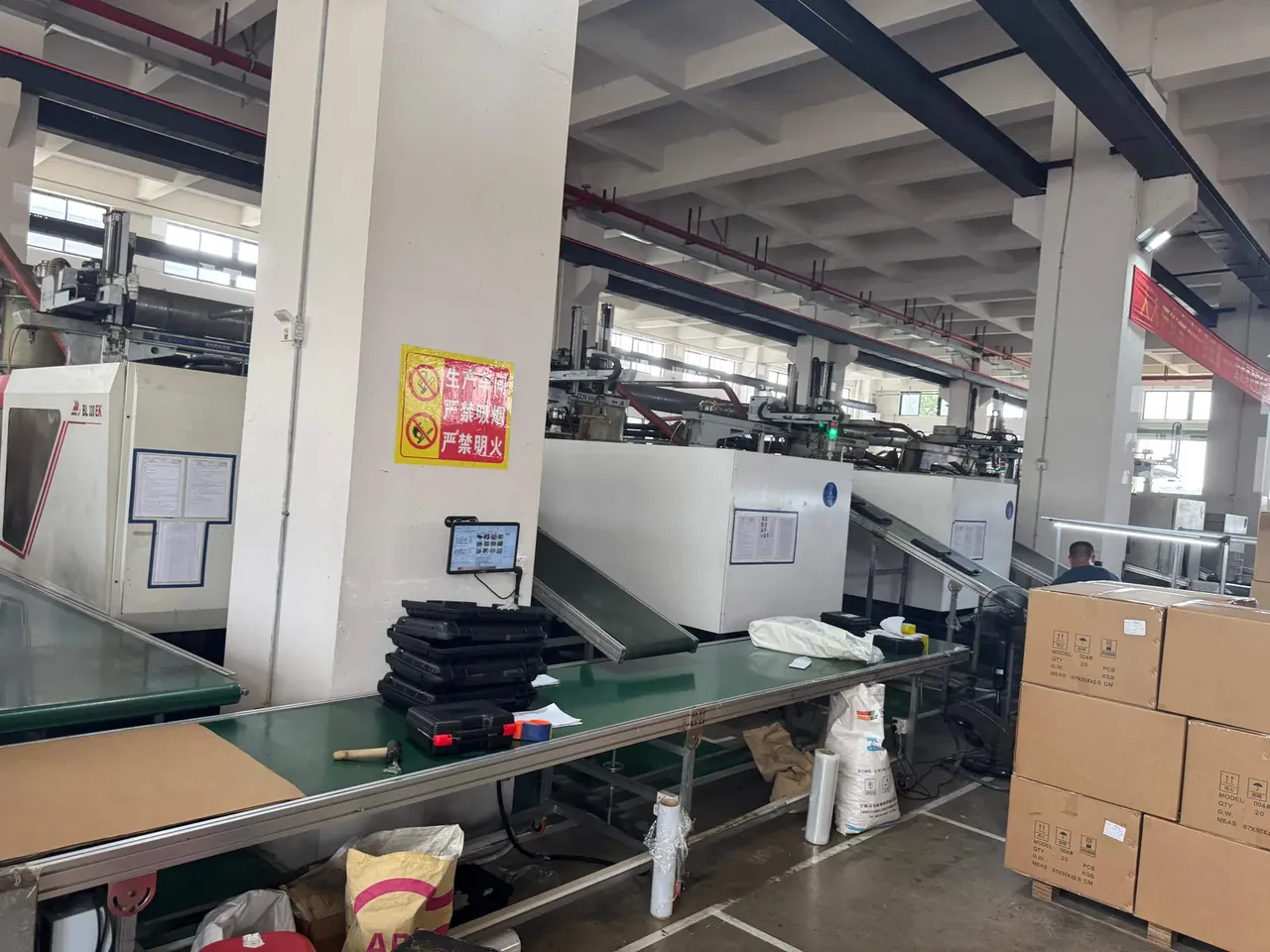
In service a 500 V test runs before every shift, thirty entries per card, cards kept for 12 months. Wrenches are calibrated every 6 months to ±4% and ride alone in the long channel so the square drive is never chipped by loose sockets.
Handling splits in two: 21 kg carried 60 m by one person, 34 kg lifted by two on handles rated 40 kg static. Two high is the ceiling, since a third layer costs 15% of catch preload within 3 months and opens a 1 mm gap.
None of these handling details shows in a resistance reading, yet a 750 mm trolley deck and four 30 mm feet decide whether the case survives a year.
Conclusion
A battery swap case reads like a short specification: a shell, twelve pockets, a mat. What decides whether it works is narrower, namely whether a 1000 V handle still clears its neighbour by 20 mm, whether the 500 V reading holds above 100 MΩ after a day in the sun, and whether the catches keep preload at two high. Fix those points on the drawing and the record card, and the box is built for live work.
This article covers only the enclosure (case) side of the specification and design intent, not any handling, loading or use of the items inside.
Related Reading
- Sizing a moulded tray case for swap battery trays
- Insulation protection for live-line tools
- Catch and handle load ratings on equipment cases
- Selection criteria for battery-class cases
Related Products
- 8 Series — Gun Cases; Military Equipment Cases; Camera Equipment Cases; Drone Cases; Watch Cases; Knife Cases; First Aid Cases; Electronics Equipment Cases
- WL8-2812 PP Gun Case — model WL8-2812
- All protective cases and toolboxes: 7 series, 158 models