

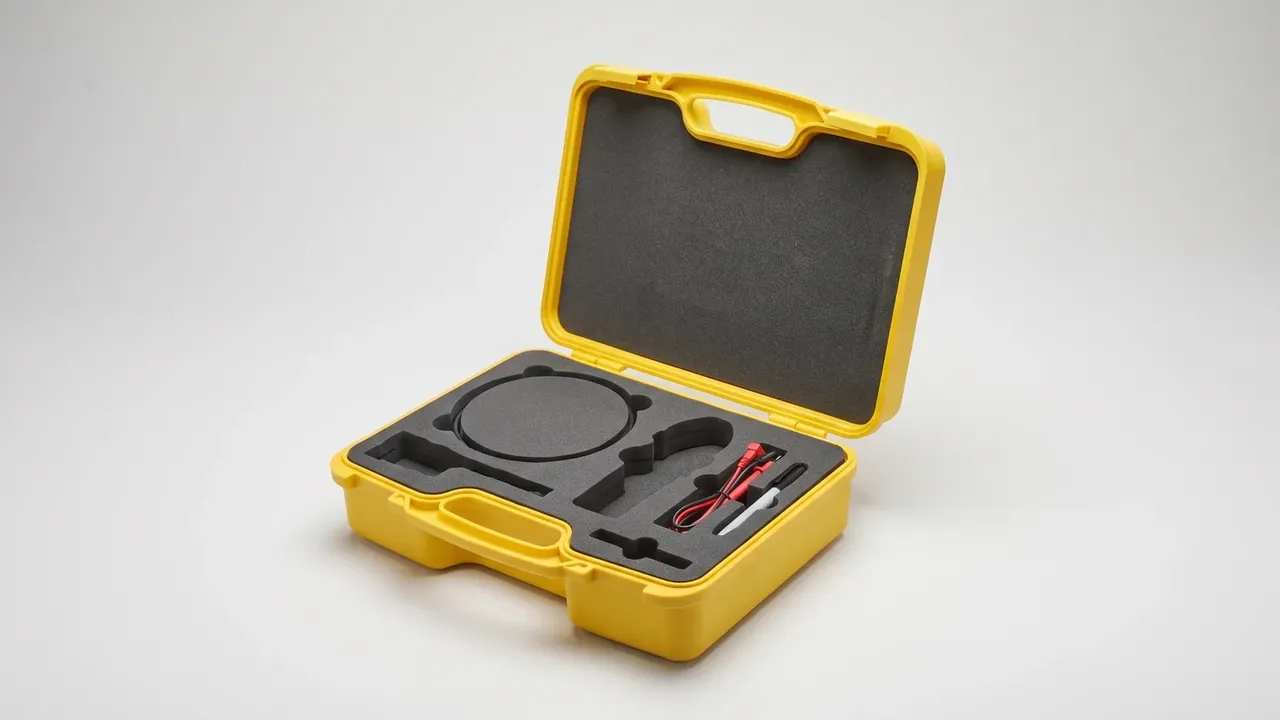
Quick answer: On a 35 kV route the carry method follows loaded weight and walking distance, a shoulder strap to 26 kg and 2 km and a two-person pole or a vehicle beyond that, while protection rests on the IP67 seal and an 8 C condensation margin.
Table of contents
- Three Ways to Carry an Instrument Case
- Latches and Seals: What IP67 Covers
- Condensation and Its Dew Point
- A 3 m Pole in a 600 mm Cavity
- Ninety Seconds of Wind and Rain
- FAQ
1. Three Ways to Carry an Instrument Case
Spans on 35 kV distribution lines run 80 to 120 m, so a 5 km branch means about 45 structures. Loaded with an insulation tester, a phase comparator, a clamp meter and three sets of leads, an instrument case weighs 18 to 26 kg at 620 by 460 by 250 mm. Weight and bulk decide the rest.
| Method | Load | One way | People |
|---|---|---|---|
| Shoulder strap | 18 to 26 kg | Up to 2 km | 1 |
| Two-person pole | 30 to 45 kg | 2 to 4 km | 2 |
| Vehicle mount | Above 45 kg | Beyond 4 km | 1 plus driver |
A strap works because the load sits on the ribs moulded into the back wall. The webbing is 50 mm wide, the pad 15 mm of EVA, and the stitching holds 200 N over a 2.5 km walk. The two-person pole is a 32 mm tube through 40 mm holes lined with 3 mm steel sleeves, and a vehicle mount needs only two 25 mm straps at 150 N over a 15 mm mat, holding movement under 2 mm on gravel.
2. Latches and Seals: What IP67 Covers
Read IP67 as two claims. The 6 means dust-tight, the 7 means no ingress after 30 minutes at 1 m. For an instrument case the second digit matters, and it depends on gasket squeeze, latch force and flat mating faces at once.
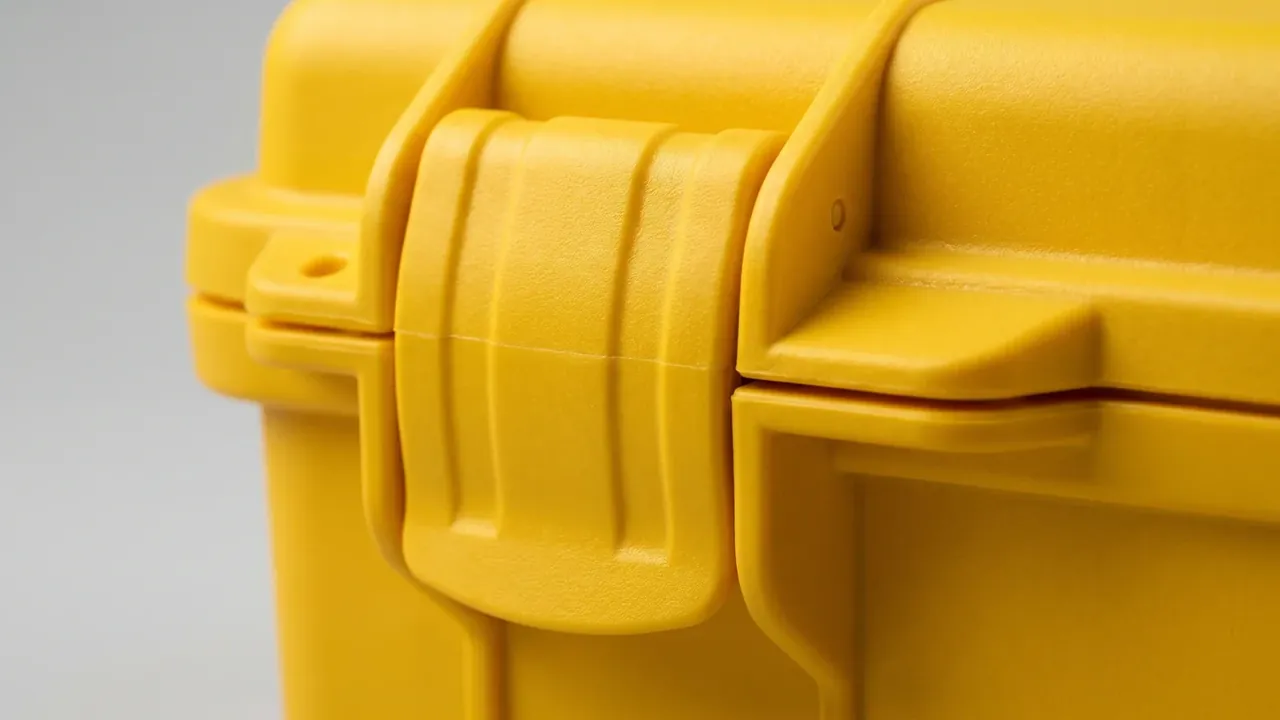
A 6 mm silicone sponge cord sits in a 5.2 mm groove and closes to 4.2 mm, a 30 percent squeeze. Under 20 percent it never seats; over 45 percent it takes more than 1 mm of permanent set within five years. Two latches at 120 N each close the lid gap to 0.3 mm across 5,200 cycles, and spring preload must not fall past 15 percent.
Opening in rain starts with the lid, not the latches. Tilt it 15 degrees so water runs into a channel 3 mm deep and 8 mm wide, which clears 120 ml in 90 seconds, then release the catches.
3. Condensation and Its Dew Point
Condensation is a dew point question. A case loaded at 8 C in a cold cab and opened at 11 am, when outside air reaches 34 C and the inside still holds 26 C, meets a dew point near 22 C at 80 percent humidity, so water forms on the lid foam.
| Outside | Inside | Humidity | Result |
|---|---|---|---|
| 34 C | 26 C | 80% | Wet, dew point 22 C |
| 28 C | 26 C | 65% | Dry, dew point 20 C |
| 34 C | 32 C | 85% | Wet, dew point 29 C |
Eight degrees of difference is the line. At 15 degrees or more with humidity above 75 percent, condensation is close to certain, which is why 20 g of silica gel goes into every 20 litres of cavity and the swap interval drops to 45 days in the wet season.
The cost shows in readings: at 85 percent humidity for 72 hours an insulation tester drifts 0.5 percent and foam gains 3 percent in weight.
4. A 3 m Pole in a 600 mm Cavity
Two pole sections joined reach 3 m and still measure 1.55 m collapsed, which no 600 mm cavity accepts. The workaround splits the load: instruments inside, the pole in an external tube 60 mm in bore and 1,250 mm long with 30 mm nylon caps.
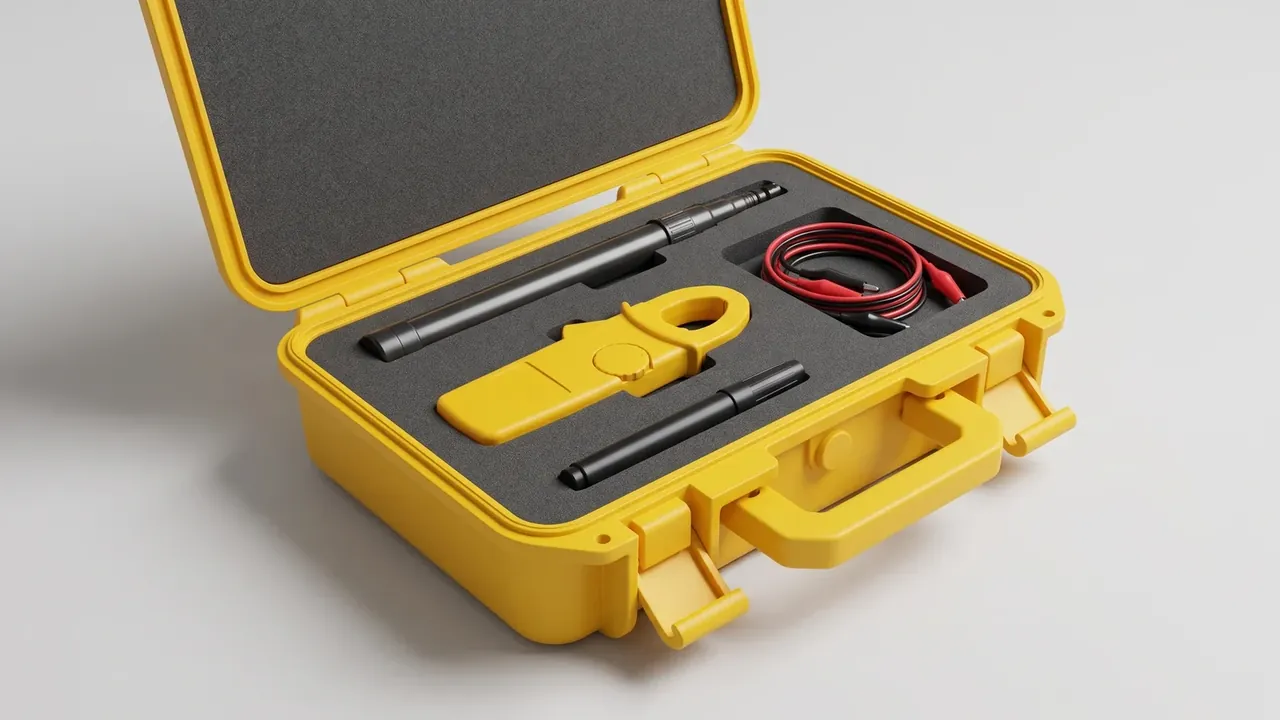
Dividers are cut at 20 mm from 70 kg/m³ EVA with a 20 mm wall between pockets, each leaving 0.5 mm clearance per side. Below 0.2 mm an instrument must be pried out; above 1 mm it slides 4 mm over a 3 km walk and grinds the foam. Retrieving a set of leads fell from 90 seconds to 40 once the cavities were separated.
5. Ninety Seconds of Wind and Rain
Force 8 runs 17.2 to 20.7 m per second, and a lid of 0.28 square metres becomes a sail taking about 30 N. A hood does more than shed water: it locks lid and body at 105 degrees, in 210D Oxford cloth coated to 3,000 mm of water column with a 60 mm drip edge.
Rain work runs to a 90 second script: 15 to lift the hood, 10 to release the latches, 25 to take the instrument out, 30 to read it, 10 to stow it. Past that the lid pools, the mating face films over and closing traps the water. Dust needs the reverse habit, a wipe with 70 percent ethanol and 2 minutes to flash off, or 0.3 mm of grit holds the seal 0.2 mm open.
Conclusion
Carrying and protecting an instrument case at 35 kV is one habit applied twice: measure first, choose second. Weigh the loaded case and pace the route before picking strap, pole or vehicle, then read the temperature difference and humidity before fixing desiccant quantity and wipe interval. An IP67 seal, 120 N at each latch, a 0.3 mm lid gap and an 8 C margin are what keep the box trustworthy at the foot of a pylon. Skip them and thicker walls buy nothing.
This article discusses only the container (case body) side of specifications and design intent, and does not cover any handling, loading or use of the contents.
Related Reading
- Instrument case body specifications and cavity sizes
- How to judge an instrument case for selection
- Seal structure and test conditions of IP67 cases
- Layering and cutting methods for case foam lining
Related Products
- 8 Series — Gun Cases; Military Equipment Cases; Camera Equipment Cases; Drone Cases; Watch Cases; Knife Cases; First Aid Cases; Electronics Equipment Cases
- WL8-2812 PP Gun Case — model WL8-2812
- All protective cases and toolboxes: 7 series, 158 models