

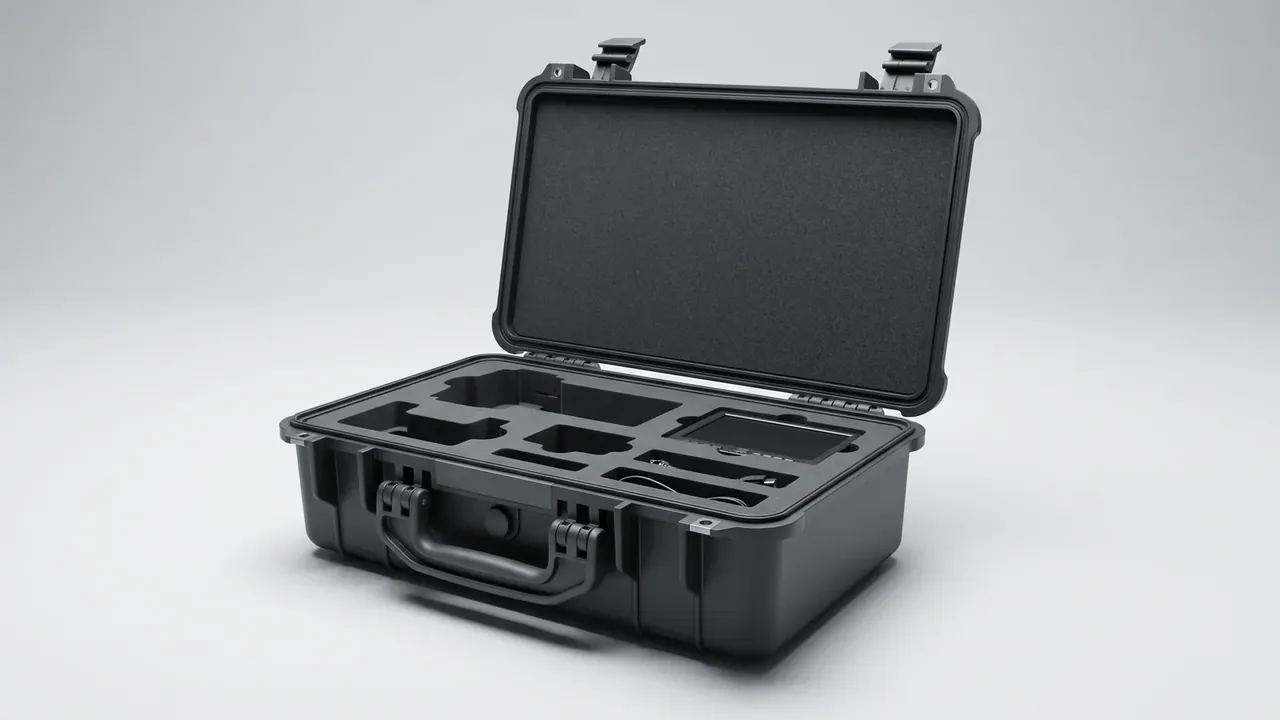
Quick answer: A bespoke plastic protective case is pinned down by three sets of numbers: the outside-to-cavity gap, wall thickness by zone, and the static load implied by stack height. Start at ±1.0 mm cavity tolerance, 3.0 mm sides over a 3.5 mm base, and 150 kg at five high.
Table of contents
- How a Bespoke Plastic Protective Case Spec Is Sized
- Wall Zones That Must Be Thickened
- Load Rating, Stacking and Layer Limits
- Latch, Gasket and Pressure Valve Matching
- Tolerances, Samples and Acceptance
- FAQ
1. How a Bespoke Plastic Protective Case Spec Is Sized
A bespoke plastic protective case carries three dimension sets, not one: outside, cavity and usable cavity. The outside sets transport and stacking, the cavity sets what fits.
State them in that order with foam thickness. A 600 × 450 × 220 mm body with 20 mm foam all round leaves a cavity near 540 × 390 × 185 mm; take 25 mm off the base and 15 mm off the lid and usable height is 145 mm.
| Dimension set | What to state | On a 600 × 450 × 220 mm body | Decided by |
|---|---|---|---|
| Outside | Length, width, height with corners | 600 × 450 × 220 mm | Tool size, stacking |
| Cavity | Floor length, width, depth to lid foam | 540 × 390 × 185 mm | Wall and rib height |
| Usable | Clear space after all foam | 500 × 350 × 145 mm | Foam plan and cuts |
2. Wall Zones That Must Be Thickened
One wall number on a bespoke plastic protective case means the moulder builds to the thinnest point. Write zones instead: 3.0 mm sides, 3.5 mm base, 2.8 mm lid, 4.5 mm at corners and latch bosses.
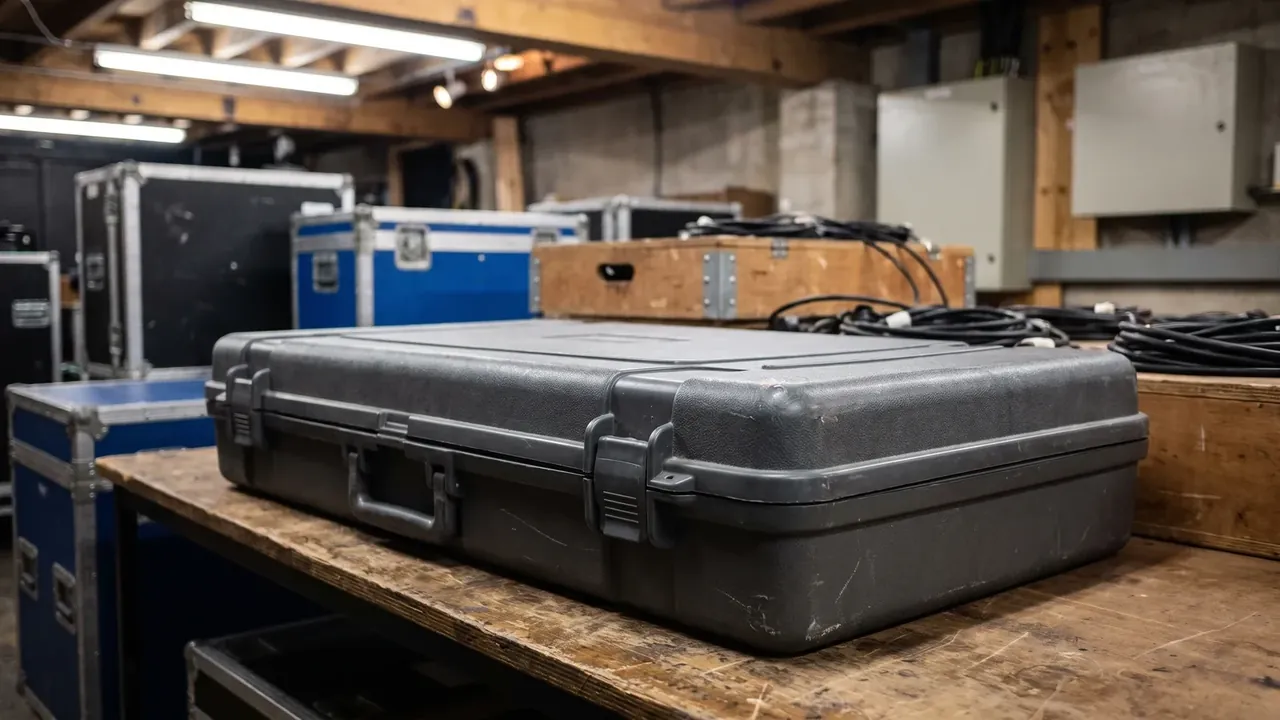
Zoned walls hold the load path for a tenth of the weight that thickening everything would add, which takes the body from 3.4 kg to 4.3 kg.
Thicken where force travels: 120 mm either side of the handle, each latch boss root, the hinge seats, the base corners. On a 650-tonne press, walls under 2.2 mm short-shot over a 300 mm flow.
3. Load Rating, Stacking and Layer Limits
Load needs three figures: static, a full case at rest; dynamic, the transport peak at 1.5 to 2 times static; stacking, upper cases on a lower lid. A typical sheet reads 45 kg, 90 kg and five high at 30 kg each.
Layer limits come from the long-term sag of the bottom lid. Past 2 mm of base sag or 1.5 mm of lid sag after 24 hours loaded, the second layer tilts.
Every figure carries its test conditions: 45 kg for 24 hours at ambient is not 45 °C for 72 hours.
4. Latch, Gasket and Pressure Valve Matching
Latch count follows length: two under 600 mm, three from 600 to 900 mm, four above 900 mm, spaced no more than 250 mm. Wider spacing bows the lid gap, the gasket misses its compression, and the air test finds it.
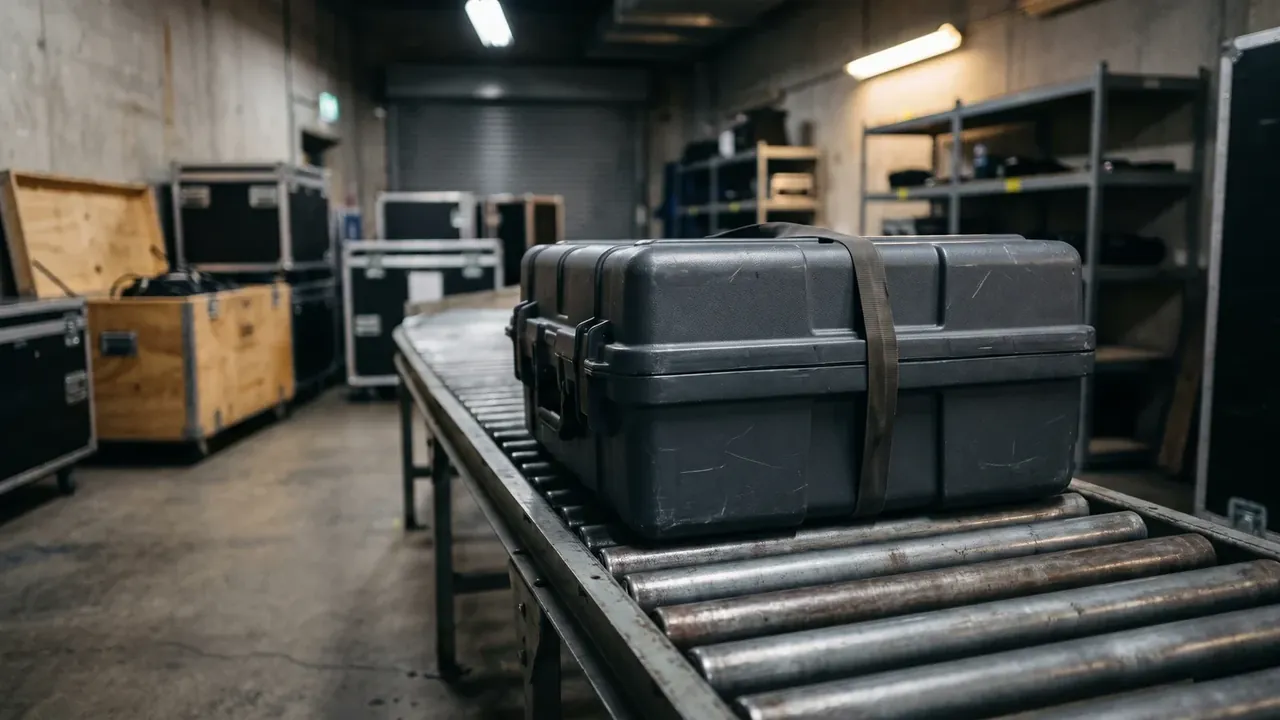
Compression and hardness belong on the sheet: an O-profile returns best at 25 to 30 percent of its diameter, near Shore A 55, with 0.8 mm lid gap flatness.
Across a 40 °C swing the differential reaches 6 to 8 kPa; without a valve that force lands on the latches and the lid jumps open. Specify 3 to 5 kPa to open and 0.5 litres per minute.
5. Tolerances, Samples and Acceptance
Split tolerances by location: cavity length and width ±1.0 mm, depth ±0.8 mm, diagonal difference within 1.2 mm, lid gap 0.6 to 1.0 mm. A twisted bespoke plastic protective case shows in the diagonal before it leaks.
Sampling runs in two steps. T1 is three pieces, dimensions and assembly only. T2 takes one through a 1.2 m drop on six faces, three edges and a corner after 4 hours at −20 °C, and another through 24 hours of loaded stacking.
| Item | Limit | Sampling |
|---|---|---|
| Cavity length, width | ±1.0 mm | 5 per lot, all measured |
| Diagonal difference | Within 1.2 mm | 5 per lot |
| Loaded stacking | 24 hours, base sag within 2 mm | 1 per lot |
Conclusion
A specification turns wishes into measurable numbers: three dimension sets fix the space, zoned walls distribute weight, load figures set the boundary, latch and gasket keep the lid closed. Compress the five sections into one sheet and the bespoke plastic protective case is finally specified.
This article discusses only the container (case body) side of specifications and design intent, and does not cover any handling, loading or use of the contents.
Related Reading
- How protective case size ranges are divided
- The custom process from brief to volume
- Specification points for heavy duty cases
- Reading a case maker's standards
Related Products
- 8 Series — Gun Cases; Military Equipment Cases; Camera Equipment Cases; Drone Cases; Watch Cases; Knife Cases; First Aid Cases; Electronics Equipment Cases
- WL8-2812 PP Gun Case — model WL8-2812
- All protective cases and toolboxes: 7 series, 158 models