

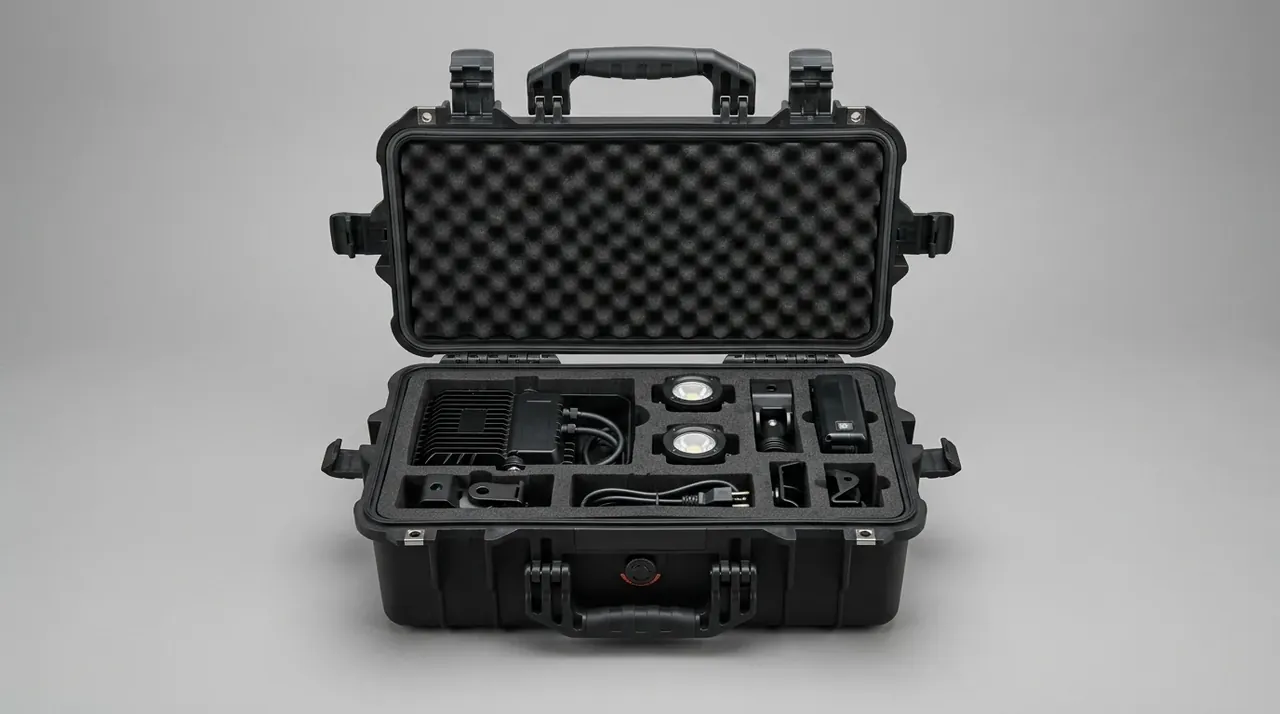
Quick answer: The Blood products low temperature sealed box separates a 490 × 330 × 310 mm cavity from four coolant bays, holding 2–8 °C for 48 h.
Table of contents
- Coolant bays separated from the cavity in the Blood products low temperature sealed box
- Lip compression and the condensate path
- Bonding the vacuum insulation panels and their thickness margin
- Probe layout for the 48 h temperature hold
- Factory test order for immersion and leak rate
- FAQ
1. Coolant bays separated from the cavity in the Blood products low temperature sealed box
The Blood products low temperature sealed box sets aside a 490 × 330 × 310 mm cavity and four coolant bays inside a 580 × 420 × 400 mm shell, with a 4.0 mm wall between them. Bays open toward the lid, so the side wall keeps only a fill seam. A drainage slope carries condensate to the outside of the rim lip, away from the cavity. Humidity and pressure get separate jobs: the bays hold the zone, the rim holds the seal. A 20 mm vacuum panel lines the cavity, kept off the bay wall by a frame so its edge is not cracked by direct cold.
Four bays sit in symmetric pairs along the long edges, so no single bay biases the shell to one side.
| Hold phase | Bay state | Verdict |
|---|---|---|
| At lid close | 4 bays even | baseline logged |
| Mid hold | no condensate on bay wall | no seep |
| End of 48 h | 2–8 °C band | no excursion |
| After opening | drainage slope dry | no backflow |
2. Lip compression and the condensate path
A 28% compression on the twin lip lets the Blood products low temperature sealed box stop condensate and pressure at once. The outer lip meets the lid fold and cuts off water; the inner lip presses a second land and takes the pressure difference across the valve. Below 28% the gasket loses rebound in the cold and a 1.0 m immersion for 30 min finds a corner path; beyond it the lip crushes early over 4000 cycles and the ≤0.4 kPa/min leak rate fails.
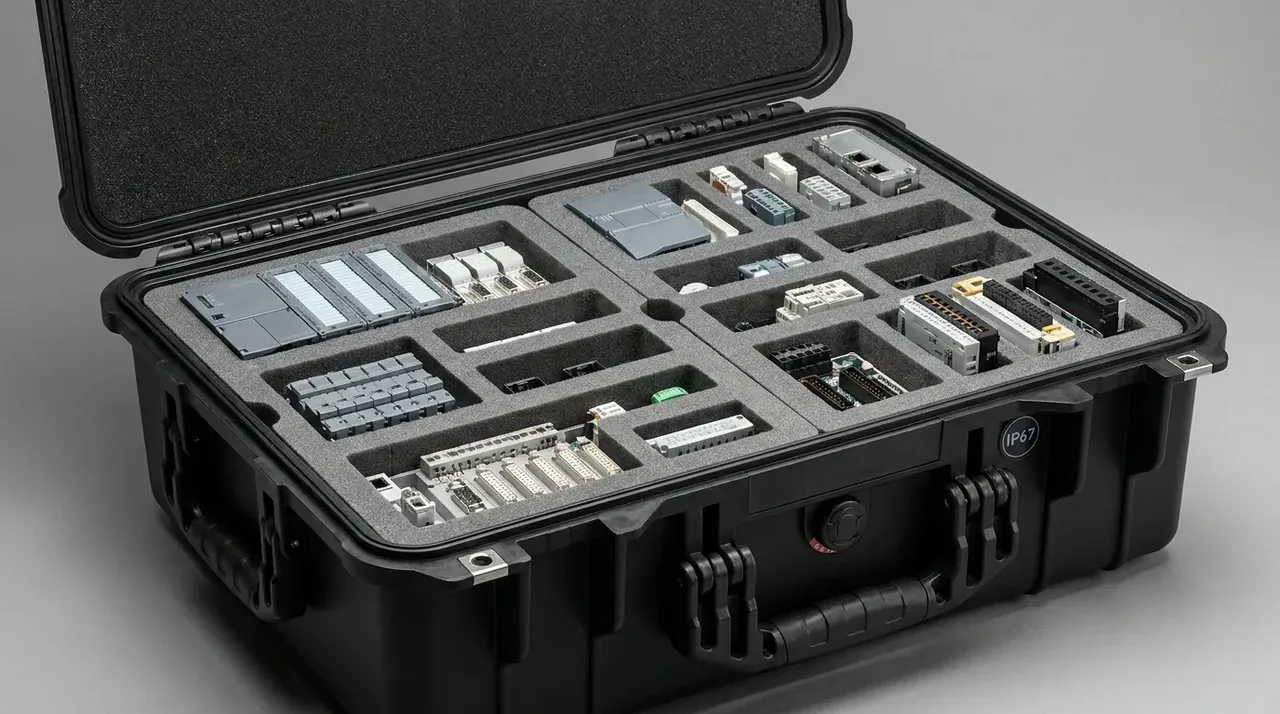
The Blood products low temperature sealed box chooses the gasket for long compression in the 2–8 °C band, validated against a method with no certificate numbers or test-grade codes in the sheet. A φ16 mm valve sits outside the inner lip, so equalising pressure never crosses the seal face.
| Seal stage | Working face | Value or verdict |
|---|---|---|
| Outer lip | lid fold | 28% compression |
| Inter-lip gap | between the lips | water stays out of cavity |
| Inner lip | second land | takes pressure difference |
| Pressure valve | φ16 mm port | leak rate ≤0.4 kPa/min |
3. Bonding the vacuum insulation panels and their thickness margin
The Blood products low temperature sealed box bonds a 20 mm vacuum panel around the cavity; the margin comes from the 580 × 420 × 400 mm outer size minus the 490 × 330 × 310 mm cavity, less the 4.0 mm wall and four bays. Bonding is full-area, not spot: a void becomes a local thermal bridge in the 48 h hold, and the 2–8 °C lower bound fails there first. Cut edges are foil-sealed before a batten fixes them.
The 20 mm panel and 4.0 mm wall are listed apart, so changing either means recalculating the cavity.
4. Probe layout for the 48 h temperature hold
For the 2–8 °C band held 48 h, the Blood products low temperature sealed box reads three probe groups: cavity centre, four corners, and just inside the rim. The verdict comes from the point nearest the upper bound, not an average, and any point outside the band at 48 h fails the run. No probe sits inside a bay.
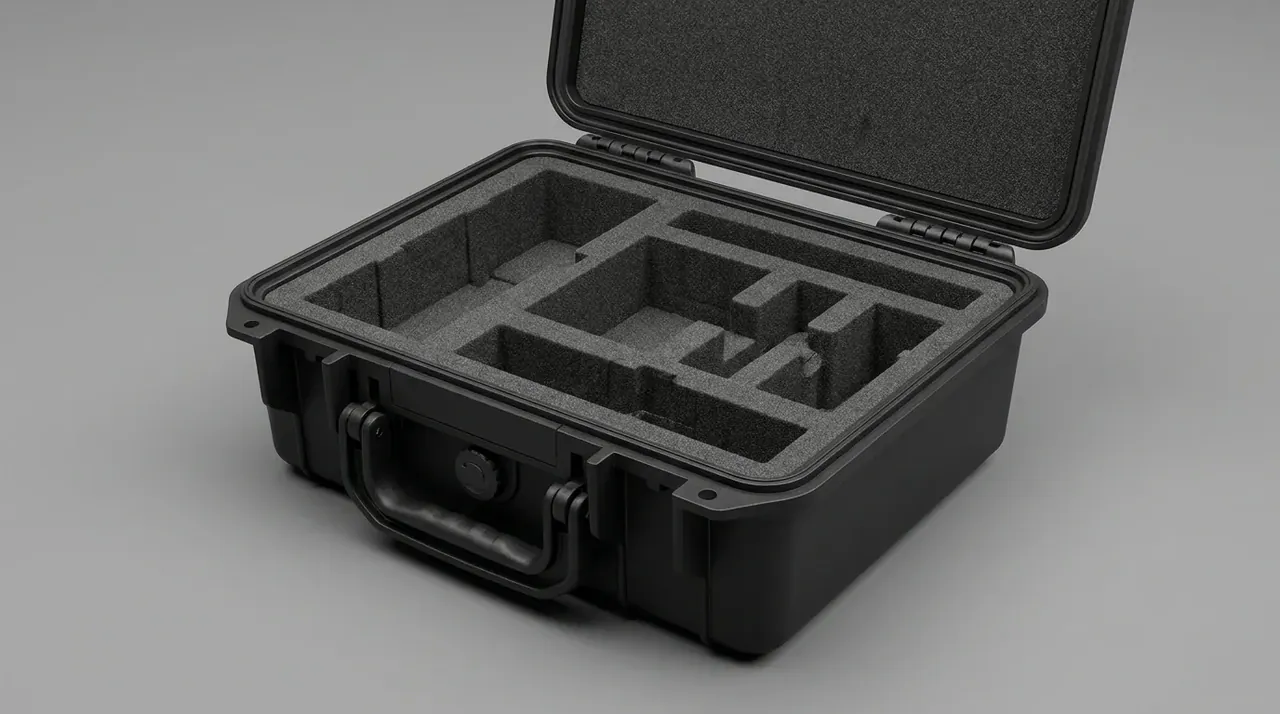
After 48 h the lid opens and the inner lip is checked for water marks before the leak rate is read again. The ≤0.4 kPa/min value after the φ16 mm valve equalises is filed apart from the hold readings. Both the 9.2 kg empty shell and four empty bays are run.
| Zone reading | Probe position | Verdict |
|---|---|---|
| Start | cavity centre | baseline logged |
| Mid hold | four corners | within 2–8 °C |
| End of 48 h | inside rim | highest point taken |
| After opening | inner lip | no water mark |
5. Factory test order for immersion and leak rate
Factory tests run in a fixed order: the 580 × 420 × 400 mm outer size, 490 × 330 × 310 mm cavity, 4.0 mm wall and 20 mm panel are measured, then immersion at 1.0 m for 30 min, a 1.0 m drop, a ≤0.4 kPa/min leak rate, IP67 and 4000 cycles follow. Water on the inner lip or drainage slope after immersion fails the unit; the drop is followed by a rim compression check so 28% does not drift. Leak rate is read after the φ16 mm valve equalises. JUNZHIJIA logs each item so every lot of the Blood products low temperature sealed box traces to a figure; KeXin New Materials (Guangdong) Co., Ltd. validates against methods.
Conclusion
The Blood products low temperature sealed box splits zone and seal into two shell lines: four bays parted from a 490 × 330 × 310 mm cavity by a 4.0 mm wall, 20 mm vacuum panels around the cavity, a twin lip at 28% and a φ16 mm valve holding leak rate to ≤0.4 kPa/min. A 2–8 °C band over 48 h, immersion at 1.0 m for 30 min, a 1.0 m drop, IP67 and 4000 cycles form the fixed order; outer 580 × 420 × 400 mm and 9.2 kg empty bound the shell.
Related Reading
- Cold chain case shell basics
- Structural notes in the cold chain case guide
- Rim structure of sealed specimen transit boxes
- Stacking and sealing of logistics cold chain cases
Related Products
- 8 Series — Gun Cases; Military Equipment Cases; Camera Equipment Cases; Drone Cases; Watch Cases; Knife Cases; First Aid Cases; Electronics Equipment Cases
- WL8-2812 PP Gun Case — model WL8-2812
- All protective cases and toolboxes: 7 series, 158 models