

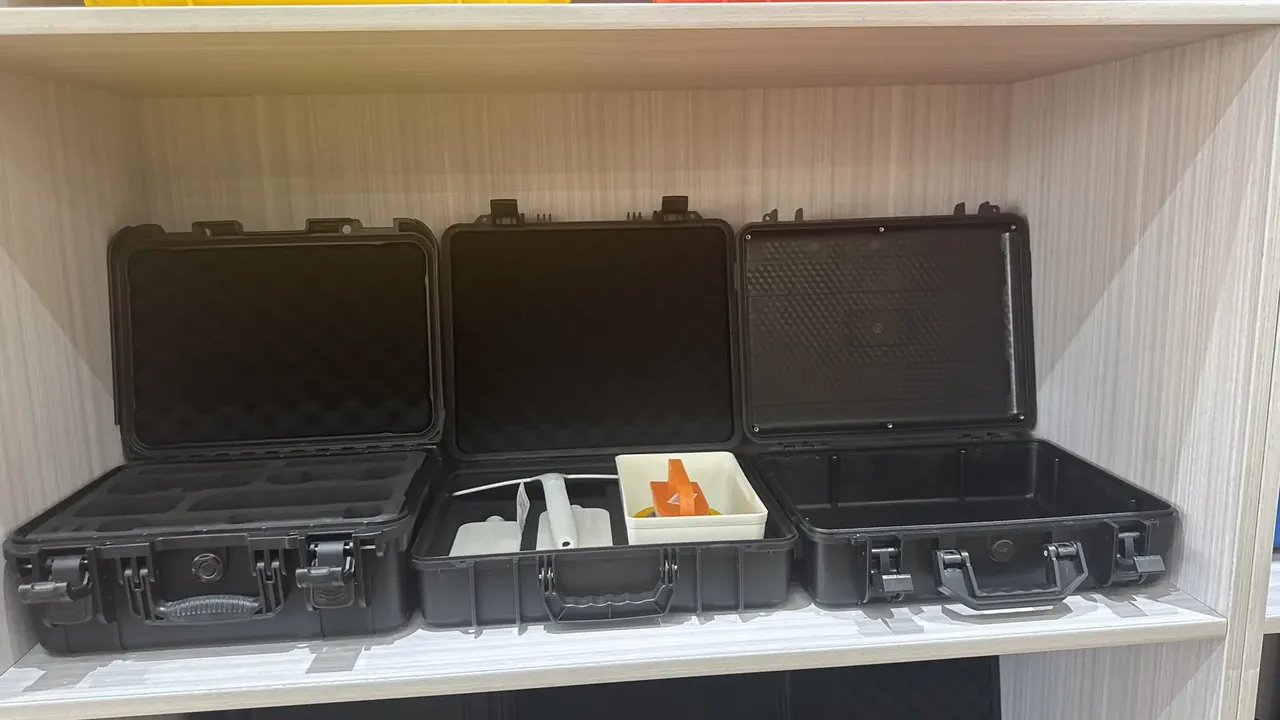
Quick answer: A biological sample/specimen sealed transit box is the outer layer: 400 × 300 × 180 mm, 400 mL absorbent, 95 kPa for 30 min, 2 latches at 300 N.
Table of contents
- The outer layer, and only the outer layer
- Fitting 400 mL of absorbent into a 340 × 240 mm floor
- 95 kPa differential and IP67 are two different loads
- After a 1.2 m drop, inspect the latch seats first
- Three label positions and the 4 °C / 8 h boundary
- FAQ
1. The outer layer, and only the outer layer
Three layers, three jobs: the innermost sits against the specimen, the middle takes up an accidental leak, the outer absorbs crush, drops and rain. A biological sample/specimen sealed transit box is that third layer; it holds the other two in place rather than sealing for them.
The shell measures 400 × 300 × 180 mm outside, 340 × 240 × 140 mm inside, 3.0 mm wall, 3.4 kg empty. The gap between the footprints is not slack: 30 mm each side carries the absorbent pad, 20 mm top and bottom carries ribs and the closing face.
Table 1: What the outer layer must do
| Packing layer | Duty | Requirement |
|---|---|---|
| Outer, shell | Crush, drop, rain | 3.0 mm, 400 × 300 × 180 mm |
| Outer, absorbent | Hold a leak on the floor | 400 mL over 340 × 240 mm |
| Outer, closing face | Hold the pressure difference | 95 kPa for 30 min |
| Outer, latches | Keep the gasket compressed | 2 at 300 N each |
Of the 3.4 kg empty weight, 0.6 kg sits in seats and ribs; a carrier rarely walks more than 800 m with one in hand.
2. Fitting 400 mL of absorbent into a 340 × 240 mm floor
The floor of the biological sample/specimen sealed transit box is 340 × 240 mm, or 81,600 mm², so 400 mL is a 4.9 mm layer of liquid; a pad holding eight times its volume needs about 12 mm of thickness, with a 30 mm upturn over the wall joint.
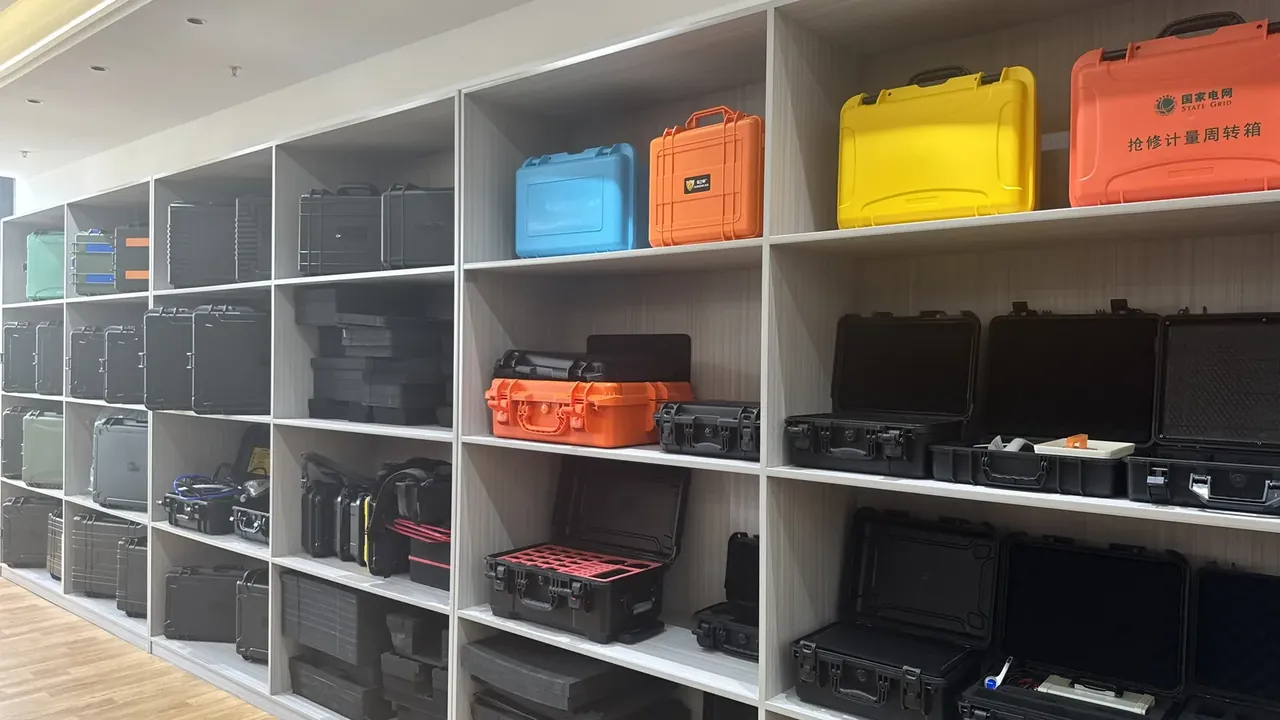
Fixing decides whether the pad survives a 1.2 m side drop: four dots of tape or a 1 mm PP plate keep the corners covered, while a loose pad slides to one end and halves capacity. A 5 mm air gap then drains condensate down a 1° slope.
3. 95 kPa differential and IP67 are two different loads
The 95 kPa test asks whether shell and closing face stay leak-free when inside and outside differ by 95 kPa, which maps onto a hold pressure change stacked with ground handling. IP67 asks whether water enters in 30 min at 1 m of still water; load direction, medium and criterion all differ, so swapping one for the other is the commonest misreading.
The weak point under 95 kPa on a biological sample/specimen sealed transit box is the middle of the largest panel. With a 3.0 mm wall and ribs at 120 mm centres, the centre of a 400 × 300 mm lid moves about 1.8 mm, so the gasket needs squeeze in reserve or the differential escapes through the joint.
Table 2: Closing face and seal values
| Seal element | Value | Criterion |
|---|---|---|
| Gasket section | 6 mm | EPDM sponge, 55 Shore C |
| Groove depth | 4.5 mm | 25% compression, 1.5 mm |
| Latch hold | 2 at 300 N | Never under 15% compression |
| Lid ribbing | 120 mm centres | ≤ 2 mm at 95 kPa |
A quarter is the usual band for EPDM sponge: under 15% rebound is weak, over 40% the strip takes a set in six months. The latches at 300 N hold that compression but do not carry the differential.
4. After a 1.2 m drop, inspect the latch seats first
A biological sample/specimen sealed transit box is dropped from 1.2 m onto six faces and three edges, opening the lid after each impact. No latch may release, no gap may open, and the 340 × 240 × 140 mm cavity must not shift by more than 2 mm.
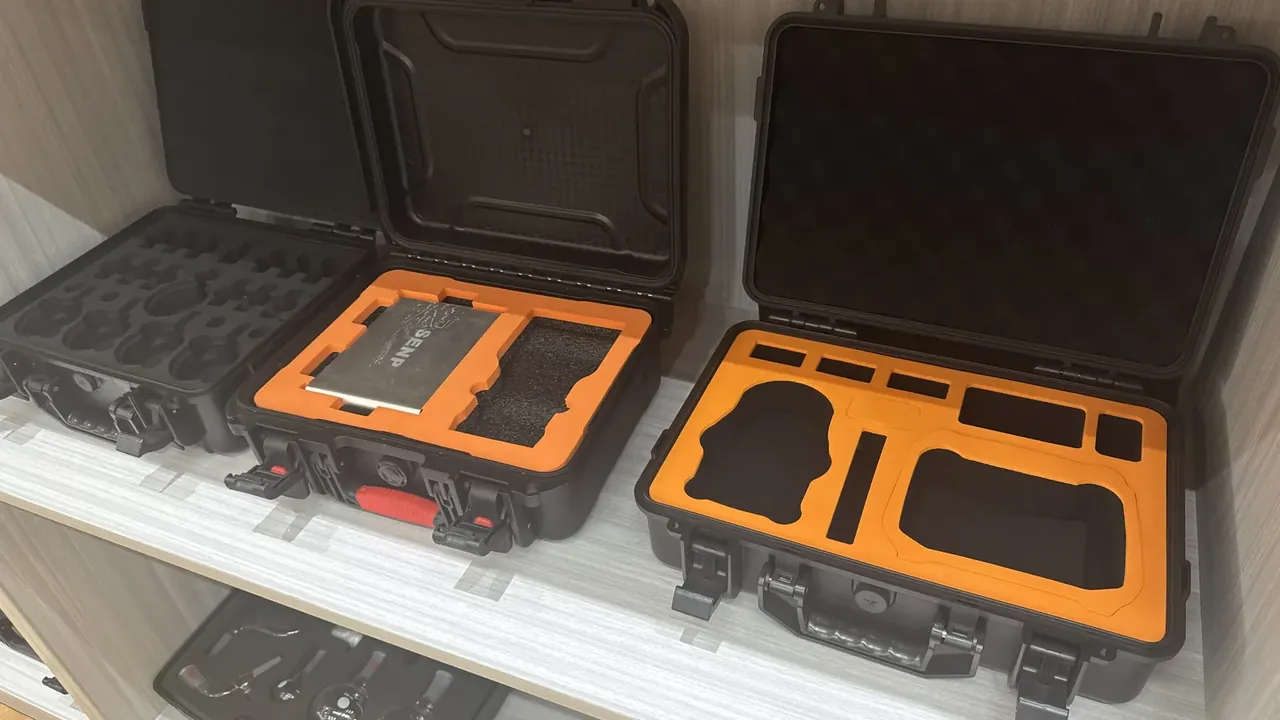
Release starts at the seat root, not the latch body. On a corner drop the moment of an ABS seat concentrates between its two M4 holes, and at 22 mm spacing root stress peaks; holes at 30 mm with a 1.5 mm fillet keep it intact.
The shell rarely fails at this height, flatness of the closing face does. A 1 mm dent leaves one stretch of gasket under 25% compression and the pressure test bubbles there first, so the order is seat, joint, flatness. Impact copolymer PP, PA66 with 30% glass and EPDM cover the −20 °C to 55 °C range.
5. Three label positions and the 4 °C / 8 h boundary
A biological sample/specimen sealed transit box carries three labels: top left of the lid face, 30 mm beside the right latch, bottom right of the floor. Three faces mean the same data reads within a second whichever way the case is stood.
An 80 × 50 mm PVC label goes on the lid, a 40 × 20 mm label of the same stock at the latch, and an in-mould label formed with the shell on the floor; the adhesive ones face 50 wipes of 75% alcohol.
For this biological sample/specimen sealed transit box, 4 °C for 8 h with 2 gel packs is a configuration statement, not a validation. The cavity is 11.4 L and two 500 g packs take about 1.0 L, leaving air volume and heat leak to shape the curve.
Table 3: The three label positions
| Position | Format | Size and criterion |
|---|---|---|
| Lid face, top left | PVC adhesive | 80 × 50 mm, 15 mm from edge |
| Beside right latch | PVC adhesive | 40 × 20 mm, 30 mm from latch |
| Floor, bottom right | In-mould label | Formed with shell, 24 h at −20 °C |
Conclusion
The value of a biological sample/specimen sealed transit box is what a 400 × 300 × 180 mm footprint pins down: 400 mL of absorbent that spreads, a face that stays shut at 95 kPa, and two latches still seated after a 1.2 m drop. The 3.0 mm wall and 25% gasket compression are the base; three label positions make a batch read as one product.
Related Reading
- Temperature window and coolant layout for cold chain cases
- A full selection path for cold chain boxes
- Structure and load path of core sample cases
- Drop criteria in low temperature conditions
Related Products
- 8 Series — Gun Cases; Military Equipment Cases; Camera Equipment Cases; Drone Cases; Watch Cases; Knife Cases; First Aid Cases; Electronics Equipment Cases
- WL8-2812 PP Gun Case — model WL8-2812
- All protective cases and toolboxes: 7 series, 158 models