

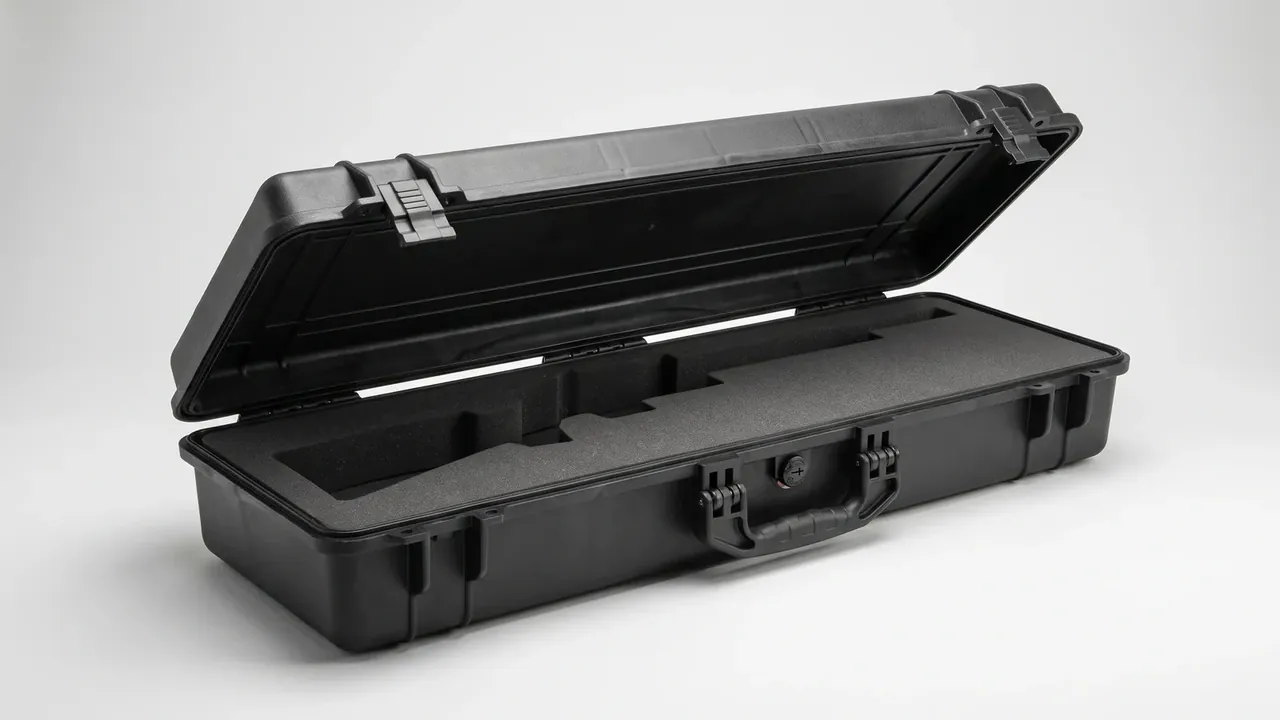
Quick answer: Box, Packing, Ammunition configurations should be set from the duty profile upward, not from the load list downward. A warehouse stack, a vehicle rack, a field hand-out and a high-cycle store put different demands on handle, latches, foam and relief valve, and only the profile fixes the assembly order.
Table of contents
- A Practice to Drop: Choosing the Case Before the Loading Order
- Four Duty Profiles and How Each Is Assembled
- Four Mistakes in Opening, Closing and Lifting
- Writing the Duty Profile Into Acceptance
- FAQ
1. A Practice to Drop: Choosing the Case Before the Loading Order
Most buyers pick a Box, Packing, Ammunition case that looks right, then work out how to fit the load inside. It saves one decision early and locks every assembly step afterwards.
The cost lands at the second loading. The first arrangement fits, the second does not, so foam gets added and dividers get trimmed, and the stiffness of the shell is given away piece by piece.
Run it the other way: state where the case is opened, by whom and how often, then let that decide the structure.
| Profile | Structural item | Field criterion | Typical mismatch |
|---|---|---|---|
| Warehouse, four tiers | Base ribs and stacking pads | Bottom sag under 5 mm | Flat base, stack leans at tier three |
| Vehicle carry | Handle load and latch spacing | 35 kg in one hand, latches hold | Handle decorative, fails on rough road |
| Field hand-out | Seal and relief valve | Lid opens at 30 kPa differential | No valve, lid sticks after a cold night |
| High-cycle store | Hinge pin and latch material | 1100 cycles a year, no play | Single thin pin, sags within six months |
All four criteria can be measured on site, no laboratory needed.
2. Four Duty Profiles and How Each Is Assembled
Assembly order for Box, Packing, Ammunition changes with the profile, and a wrong order wastes a good case.
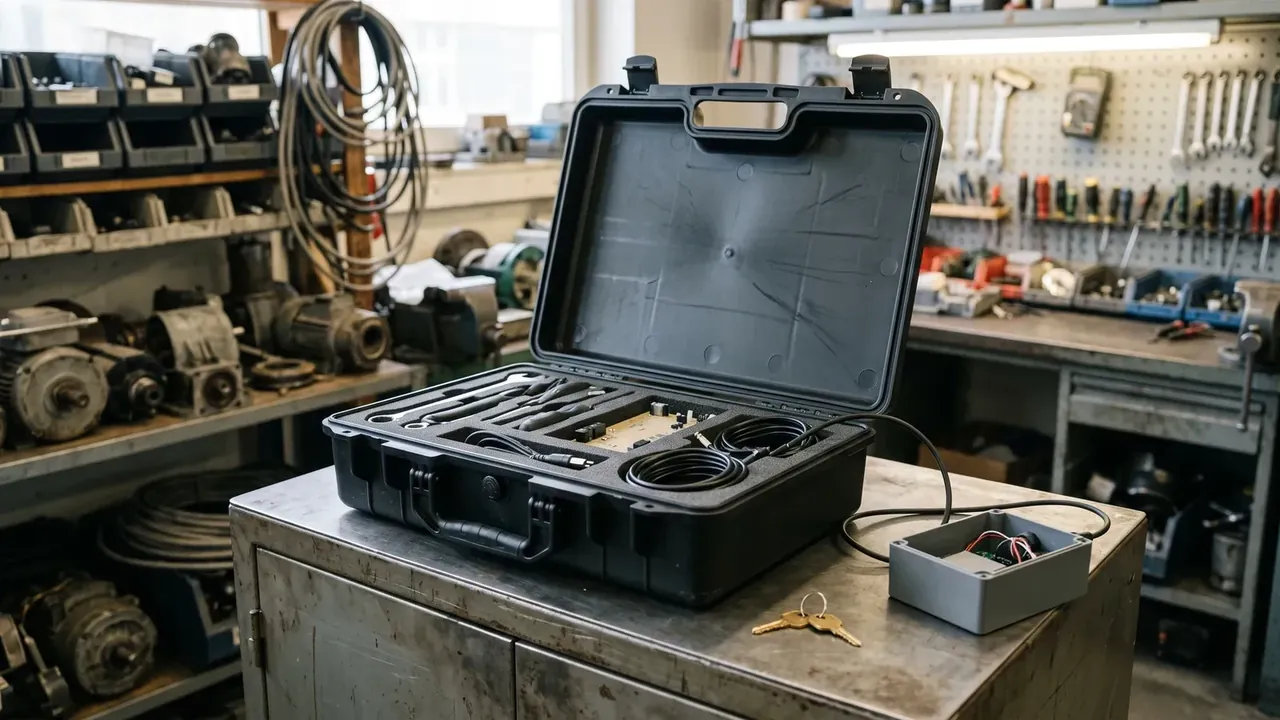
- Warehouse stack: heavy items first, bottom-hugging and against one wall, total height kept under 1.6 m.
- Vehicle carry: seat the foam, close the lid, latch diagonally, then press once and listen for the seal.
- Field hand-out: crack the relief valve before opening, close the lid before working the latches, so grit stays off the seal.
- High-cycle store: hinge side outward, nothing against the wall, 200 mm of swing space.
The vehicle profile is the one Box, Packing, Ammunition buyers most often get wrong. Vibration in a truck bed has no fixed direction, and a case resting on its own weight walks sideways by ten centimetres in a day.
One strap, or a case wedged against the side panel, holds that drift under 20 mm.
3. Four Mistakes in Opening, Closing and Lifting
Misuse of a Box, Packing, Ammunition case beats manufacturing defects, and three of the four mistakes happen within ten seconds of opening.
The first is lifting by the latch. A latch only compresses the seal, the handle carries the load, so a case swung on its catch yields metal first and loses the seal with it. The second is prying one side of the lid while the other side is still latched, which twists the hinge and rounds the pin bore into an oval inside six months. The third is dropping the case from above thirty centimetres, where the base ribs take the whole impact and a crack starts at the rib root. The fourth is quieter: a wet case closed on a rainy return traps the moisture, and the cavity is beaded with condensation by morning. Correcting all four costs almost nothing, while leaving them alone returns whole batches to the workshop.
| Action | Wrong move | Immediate effect | Right move |
|---|---|---|---|
| Open | Pry one side, other latched | Hinge twisted, bore rounded | Release both sides, then lift |
| Carry | Lift by the latch | Latch distorted, seal lost | Grip the handle, load against the leg |
| Set down | Drop from above 30 cm | Base rib cracks | Two people, corners first |
| Store | Close a wet case | Seal moulds, cavity condenses | Air it open for 2 hours |
Of the four, the carry habit costs most, because it damages the seal where nobody can see it.
4. Writing the Duty Profile Into Acceptance
An acceptance list for Box, Packing, Ammunition built on dimensions alone loses the profile the moment the goods are handed over.
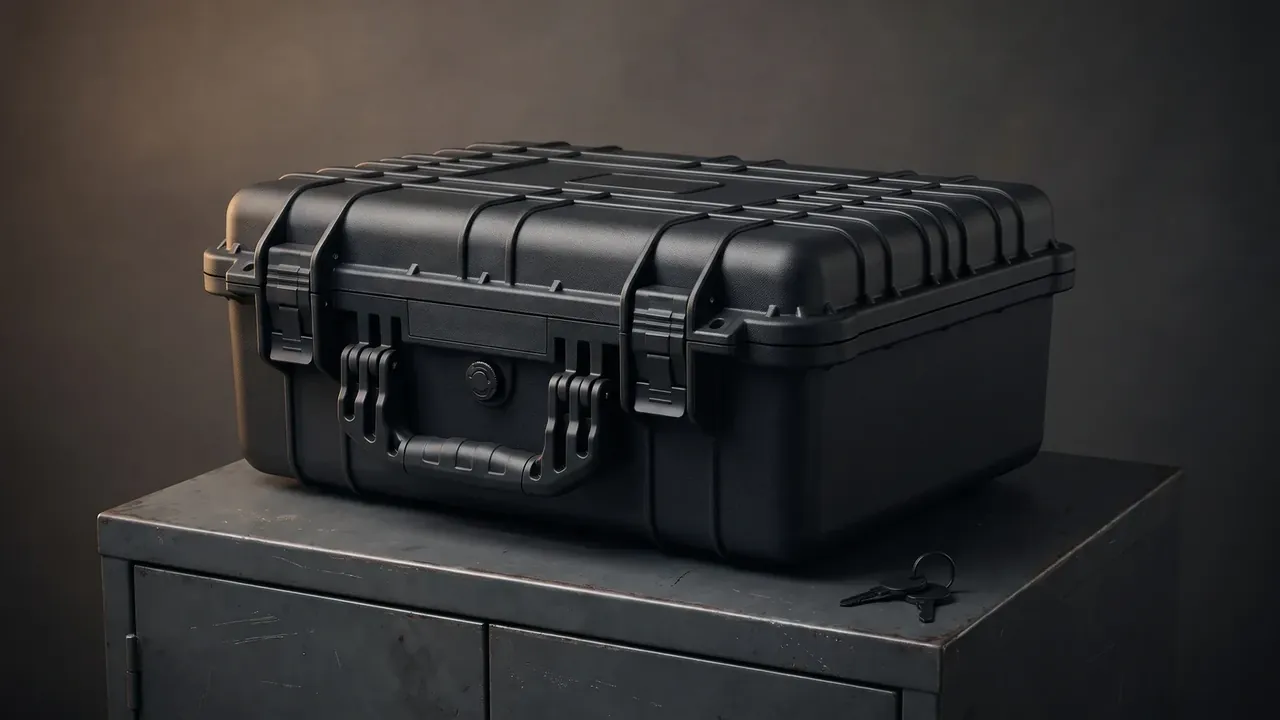
Split the list into three, and the hand-over finally matches the site.
- Structure: 3.2 mm walls, four tiers, 35 kg handle load, 280 mm latch spacing.
- Action: opening method, latch sequence, valve position, one-handed lift or not.
- Environment: 45 °C cabin, 85 % humidity, 72 hours of salt spray, minus 20 °C at night.
With the three aligned, acceptance becomes a rehearsal of the real action.
Ask the supplier to run load, close, carry and set down on the spot. It tells you more than ten pages of data.
Conclusion
The profile sets the configuration, the configuration sets the actions, and the actions decide how long a Box, Packing, Ammunition case lasts. Warehouse duty reads the base, vehicle duty reads the handle, field duty reads the valve, and high-cycle duty reads the hinge. Write those four profiles into acceptance and the assembly order stops being guesswork on site. A well-chosen Box, Packing, Ammunition case should be invisible in its first year of service.
This article discusses only the container (case body) side of specifications and design intent, and does not cover any handling, loading or use of the contents.
Related Reading
- Inspection items and pass lines for box packing ammunition
- Stowage profiles for boxed ammunition
- Transit case configurations for transfer work
Related Products
- 8 Series — Gun Cases; Military Equipment Cases; Camera Equipment Cases; Drone Cases; Watch Cases; Knife Cases; First Aid Cases; Electronics Equipment Cases
- WL8-2812 PP Gun Case — model WL8-2812
- All protective cases and toolboxes: 7 series, 158 models