

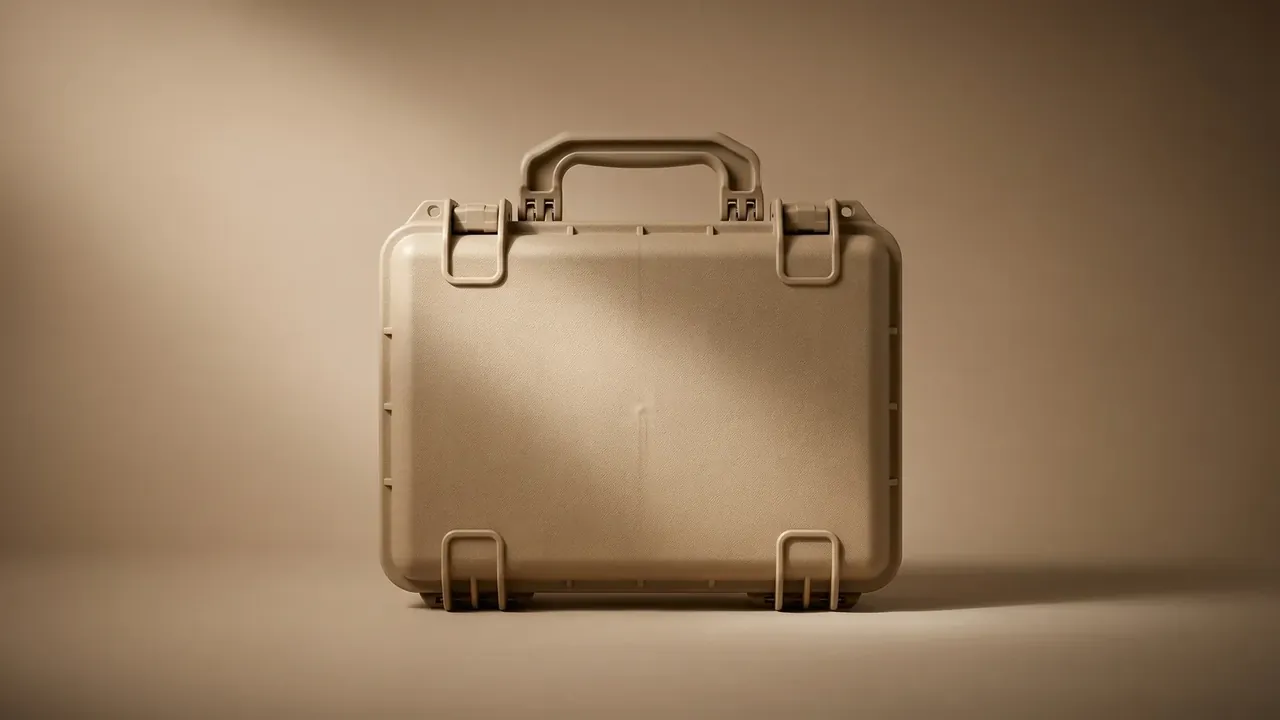
Quick answer: Fix four numbers before discussing price on a box, packing, ammunition order: minimum quantity, tooling and ownership, lead time, payment terms. Without them, a low quote is a cost moved elsewhere.
Table of contents
- Four numbers to fix before any quotation
- Three lines: tooling, acceptance and change
- Four items usually buried in the quote
- Sampling or the factory audit first
- FAQ
1. Four numbers to fix before any quotation
A box, packing, ammunition request that says similar model, five hundred pieces, send a price returns quotes nobody can compare. One includes tooling, one does not; one includes pallets, one bills them at the port.
| Number | Usual wording | Specify instead | What goes wrong |
|---|---|---|---|
| Minimum order | 500 pieces | 300 mono, 500 two-tone | Setup fee added |
| Tooling | One-off | 72,000 CNY, trial included | Billed twice |
| Lead time | About a month | 45 days first, 35 repeat | Misses the vessel |
| Terms | To be discussed | 30 / 60 / 10 | Deposit held |
The minimum order comes from colour changes. A rotational machine needs four hours to purge, and a two-tone part needs masking on top, so a run below 300 cannot absorb that time and the plant adds a setup fee.
Tooling at 72,000 CNY is normal for a steel rotomould with trial and first article. Who owns it matters more than the number.
Lead time splits in two. Of the 45 days on a box, packing, ammunition first order, 12 are sampling, 18 are mold cutting and 15 production; a repeat runs 35 because the tool is on the machine.
2. Three lines: tooling, acceptance and change
With the numbers fixed, a box, packing, ammunition contract still needs three lines drawn, because thickness on paper does not stop an argument.
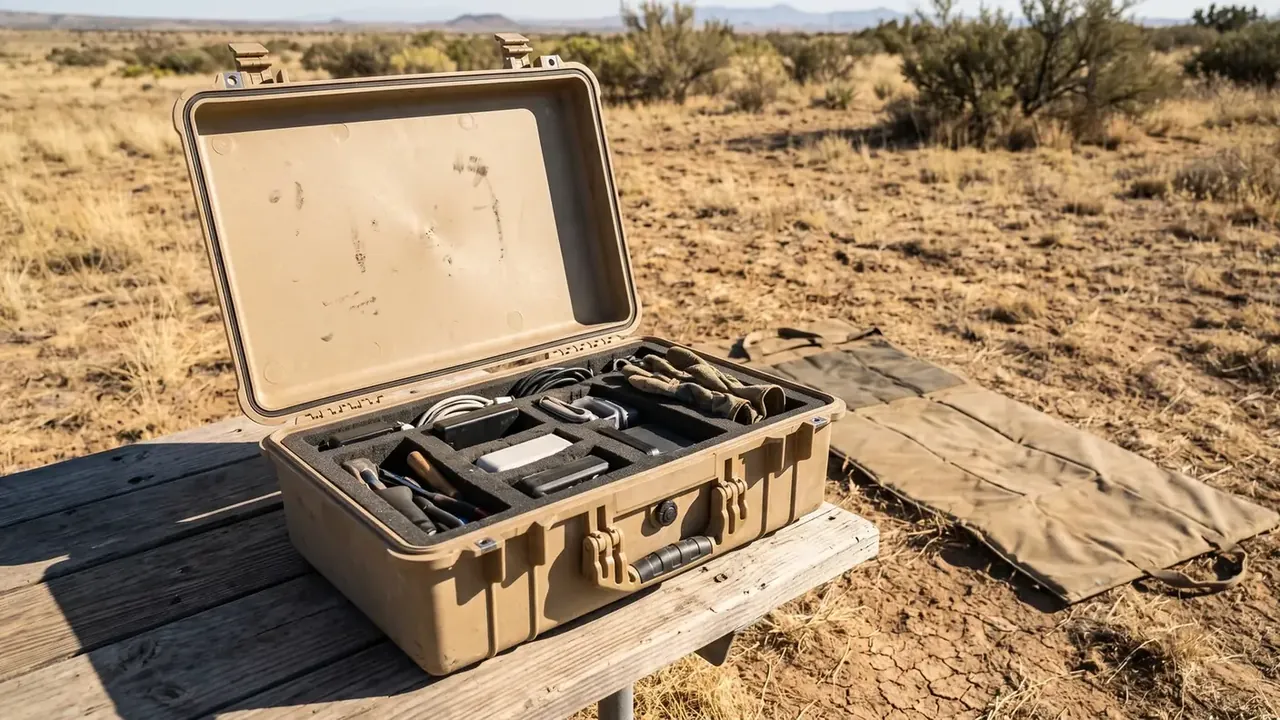
- Ownership: whoever pays owns the mold. Record stamp, cavity count and storage bay; a move needs 30 days of notice.
- Acceptance: AQL 2.5 major, 1.0 critical. Critical means latch retention, seal flatness and minimum wall; one failure rejects the batch.
- Change: drawings carry revision numbers, changes travel in writing. Moving one rib costs 3 days of tool repair.
Ownership is the line most often left blank. A mold can sit in another workshop for three years, still yours on the books and unclear in practice, until a supplier change shows it cannot be moved cheaply.
Write it until it can be executed: stamp, cavity count, the bay it sits in.
3. Four items usually buried in the quote
Two box, packing, ammunition quotes for one case, 40 CNY apart, differ by four items, not margin.
| Item | How it looks | Real cost | Ask |
|---|---|---|---|
| Tooling in unit price | 12 CNY cheaper | 36,000 CNY on 3,000 | Separate or amortised |
| Packing | Excluded | 3.5 CNY each | Pallets, wrap included |
| Testing | As required | 800 CNY per batch | Who pays |
| Colour change | Free | 4 hours at 260 CNY | How many free |
A box, packing, ammunition quote that amortises tooling looks 12 CNY cheaper, which is 36,000 CNY across 3,000 pieces against a mold worth 72,000. Smaller batches lose more, since the amortisation does not shrink with the order.
Packing is second. The box stacks by itself, but pallets, wrap and corners add 3.5 CNY each, which is 2,100 CNY on a 40-foot container.
Testing is third. Salt fog at 800 CNY per 96-hour batch is mandatory on the first article, and as required in a quote usually means the buyer pays.
Colour changes and repairs come last. Two free changes a year and free repair of natural wear remove the two items that quietly grow.
4. Sampling or the factory audit first
Get the order wrong and a good sample still fails in production. Audit first, sample second: the oven size decides whether a long case can be moulded, the arm length caps part weight, and the mold bay shows whether tools sit flat.
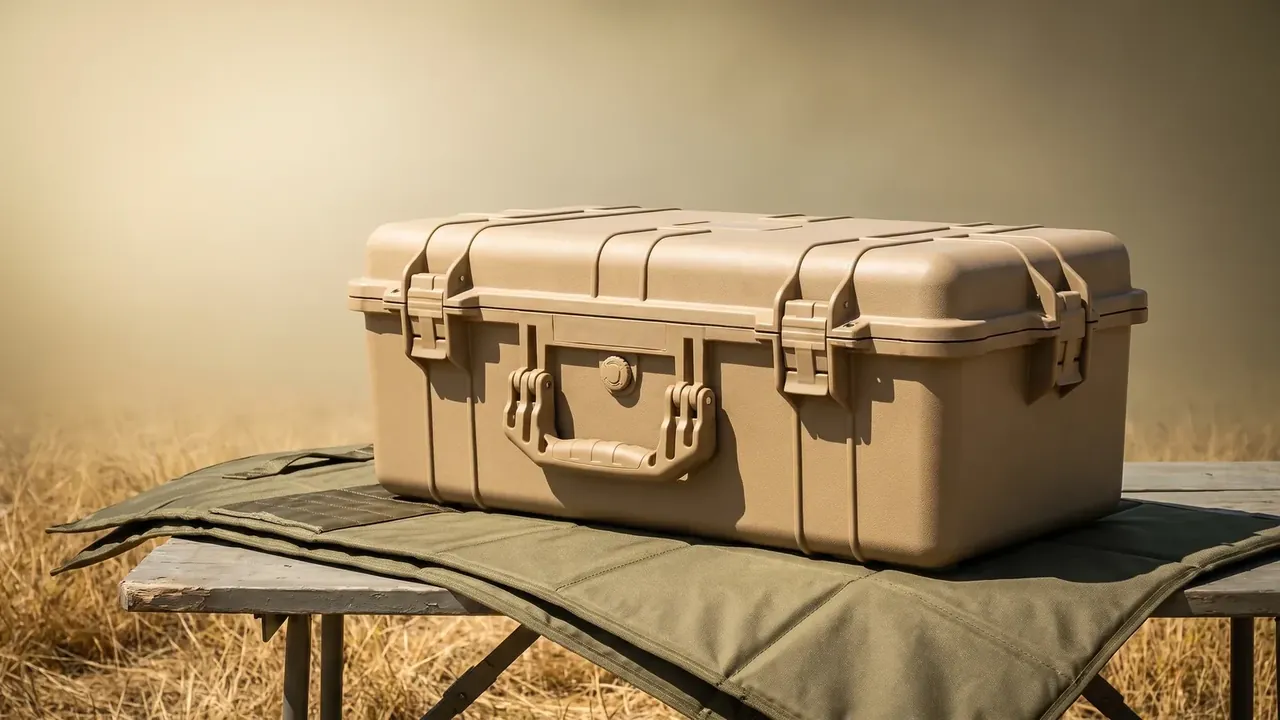
A box, packing, ammunition sample takes 12 days and 1,800 CNY, refunded past 3,000 pieces. Measure five things on arrival: cavity length, width and depth, wall thickness, latch retention, seal flatness.
An audit needs three stops. The oven and arm set the size ceiling, the mold bay shows storage discipline, and the material area shows grade and regrind, where anything above 20% visibly weakens low-temperature impact.
Sequence the three steps and most of the trouble disappears. Check the machine and confirm the size is possible. Sample next and confirm the structure is right. Negotiate last, on capacity you have seen rather than a rendering. Reverse the order and the usual outcome is a good sample and a distorted batch, because the sample was trimmed by hand and production is cut by a parting line. Blame is hard to place, and the schedule is gone either way.
Conclusion
Quoting a box, packing, ammunition programme is mostly bookkeeping: four numbers written down, three lines drawn. Unclear numbers make quotes incomparable, unclear lines make contracts unenforceable, and once both settle the unit price is easy.
This article discusses only the container (case body) side of specifications and design intent, and does not cover any handling, loading or use of the contents.
Related Reading
- Inspection items and pass lines for these cases
- How to score a supplier
- What a rotomould production audit covers
Related Products
- 8 Series — Gun Cases; Military Equipment Cases; Camera Equipment Cases; Drone Cases; Watch Cases; Knife Cases; First Aid Cases; Electronics Equipment Cases
- WL8-2812 PP Gun Case — model WL8-2812
- All protective cases and toolboxes: 7 series, 158 models