

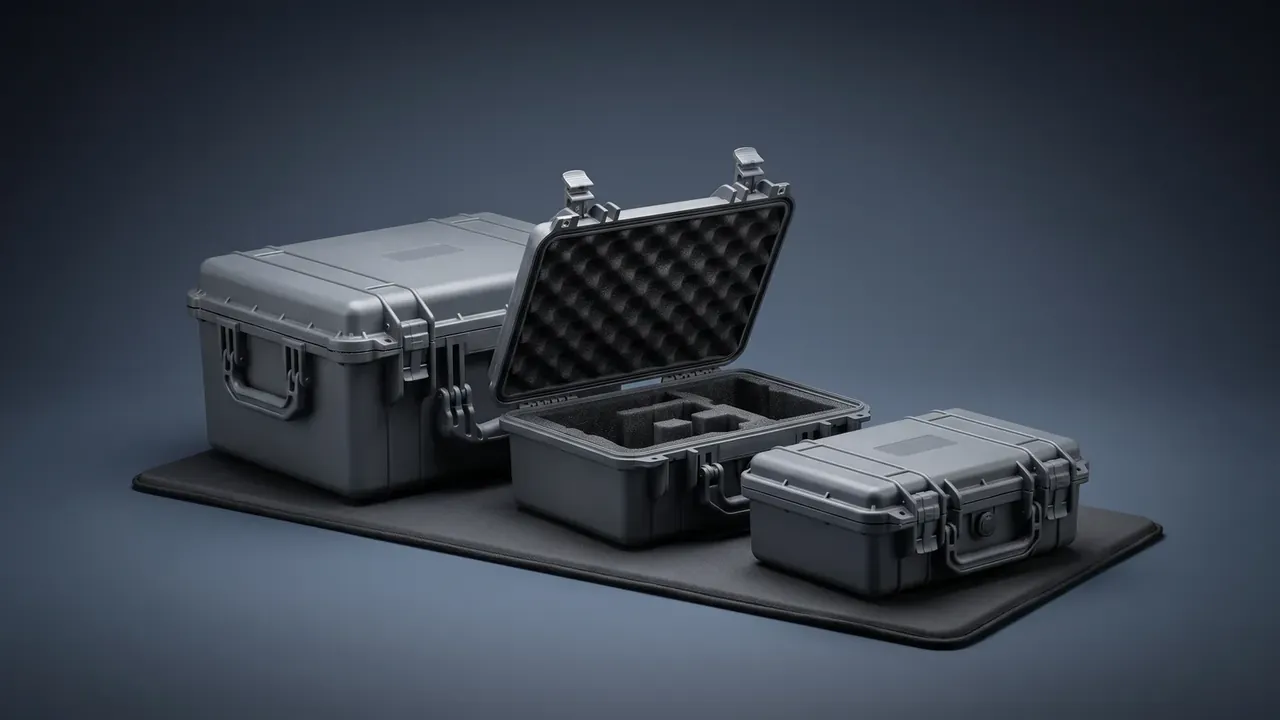
Quick answer: A quote for boxes, small arms ammunition grade, is only comparable when the enquiry fixes five lines: wall thickness with tolerance, hardware grade, annual volume, tool ownership and the start of the lead time. This 36-day record shows what to write, what to ask, and where the price leaks.
Table of contents
- The Five Lines an Enquiry Must Carry
- Nine Days of Sampling: Tool, Trials, First Article
- A Plant Audit That Reads Paper, Not Showrooms
- Four Pricing Traps and the Payment-Term Talk
- FAQ
1. The Five Lines an Enquiry Must Carry
The enquiry arrived with one three-view drawing and a line of text: olive drab, stackable three high. Five factories quoted the same drawing, from 53 to 101 US dollars a unit. The gap was not margin but the wall and hardware each plant assumed for us.
Boxes, small arms ammunition grade, are quoted on five lines, and every missing line becomes an assumption.
| Line | How to write it | When it is missing |
|---|---|---|
| Envelope and wall | 760 x 420 x 310 mm, wall 4.2 mm, tolerance plus or minus 0.6 | The plant quotes 3.0 mm, 11 percent cheaper, and the first article ends the talk |
| Hardware grade | Catches and hinges in 304 stainless, pin 8 mm | Written as stainless only, production swaps to 201 and rust shows at 72 hours |
| Volume and lot | 1,200 units a year, 200 per release | The price is a 3,000-unit price and rises 15 percent at 200 |
| Tool ownership | Tooling paid at 6,400 USD, title to the buyer | The tool stays with the plant, and a new supplier means a new tool |
| Lead time start | 21 days from signed sample approval | The clock starts at tool completion and 25 days disappear |
One line belongs above all five: the drawing revision number and its issue date. Most sample-versus-production arguments end there.
2. Nine Days of Sampling: Tool, Trials, First Article
The tool was steel, bought outright at 6,400 US dollars, two cavities, rated 15,000 cycles. The compound was high-density polyethylene, oven at 260 degrees Celsius, 26-minute cycle, twelve minutes cooling. The first shot came out at 3.6 mm at the thinnest wall, six tenths under drawing. The plant blamed powder that would not cling at the corner radius. The second shot reached 4.1 mm but left a 20 mm sink mark along the lid rim. The third held 4.2 mm and cleared the mark, and five samples arrived nine days after the tool went in.
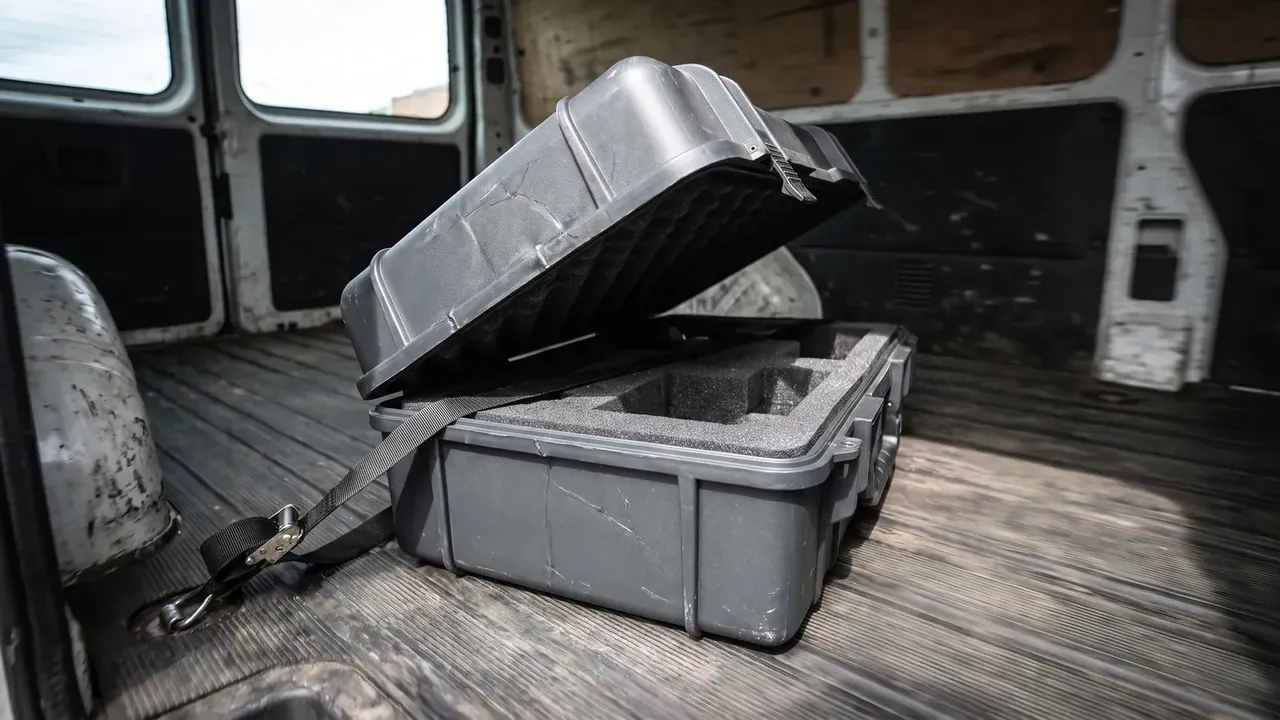
Two samples went onto the stack test: 120 kg on top, three high, 24 hours. The base sagged 1.8 mm at the centre and the lid gap did not open, and that figure went into the acceptance annex.
Three documents get signed on approval day: the wall record, the colour verdict, the salt-spray report. Skip one and later arguments rest on opinion.
The 21-day clock starts on that signature.
3. A Plant Audit That Reads Paper, Not Showrooms
Any plant can dress a showroom. The line cannot lie. The visit took half a day and looked only at what can be traced back.
- Metrology: an ultrasonic gauge with a current calibration sticker, and a tool list covering 0 to 10 mm. Ask the inspector to pull a finished unit and take three readings at five points.
- Records: compound batch, oven curve and cycle time logged for every shot. A 30-day-old curve produced without hunting means the system runs daily.
- Hardware: incoming sheets for catches and hinges, and a salt-spray report from a third party rather than the plant's own lab.
Records are the easiest to skip and the hardest to fake. A failure at this service life is traced back six months, and without paperwork the only remedy left is a recall.
A showroom can be borrowed. A logbook cannot.
4. Four Pricing Traps and the Payment-Term Talk
Three of the five quotes went back the same day, none for being expensive. Build to drawing grows four meanings once it reaches a quotation sheet, and each returns as a surcharge.
| Trap | What the quote says | What to ask | Where it belongs |
|---|---|---|---|
| Thin wall | Wall 4.2 mm, no tolerance | What minimum reading passes | Technical annex, with revision |
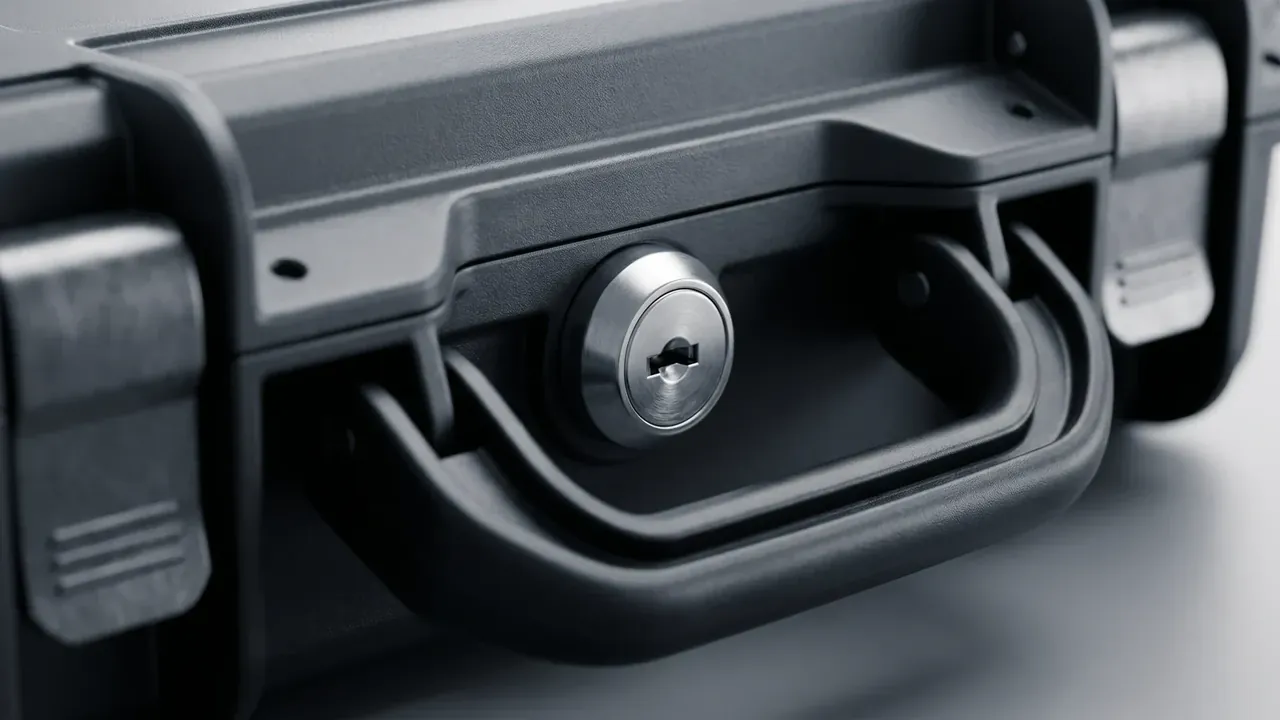
| Hardware downgrade | Stainless catch, no grade | 304 or 201, how many salt-spray hours | Bill of materials |
| Tool not owned | Tooling billed, title blank | Can the tool leave at the end | Standalone clause, 12-month storage |
| Lead time start | 45 days after payment | Payment date or approval date | Delivery clause |
Payment terms are the second battlefield. This order settled at 30 percent deposit, 70 percent against a bill of lading copy. Asked for 60-day terms, the plant prices that capital at about eight percent a year, or 2.5 percent on the unit.
Put a validity date on the quote. Compound prices move quarterly, and no expiry date hands the supplier a free re-quote.
Conclusion
Of the 36 days, fewer than two went into arguing price. The rest went into aligning wording: drawing revision, wall tolerance, hardware grade, tool ownership, and the day the lead time starts. Fix those five lines and quotes for boxes, small arms ammunition models become comparable.
This article discusses only the container (case body) side of specifications and design intent, and does not cover any handling, loading or use of the contents.
Related Reading
- Inspection items and pass criteria
- Turning a supplier scorecard into a decision
- What a gun case line audit looks for
Related Products
- 8 Series — Gun Cases; Military Equipment Cases; Camera Equipment Cases; Drone Cases; Watch Cases; Knife Cases; First Aid Cases; Electronics Equipment Cases
- WL8-2812 PP Gun Case — model WL8-2812
- All protective cases and toolboxes: 7 series, 158 models