

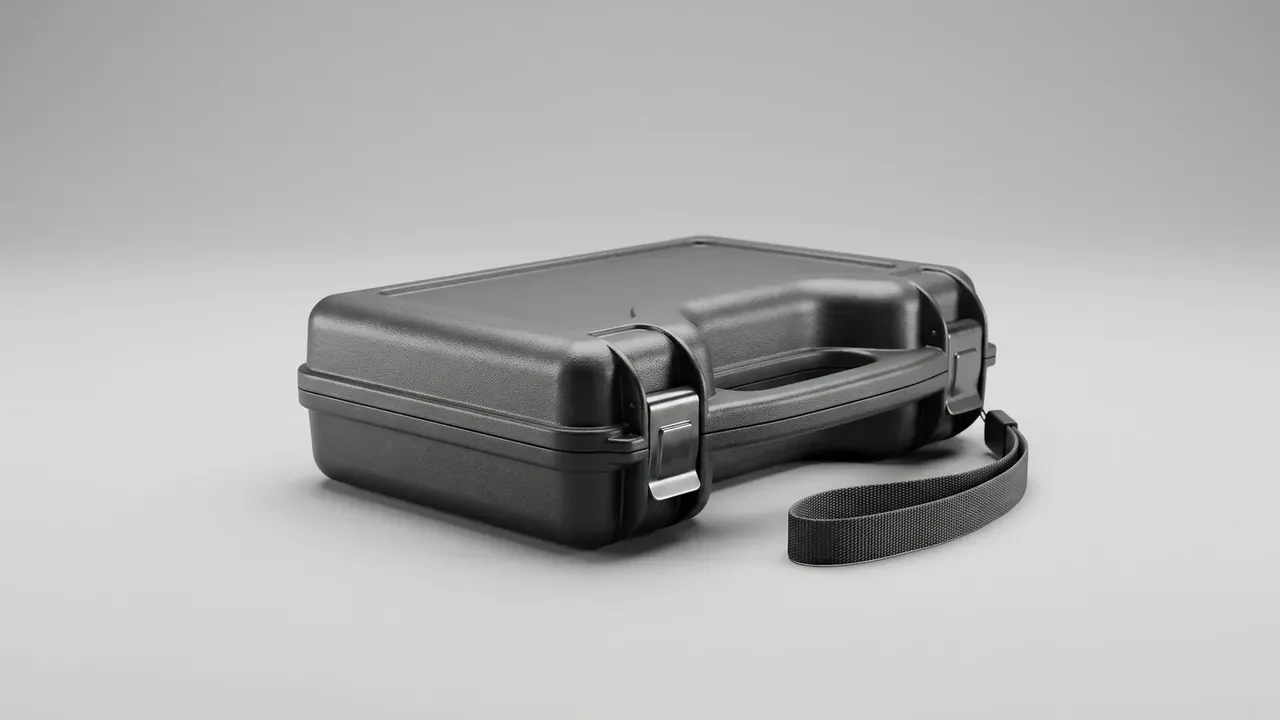
Quick answer: Judge boxes, small arms ammunition at the loading dock by six measurable points: lid seam evenness, latch travel, cold-weather recovery, stacked load, divider depth and rust location. All six take ten minutes.
Table of contents
- Boxes, Small Arms Ammunition: the first check is the lid seam
- Cold-weather feel and gasket recovery
- Stack height and the load on the bottom case
- Internal dividers and the pick-and-place motion
- Salt-spray rust points and appearance calls
- Six columns on the comparison sheet
- FAQ
1. Boxes, Small Arms Ammunition: the first check is the lid seam
A loading check rarely gets ten minutes, so every item must work with one look and one hand. Start at the lid seam. Tight in one place and open in another means a warped lid, and no gasket seals against a warp.
Slide a 0.5 mm feeler gauge along the seam. If one run admits it past 40 mm, that case is not a long-haul unit.
| Check | How to test | Pass line |
|---|---|---|
| Lid seam | 0.5 mm gauge along the seam | no run over 40 mm |
| Latch closure | feel the cam go over centre | 2 mm left past centre |
| Dividers | invert a full case, shake | no rattle, no shift |
| Rust points | hardware and hinge pins | 480 hours, no red rust |
Appearance comes last; it lies best.
2. Cold-weather feel and gasket recovery
Minus twenty-five is normal for a northern store in winter, and plastic hardens at that temperature.
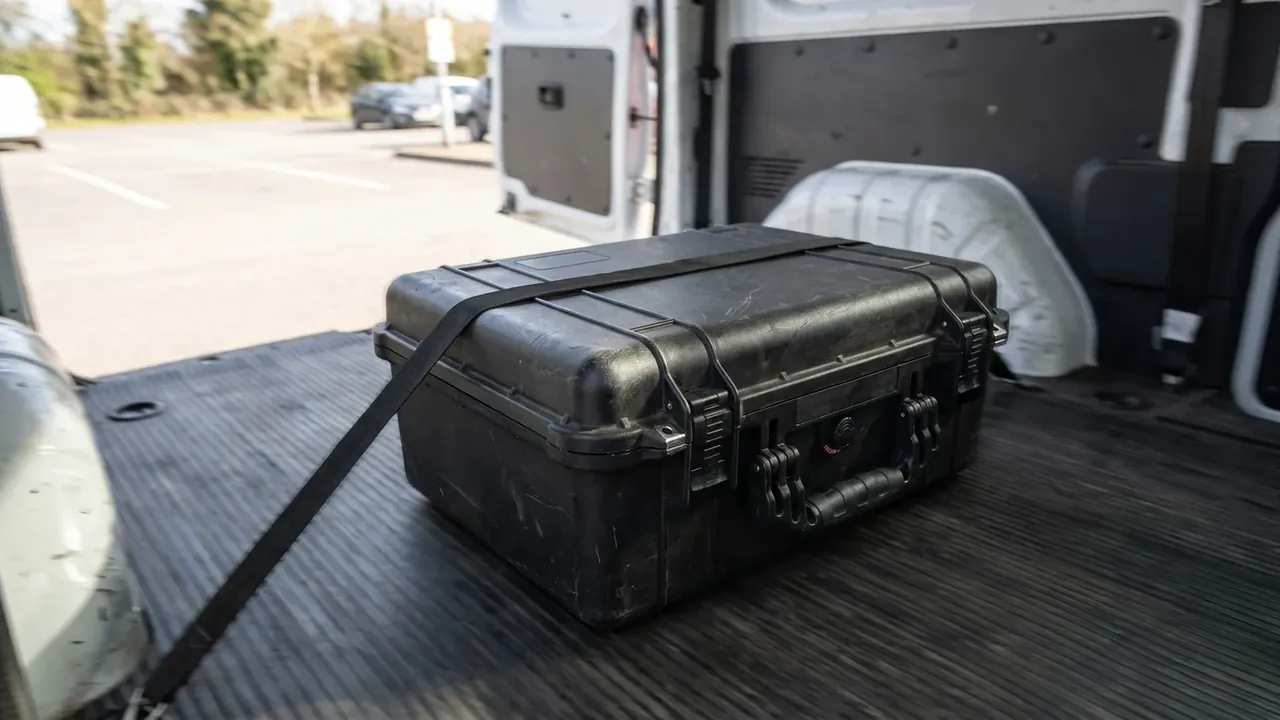
Open and close three times in the cold, watching the cam go over centre. Indoors that takes roughly 18 N·m; in the cold it turns stiff, and the stiffness tells you where the design sits. If the latch needs both hands, the cam is too hard or the pin clearance too small. Broken cams fail on the pin side with a flat fracture face: fatigue, not overload.
Gasket recovery is easier to miss. After opening in the cold, wait two minutes, then close and listen. A soft cushioning sound is healthy. A hard, flat knock means the rubber has lost its spring, and extra latch pressure only deforms the seam.
3. Stack height and the load on the bottom case
Split the rated stack number for boxes, small arms ammunition in two: storage and transit. Four high is normal in a warehouse; a truck body carries two, because the floor moves with the road.
Work the bottom load out by hand. A full case at 22 kg puts 66 kg on the lid face of the lowest unit in a four-high stack. Apply a long-term factor of 1.5 and the static requirement approaches 100 kg. Cases rated at five high still dish after two summer months: the rating is a peak, storage is a load.
| Storage mode | Height | Load on bottom | Window |
|---|---|---|---|
| Warehouse pallet | 4 high | about 66 kg | one rainy season |
| Truck body | 2 high | about 22 kg | one round trip |
| Open shelter | 3 high | about 44 kg | three months |
4. Internal dividers and the pick-and-place motion
Divider quality in boxes, small arms ammunition lives in the motion of taking something out, not on a drawing.
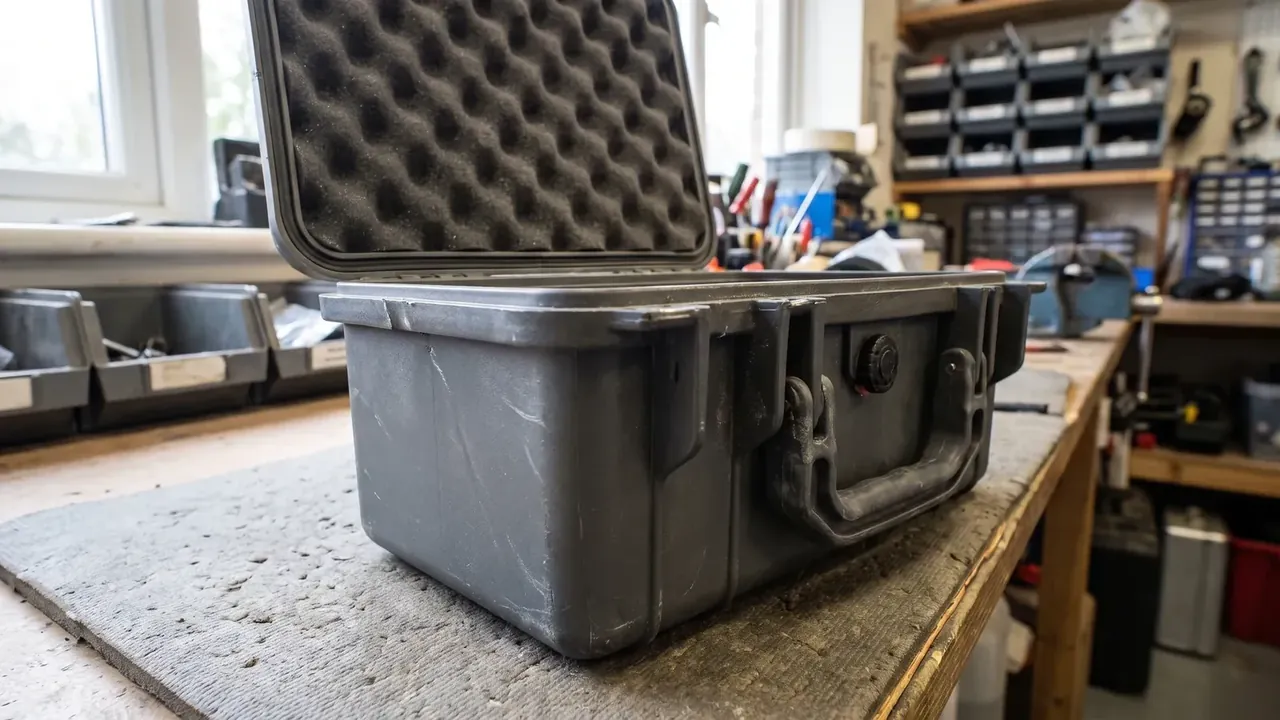
Invert a loaded case and shake it gently; any rattle is a failed divider. Then time one pick: a practised hand goes from open lid to a single cell in about 8 seconds. If two neighbouring cells must be pushed aside first, that time doubles, and the rib takes the load in one spot every shift.
Rib height around two thirds of the interior depth is the stable choice at this weight.
5. Salt-spray rust points and appearance calls
Walk the check in a fixed order and look at four places only.
- Hinge pin ends: red rust means thin plating; the pin seizes in two wet seasons.
- Latch spring plate: rust from the blanked edge means no post-press treatment.
- Seal-wire bore: rust inside means the hole was never passivated.
- Seal groove corner: water collects here, so rust starts here.
Scuffs in the paint are not a reason to reject. The call on boxes, small arms ammunition must separate rust that threatens sealing from rust that only offends the eye.
6. Six columns on the comparison sheet
A quotation arrives as one price. Put the six checks into one table and the gap appears.
| Item | Supplier A | Supplier B | How to convert |
|---|---|---|---|
| Latches | two, replaceable | two, riveted | price a whole lid swap |
| Dividers | moulded in one shot | inserted panels | panels every 3 years |
| Rust | 480 hours | 240 hours | hinge every 3 years |
| Stack | 4 high loaded | 3 high loaded | floor space per unit |
Supplier B looks cheaper until riveted latches, inserted panels and the missing stack layer are folded back in.
Conclusion
Selection on site is not a matter of impression. It is six numbers: an even seam, a latch with travel left, a bottom case that holds its stack, a divider that releases in one motion, rust that starts late, and a price folded into three-year cost. Put all six on one record sheet, and the next supplier comparison for boxes, small arms ammunition stops depending on memory.
This article discusses only the container (case body) side of specifications and design intent, and does not cover any handling, loading or use of the contents.
Related Reading
- Transport marking requirements
- Compartment layout and marking
- Small-batch ordnance cases
- Small plastic case selection
- Ammunition chest versus ammunition box
Related Products
- 8 Series — Gun Cases; Military Equipment Cases; Camera Equipment Cases; Drone Cases; Watch Cases; Knife Cases; First Aid Cases; Electronics Equipment Cases
- WL8-2812 PP Gun Case — model WL8-2812
- All protective cases and toolboxes: 7 series, 158 models