

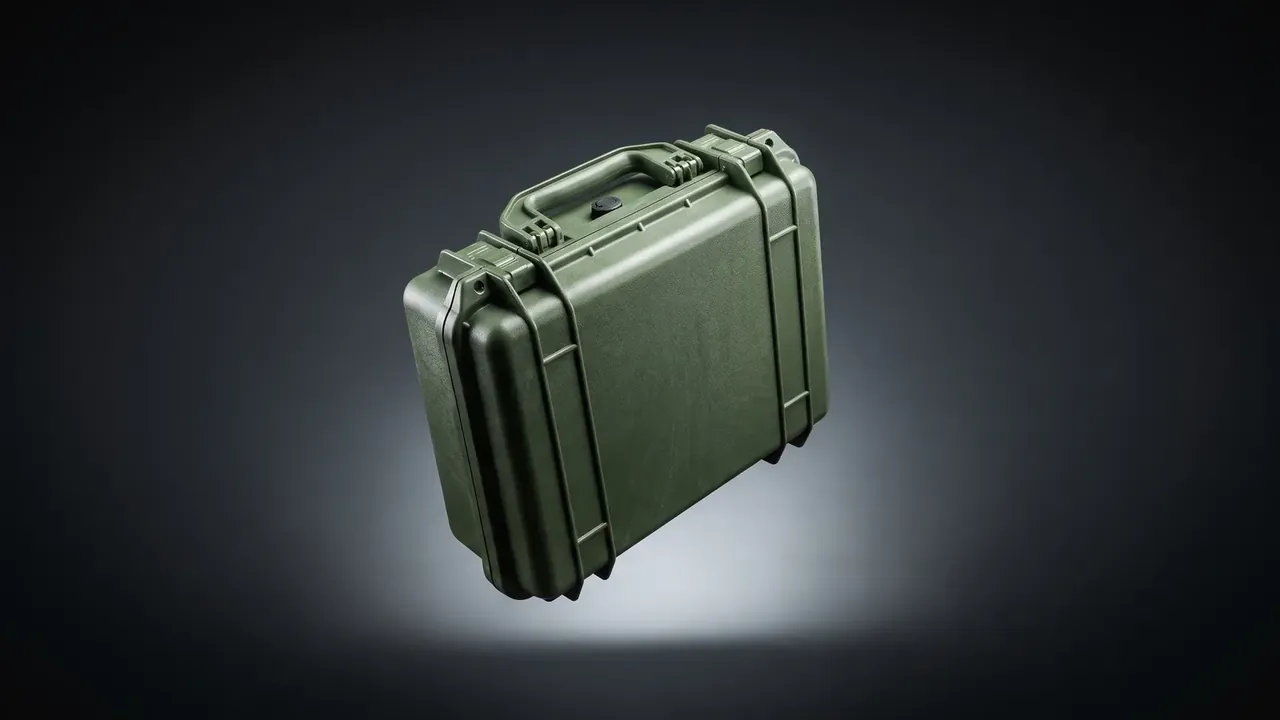
Quick answer: Bulk Industrial Case Purchasing is won at the tier break: 500, 1,000 and 3,000 piece tiers, a 30-day order lock, three lots and 80 samples per lot.
Table of contents
- Where the Price Tier Breaks
- Scheduling Windows and the Order Lock
- Splitting Deliveries Into Lots
- Sample Size at AQL 2.5
- Cash Tied Up in Stock
- FAQ
1. Where the Price Tier Breaks
Place 3,000 units and the money saved at the table is often paid back in the warehouse. The first calculation in Bulk Industrial Case Purchasing is not the unit price but the step between tiers. A quote listing 500, 1,000 and 3,000 pieces looks like a volume ladder; it is really a ladder of fixed actions.
Setup, first-article approval and colour-change purging repeat at every lot boundary, and none of them scales with quantity. The 500-piece tier carries the full setup, 1,000 halves it, 3,000 halves it again, so the marginal saving drops from double digits to single digits. That flattening is the break: above it the concession no longer covers the stock you hold.
| Order tier | Quantity | Setup recovery | Cash held |
|---|---|---|---|
| Entry | 500 pcs | Recovered in full | Cleared inside one turnover cycle |
| Middle | 1,000 pcs | Half recovered | Matches a 45-day turnover |
| Top | 3,000 pcs | Thinly spread | Runs past one turnover cycle |
A crude test: multiply the price gap by the pieces in the higher tier to get the total it saves; weigh that against those pieces times the extra days they sit and the storage rate. If the saving is smaller, stay in the middle tier.
Colour hides a second break in Bulk Industrial Case Purchasing: a second colour adds purge time quoted on a separate line. Two colours within a year usually beat one large order plus a colour change, since the purge spread over 3,000 pieces looks cheap and pushes the schedule a week.
2. Scheduling Windows and the Order Lock
An order holds intent; a lock holds a slot on the line. Factories cut the calendar into windows and push orders back once one fills, so the date that matters in Bulk Industrial Case Purchasing is 30 days before production starts. Later, the order squeezes into a gap, the gap needs a purge, and the tier price drops back a level.
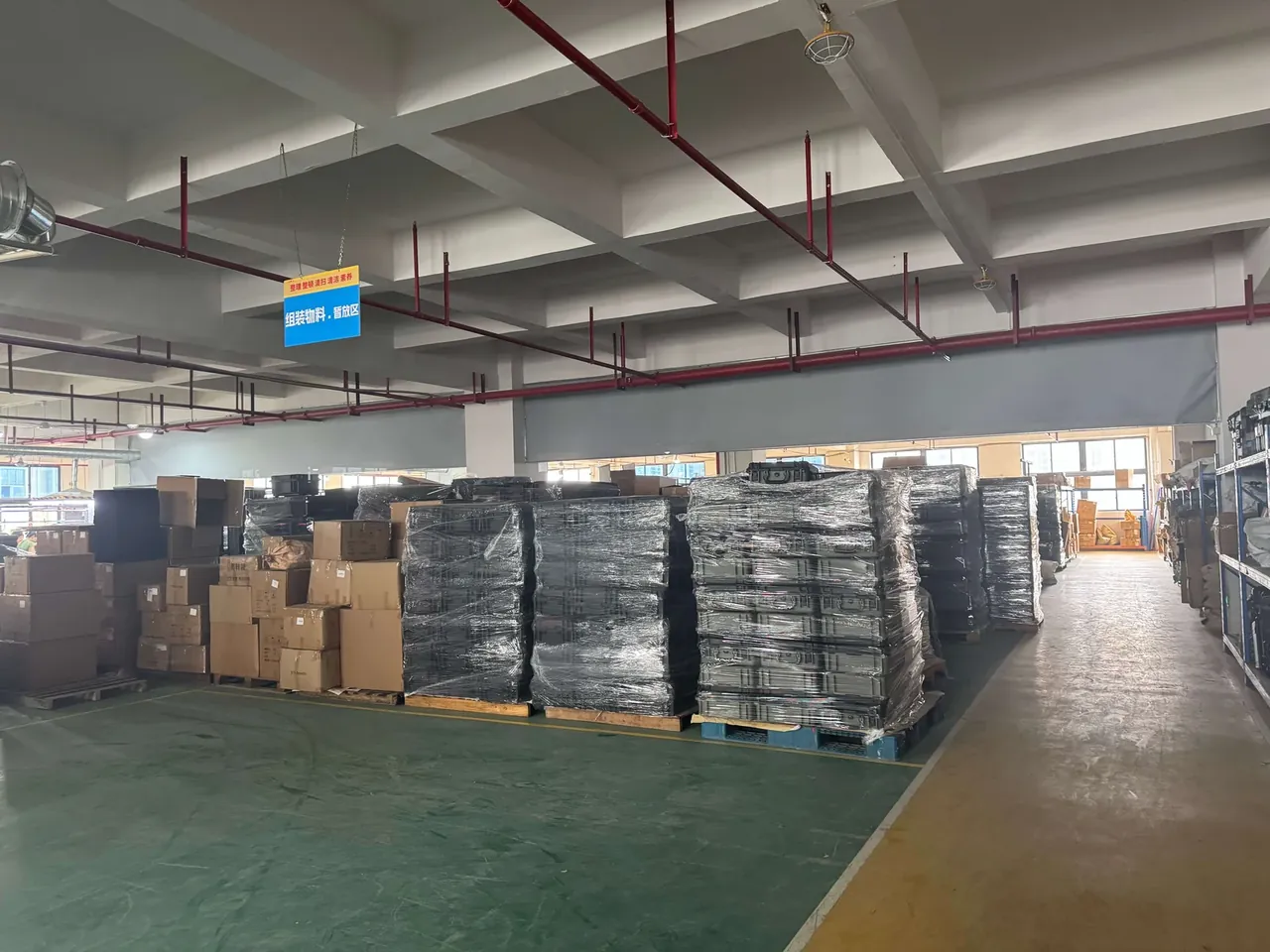
Two things set the window: whether the mould is on the machine and whether material is on the floor. A repeat colour on a mounted mould fits 30 days; a colour change with fresh first-article approval makes 30 days a floor for Bulk Industrial Case Purchasing.
Write the lock as a clause: confirm quantity and colour 30 days out, quantity adjustable, delivery extended if the date slips. That sentence does more than a penalty clause, because it moves uncertainty to the buyer and lets the factory hold the line. What the order buys is a place in the schedule, not stock on a shelf.
3. Splitting Deliveries Into Lots
A split is not thinning the goods; it is cutting the sampling unit for Bulk Industrial Case Purchasing. Cut 3,000 units into three lots of 1,000 and every lot stays in the 501 to 1,200 band, where the sample holds at 80.
Two lots of 1,500 move to the 1,201 to 3,200 band at 125 samples, 250 in total against 240 for three lots. Coarser cutting costs more inspection, and few buyers price that when they order.
| Cutting | Units per lot | Lot band | Sample per lot |
|---|---|---|---|
| Three lots | 1,000 pcs | 501 to 1,200 | 80 pcs |
| Two lots | 1,500 pcs | 1,201 to 3,200 | 125 pcs |
| One lot | 3,000 pcs | 1,201 to 3,200 | 125 pcs |
Pacing matters too. Three lots 30 days apart let the first sell while the last still lands inside one turnover cycle, so two lots at most sit on the floor. Seven-day gaps make the split cosmetic; 60-day gaps risk a colour change and put shade variation back on your side.
4. Sample Size at AQL 2.5
Three numbers define the Bulk Industrial Case Purchasing plan: inspection level, AQL value and sample size. General level II at AQL 2.5 gives acceptance 5 and rejection 6 at 80 pieces, so a sixth cosmetic defect rejects the lot.
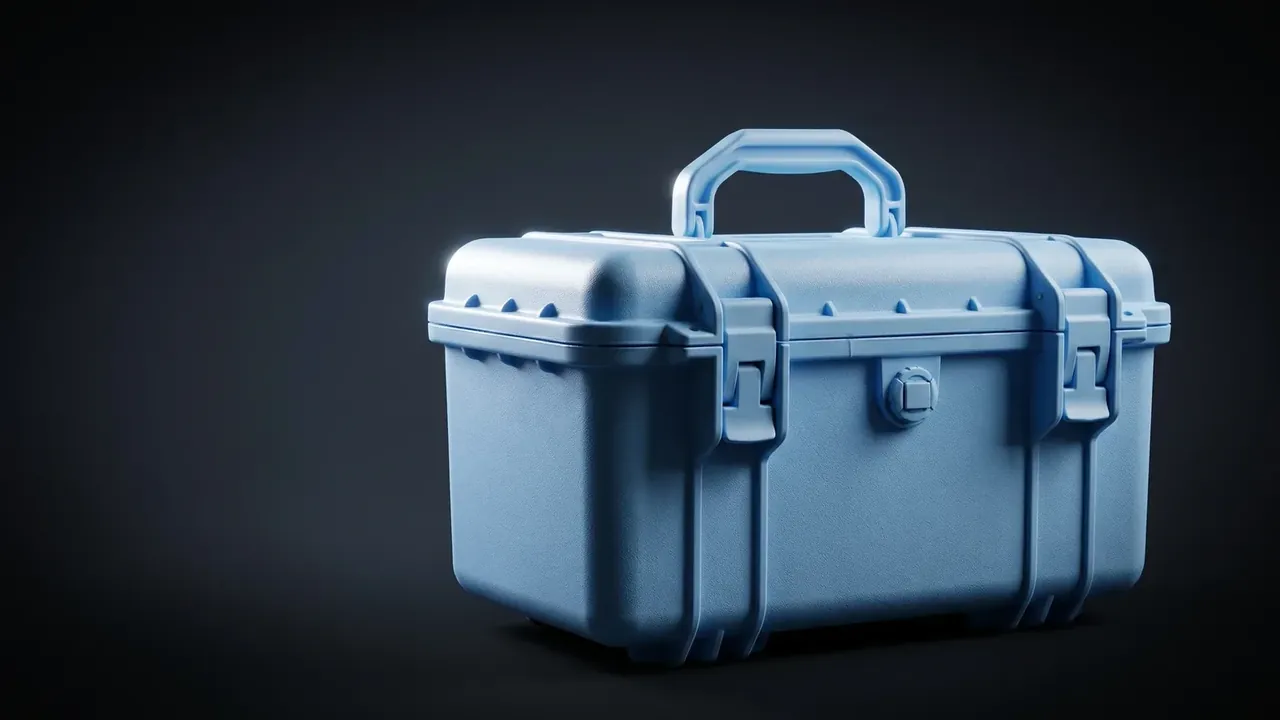
How the 80 are drawn causes more argument than the number. Pull across cartons, layers and pallet positions rather than off the top of one pallet, and record latch, hinge, gasket and wall scuffing separately.
Judge cosmetics apart from function. A latch that will not close is functional, and one piece rejects the lot; shade, print offset and flow marks follow AQL 2.5. Most disputes in Bulk Industrial Case Purchasing are functional faults counted as cosmetic ones.
Keep the sampling sheet, defect photographs and a sealed reference piece; without all three a re-inspection becomes a contest of memory and costs more than the first pass.
Lot verdict: 5 cosmetic defects or fewer in 80 pieces pass; a sixth fails, and a shade gap above ΔE 2.0 across three lots sends the batch back for re-inspection.
5. Cash Tied Up in Stock
3,000 units at once cost 0.8 CNY per case per month to store, 2,400 CNY a month, and capital at 6% a year accrues daily on the value held. The gap between 45 and 120 days is not rent; it is whether the money can fund the next order.
Three items make the carrying cost: rent, capital and markdown risk after a design change. The first two calculate, the third only estimates. Colour and print lose value fastest in Bulk Industrial Case Purchasing, because a revised logo turns shelf stock into discounted goods, a line no quote ever shows.
Set stock days from monthly shipments. At 1,000 a month, 45 days means 1,500 units on hand; at 300 a month, 450. Choose the tier after that figure, or 3,000 units land against demand of 300 a month.
Count versions too, a step buyers skip. Three colours at 1,000 each are not 3,000 usable units, since only the selling colour moves; the rest behave like dead stock, and turnover lengthens for each colour separately.
So the trade is plain: 3,000 pieces buy a lower unit price and pay in cash. Bulk Industrial Case Purchasing rewards the buyer who holds both numbers at once.
Related Reading
- Five criteria for bulk protective case orders
- How volume price tiers are built
- Plastic cases against wooden crates on cost
- Choosing bulk plastic carrying cases
Related Products
- 8 Series — Gun Cases; Military Equipment Cases; Camera Equipment Cases; Drone Cases; Watch Cases; Knife Cases; First Aid Cases; Electronics Equipment Cases
- WL8-2812 PP Gun Case — model WL8-2812
- All protective cases and toolboxes: 7 series, 158 models