

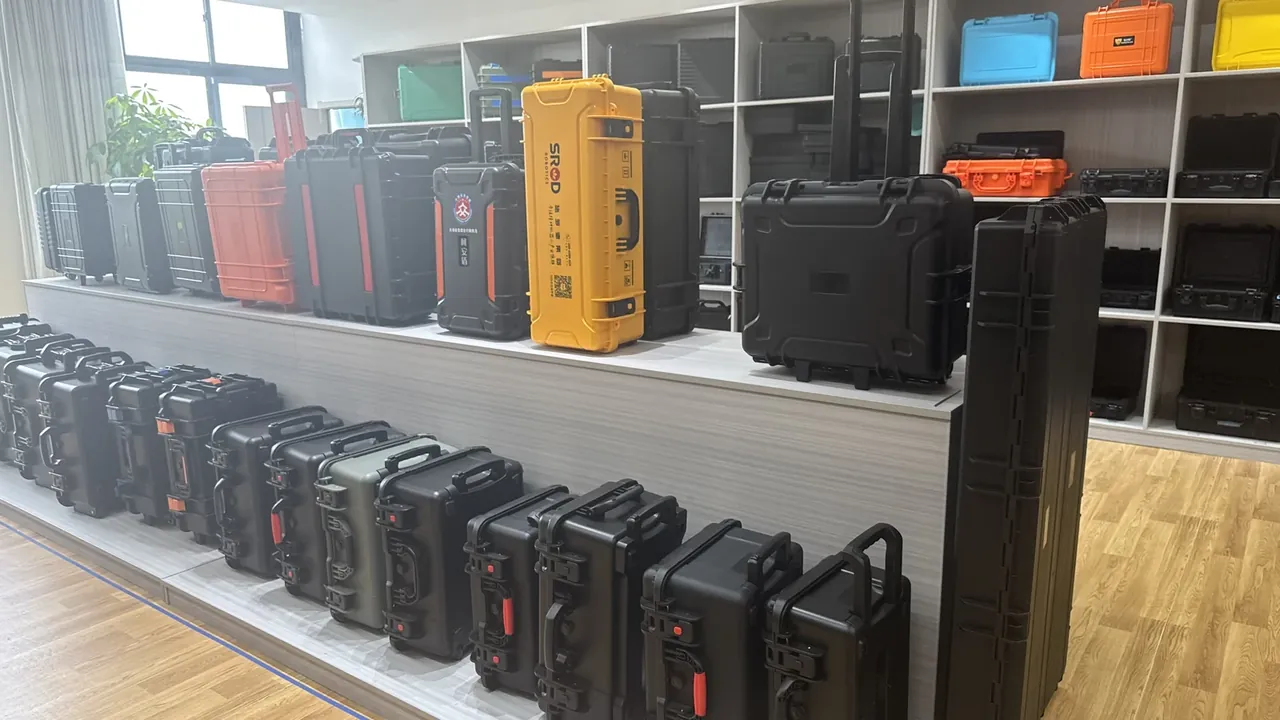
Quick answer: A cartridge safety case differs from a steel ammunition box, corrugated packaging, a plain plastic box and a soft pouch on five points: protection, sealing, weight, cost and traceability. Compare them at one internal volume and one payload, or the numbers mean nothing.
Table of contents
- Cartridge Safety Case Comparison: Fix the Baseline First
- Protection: Drop, Puncture and Stacking
- Sealing: Gaskets, Moisture Vapour and Replacement
- Weight and Cost: The Five-Year Ledger
- Traceability: Marking Methods and Management Cost
- FAQ
1. Cartridge Safety Case Comparison: Fix the Baseline First
Comparisons fail when each option is quoted on its own terms: steel at 30 L, corrugated at 12 kg, plastic by outside size. Fix 20 L internal and a 12 kg payload first, then let five dimensions line up: protection, sealing, weight, cost and traceability.
| Dimension | Test | Usual fudge |
|---|---|---|
| Protection | 1.2 m drop, 10 kg head | Drop height unstated |
| Sealing | 1 m immersion, 30 minutes | Splash sold as sealing |
| Weight | Empty and loaded | Insert ignored |
| Cost | Unit and annual cost | Replacement ignored |
| Traceability | Process and rub cycles | Sticker called a plate |
2. Protection: Drop, Puncture and Stacking
A drop test needs attitudes written down: 1.2 m, six faces, three edges, four corners, thirteen impacts, with no crack, no latch release and no insert shift, which usually means 2.8 to 3.2 mm walls.
A 10 kg head dropped 300 mm pierces a 1.6 mm polypropylene box; a 3.0 mm copolymer cartridge safety case takes an 1.8 mm dent and stays sealed. Steel at 1.0 mm resists best, but its dents never come out and the box weighs 4.8 kg.
Stacking is read at 110 kg for 48 hours, deflection under 1.4 mm; corrugated at 6.5 kN per metre collapses by the fourth tier.
3. Sealing: Gaskets, Moisture Vapour and Replacement
Sealing has three readings: immersion, vapour transmission and replacement interval. A cartridge safety case holds 1 m of water for 30 minutes, its gasket compressing from 6 mm to 4.2 mm in one unbroken loop.
A steel box uses a rubber gasket and four catches, with the hinge side leaking first and the gasket changed every two years. Corrugated has no seal and passes about 8 g per square metre per day; a plain plastic box keeps splashes out for ten minutes; a 600D pouch with a PU coating passes about 5 g.
| Option | Seal | Replacement | 1 m, 30 minutes |
|---|---|---|---|
| Safety case | Continuous silicone | 3 years | Dry |
| Steel box | Rubber gasket | 2 years | Hinge side seeps |
| Corrugated | None | Single trip | Soaked |
| Plain plastic | None | Not applicable | Water enters |
| Soft pouch | PU coating | On wear | Seeps |
Replacement belongs in the annual cost, not a one-off purchase.
4. Weight and Cost: The Five-Year Ledger
At 20 L, empty weight runs from 3.1 kg for the cartridge safety case to 4.8 kg steel, 0.9 kg corrugated, 1.4 kg plain plastic and 0.4 kg for the pouch, which sets how many one person carries.
Cost is annualised. Unit prices run 78, 185, 12, 29 and 35 yuan, and corrugated only looks cheapest until six repacks a year add 72.
| Option | Empty, 20 L | Price | Life | Annual cost |
|---|---|---|---|---|
| Safety case | 3.1 kg | 78 | 5 years | 15.6 |
| Steel box | 4.8 kg | 185 | 10 years | 18.5 |
| Corrugated | 0.9 kg | 12 | Single trip | 72 |
| Plain plastic | 1.4 kg | 29 | 2 years | 14.5 |
| Soft pouch | 0.4 kg | 35 | 3 years | 11.7 |
The ledger ignores downtime: replacing plastic every two years means re-marking a batch, and the cheapest pouch fails stacking, so savings return as rework.
5. Traceability: Marking Methods and Management Cost
Marking is judged on process, durability and payload. A cartridge safety case takes a 12-digit laser mark plus a 15 by 15 mm code surviving 500 rubs; steel takes a 6 mm stamp 0.3 mm deep, legible after 96 hours of salt spray, but carries only a lot number.
Corrugated print runs when wet, labels lift in two years, sewn tags hold 8 characters. A scan takes 1 second per unit against 12 by hand, so 200 units differ by 37 minutes, and a number readable three years on makes a discrepancy investigable.
Conclusion
On one baseline the gaps are plain: steel is heavy, corrugated is open to moisture, plain plastic fails puncture, and a pouch has no rigidity. A cartridge safety case sits on the hard side of the middle, at 3.1 kg empty, 30 minutes at 1 m and five years of life, last on none of the five lines.
This article discusses only the container (case body) side of specifications and design intent, and does not cover any handling, loading or use of the contents.
Related Reading
- Cartridge safety case versus a plain plastic box
- How to compare ammunition case materials
- Keeping a steel ammunition box in service
- Acceptance clauses for cartridge transport boxes
Related Products
- 8 Series — Gun Cases; Military Equipment Cases; Camera Equipment Cases; Drone Cases; Watch Cases; Knife Cases; First Aid Cases; Electronics Equipment Cases
- WL8-2812 PP Gun Case — model WL8-2812
- All protective cases and toolboxes: 7 series, 158 models