

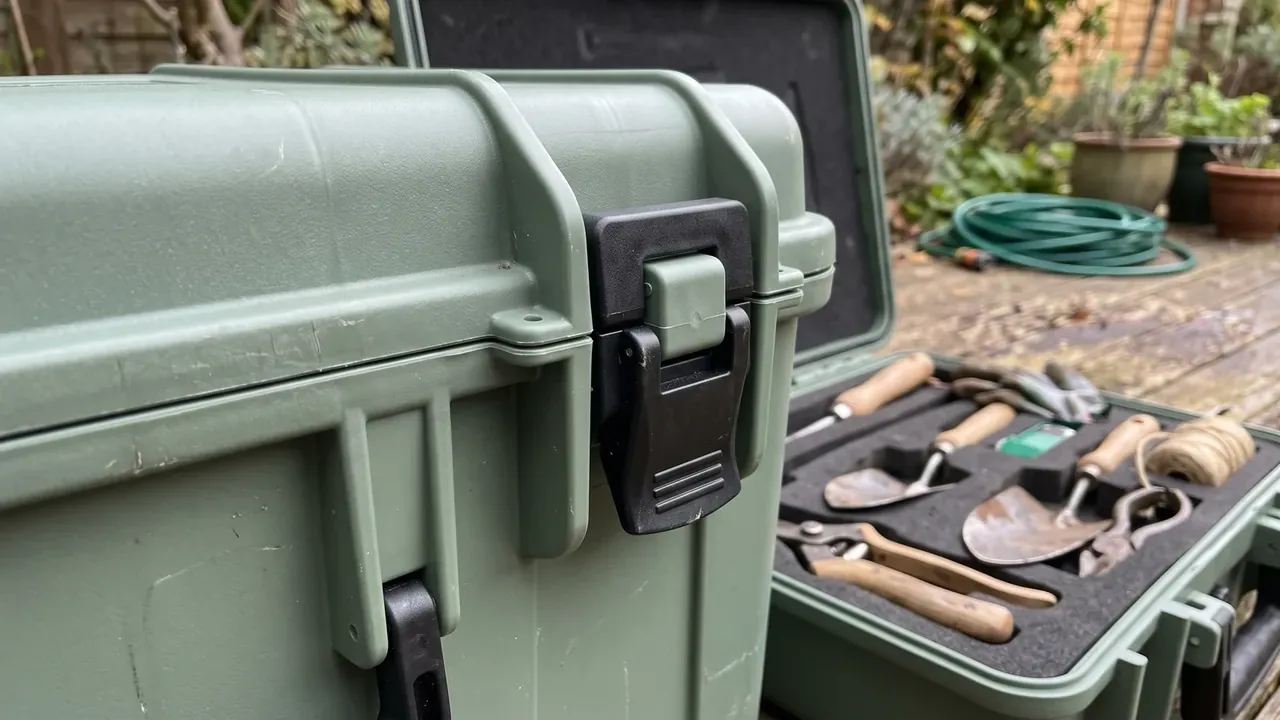
Quick answer: Five criteria decide a cartridge storage box: capacity and cell count, stacking tiers and pallet size, seal grade for store humidity, stocktaking and labelling, and batch size against a five-year budget.
Table of contents
- Capacity and Grid Count for the Cartridge Storage Box
- Warehouse Stacking: Tiers, Pallets and Aisles
- Moisture Control by Humidity Band
- Stocktaking and Labelling at Box Level
- Batch Size, Lead Time and Budget
- FAQ
1. Capacity and Grid Count for the Cartridge Storage Box
Count cells, not litres. A cartridge storage box of 50 litres cut into 20 cells holds about thirty percent more than one cut into 12. List the categories kept, note how much is drawn at once, then work back to cell depth.
Match one draw to one box. If a box holds 500 rounds and the issue unit is 200, every draw means repacking.
| Capacity pattern | Typical load | Cells and depth | Fits |
|---|---|---|---|
| Many types, small lots | 200 to 300 rounds | 12 cells, 40 mm | Issue counters |
| Fixed types, medium lots | 500 rounds | 20 cells, 60 mm | Unit level stores |
| One type, large lots | 800 to 1000 rounds | 4 large cells | Sealed reserve |
| Mixed | 400 rounds plus parts | Mixed sizes | Accessories in one box |
2. Warehouse Stacking: Tiers, Pallets and Aisles
Read the ceiling before the box. A 4.2 m clear height loses 600 mm to lights and sprinklers, leaving 3.6 m. A 300 mm box could reach 12 tiers, but bottom load and safe reaching stop the stack at four or five.
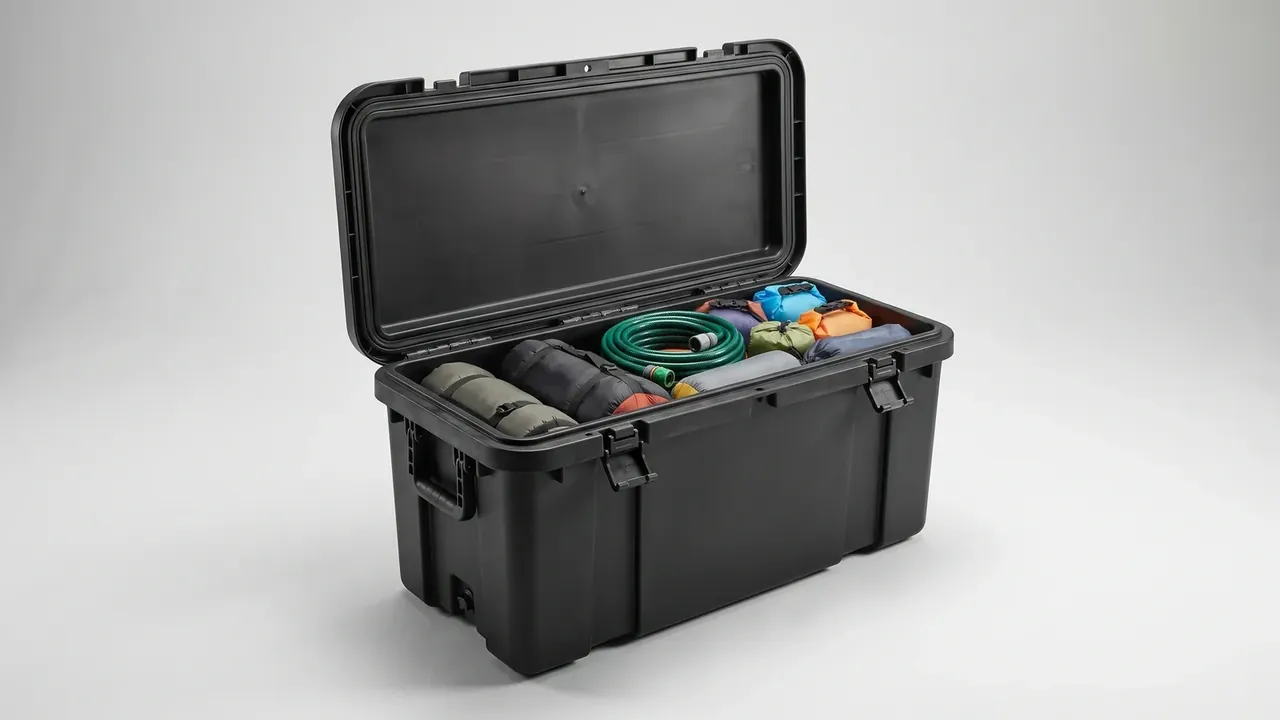
A 1200 by 1000 mm pallet takes four 600 by 400 mm cartridge storage box bases per layer; four tiers give 16 boxes at about 320 kg. Below 6 m of width, keep the aisle and drop the wall row.
| Arrangement | Boxes | Loaded weight | Fits when |
|---|---|---|---|
| Floor stack, 3 tiers | Not applicable | about 240 kg | No racking |
| Pallet, 3 tiers | 12 | about 240 kg | Shelf pitch 1.4 m |
| Pallet, 4 tiers | 16 | about 320 kg | Shelf pitch 1.8 m |
3. Moisture Control by Humidity Band
Damp control starts with a measurement, not a desiccant bag. A southern store sits above 70 percent through the wet season, a heated northern store can fall to 30 percent. Log two weeks of readings and design to the peak.
Below 60 percent, the seal alone is enough with 20 g of silica gel changed twice a year. Between 60 and 75 percent, raise the gel to 40 g, change it quarterly and add an indicator card. Above 75 percent, move the box into a dehumidified room or specify a valved model.
Opening frequency moves the same numbers: an issue counter opened ten times a day burns desiccant three times faster than a sealed reserve, so several small boxes beat one large one.
4. Stocktaking and Labelling at Box Level
Label design sets count granularity. With a number only, counting takes about 25 seconds per box; with a QR code tied to cell detail, scanning plus a ten percent sample takes 8 seconds.
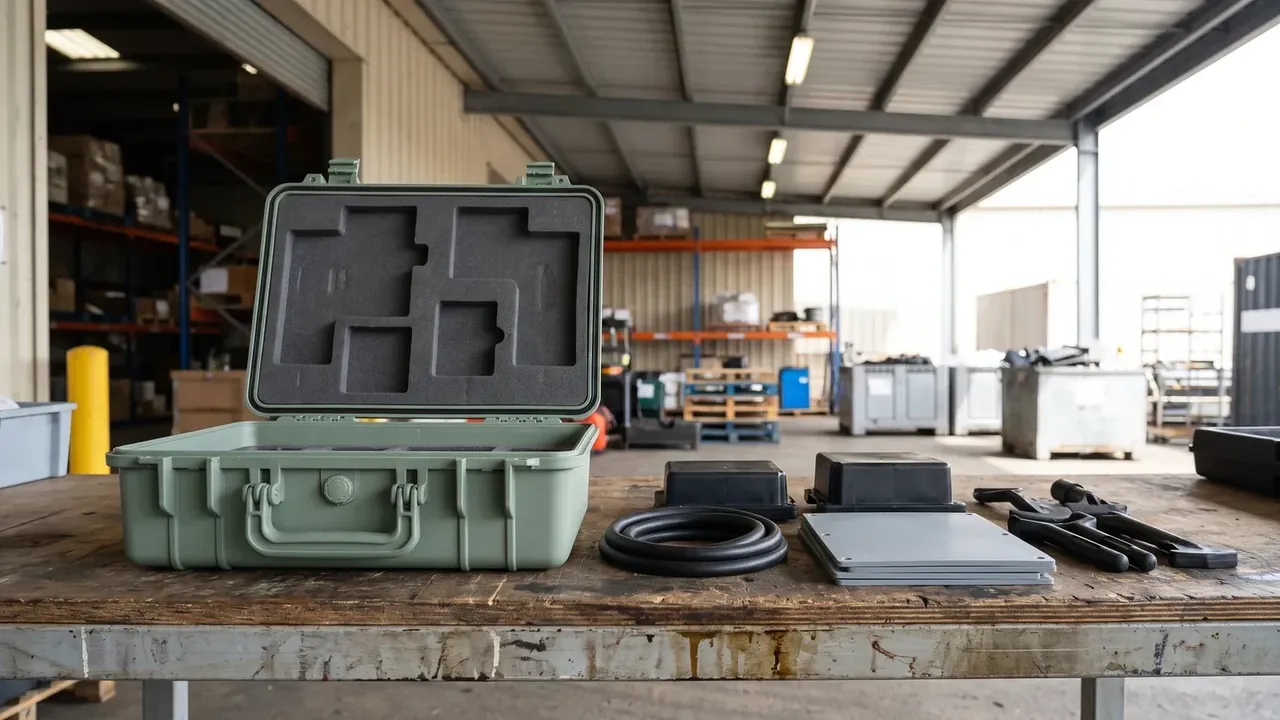
Four lines cover most labels: box number, type, quantity, seal date. Print at 60 by 40 mm top right, clear of latches and the seal channel, where adhesive interferes with closing. Synthetic stock survives cold rooms.
A register answers two questions: where the box is, and what is inside. Bind the first to box number, the second to the last count.
5. Batch Size, Lead Time and Budget
Batch size sets price and lead time. A 50 unit run ships in about 25 days, 300 units at 35 days, and custom foam adds 7 to 10 days for tooling.
Budget belongs on five years, not unit price. Two boxes quoted 15 percent apart reverse to a 30 percent annual gap when one insert collapses in two years and the other lasts five.
| Budget line | Share of five-year cost | Note |
|---|---|---|
| Box purchase | about 65% | One-off |
| Insert replacement | about 15% | Every 2 to 5 years |
| Seal cord and labels | about 8% | Consumables |
Conclusion
The five criteria answer one question: once this box sits in the existing store, will drawing, stacking, moisture control, counting and buying work? Capacity to the issue unit, tiers to pallet and ceiling, seal to humidity band, labels to count granularity, budget to five years. Choosing a cartridge storage box this way beats comparing specification sheets.
This article discusses only the container (case body) side of specifications and design intent, and does not cover any handling, loading or use of the contents.
Related Reading
- Cartridge storage box versus storage cabinet
- How to match capacity and configuration in ammunition storage
- Warehouse storage: stacking boxes with racking
- Specifications and load ratings for stackable boxes
Related Products
- 8 Series — Gun Cases; Military Equipment Cases; Camera Equipment Cases; Drone Cases; Watch Cases; Knife Cases; First Aid Cases; Electronics Equipment Cases
- WL8-2812 PP Gun Case — model WL8-2812
- All protective cases and toolboxes: 7 series, 158 models